
Caddie's Gear Advisor
Curated for today's 76°F · Clouds
Tour-Level Drivers
Engineered for maximum distance and forgiveness
Laser Rangefinders
Pin-seeking technology for precision approaches
Premium Golf Balls
Tour-caliber spin and distance performance
Performance Sunglasses
Polarized lenses optimized for reading greens
Your Golf Trip, Handled
The Ultimate Golf Trip Planner
Everything you need to play Carter Plantation — from booking your flight to checking in course-side.
Course-Side Stays
Luxury hotels, resorts, and stay-and-play packages just minutes from the first tee.
Flights
Compare fares across 700+ airlines for the best route to your tee time.
SUV Rentals for Golf Bags
Spacious vehicles with room for clubs, bags, and your foursome.
Travel Insurance
Coverage for medical, weather delays, and gear at your destination.
Carter Plantation: Course Intelligence
Signature Setup
Carter Plantation runs through the low, wet ground near Springfield, Louisiana, between Hammond and Baton Rouge, and the land tells you what kind of round you're in for before you reach the first tee — bayou, cypress, and the Tickfaw River corridor framing the holes. It is a David Toms Signature design that opened in 2004, and that pedigree matters here: Toms is a Louisiana man (Shreveport, LSU), so the routing reads like someone who understands what summer humidity and standing water do to a golf course in this part of the South.
The course is a stop on Louisiana's Audubon Golf Trail, and from the back tees it stretches past 7,000 yards across flat, low-country terrain where water is the defining hazard rather than elevation. The closing par-4 is the photo hole — it works back around water toward the clubhouse and asks for a committed tee shot before a nervy approach over the margin. I haven't walked this course in person, so the strategic notes below lean on the design's water-first character and Louisiana historical weather rather than a scorecard I kept myself.
Hole-by-Hole Wind & Playing Lines
On flat bayou ground like this, wind off the Gulf is the variable that turns a stock yardage into a guess. The three places I'd watch hardest, and how the wind changes them:
- The #1-handicap par-4: In summer the prevailing flow is out of the south to south-southeast off the Gulf, and on these exposed low holes it presses against the longer approaches. A mid-iron number into even a 10 mph S/SSE breeze plays a full club longer, and with wetland fronting the green the miss is wet, not just long. Favor the dry side off the tee, club up one, and take the back of the green over flirting with the water margin.
- A water-carry par-3: The short holes here sit defenseless to crosswind because there's no high ground to block it. On a SSE day the wind shoves a held shot toward the hazard side — aim at the fat half of the green and let the wind drift it to the pin rather than starting it at the flag.
- The 18th (finishing par-4): Bending around water back to the clubhouse, it's the hole where a tired, humid-afternoon swing gets punished. Into a freshening late-day Gulf breeze, take the safe line off the tee and accept a longer approach; bailing dry-side long beats the wet-side short.
Green & Fairway Characteristics
Fairways are Bermudagrass — the right call for south Louisiana — and they run reasonably firm in spring before the summer rains soften everything. The greens are an ultradwarf surface built to survive the heat and humidity, and in the wet months they play soft and receptive rather than slick; expect a Stimp around 10 on a normal day and grain that follows the afternoon sun. Because the property is genuinely flat, your effective yardage tracks the card more honestly than on a hill course — the catch is that water, not slope, dictates where you can and can't miss. Several holes thread between bayou and wetland margins, so the safe side of the fairway is worth more than the extra ten yards on the aggressive line.
Seasonal Weather Pattern
Springfield sits in the humid subtropical band, and the golf calendar is ruled by moisture. July and August highs run 90–95°F with dew points in the mid-70s, which makes the air feel heavy by mid-morning and turns the afternoon into thunderstorm territory — pop-up convection most summer days, not the occasional one. Spring (March into May) is the sweet spot: highs in the 70s, firmer Bermuda, and the steadiest morning conditions of the year. Winters are mild — January highs around 60°F — so the course plays year-round, though a passing cold front can drop a raw, 40°F morning and stiffen the greens for a few hours. The standing water across the property keeps humidity high right up against the playing corridors, which is exactly why the morning window matters so much here.
Local Play Tips
A detail that won't show on a yardage book: on a flat, water-laced course this close to the Gulf, the still early morning is your friend and the breeze is the enemy. Before the late-morning Gulf flow fills in, the water-carry holes are far more forgiving because there's no crosswind nudging your ball toward the hazard. Once that breeze sets up — typically by late morning in summer — every shot over water gains a layer of risk. If I were planning a number-chasing round here, I'd take the first tee time available and try to be past the wettest holes before the wind and the afternoon storm cells arrived. I'll be straight that I haven't played Carter Plantation myself, so I'm reading this off the design's water-heavy layout and the region's weather rather than my own card — but on any Louisiana bayou course, early-and-dry is the play I'd trust.
Pre-Round Weather Workflow
Use the 7-day G-Score and windExposure read to time this course, because on flat bayou ground the wind and storm timing matter more than anything on the card:
1. Book the earliest tee you can get. On still summer mornings the G-Score runs 8–12 points higher than the storm-prone afternoon; the water holes are most forgiving before the Gulf breeze fills in. 2. Read wind direction, not just speed. A S/SSE flow loads the approaches over water — let the windExposure flag, not the raw yardage, drive your club selection on every carry hole. 3. Watch the afternoon storm line June–August. Convection builds most summer days here; if the 7-day shows building afternoon cells, finish your eighteen before 1 p.m. rather than risk a lightning hold. 4. In winter, check the overnight low. A 40°F front morning firms the ultradwarf greens and shortens carry — give yourself an extra half-club until the surface softens past mid-morning.
Related Reading
Before you tee off at Carter Plantation
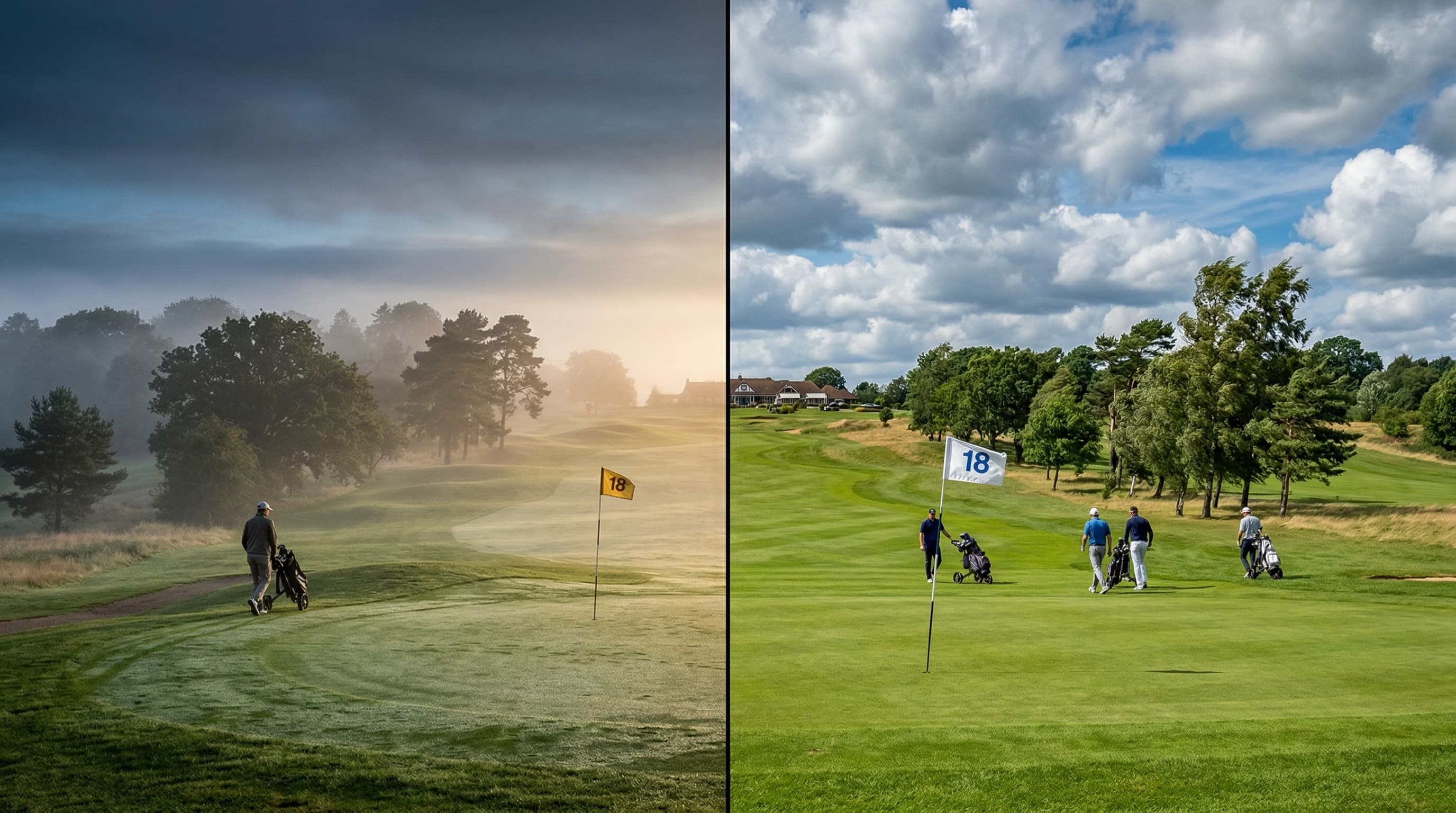
Morning vs Afternoon Tee Times: What Weather Data Reveals About When to Play
Hourly weather data reveals morning tee times score 8-12 G-Score points higher than afternoon slots. Here is what the numbers say about optimal timing.
Read Story
Best Golf Weather by State: Ranking America by Average G-Score
We ranked all 50 US states by average G-Score golf playability. California tops the list, but the results beyond the top five may surprise you.
Read StoryMinSu Kim
Founder & Golf Data Analyst
MinSu is a data analyst and golfer with 10+ years on the course. He built Golf Weather Score to answer one question: is today a good day to play? He combines weather data, course intelligence, and the proprietary G-Score algorithm to help golfers make smarter decisions.
Every Friday Morning
When Carter Plantation plays best next weekend.
Friday 6am ET: peak G-Score windows for Carter Plantation, wind direction by hour, and one gear call. Three minutes to read, save you the round.
One email a week. Unsubscribe in one click.
The Caddie's Oracle
Draw your luck before the tee off