
Caddie's Gear Advisor
Curated for today's 54°F · Clouds
Cold-Weather Performance Layers
Thermal mid-layers that move with your swing
Tour Hand Warmers
Rechargeable warmers trusted by caddies
Thermal Base Layers
Lightweight compression that traps heat
Winter Golf Headwear
Beanies and ear warmers built for the links
Your Golf Trip, Handled
The Ultimate Golf Trip Planner
Everything you need to play Cascade Hills Country Club — from booking your flight to checking in course-side.
Course-Side Stays
Luxury hotels, resorts, and stay-and-play packages just minutes from the first tee.
Flights
Compare fares across 700+ airlines for the best route to your tee time.
SUV Rentals for Golf Bags
Spacious vehicles with room for clubs, bags, and your foursome.
Travel Insurance
Coverage for medical, weather delays, and gear at your destination.
Cascade Hills Country Club: Course Intelligence
Signature Setup
Cascade Hills sits on rolling glacial terrain east of Grand Rapids, Michigan, and it plays older than its yardage suggests — a Tom Bendelow routing from 1922 that leans on elevation change and mature hardwoods rather than length. The first morning I walked it, in late September, the fairways were already holding the cool damp of a Michigan fall and the ball wasn't running. The signature hole is the 12th, a 415-yard par-4 that doglegs right around a wooded ravine; the tee shot tempts you to cut the corner, but the trees on the inside are tall enough that a slight push dies in the branches. This is a members' course in the truest sense — quiet, tree-lined, and built before the era of forced carries and island greens. I haven't seen the club's full tournament history, so I won't overstate it; what I can tell you is the routing rewards local knowledge over raw distance.
Hole-by-Hole Wind & Playing Lines
The prevailing wind in Grand Rapids comes out of the west and southwest, pulled in off Lake Michigan about 30 miles to the west, and at Cascade Hills it matters most on the holes that run uphill or across the ravines.
- Hole 4 (par-4, 438y, #1 handicap): Plays straight into the W/SW breeze most summer afternoons. The 150-yard marker plays closer to 170 when the wind is up — I hit driver then 4-iron here on a 12 mph SW morning and was still short. Favor the left half off the tee; the right side leaves a blind, hanging lie.
- Hole 12 (par-4, 415y, signature): With a left-to-right wind the dogleg opens up and you can flirt with the corner. Into a head wind, take the safe line down the left and accept a longer approach over the ravine edge.
- Hole 17 (par-3, ~190y): Exposed and usually downwind-to-crosswind from the southwest. A two-club difference between a calm 8 a.m. and a breezy 2 p.m. is normal here in July.
Green & Fairway Characteristics
The greens are bentgrass and ran about 10–11 on the Stimp the days I played — quick enough to matter on the downhill putts, but not glassy. They hold a well-struck approach in the morning when there's still moisture, then firm up by early afternoon in summer. Fairways are tree-lined and generous off the tee on the front, tightening on the back nine where the ravines come into play. Expect several uphill approaches; the elevation change means your stock yardages run a half-club long going up. Front nine plays a touch more open and flat; the back nine is the hillier, more demanding half, and that's where the wind does its real damage.
Seasonal Weather Pattern
West Michigan's golf season is short and front-loaded. April mornings can still sit in the low 40s°F with frost delays common into early May, and the ground stays soft and slow through spring. Peak conditions are June through August — daytime highs in the low-to-mid 80s°F, but mornings frequently start around 58–62°F, which is why early tee times play firmer and faster than afternoons. The real local signature is lake-effect: clouds and abrupt wind shifts off Lake Michigan can roll in with little warning, and humidity climbs through July. By late September the fairways turn damp and the ball stops running — plan on one to two extra clubs into greens. Unlike the drier inland-prairie courses in the same temperate band, Cascade Hills holds moisture longer because of the tree cover and ravine shade.
Local Play Tips
The single thing that won't show up in a yardage book: the back-nine ravine holes (12 and the stretch around it) sit lower and shaded, so they hold dew and cool air an hour longer than the front. On an early summer round the ball comes off noticeably dead down there before mid-morning — I lost a good five yards of carry on the 12th approach at 8:30 a.m. that I got back by the time I replayed a similar shot near noon. Walk it if you can; the elevation changes are gradual enough to enjoy and you read the slopes far better on foot than from a cart path.
Pre-Round Weather Workflow
Use the 7-day G-Score on the course page to time your round, and pair it with the windExposure indicator before you commit to a tee time. For Cascade Hills, the pattern is consistent: morning slots score higher because the W/SW breeze off Lake Michigan strengthens through the afternoon, adding a club or more into the exposed par-3s and the uphill 4th. Check the wind direction the night before — a W/SW reading means the 4th and 17th will play long, so plan your club selection up front. If the forecast shows a damp or post-rain morning, expect soft greens that hold approaches but slow your putts, and add yardage on every uphill shot. Lock your tee time for before 10 a.m. in summer and you'll play the course at its most predictable.
Related Reading
Before you tee off at Cascade Hills Country Club

America's 20 Windiest Golf Courses: A G-Score Wind Analysis
We ranked America's 20 windiest golf courses using G-Score wind penalty data. See how coastal gusts and prairie gales reshape playability scores.
Read Story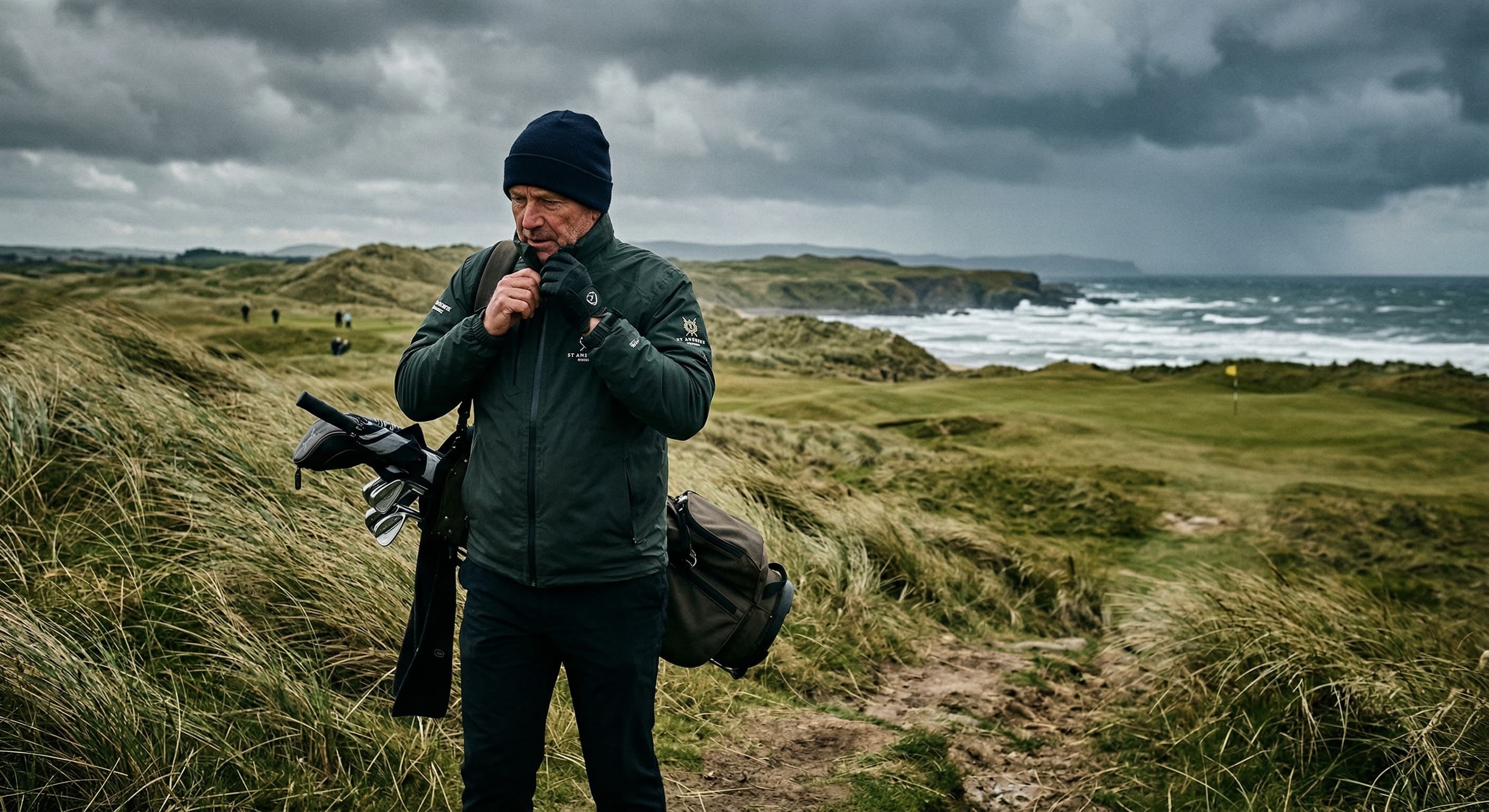
Why 'Feels Like' Temperature Matters More Than the Thermometer on the Golf Course
Standard weather apps lie to golfers. Learn how wind chill, heat index, and real-feel temperature affect your game and what to wear for every condition.
Read StoryMinSu Kim
Founder & Golf Data Analyst
MinSu is a data analyst and golfer with 10+ years on the course. He built Golf Weather Score to answer one question: is today a good day to play? He combines weather data, course intelligence, and the proprietary G-Score algorithm to help golfers make smarter decisions.
Every Friday Morning
When Cascade Hills Country Club plays best next weekend.
Friday 6am ET: peak G-Score windows for Cascade Hills Country Club, wind direction by hour, and one gear call. Three minutes to read, save you the round.
One email a week. Unsubscribe in one click.
The Caddie's Oracle
Draw your luck before the tee off