
Caddie's Gear Advisor
Curated for today's 56°F · Mist
Tour-Level Drivers
Engineered for maximum distance and forgiveness
Laser Rangefinders
Pin-seeking technology for precision approaches
Premium Golf Balls
Tour-caliber spin and distance performance
Performance Sunglasses
Polarized lenses optimized for reading greens
Your Golf Trip, Handled
The Ultimate Golf Trip Planner
Everything you need to play Castle Rock Golf Course — from booking your flight to checking in course-side.
Course-Side Stays
Luxury hotels, resorts, and stay-and-play packages just minutes from the first tee.
Flights
Compare fares across 700+ airlines for the best route to your tee time.
SUV Rentals for Golf Bags
Spacious vehicles with room for clubs, bags, and your foursome.
Travel Insurance
Coverage for medical, weather delays, and gear at your destination.
Castle Rock Golf Course: Course Intelligence
Signature Setup
Castle Rock Golf Course sits in central Wisconsin near New Lisbon, up against Castle Rock Lake — the Castle Rock Flowage off the Wisconsin River, one of the largest lakes in the state. Arthur L. Johnson designed it and it opened in 1974: a par-71 layout that runs 6,141 yards from the Blue tees, rated 70.2 with a slope of 125, and offers five tee sets down to 4,968 yards. I haven't played Castle Rock myself, so I'll keep the course facts conservative and honest; where I'll spend my confidence is on what a big inland lake and central Wisconsin's sandy "Central Sands" ground do to the way the course plays, because I've played enough lake-adjacent Midwestern golf to know the wind and the firmness are the real defense here, not the yardage. The card is short by modern standards — the longest hole is the 538-yard par-5 4th — so this is a placement course where the weather decides the difficulty.
Hole-by-Hole Wind & Playing Lines
The defining variable is the lake. Castle Rock Flowage is open water to the west and north, and a north-to-northwest breeze comes across it with nothing to slow it down. The 538-yard 4th is the clearest example: it reads reachable-ish on a calm morning, but into a 12–15 mph lake wind it stretches well past its number, and the smart play is to give up on getting home and lay back to a full wedge instead of a half-club guess. The two longest par-4s — the 386-yard 13th and the 392-yard 15th — are the holes I'd respect most when the wind is up; a downwind tee shot leaves a flick, but into the breeze the approach climbs a club or more and the miss is long-and-through, not short. The short par-3 17th (148 yards) and the 171-yard 6th flip hardest-to-easiest depending purely on wind direction — on a still dawn they're flip-wedge holes; in an afternoon crosswind off the lake they demand a committed stock swing and a center-green target.
Green & Fairway Characteristics
This is Central Sands country — the soil is sandy, drains fast, and firms up quickly after rain, which matters more than most visitors expect. A firm fairway means your downwind drives release and chase, and a firm green means a high approach into the wind that lands soft is worth more than a runner. The greens are mid-sized and the slope of 125 tells you the trouble is fair rather than severe; this is a course you score on with position, not power. Off the tee, the premium is on the correct side for the next shot rather than raw distance — at 6,141 yards you rarely need driver to have a wedge in hand, and on a windy day the lower-risk line into the fairway beats the aggressive carry. Play the firm ground as an ally: land short and use the bounce when the wind is helping, and take one more club and fly it in when the wind is against.
Seasonal Weather Pattern
Central Wisconsin golf runs on a tight season. April–May: opening stretch — cool highs in the 50s and 60s, raw mornings near freezing, soft ground early before the sandy soil dries out. June: the prime window — highs in the 70s, longer daylight, the firmest and calmest dawns of the year before the summer pattern sets in. July–August: warmest, highs in the low-to-mid 80s, but the signature hazard is the afternoon thunderstorm — heat and humidity stack up over central Wisconsin and trigger pop-up storms and gusty pre-storm wind from early-to-mid afternoon. September–October: often the best scoring stretch — crisp, stable air, highs in the 60s and 70s, lighter wind, then cold mornings back in the 30s as the season closes. The course shuts down through the Wisconsin winter. Unlike a coastal layout where a sea breeze is the steady variable, here the two governing factors are the Castle Rock Lake wind and the summer afternoon storm.
Local Play Tips
Two things the tee sheet won't tell you. First, the lake wind has a daily rhythm: it's calmest at first light and builds through the morning into the afternoon, so the same hole that's a flip-wedge at 7 a.m. is a three-quarter punch by 1 p.m. If you have any choice of tee time in the summer, take the earliest one — you'll play the par-5 4th and the long par-4s before the wind has any say. Second, respect the sandy ground: after a dry stretch the fairways get genuinely fast, and the mistake visitors make is flying every approach the same as they would on a soft course — into a firm, into-the-wind green you need to take a club more and land it on the front, while downwind you can land short and let the bounce do the work.
Pre-Round Weather Workflow
Use the 7-day G-Score on this course page and check three things specific to a lake course like Castle Rock. (1) Wind direction and speed — a north-to-northwest reading off Castle Rock Flowage above 12 mph is the single biggest difficulty swing; it lengthens the 538-yard 4th and the long par-4s, so plan to club up and play front edges. (2) Time of day — the lake wind builds through the morning, so a forecast that's calm at dawn and breezy by midday means an early tee time scores several G-Score points higher; move up if you can. (3) Afternoon storms in summer — in July and August watch for the pop-up thunderstorm pattern, which drops the G-Score sharply after midday and brings gusty pre-storm wind, another reason to start early. On this course, the right time of day and an honest read on the lake wind are worth more strokes than any swing change.
Related Reading
Before you tee off at Castle Rock Golf Course
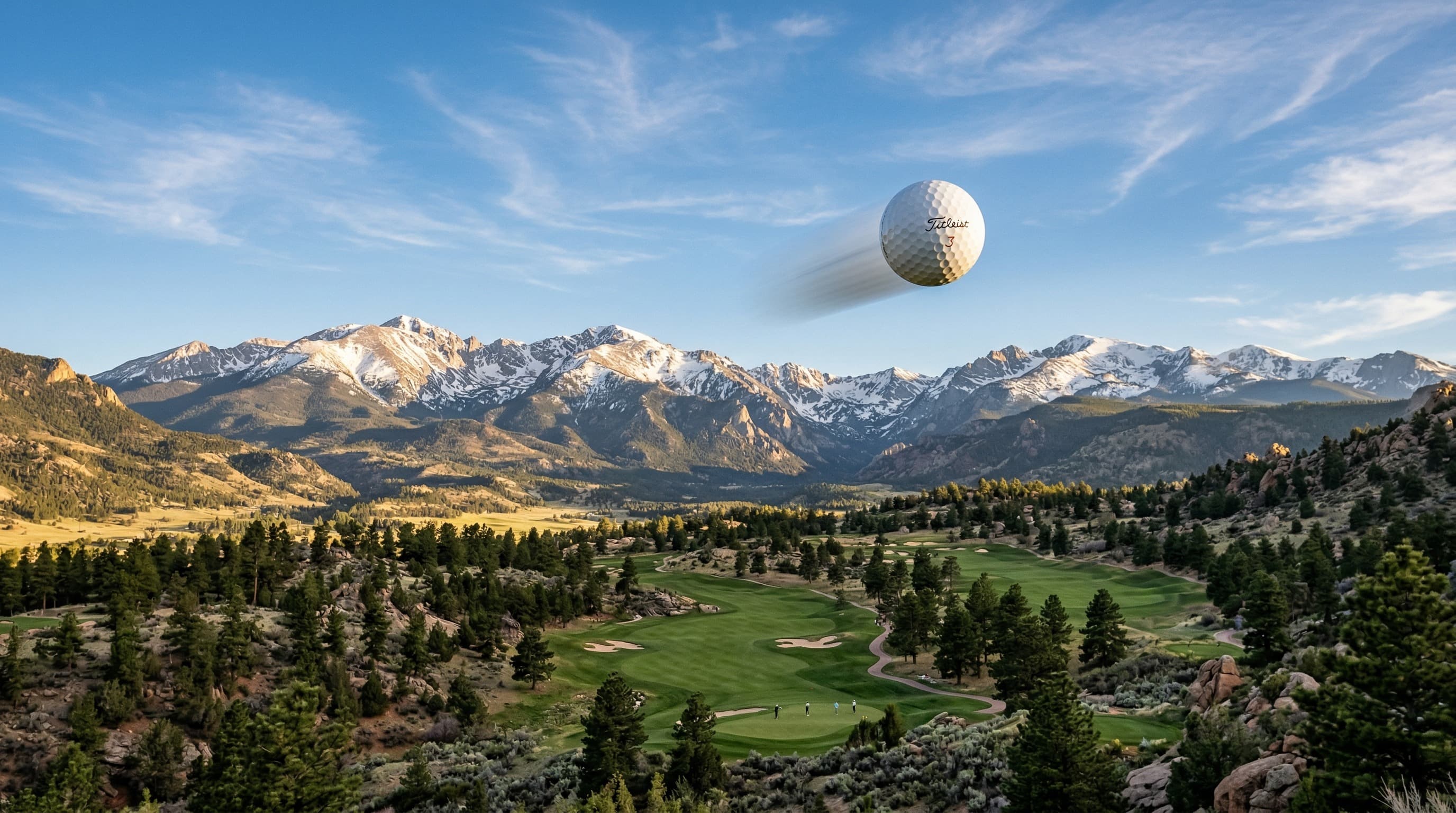
How Altitude Affects Golf Ball Distance: The Science Behind Every Extra Yard
At elevation, your golf ball flies farther than you expect. We break down exactly how altitude changes carry distance, spin rates, and club selection using real data from high-altitude courses across America.
Read Story
How to Read a G-Score: The 0–100 Golf Playability Number, Decoded
A G-Score on this site is a single 0–100 number that tells you whether today is worth tee-up. Here is exactly what each band means, what drives the calculation, and how to use it to plan a round you will actually score on.
Read StoryMinSu Kim
Founder & Golf Data Analyst
MinSu is a data analyst and golfer with 10+ years on the course. He built Golf Weather Score to answer one question: is today a good day to play? He combines weather data, course intelligence, and the proprietary G-Score algorithm to help golfers make smarter decisions.
Every Friday Morning
When Castle Rock Golf Course plays best next weekend.
Friday 6am ET: peak G-Score windows for Castle Rock Golf Course, wind direction by hour, and one gear call. Three minutes to read, save you the round.
One email a week. Unsubscribe in one click.
The Caddie's Oracle
Draw your luck before the tee off