
Caddie's Gear Advisor
Curated for today's 52°F · Clouds
Cold-Weather Performance Layers
Thermal mid-layers that move with your swing
Tour Hand Warmers
Rechargeable warmers trusted by caddies
Thermal Base Layers
Lightweight compression that traps heat
Winter Golf Headwear
Beanies and ear warmers built for the links
Your Golf Trip, Handled
The Ultimate Golf Trip Planner
Everything you need to play Catamount Ranch & Club Golf Course — from booking your flight to checking in course-side.
Course-Side Stays
Luxury hotels, resorts, and stay-and-play packages just minutes from the first tee.
Flights
Compare fares across 700+ airlines for the best route to your tee time.
SUV Rentals for Golf Bags
Spacious vehicles with room for clubs, bags, and your foursome.
Travel Insurance
Coverage for medical, weather delays, and gear at your destination.
Catamount Ranch & Club Golf Course: Course Intelligence
Signature Setup
Catamount Ranch & Club sits in the Yampa Valley just south of Steamboat Springs, Colorado, a Tom Weiskopf design that opened around the turn of the 2000s as the centerpiece of a private mountain community. I want to be straight with you before I go further: I haven't played Catamount as a member's guest, so I'm not going to hand you fabricated pin sheets or pretend I've read these greens at dusk. What I can speak to with real confidence is the weather physics that governs golf at roughly 6,900–7,000 feet in a Colorado mountain valley — and at this elevation, the altitude and the afternoon sky decide more of your score than the slope rating ever will.
This is a par-72 mountain layout that stretches past 7,000 yards from the tips, but the honest framing is that the number on the card and the number you actually play are two different things up here.
Hole-by-Hole Wind & Playing Lines
The prevailing summer pattern is a light morning drainage flow down-valley that swings and strengthens out of the southwest as the day heats up and storms organize over the Park Range.
- The #1-handicap par-4 (~440y card): In the calm of an 8 a.m. round, altitude shaves this to roughly a 410-yard feel — your driver and approach both fly about 7% farther in the thin air. But play it after noon into a 10–15 mph quartering SW wind and that altitude bonus evaporates; it plays every inch of 440. Favor the wide side off the tee and club up on the approach rather than trusting the morning math.
- The downhill par-3 (~175y card): Played across a wetland draw and dropping in elevation, this is a deceiving yardage. Between the altitude carry and the downhill, I'd be thinking closer to a 155–160y club selection on a still morning — but the green is exposed, so a crossing afternoon breeze can add back everything you subtracted.
- A reachable par-5: The temptation at altitude is to go for everything in two. On a cool, dense morning the ball flies shorter than the midday version of the same swing, so respect the front hazard early in the round and let the thin afternoon air be your friend instead.
Green & Fairway Characteristics
The greens here are bentgrass, the standard for cold-season mountain golf, and by late summer dry-down they firm up and roll quick — I'd expect Stimp in the 10–11 range when the surfaces are baked. The fairways are a bluegrass-and-fescue mountain mix that stays receptive in spring but gets firm and fast by August, giving you real rollout off the tee. The routing climbs and falls with the valley terrain, so uphill approaches play longer and downhill ones shorter than your rangefinder admits — the altitude correction and the slope correction stack, and getting both right is the whole game.
Seasonal Weather Pattern
Catamount's season is short and weather-bracketed: realistically May through October, with snow shutting the mountain golf calendar the rest of the year. Summer mornings in the Yampa Valley are genuinely cold — 38–45°F at first light is normal even in July — and that dense air costs you carry until the sun works on it. By early afternoon you're often near 80°F, and the classic Colorado monsoon pattern builds towering thunderstorms over the surrounding peaks from roughly 1 to 4 p.m. in July and August. Unlike a desert or coastal band, the governing risk here isn't heat or sea breeze — it's lightning off the high ground.
Local Play Tips
The single most useful thing I can tell you about high-valley Colorado golf like this: book the earliest tee time you can get, and not for the usual reasons. It isn't just pace of play — it's that the afternoon thunderstorm window is real and dangerous at altitude, and a round that starts at 7:30 a.m. usually finishes before the sky turns. The cold morning carry-loss is a smaller price than getting chased off the 14th hole by lightning. Bring a layer you can shed; the swing from a 40°F tee to an 80°F turn is dramatic.
Pre-Round Weather Workflow
Use the 7-day G-Score the night before and the morning of. For a mountain course like Catamount, you're reading three things in order: the overnight low and dawn temperature (cold, dense air = expect carry loss and frost delays in the shoulder seasons), the windExposure trend through the afternoon (the down-valley to SW swing is what flips your altitude bonus on and off), and — most important in summer — the afternoon convection and thunderstorm probability. If G-Score peaks in the morning and degrades after 1 p.m., that's your signal: take the early tee time, play fast, and let the thin midday air reward the approaches you have left before the storms build.
Related Reading
Before you tee off at Catamount Ranch & Club Golf Course
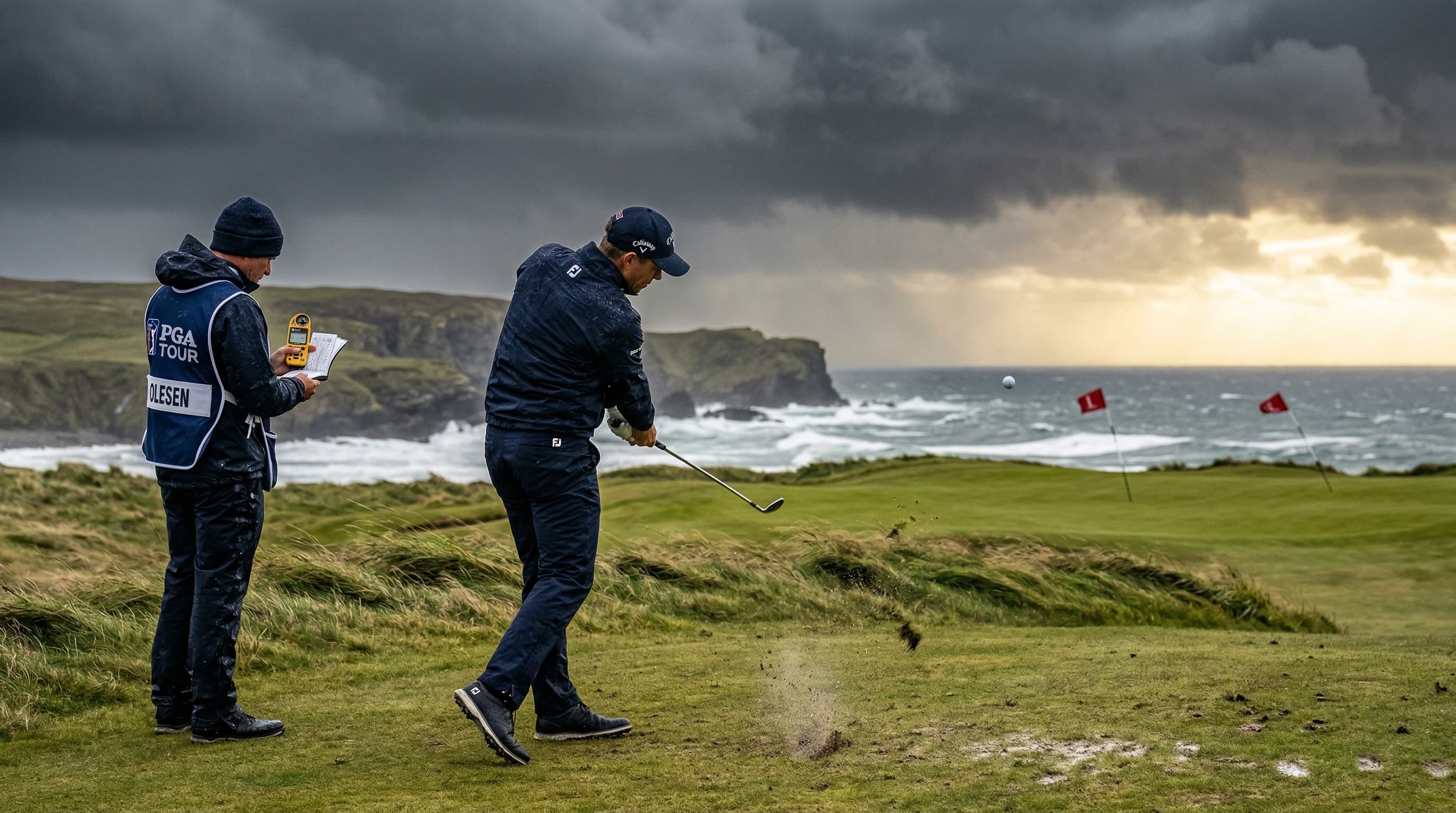
Golf Weather Physics: How Temperature, Altitude, and Humidity Change Ball Flight
Real physics data on how temperature, altitude, humidity, and wind change your golf ball flight — with specific yard adjustments, named course examples, and measured G-Score data from courses we track daily.
Read Story
The May 2026 G-Score Heatmap: Where American Golf Peaks This Spring
May is the most underrated month on the American golf calendar. Five regions hit their annual peak this spring, three turn quietly hostile, and the data tells a clearer story than the brochures. Here is where to play, where to avoid, and how to time your booking window.
Read StoryMinSu Kim
Founder & Golf Data Analyst
MinSu is a data analyst and golfer with 10+ years on the course. He built Golf Weather Score to answer one question: is today a good day to play? He combines weather data, course intelligence, and the proprietary G-Score algorithm to help golfers make smarter decisions.
Every Friday Morning
When Catamount Ranch & Club Golf Course plays best next weekend.
Friday 6am ET: peak G-Score windows for Catamount Ranch & Club Golf Course, wind direction by hour, and one gear call. Three minutes to read, save you the round.
One email a week. Unsubscribe in one click.
The Caddie's Oracle
Draw your luck before the tee off