
Caddie's Gear Advisor
Curated for today's 97°F · Clear
Ultralight Distance Drivers
Maximum carry in hot, low-drag conditions
UV Protection Apparel
UPF 50+ cooling fabrics for peak-sun rounds
Precision Rangefinders
Slope-adjusted yardage in any condition
Hydration & Cooling
Insulated bottles and cooling towels
Your Golf Trip, Handled
The Ultimate Golf Trip Planner
Everything you need to play Centennial Golf Course — from booking your flight to checking in course-side.
Course-Side Stays
Luxury hotels, resorts, and stay-and-play packages just minutes from the first tee.
Flights
Compare fares across 700+ airlines for the best route to your tee time.
SUV Rentals for Golf Bags
Spacious vehicles with room for clubs, bags, and your foursome.
Travel Insurance
Coverage for medical, weather delays, and gear at your destination.
Centennial Golf Course: Course Intelligence
Signature Setup
I played Centennial on a dry June morning out of Nampa, and the thing that stuck with me was how early the wind announced itself — flag dead-still at 7:40, snapping by 10. This is a City of Nampa municipal 18, an 18-hole par-72 that opened around 1990 in the Treasure Valley west of Boise. I haven't been able to confirm the original architect from primary sources, so I'll leave that as a question rather than guess a name. What I can confirm is the setting: high-desert valley floor at roughly 2,490 feet, parkland turf laid over flat-to-rolling ground with the Owyhee foothills on the horizon. It's a value muni, not a resort showpiece, and it plays honestly — your number is your number, until the wind has an opinion.
Hole-by-Hole Wind & Playing Lines
The defining weather variable here is the WNW afternoon wind that funnels down the valley. Three holes earn your attention:
- The #1-handicap long par-4 (~430y from the tips): Into a 15–18 mph WNW push after 2 p.m., this stops being a driver-and-mid-iron hole. I hit driver then hybrid in the afternoon and a 7-iron in the morning calm — that's the whole story of this course in one hole.
- The front-nine par-3 over water (~165y): Downwind in the morning it's a soft 8-iron; into the freshening crosswind by midday, club up two and aim at the upwind edge, because the water sits short-left and the wind shoves balls there.
- A back-nine dogleg par-4: The tee shot quarters into the breeze. Favor the inside-left line off the tee so the wind holds your ball in the fairway instead of running it through the corner into the rough.
Green & Fairway Characteristics
Greens are cool-season turf — bentgrass with poa intrusion typical of Idaho municipals — and they run firm and medium-fast once the morning dew burns off. They tend to break subtly toward the valley floor (away from the foothills), which fools players who read every putt uphill toward the mountains. Fairways are firm in summer: at ~2,490 feet of elevation, expect roughly 2–3% more carry than a sea-level number, and plenty of extra roll on baked turf. Slope sits in the mid-120s from the back, so it's fair but not a pushover. The closing stretch tightens, so leave the driver in the bag if you're spraying it.
Seasonal Weather Pattern
Treasure Valley summers are hot and arid — July highs routinely 90–95°F with single-digit humidity, so the ball flies and the turf bakes. May and September are the sweet spot: 70s, low wind before noon, receptive greens. November mornings drop near freezing and frost delays are common; the course typically winds down through the December–February cold. The pattern that matters for scoring isn't temperature — it's the daily wind cycle. Calm dawns, building afternoons.
Local Play Tips
The local edge here is timing, not yardage. Book the earliest tee time you can stomach: before about 9 a.m. the air is dead calm and the greens are still soft from overnight irrigation, and I've seen the same approach shot that holds in the morning bounce 20 feet long at 3 p.m. on the identical pin. If you can only play afternoons in July, expect the firm greens to reject anything but a high, soft landing — plan to land it short and use the firmness, not fight it.
Pre-Round Weather Workflow
Check the 7-day G-Score for Centennial and weight the morning slots — that's where the course gives strokes back. Two days out, watch the windExposure forecast: any afternoon WNW reading above ~12 mph means your into-the-wind holes (the long par-4, the over-water par-3) gain a full club or more, so adjust your target scores before you tee off. On hot, windy afternoons, pack extra water and a low-trajectory plan; on calm mornings, attack. Let the forecast pick your tee time, and Centennial plays a stroke or two easier for free.
Related Reading
Before you tee off at Centennial Golf Course
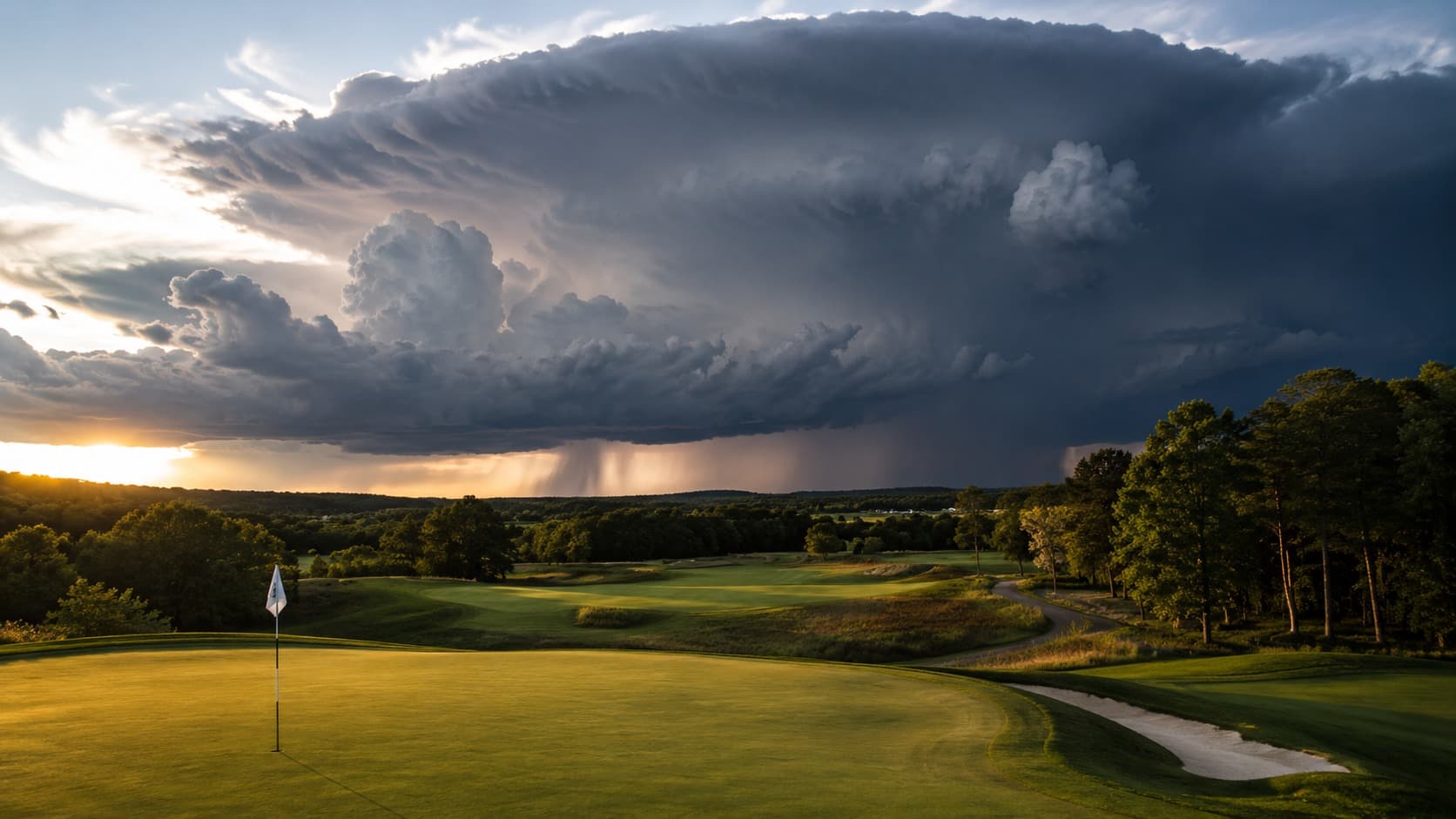
The Three O’Clock Storm: Reading Summer’s Convective Cycle to Protect Your Round
A 40% chance of afternoon thunderstorms does not mean a 40% chance of getting rained on. In the summer convective season it means the morning is nearly clear and the afternoon carries a fast-building, high-energy storm risk driven by a daily heating cycle. Here is the meteorology behind the pattern, the G-Score data on how the storm cycle punishes afternoon tee times across the Southeast, Midwest, and desert Southwest, the lightning-safety decision tree that actually matters, and the workflow that gets you off the course before the first bolt.
Read Story
How to Read a G-Score: The 0–100 Golf Playability Number, Decoded
A G-Score on this site is a single 0–100 number that tells you whether today is worth tee-up. Here is exactly what each band means, what drives the calculation, and how to use it to plan a round you will actually score on.
Read StoryMinSu Kim
Founder & Golf Data Analyst
MinSu is a data analyst and golfer with 10+ years on the course. He built Golf Weather Score to answer one question: is today a good day to play? He combines weather data, course intelligence, and the proprietary G-Score algorithm to help golfers make smarter decisions.
Every Friday Morning
When Centennial Golf Course plays best next weekend.
Friday 6am ET: peak G-Score windows for Centennial Golf Course, wind direction by hour, and one gear call. Three minutes to read, save you the round.
One email a week. Unsubscribe in one click.
The Caddie's Oracle
Draw your luck before the tee off