
Caddie's Gear Advisor
Curated for today's 95°F · Thunderstorm
Storm-Ready Outerwear
Waterproof layers built for 18 holes in the rain
Tour-Grade Umbrellas
68" double-canopy wind-resistant coverage
Wet-Weather Gloves
All-weather grip that performs in the rain
Waterproof Golf Shoes
Keep your feet dry through every fairway
Your Golf Trip, Handled
The Ultimate Golf Trip Planner
Everything you need to play English Turn — from booking your flight to checking in course-side.
Course-Side Stays
Luxury hotels, resorts, and stay-and-play packages just minutes from the first tee.
Flights
Compare fares across 700+ airlines for the best route to your tee time.
SUV Rentals for Golf Bags
Spacious vehicles with room for clubs, bags, and your foursome.
Travel Insurance
Coverage for medical, weather delays, and gear at your destination.
English Turn: Course Intelligence
Jack Nicklaus designed English Turn Golf and Country Club in 1988 on a piece of New Orleans East Bank land along a Mississippi River horseshoe bend, on a property the developers had bought specifically to host a PGA Tour event. The course hosted the Tour's New Orleans stop — under several different sponsor names, including the Freeport McMoRan Classic, the Compaq Classic of New Orleans, and the Zurich Classic — from 1989 through 2004, when the event moved to TPC Louisiana. English Turn produced champions including Mike Sullivan (1989), Nick Price (1993), Davis Love III (1995), and Steve Stricker (2003).
The scorecard reads 7,089 yards from the back markers, par 72, with a slope of 142 and a course rating of 74.8. The four par-3s sit between 168 and 215 yards. The 215-yard sixth is the longest one-shotter and plays directly across one of the property's natural water hazards — the Mississippi River horseshoe means seven of eighteen holes have a meaningful water carry. The four par-5s range from 530 to 595 yards. The 595-yard fifteenth is the longest hole on the card and plays as a three-shot par-5 because the layup zone is bounded by water short and long.
The number-one handicap is the 478-yard fourth — a long par-4 with an approach into a green Nicklaus set on a Mississippi River bluff. The 446-yard second-hardest is the par-4 seventeenth; the 451-yard third-hardest is the par-4 eighth. Three of the top-three are par-4s over 440 yards, which is the slope signal that scoring at English Turn happens on the par-5s and the par-4s are exposure.
The Louisiana Gulf Coast climate keeps English Turn playable year-round, with the prime window running October through May when the humidity drops and the air dries out. The summer New Orleans humidity peaks in July and August; afternoon thunderstorms are a daily occurrence and rounds get suspended frequently. The course is private and access is members-and-guests only.
Related Reading
Before you tee off at English Turn
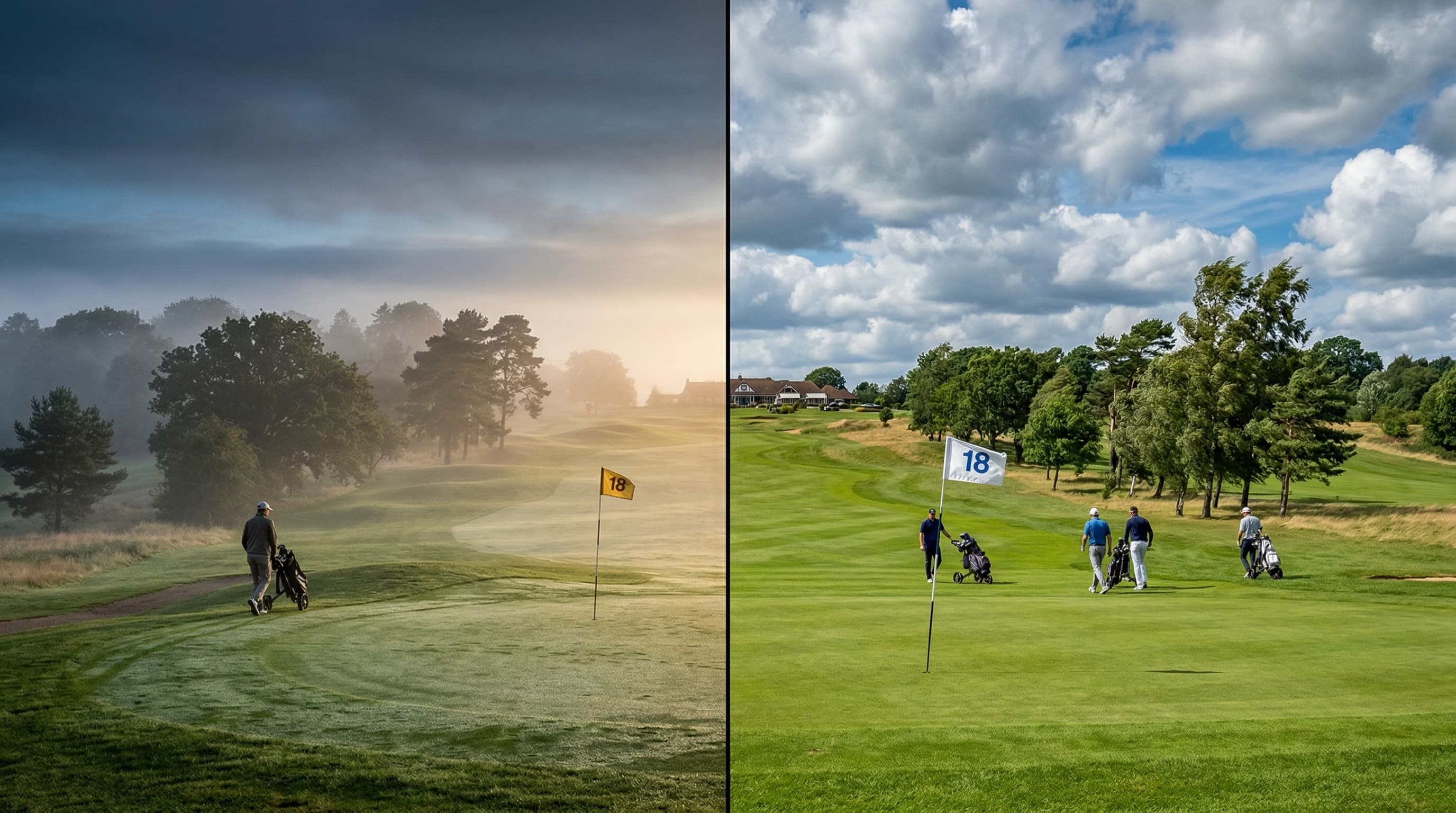
Morning vs Afternoon Tee Times: What Weather Data Reveals About When to Play
Hourly weather data reveals morning tee times score 8-12 G-Score points higher than afternoon slots. Here is what the numbers say about optimal timing.
Read Story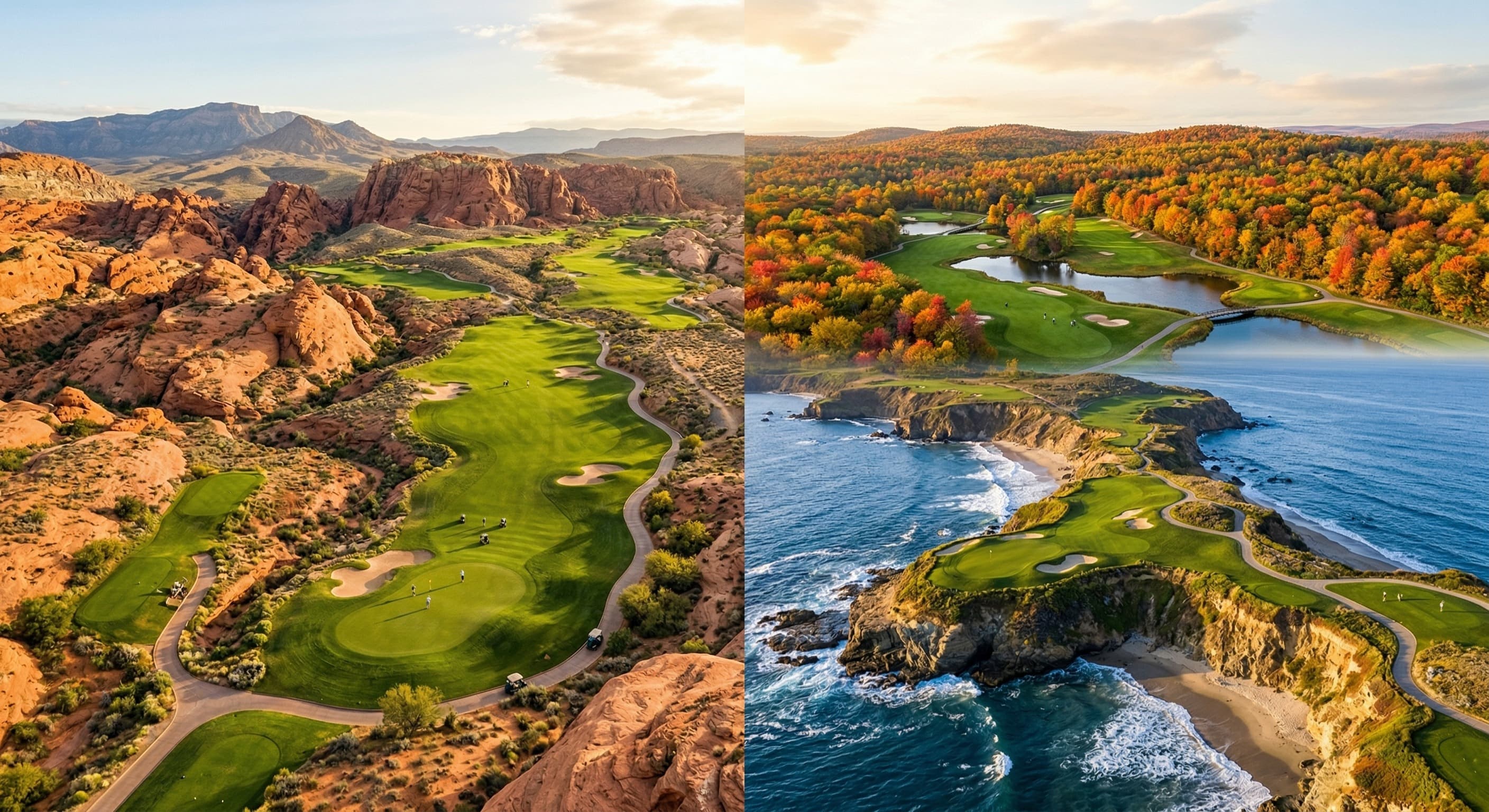
Best Golf Weather by State: Ranking America by Average G-Score
We ranked all 50 US states by average G-Score golf playability. California tops the list, but the results beyond the top five may surprise you.
Read StoryMinSu Kim
Founder & Golf Data Analyst
MinSu is a data analyst and golfer with 10+ years on the course. He built Golf Weather Score to answer one question: is today a good day to play? He combines weather data, course intelligence, and the proprietary G-Score algorithm to help golfers make smarter decisions.
Every Friday Morning
When English Turn plays best next weekend.
Friday 6am ET: peak G-Score windows for English Turn, wind direction by hour, and one gear call. Three minutes to read, save you the round.
One email a week. Unsubscribe in one click.
The Caddie's Oracle
Draw your luck before the tee off