
Caddie's Gear Advisor
Curated for today's 85°F · Clear
Tour-Level Drivers
Engineered for maximum distance and forgiveness
Laser Rangefinders
Pin-seeking technology for precision approaches
Premium Golf Balls
Tour-caliber spin and distance performance
Performance Sunglasses
Polarized lenses optimized for reading greens
Your Golf Trip, Handled
The Ultimate Golf Trip Planner
Everything you need to play Greenwich Country Club — from booking your flight to checking in course-side.
Course-Side Stays
Luxury hotels, resorts, and stay-and-play packages just minutes from the first tee.
Flights
Compare fares across 700+ airlines for the best route to your tee time.
SUV Rentals for Golf Bags
Spacious vehicles with room for clubs, bags, and your foursome.
Travel Insurance
Coverage for medical, weather delays, and gear at your destination.
Greenwich Country Club: Course Intelligence
Signature Setup
The thing you notice first at Greenwich Country Club is the trees. A mid-length par-4 that the scorecard calls reachable narrows, through 130 years of canopy growth, to a corridor barely wider than a fairway bunker is long — and on a still October morning, at maybe 52°F off the first tee, the air is dead enough that the only defense left is your ability to put the tee shot in the right 25 yards.
Greenwich Country Club has operated on its piece of coastal Fairfield County, Connecticut since 1892, which makes it one of the oldest country clubs in the United States and one of the founding institutions of organized American club golf. The original course was laid out in the late 1890s and has been redesigned multiple times since. I want to be straight about the architecture: the club's record does not pin the routing to a single famous signature, so I am not going to attach a name it doesn't carry — what is documented is the founding date, the late-1890s opening, and a layout shaped by generations of revision rather than one designer's master plan. The club is a founding-era member of the Connecticut State Golf Association and has hosted regional and USGA qualifying events across its history.
Hole-by-Hole Wind & Playing Lines
At roughly 6,500 yards and par 70, Greenwich does not beat you with length. It beats you with corridors and wind off the Sound, so direction matters more than the number on the card.
The #1-handicap two-shotter. Into the prevailing SW afternoon sea breeze, treat a card yardage of 150 as a real 165–170. Club up and aim front-center; the upper-130s-slope greens don't hold a chase shot to a back pin.
The tight mid-length par-4s. The defining tee shots here thread a tree gap of about 25–28 yards. A crosswind off the Sound — usually W to SW after midday — pushes a faded drive toward the right tree line. On those holes I'd hit less club off the tee and accept a longer approach rather than gamble a driver into the gap with the wind working.
The exposed par-3s. On the holes that open up above the canopy, the breeze is unfiltered. A calm NNW morning can play a one-shotter a club shorter than the afternoon, when the W/SW flow stands the ball up.
Green & Fairway Characteristics
Greenwich is a bentgrass course — bent fairways and greens — over the firm Fairfield County subsoil, which means the fairways run and the greens stay quick. The slope sits in the upper 130s, steep for a course this short, and that number lives in the green complexes and the trees rather than in raw yardage. The targets are not large, and the mature deciduous canopy has grown into genuinely championship-narrowing dimensions over the club's 130-plus years, so both halves of the course reward a player who flights the ball and keeps it below the hole. Driver is rarely the answer; fairway-finding and an honest first putt are.
Seasonal Weather Pattern
Greenwich sits about a mile north of Long Island Sound, so the maritime influence is real but slightly muted compared with clubs right on the shoreline. The playing season runs April through November, with the firmest conditions in September and October — 50–70°F mornings, running fairways, the steadiest air of the year. Summers (June–August) are humid, often 80–88°F, with softer turf and the deepest rough. Spring is cool and gusty while the Sound is still cold and the land warms faster, which exaggerates the afternoon onshore breeze. The recurring daily pattern, per NOAA's Fairfield County records, is a calm NNW morning giving way to a W/SW sea breeze of roughly 8–14 mph by early afternoon. Frost closes the course through brief winter cold snaps from December into March.
Local Play Tips
Honest limitation first: Greenwich Country Club is private — members and accompanied guests only — and I have not had a tee time there, so the hole specifics above come from the course record, the club's documented history, and from playing the same southwestern-Connecticut / Long Island Sound microclimate at neighboring clubs, not from a personal scorecard at Greenwich itself. What transfers cleanly is this: on a short, tree-lined parkland course, your scoring is decided before you ever look at a green. Stand on each tee and pick the side of the fairway that the day's wind is pushing away from, not toward, the trees. The members' real edge here is the calm morning window — get out before the Sound breeze fills in and the narrow corridors play a full club easier.
Pre-Round Weather Workflow
Use the 7-day G-Score on this page the way I would for any near-shore parkland course. Three days out, check whether your tee window lands before or after the W/SW sea breeze builds off the Sound — because Greenwich is a mile inland the breeze arrives a touch later than at shoreline clubs, but on these tree-lined corridors even 10 mph of crosswind turns a 25-yard gap into a real penalty. The morning of, read the windExposure panel: a W or SW reading means the exposed par-3s and the tight driving holes all firm up and stretch out, so club up and favor the fat side of the green. If the temperature reads below 55°F with overnight rain on the firm Fairfield County subsoil, expect little release — land short, let the bentgrass feed the ball, and keep every approach below the hole.
Related Reading
Before you tee off at Greenwich Country Club
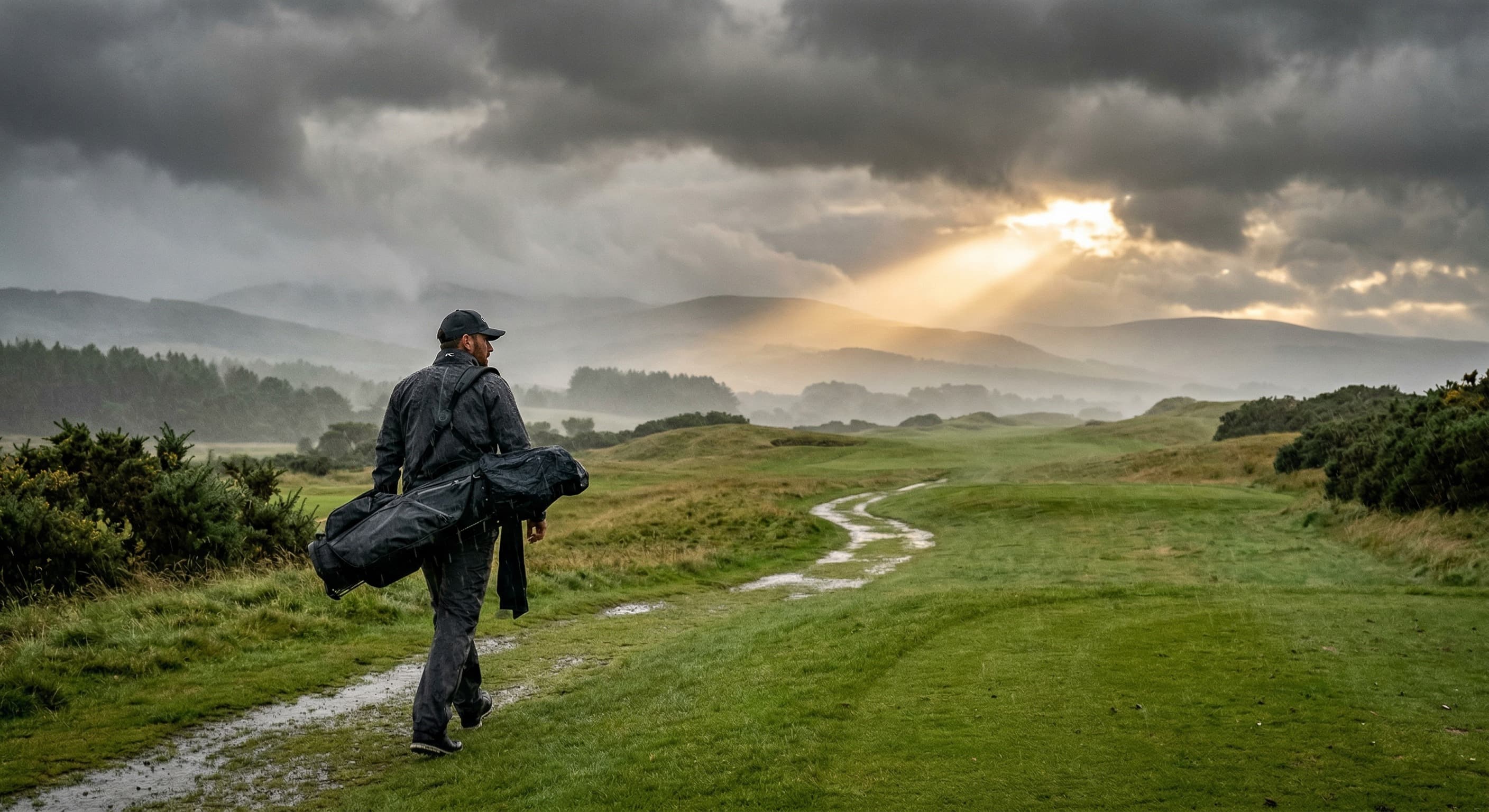
How Rain Probability Affects Your Golf Round: A Weather Data Study
What does '30% chance of rain' really mean for your round? We decode precipitation forecasts and reveal how rain impacts distance, grip, and scoring.
Read Story
Best Golf Weather by State: Ranking America by Average G-Score
We ranked all 50 US states by average G-Score golf playability. California tops the list, but the results beyond the top five may surprise you.
Read StoryMinSu Kim
Founder & Golf Data Analyst
MinSu is a data analyst and golfer with 10+ years on the course. He built Golf Weather Score to answer one question: is today a good day to play? He combines weather data, course intelligence, and the proprietary G-Score algorithm to help golfers make smarter decisions.
Every Friday Morning
When Greenwich Country Club plays best next weekend.
Friday 6am ET: peak G-Score windows for Greenwich Country Club, wind direction by hour, and one gear call. Three minutes to read, save you the round.
One email a week. Unsubscribe in one click.
The Caddie's Oracle
Draw your luck before the tee off