
Caddie's Gear Advisor
Curated for today's 73°F · Clear
Tour-Level Drivers
Engineered for maximum distance and forgiveness
Laser Rangefinders
Pin-seeking technology for precision approaches
Premium Golf Balls
Tour-caliber spin and distance performance
Performance Sunglasses
Polarized lenses optimized for reading greens
Your Golf Trip, Handled
The Ultimate Golf Trip Planner
Everything you need to play Los Angeles Country Club — from booking your flight to checking in course-side.
Best time to golf in CaliforniaCourse-Side Stays
Luxury hotels, resorts, and stay-and-play packages just minutes from the first tee.
Flights
Compare fares across 700+ airlines for the best route to your tee time.
SUV Rentals for Golf Bags
Spacious vehicles with room for clubs, bags, and your foursome.
Travel Insurance
Coverage for medical, weather delays, and gear at your destination.
Los Angeles Country Club: Course Intelligence
Signature Setup
I have not teed it up at LACC — it is one of the most private clubs in America, and I will be honest about that. What I do have is a notebook from walking the grounds as a spectator at the 2023 U.S. Open, standing on the 11th tee under a thick June marine layer at about 64°F, watching balls hang in the gray air over the barranca. That hole tells you what the course is about.
The North Course is George C. Thomas Jr.'s 1921 design, built with construction partner William P. Bell — the same Thomas who routed Riviera and Bel-Air a few miles away. By the 2000s the course had drifted from his intent, so Gil Hanse, Jim Wagner, and Thomas biographer Geoff Shackelford restored it in 2010, reopening the original barrancas and recovering lost green edges. That work paid off in June 2023, when the North hosted its first U.S. Open at par 70 and 7,423 yards. Wyndham Clark won at 10-under 270, edging Rory McIlroy by a single stroke; in round one Rickie Fowler and Xander Schauffele each fired a 62, the lowest round in U.S. Open history.
Hole-by-Hole Wind & Playing Lines
LACC's wind is an afternoon story. Mornings under the marine layer are calm; by early afternoon a steady onshore breeze pushes in off the Pacific basin and the firm greens stop holding.
The 11th, the signature reverse Redan, stretched to roughly 290 yards for the Open — a par-3 that demands a fairway wood or driver. Into even a 10 mph afternoon breeze it becomes a brute; the smart line is short-right, letting the green's reverse slope feed the ball on rather than carrying the front bunkers. The 14th, a par-4 near 470 yards, is the back-nine's hardest examination — into the onshore wind a 165-yard approach plays closer to 185, so aim front-center and take the extra club. By contrast the 15th, a short par-3 of about 120 yards (played as short as 78 yards at the 2017 Walker Cup), is all about the wind on a wedge: in the calm morning it is a flick, but a crossing afternoon gust turns a 9 o'clock pin into a sucker flag.
Green & Fairway Characteristics
The defining feature is the barranca — dry native washes that crisscross the routing and swallow anything bailed away from Thomas's preferred lines. Fairways are kikuyu, a dense, grabby turf that sits the ball up but resists run-out, so carry distances matter more than total. The greens are firm and run toward the canyons rather than toward any single landmark; trust the surveyed slope over the eye. The course has five par-3s ranging from roughly 130 to 290 yards, an unusually wide spread that forces nearly every club in the bag across one round.
Seasonal Weather Pattern
This is coastal Los Angeles, not generic Southern California sun. The dominant variable is the marine layer — "June Gloom" — that blankets west L.A. on summer mornings, holding temperatures in the low-to-mid 60s°F and keeping the air still and damp until it burns off around late morning. Annual rainfall clusters in winter (December–March); summers are nearly bone-dry, which is exactly why the greens firm up so fast once the sun arrives. Highs through the playing year sit mostly in the 65–80°F range, mild by U.S. Open standards.
Local Play Tips
Read the marine layer like a clubbing chart. A soft, gray morning means receptive greens and zero wind — attack pins and trust your carry numbers. Once the layer lifts and the onshore breeze fills in, add roughly half a club to every approach and respect that kikuyu lies near the barranca will not let you flight a low runner out of trouble. The course rewards the player who front-loads aggression into the calm window, the same lesson the 2023 field learned when scoring climbed every afternoon.
Pre-Round Weather Workflow
Check the 7-day G-Score for the L.A. coastal zone the night before and target the earliest slot with the lowest windExposure rating — the marine-layer morning will almost always grade higher than the burned-off afternoon here. If you only have an afternoon window, plan on half a club extra into the 11th and 14th and treat the firm greens as run-off surfaces, not dartboards. For more Southern California coastal timing notes and nearby Thomas designs, see our California golf weather hub.
Course facts confirmed via the 123rd U.S. Open fact sheet (par 70, 7,423 yards; Wyndham Clark over Rory McIlroy by one) and published course history (George C. Thomas Jr. & William P. Bell, 1921; Hanse/Wagner/Shackelford restoration, 2010).
Related Reading
Before you tee off at Los Angeles Country Club
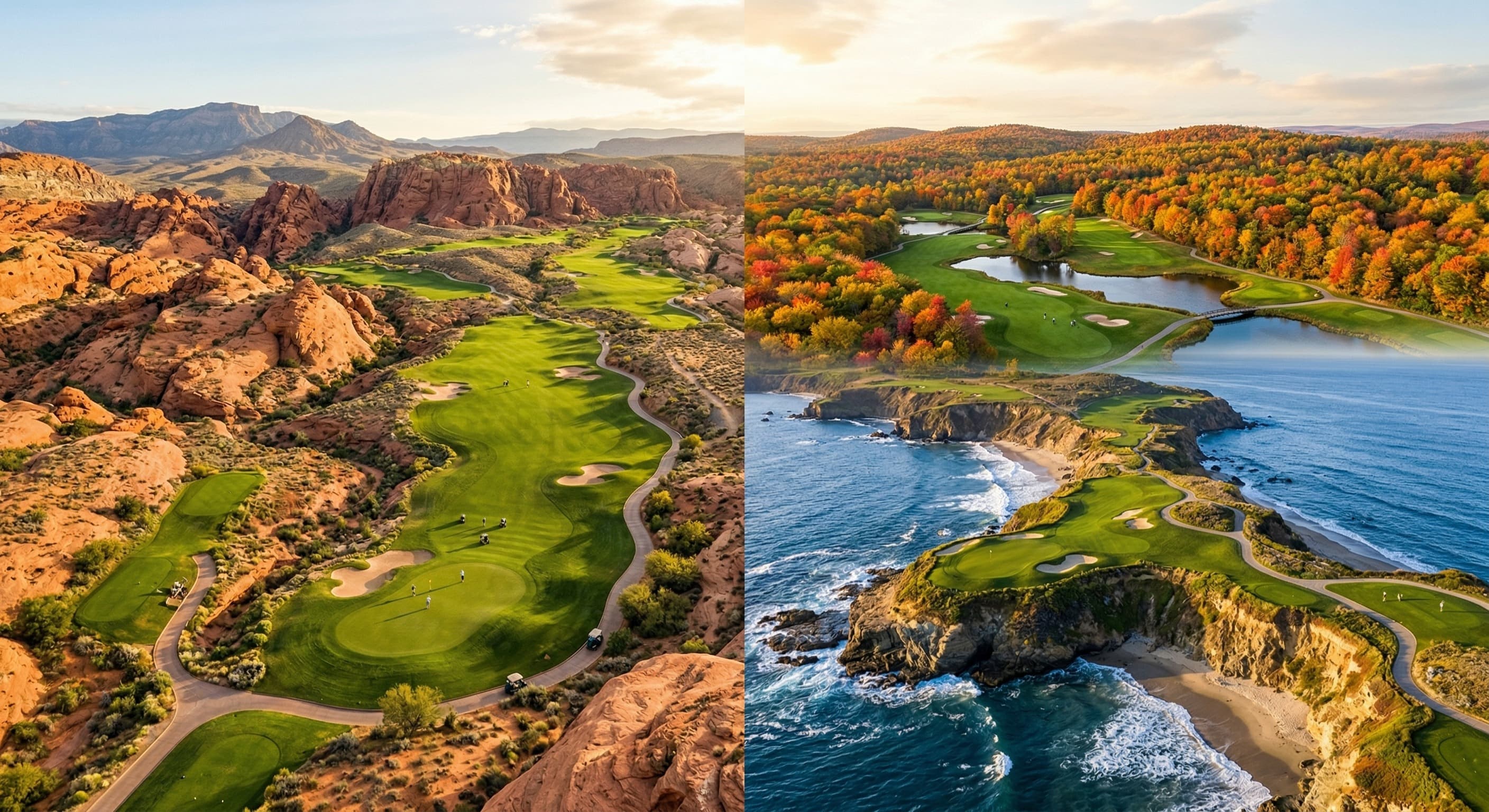
Best Golf Weather by State: Ranking America by Average G-Score
We ranked all 50 US states by average G-Score golf playability. California tops the list, but the results beyond the top five may surprise you.
Read Story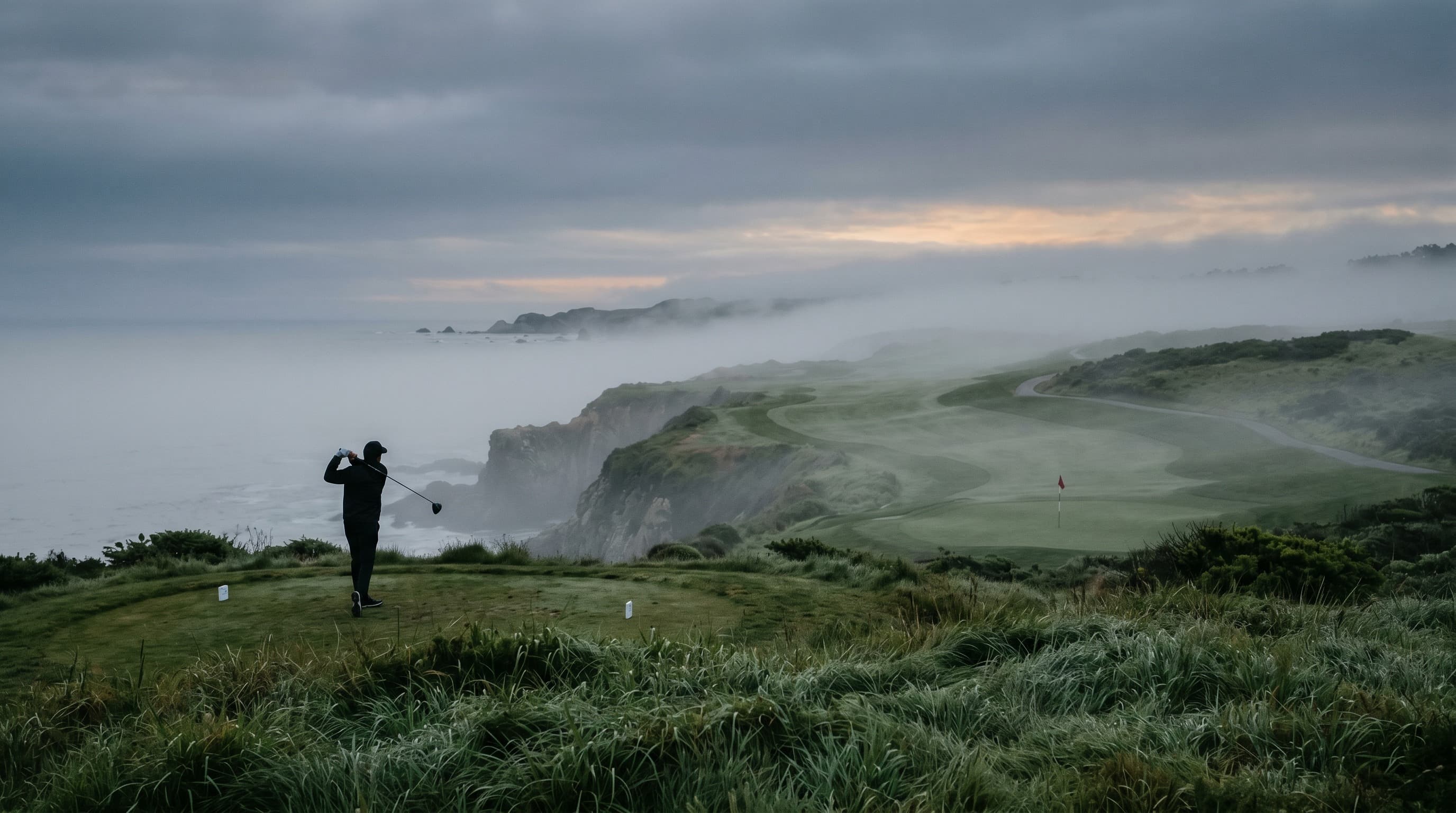
Reading Coastal Wind: How the Marine Layer Reshapes Pebble Beach, Bandon, and the Pacific Coast Game
Coastal golf does not play by inland rules. The marine layer suppresses wind in the morning, then releases it through midday in a thermal cycle that turns a calm 7am tee into a 22mph back nine. Here is the meteorology behind the pattern, the G-Score data that confirms it across the Pacific coast, and the morning workflow that turns the marine layer from a confusion into a competitive advantage.
Read StoryDanorie
Editorial & Data
Golf Weather Score is built by Danorie. We compute the G-Score — our own playability rating — from live NOAA forecasts and published course scorecards, so any US course can be compared on any day with a single number. Methodology and data sources are documented on every page.
Every Friday Morning
When Los Angeles Country Club plays best next weekend.
Friday 6am ET: peak G-Score windows for Los Angeles Country Club, wind direction by hour, and one gear call. Three minutes to read, save you the round.
One email a week. Unsubscribe in one click.
The Caddie's Oracle
Draw your luck before the tee off