
Caddie's Gear Advisor
Curated for today's 82°F · Clear
Tour-Level Drivers
Engineered for maximum distance and forgiveness
Laser Rangefinders
Pin-seeking technology for precision approaches
Premium Golf Balls
Tour-caliber spin and distance performance
Performance Sunglasses
Polarized lenses optimized for reading greens
Your Golf Trip, Handled
The Ultimate Golf Trip Planner
Everything you need to play TPC Las Vegas — from booking your flight to checking in course-side.
Course-Side Stays
Luxury hotels, resorts, and stay-and-play packages just minutes from the first tee.
Flights
Compare fares across 700+ airlines for the best route to your tee time.
SUV Rentals for Golf Bags
Spacious vehicles with room for clubs, bags, and your foursome.
Travel Insurance
Coverage for medical, weather delays, and gear at your destination.
TPC Las Vegas: Course Intelligence
Signature Setup
I played TPC Las Vegas on a dry March morning, 52°F at the 1st tee with Red Rock still in shadow to the west, and the desert had that thin, weightless stillness that makes an 8 a.m. drive feel like it never lands. Three hours later the wind was up and the same course had a different face — and that swing from calm to gusty is the whole story of how to score here.
Bobby Weed built TPC Las Vegas in 1996 with Raymond Floyd consulting as the player's eye, and it opened as "TPC at The Canyons" in the Summerlin foothills on the northwest edge of the valley. It is a public TPC course that sat in the PGA Tour's Las Vegas rotation in the late 1990s. From the back tees it measures roughly 7,063 yards to a par of 71, routed across natural desert washes that cross the fairways and frame nearly every approach.
Hole-by-Hole Wind & Playing Lines
Hole 9 (#1 handicap, par-4, ~446y from the tips). The hole that quietly decides the front nine while everyone is still talking about the views. It plays into the prevailing afternoon SW wind off the Spring Mountains, and a desert wash guards the left side of the landing area. Aim right-center off the tee to take the arroyo out of play, and accept the middle of the green — into that wind a long approach drifts and a missed green short-sides you fast.
Hole 17 (par-3, ~198y). The signature shot: a long iron carried entirely over a desert wash to a green pushed back against the mountains. There is nothing short of the green but native sand and scrub, so the carry number is the only number that matters. In a crossing breeze I take one more club and start it at the fat of the green — bailing right is a far easier up-and-down than the wash short and left.
Hole 18 (par-4). A closing two-shotter where the afternoon wind usually quarters across and slightly into you. The desert pinches both sides of the fairway, so this is a fairway-finder off the tee, not a hero driver — a clean tee ball leaves a mid-iron in, and a dry par here is a good finish.
Green & Fairway Characteristics
Winter rye keeps the Bermuda fairways tight and green from October through April; out of season the Bermuda firms and the dry air lets the ball run out a long way. The bentgrass greens play firm, pitched with a subtle desert tilt that reads truer in flat morning light than under harsh midday glare, and roll around 11 on the Stimp when fully conditioned, with slope into the upper-130s from the back. The defining feature is the desert washes — several holes demand a forced carry off the tee or on the approach — so position trumps raw length, and the inward nine meets the prevailing wind more often than the front. Into that wind a low, running approach holds these firm greens where a high one gets knocked down into the scrub short.
Seasonal Weather Pattern
Lead with the Mojave: June through September is brutal desert heat, highs regularly over 105°F with single-digit humidity that turns any afternoon round into an endurance test. That extreme is why Las Vegas golf runs inverse to most of the country — November through April is the peak, daytime highs in a comfortable 60–72°F band and mornings that start cool and dead calm. Spring brings the wind, with March and April afternoons routinely throwing 15–25 mph gusts off the Spring Mountains, the single biggest scoring variable here. NOAA puts the valley's diurnal swing at 25–30°F between a winter dawn and mid-afternoon, so the tee time you pick reshapes the course as much as the wind does. I've only had this course in spring, so I won't pretend to know how the greens hold through a peak-summer afternoon — that read is from the record, not my own round.
Local Play Tips
One thing the yardage book won't tell you: at roughly 2,800 feet of elevation the ball carries noticeably farther than it does at sea level, and on a warm, dry afternoon the thin air adds even more. I club down about half a club on full shots once the temperature climbs past 80°F, and I trust the firmness of the landing area more than the raw carry number — the desert washes punish a shot that flies one club too far just as badly as one that comes up short. I'll be honest about the limit of my notes: I've only played here in spring, so I can't speak to how the greens hold in the dead heat of July, when the forecast itself tells you to take the earliest slot you can get.
Pre-Round Weather Workflow
At TPC Las Vegas the 7-day G-Score on this page hinges on one timing question: does your slot beat the late-morning Mojave wind? Settle that three days out, because the calm-versus-gusty gap swings the score 8–12 points. On the day, let the windExposure direction set the strategy — a SW reading stiffens the long par-4 9th, the 17th carry, and the closing 18th together, so play right-side targets off the tee and add a club on every forced carry over a wash. Then dial for heat: a high over 85°F means the thin desert air carries the ball farther, so take one less club than the yardage prints; a high over 100°F means move to the first wave and pack more water than you think you'll need.
Related Reading
Before you tee off at TPC Las Vegas
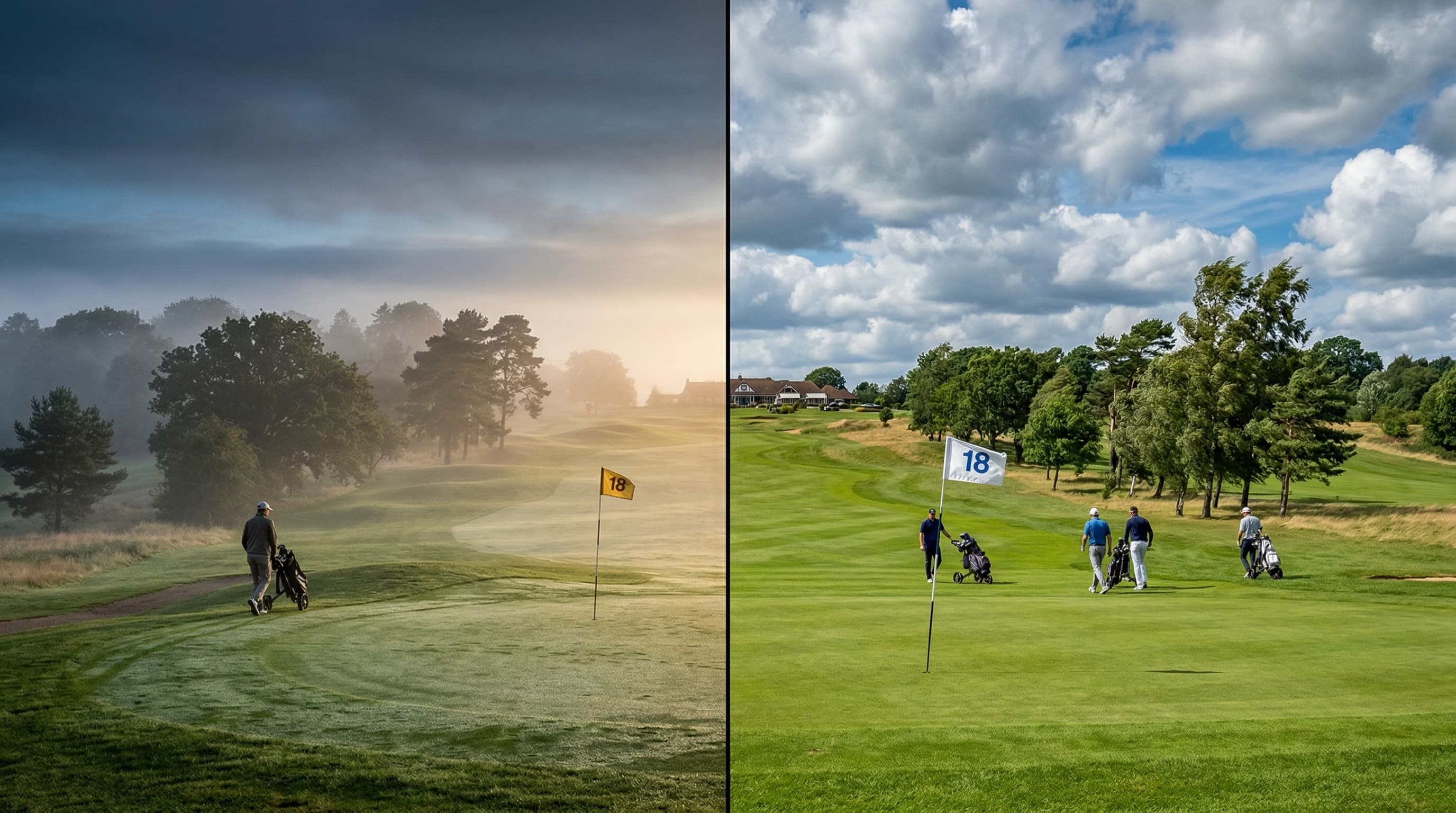
Morning vs Afternoon Tee Times: What Weather Data Reveals About When to Play
Hourly weather data reveals morning tee times score 8-12 G-Score points higher than afternoon slots. Here is what the numbers say about optimal timing.
Read Story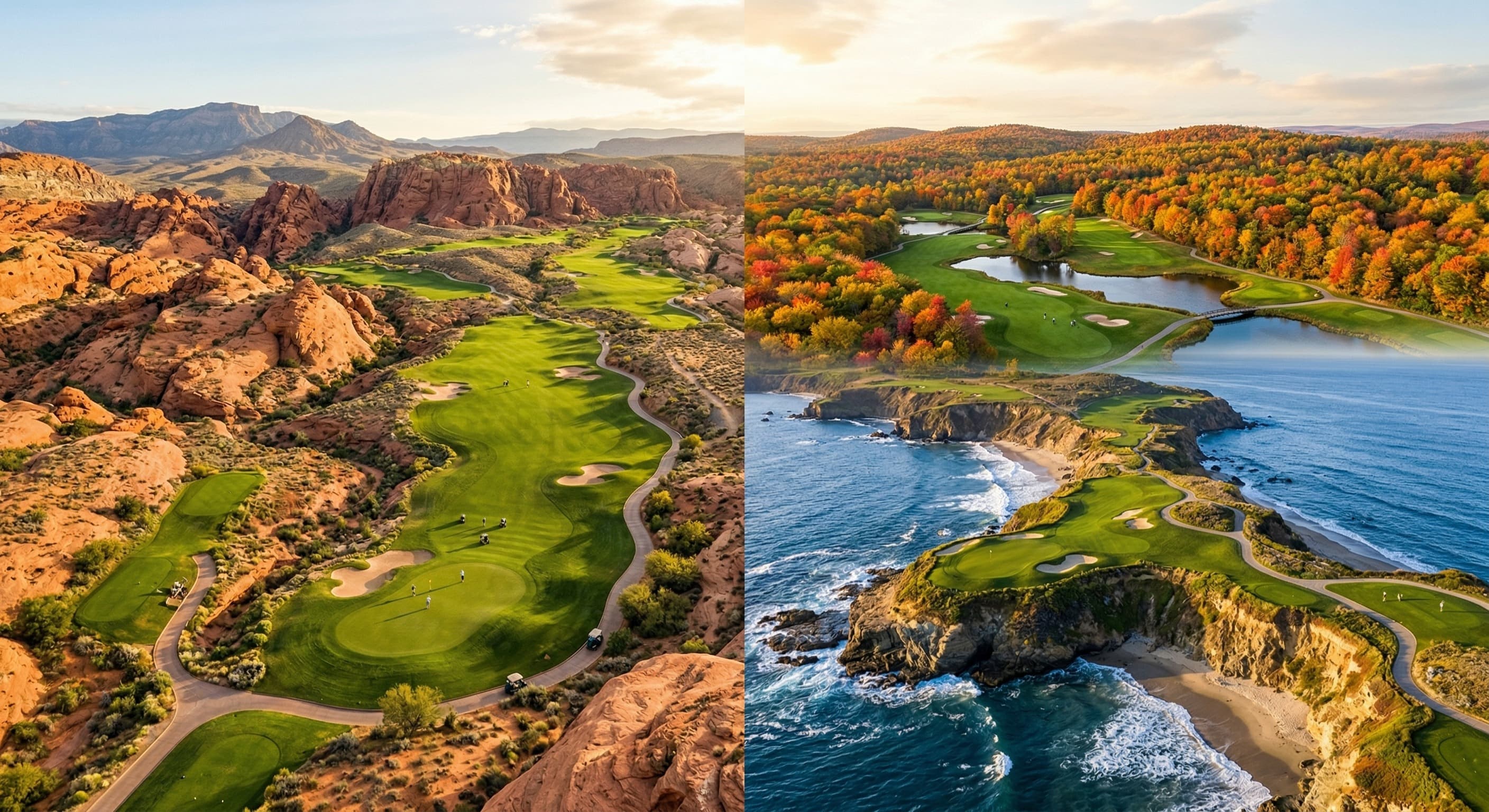
Best Golf Weather by State: Ranking America by Average G-Score
We ranked all 50 US states by average G-Score golf playability. California tops the list, but the results beyond the top five may surprise you.
Read StoryMinSu Kim
Founder & Golf Data Analyst
MinSu is a data analyst and golfer with 10+ years on the course. He built Golf Weather Score to answer one question: is today a good day to play? He combines weather data, course intelligence, and the proprietary G-Score algorithm to help golfers make smarter decisions.
Every Friday Morning
When TPC Las Vegas plays best next weekend.
Friday 6am ET: peak G-Score windows for TPC Las Vegas, wind direction by hour, and one gear call. Three minutes to read, save you the round.
One email a week. Unsubscribe in one click.
The Caddie's Oracle
Draw your luck before the tee off