
Caddie's Gear Advisor
Curated for today's 43°F · Clear
Cold-Weather Performance Layers
Thermal mid-layers that move with your swing
Tour Hand Warmers
Rechargeable warmers trusted by caddies
Thermal Base Layers
Lightweight compression that traps heat
Winter Golf Headwear
Beanies and ear warmers built for the links
Your Golf Trip, Handled
The Ultimate Golf Trip Planner
Everything you need to play TPC of Myrtle Beach — from booking your flight to checking in course-side.
Best time to golf in South CarolinaCourse-Side Stays
Luxury hotels, resorts, and stay-and-play packages just minutes from the first tee.
Flights
Compare fares across 700+ airlines for the best route to your tee time.
SUV Rentals for Golf Bags
Spacious vehicles with room for clubs, bags, and your foursome.
Travel Insurance
Coverage for medical, weather delays, and gear at your destination.
TPC of Myrtle Beach: Course Intelligence
Signature Setup
The 13th at TPC Myrtle Beach looks like a routine short iron until you stand on the tee and feel the breeze coming off the marsh behind the green. I played it on a March morning, 54°F at 7:30 a.m. with my hands stiff in the cold and the air dead calm — the easiest version of that hole I'll ever see. Two hours later the same shot would have been a club-and-a-half conversation.
TPC of Myrtle Beach was designed by Tom Fazio with tour player Lanny Wadkins consulting on shot values, and it opened in 1998 in Murrells Inlet, South Carolina, just south of the Grand Strand. It plays to a par of 72 at roughly 6,950 yards from the Wadkins tees. The course hosted the Senior PGA Tour Championship in 2000 and 2001, and it now runs the Dustin Johnson World Junior Golf Championship each year — Johnson grew up playing this stretch of South Carolina coast.
Hole-by-Hole Wind & Playing Lines
Hole 18 (par-4, ~440y). The closing hole stretches past its yardage into the prevailing SW sea-breeze flow. It's driver up the right, then a controlled second — lay back to a full wedge rather than forcing a long iron over the greenside hazard, and a par here feels earned.
Hole 13 (par-3, 200y). The signature one-shotter across water to a peninsula green. At dawn it's a stock long iron; once the onshore E/SE breeze builds it plays a full club-and-a-half longer and pushes anything weak into the hazard short. Take the extra club, aim back-center, and ignore a front pin.
Hole 6 (par-4, 420y). A subtle dogleg the scorecard underrates. A crossing NE wind off the Atlantic — common behind a spring cold front — shoves the tee shot toward the right tree line, so favor the left-center off the tee and accept a longer approach over a short-side miss.
Green & Fairway Characteristics
Champion Bermuda greens, regrassed to keep speed and firmness through the Carolina heat, run quick and true under gentle Fazio contouring rather than wild tiers. The Bermuda fairways carry winter ryegrass, so a dewy spring morning leaves them receptive while a baked summer afternoon adds noticeable roll. Slope sits in the low-to-mid 130s from the Wadkins tees. This is classic Lowcountry parkland — flat ground, mature pines, water and wetland on roughly a third of the holes — so wind and turf firmness, not elevation, set the strategy. On an exposed coastal routing, the percentage approach into the sea breeze is a flighted, lower ball; loft a high one and the wind will swat it down short of the green.
Seasonal Weather Pattern
The fact that defines this coast is Atlantic humidity, and Myrtle Beach golf peaks in spring around it: March through May brings highs in the 70s°F, lower humidity, and the firmest turf of the year — the packed Grand Strand tee sheets in those months are no accident. Summer turns hot and sticky, July highs near 90°F, dewpoints in the 70s, and near-daily afternoon thunderstorms rolling in off the ocean. Fall, late September into October, is the quieter sweet spot with stable air. Winter plays mild but raw on the leading edge of a cold snap, January mornings occasionally near 38°F before climbing to the upper 50s. NOAA marks summer as the wettest, most storm-prone window for the area, so radar timing matters as much as wind from June through August. I played here in cool spring, not the dead heat — so the summer-afternoon read is from the record, not my own scorecard.
Local Play Tips
Here's what the yardage book won't tell you: this course is defined less by its hazards than by when the Atlantic sea breeze arrives. On a still dawn the layout is gettable; by 11 a.m. an onshore breeze of 10–15 mph reshapes every exposed approach, lengthening the water carries on 13 and 18 and adding cross-wind to the back nine. I played it in early spring with calm morning air, so I lean on historical conditions for the dead-summer afternoons — I haven't teed it up here in July heat — but the pattern is consistent up and down the Strand: the morning course and the afternoon course are not the same place.
Pre-Round Weather Workflow
On an exposed Lowcountry routing, the 7-day G-Score on this page is really asking one thing: does your tee time beat the mid-morning sea breeze? Settle it three days out — that call alone is worth 8–12 points here. The morning of, the windExposure direction sets the plan: an E/SE onshore breeze stretches the water carries on the 13th and 18th, while a post-front NE wind crosses the front nine and shoves the 6th tee shot right. Through the summer storm season, read the radar timing as closely as the wind speed; a first-wave slot is your best defense against both the afternoon cells and the breeze that turns this Fazio layout from gettable to a grind.
Related Reading
Before you tee off at TPC of Myrtle Beach

Best Golf Weather by State: Ranking America by Average G-Score
We ranked all 50 US states by average G-Score golf playability. California tops the list, but the results beyond the top five may surprise you.
Read Story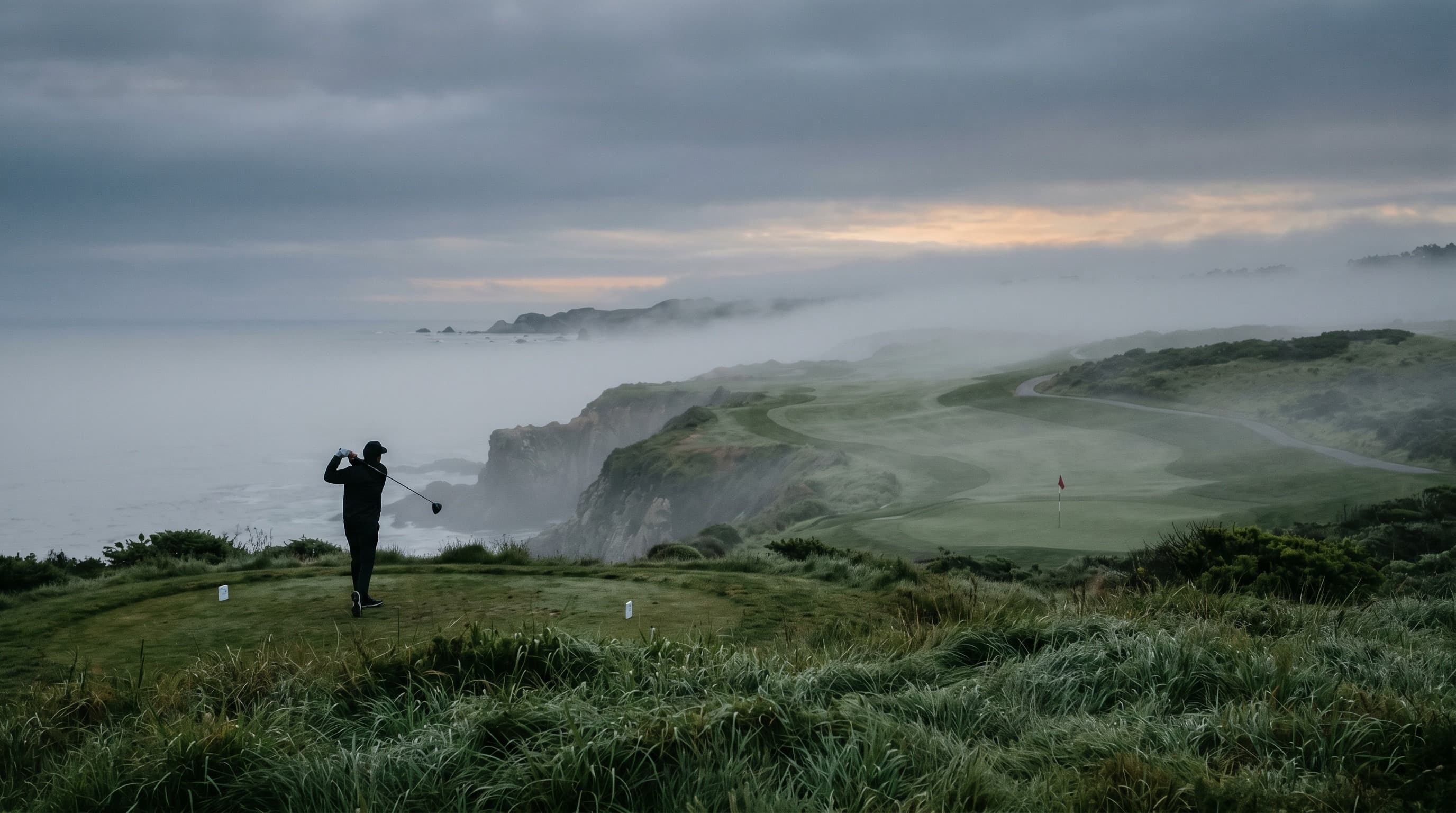
Reading Coastal Wind: How the Marine Layer Reshapes Pebble Beach, Bandon, and the Pacific Coast Game
Coastal golf does not play by inland rules. The marine layer suppresses wind in the morning, then releases it through midday in a thermal cycle that turns a calm 7am tee into a 22mph back nine. Here is the meteorology behind the pattern, the G-Score data that confirms it across the Pacific coast, and the morning workflow that turns the marine layer from a confusion into a competitive advantage.
Read StoryDanorie
Editorial & Data
Golf Weather Score is built by Danorie. We compute the G-Score — our own playability rating — from NOAA forecasts and published course scorecards, so any US course can be compared on any day with a single number. Methodology and data sources are documented on every page.
Every Friday Morning
When TPC of Myrtle Beach plays best next weekend.
Friday 6am ET: peak G-Score windows for TPC of Myrtle Beach, wind direction by hour, and one gear call. Three minutes to read, save you the round.
One email a week. Unsubscribe in one click.
The Caddie's Oracle
Draw your luck before the tee off