
Caddie's Gear Advisor
Curated for today's 53°F · Clouds
Cold-Weather Performance Layers
Thermal mid-layers that move with your swing
Tour Hand Warmers
Rechargeable warmers trusted by caddies
Thermal Base Layers
Lightweight compression that traps heat
Winter Golf Headwear
Beanies and ear warmers built for the links
Your Golf Trip, Handled
The Ultimate Golf Trip Planner
Everything you need to play Winged Foot Golf Club — from booking your flight to checking in course-side.
Course-Side Stays
Luxury hotels, resorts, and stay-and-play packages just minutes from the first tee.
Flights
Compare fares across 700+ airlines for the best route to your tee time.
SUV Rentals for Golf Bags
Spacious vehicles with room for clubs, bags, and your foursome.
Travel Insurance
Coverage for medical, weather delays, and gear at your destination.
Winged Foot Golf Club: Course Intelligence
Signature Setup
The 10th tee at Winged Foot West gives you a clear downhill look and then quietly dares you. I walked the West Course inside the ropes during the 2020 U.S. Open — a gray September morning in Mamaroneck, 61°F at 8 a.m., the Long Island Sound air still heavy — and watched tour pros bail right of that green all day rather than trust a 188-yard 6-iron to a crown that sheds anything slightly off.
A.W. Tillinghast built both the West and East Courses here in 1923, in Westchester County just north of New York City. The West is one of the great U.S. Open venues: 1929 (Bobby Jones), 1959 (Billy Casper), the 1974 "Massacre at Winged Foot" where Hale Irwin won at +7 (287), 1984 (Fuzzy Zoeller over Greg Norman in a playoff), 2006 (Geoff Ogilvy at +5), and 2020, where Bryson DeChambeau was the only player to finish under par at -6. It also hosted the 1997 PGA Championship.
Hole-by-Hole Wind & Playing Lines
Hole 18 (par-4 ~469y). The hardest finisher in the Open rotation outside of Oakmont. The green is crowned and falls off on all sides. On W/SW afternoon winds — the prevailing pattern off the Sound — a mid-iron approach won't bite. Favor front-center, leave it below the hole. Short-side right is where Phil Mickelson made the double bogey that cost him the 2006 Open.
Hole 10 (signature par-3, ~188y). Downhill, but deceptive: the elevation eats roughly a club, so the true number can play 175. Into a cool NNW morning breeze it stretches back toward a full 188. Miss the crowned green and you are chipping back up a false front from a tight lie — bogey territory. Aim at the center, never the flag.
Hole 1 (par-4 ~450y). A brutal opener. Tillinghast's bunkers pinch the landing zone, and into a SW wind the green firms fastest of any on the front nine. Club up and accept the long putt rather than spinning back off the front.
Green & Fairway Characteristics
The defining feature of West is the greens: bentgrass and Poa annua, severely crowned and pear-shaped, with run-offs on every side. For the 2020 Open they ran near 13 on the Stimp and rejected approaches that landed even 15 feet off-target — the ball trickling 40 feet down a false front. This is why DeChambeau's bomb-and-wedge plan worked: from short range he could fly the ball high enough to stop it; everyone hitting long irons watched balls release off the edges. Fairways are tight bluegrass/rye corridors squeezed by deep, flashed Tillinghast bunkering. West measured ~7,477 yards to a par of 70 in 2020. There is no easy half of the golf course.
Seasonal Weather Pattern
Winged Foot sits about a mile inland from Long Island Sound in a humid continental zone. Summers (June–August) run warm and sticky, often 80–88°F with afternoon thunderstorms and softer turf — the rough grows thickest in this window. The prime playing season is September–October: crisp 55–72°F mornings, firm greens, and the calmest air of the year, which is precisely why the USGA staged the 2020 Open in September. The Sound drives a recurring sea-breeze effect — mornings are typically calm out of the NNW, then a W/SW breeze builds through the afternoon, commonly 8–14 mph per NOAA's Westchester-area records. The course closes under winter frost from December into March.
Local Play Tips
Honest limitation first: I have not had a tee time at Winged Foot — it is a private club, member-or-guest only — so these lines come from walking the 2020 Open and from the historical record, not from a personal scorecard. The thing no yardage book conveys: you must play to land short of every flag, not at it. The crowns mean a ball that lands pin-high but a few yards wide will feed away from you, while a ball landing a touch short funnels toward the heart of the green. Train your eye to ignore the flag and pick the fattest landing slope. Get greedy here and the run-offs turn every missed green into an up-and-down scramble from a downhill lie.
Pre-Round Weather Workflow
Use the 7-day G-Score on this page the way I would here. Three days out, check whether your tee window lands before or after the afternoon W/SW sea breeze builds off the Sound — on a 7,477-yard par 70 with crowned greens, that single factor swings the score several strokes. The morning of, read the windExposure panel: a W or SW reading means the 1st, 10th, and 18th all firm up and play into the breeze, so club up and aim center-green on every approach. If the temperature reads below 55°F with overnight rain, expect almost no release into the crowns — take an extra club, land short of the flags, and let the green's slope, not your spin, bring the ball toward the hole.
Related Reading
Before you tee off at Winged Foot Golf Club

Build More Swing Speed: The Science of Biomechanics, Training, and Nutrition for Distance
Real biomechanics research, named trainers, and specific data behind building lasting clubhead speed safely through science-backed protocols.
Read Story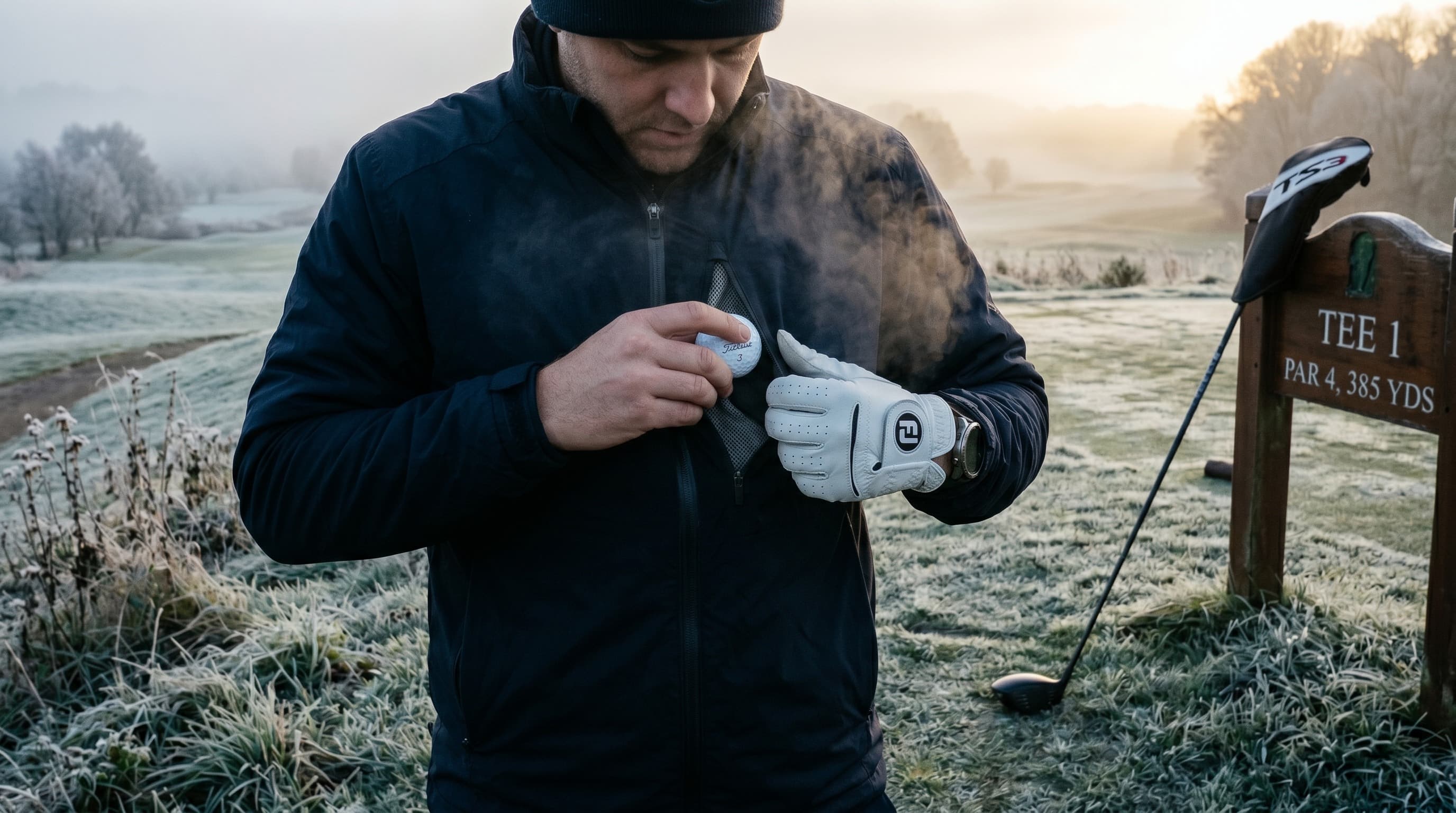
How Cold Weather Steals Distance: The Ball Compression Physics Every Golfer Should Know
Every 10°F drop costs the average golfer two to four yards of driver carry. Here is the physics — ball compression, air density, muscle temperature — and the field data we pulled from G-Score-monitored cold rounds to show exactly how distance loss compounds, and how to compensate without changing your swing.
Read StoryDanorie
Editorial & Data
Golf Weather Score is built by Danorie. We compute the G-Score — our own playability rating — from live NOAA forecasts and published course scorecards, so any US course can be compared on any day with a single number. Methodology and data sources are documented on every page.
Every Friday Morning
When Winged Foot Golf Club plays best next weekend.
Friday 6am ET: peak G-Score windows for Winged Foot Golf Club, wind direction by hour, and one gear call. Three minutes to read, save you the round.
One email a week. Unsubscribe in one click.
The Caddie's Oracle
Draw your luck before the tee off