
Caddie's Gear Advisor
Curated for today's 83°F · Thunderstorm
Storm-Ready Outerwear
Waterproof layers built for 18 holes in the rain
Tour-Grade Umbrellas
68" double-canopy wind-resistant coverage
Wet-Weather Gloves
All-weather grip that performs in the rain
Waterproof Golf Shoes
Keep your feet dry through every fairway
Your Golf Trip, Handled
The Ultimate Golf Trip Planner
Everything you need to play Adams Pointe Golf Course — from booking your flight to checking in course-side.
Course-Side Stays
Luxury hotels, resorts, and stay-and-play packages just minutes from the first tee.
Flights
Compare fares across 700+ airlines for the best route to your tee time.
SUV Rentals for Golf Bags
Spacious vehicles with room for clubs, bags, and your foursome.
Travel Insurance
Coverage for medical, weather delays, and gear at your destination.
Adams Pointe Golf Course: Course Intelligence
Signature Setup
Adams Pointe Golf Club sits in Blue Springs, Missouri, on the eastern edge of the Kansas City metro. Donald Sechrest designed it and it opened in 1998 — a public, par-72 layout that stretches to 6,938 yards from the tips with a 73.8 course rating and a slope of 131. The routing has two distinct personalities: the front nine is carved through forest and wetland, where forced carries and tight tree lines do the defending, and the back nine opens up into links-style ground with real elevation change and almost no shelter from the wind. I haven't played Adams Pointe in midsummer myself, so the hole-level reads below lean on the scorecard, the published ratings, and what Kansas City wind does to a golf ball — not on a fabricated round.
Hole-by-Hole Wind & Playing Lines
The two nines ask for opposite strategies, and the wind decides which one hurts more on a given morning.
On the front, the danger is the forced carry over wetland, and wind direction matters more than wind speed. Into a SSW summer breeze — the prevailing Kansas City flow from June through August — a 150-yard wetland carry plays closer to 165–170. The miss that gets punished is the layup that comes up short into the marsh, so club up and accept the long putt over the wet bogey.
On the back, the links holes have no trees to break the wind. A NNW autumn wind (common Oct–Nov) quarters across the open ground and pushes left-to-right tee shots toward trouble; aim up the left edge and let it ride back. The elevation changes on this nine also stack with the wind — a downhill, downwind approach can play two clubs shorter than the number, which is exactly where most golfers fly the green.
Green & Fairway Characteristics
The greens and fairways are both bentgrass, which is the detail that should change how you plan a summer round here. Bentgrass is a cool-season grass, so in the July–August Missouri heat the greens are syringed and tend to hold approaches in the morning, then firm up as the day bakes them. The slope of 131 and 73.8 rating tell you the course defends par through length and positioning rather than tricked-up green complexes. With bentgrass fairways, the ball sits up cleanly in spring and fall; in peak summer the turf can get stressed and lies tighten, so I'd favor a sweeping iron over a steep, ball-first strike on the firmest afternoons.
Seasonal Weather Pattern
Blue Springs has a true continental climate, and Adams Pointe plays like four different courses across the year. July highs sit around 89–90°F with dew points in the low 70s — humid, heavy air that kills a bit of carry and makes the bentgrass greens softest at dawn. May and September are the sweet spots: highs in the mid-70s, lower humidity, and the back-nine links ground at its firmest and most playable. November brings the NNW wind and highs in the low 50s, and by January the course is often frozen or closed, with highs near 38°F. The single most useful number for planning: KC summer wind routinely gusts 15–20 mph by early afternoon, which is why the open back nine is a morning proposition.
Local Play Tips
Two things that don't show up on the scorecard. First, the front-to-back contrast means your warm-up should be a high, soft approach shot for the tree-lined front, but your mid-round adjustment is a lower, wind-cheating ball flight for the exposed back — bring both. Second, because the greens are bentgrass in a transition-zone summer, an early tee time isn't just about beating the crowd; it's about catching the greens while they still hold and before the afternoon wind makes the back nine a guessing game.
Pre-Round Weather Workflow
Before you book a tee time at Adams Pointe, pull the 7-day G-Score and read it against this course's geography. Check the windExposure rating specifically for an afternoon slot — the open back nine is where wind does its damage, so a high afternoon wind reading should push you to a morning tee time. In July and August, target a sub-9 a.m. start to play the bentgrass greens while they're receptive and the air is calm. In spring and fall, an afternoon round is fine and often better, since the wind is milder and the firmer turf rewards the extra roll. Let the G-Score, not the calendar, set your start time.
Sources: GolfLink, GolfPass, Adams Pointe Golf Club official site, GolfDigest. Kansas City climate normals per NOAA.
Related Reading
Before you tee off at Adams Pointe Golf Course

Best Golf Weather by State: Ranking America by Average G-Score
We ranked all 50 US states by average G-Score golf playability. California tops the list, but the results beyond the top five may surprise you.
Read Story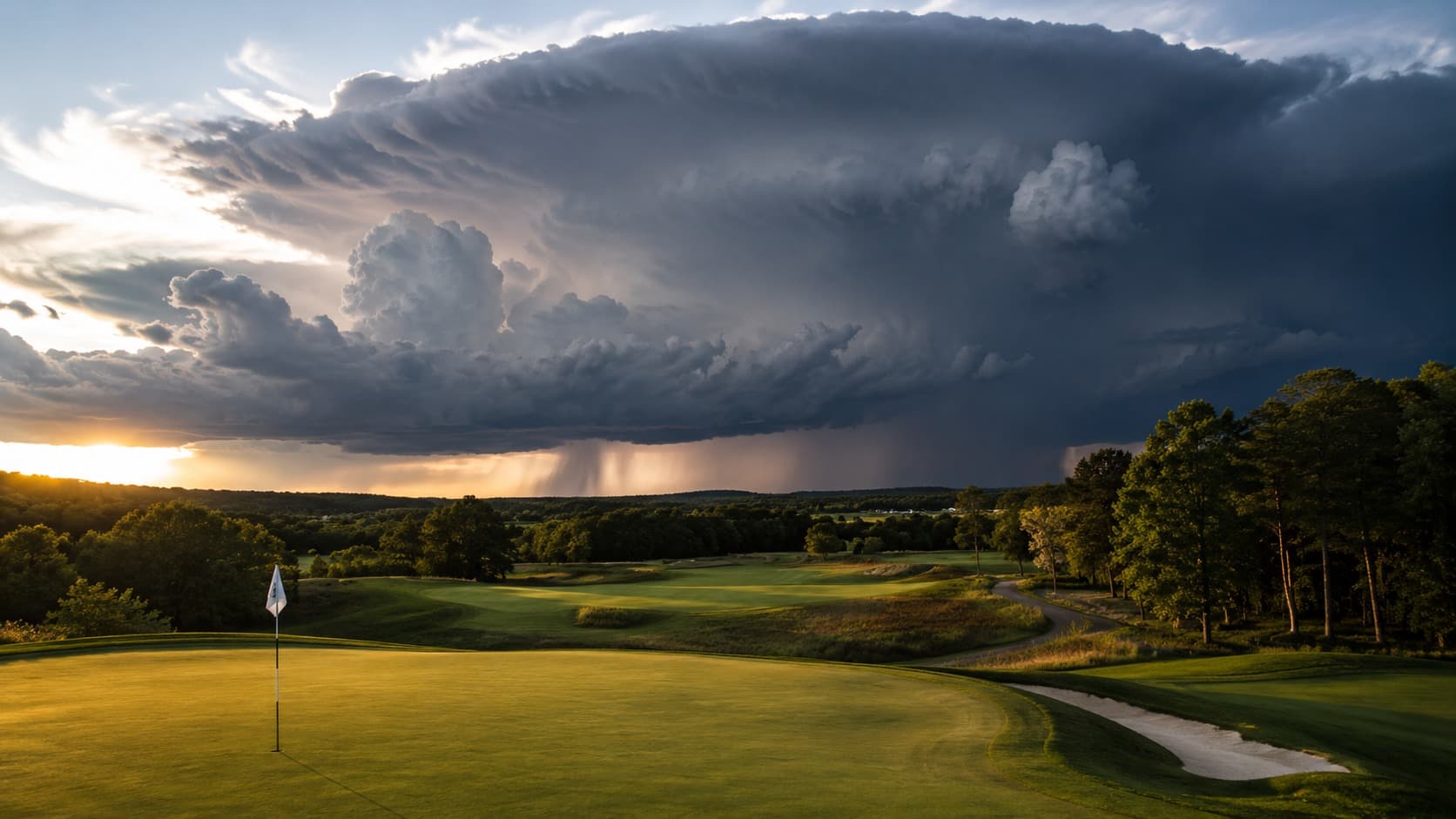
The Three O’Clock Storm: Reading Summer’s Convective Cycle to Protect Your Round
A 40% chance of afternoon thunderstorms does not mean a 40% chance of getting rained on. In the summer convective season it means the morning is nearly clear and the afternoon carries a fast-building, high-energy storm risk driven by a daily heating cycle. Here is the meteorology behind the pattern, the G-Score data on how the storm cycle punishes afternoon tee times across the Southeast, Midwest, and desert Southwest, the lightning-safety decision tree that actually matters, and the workflow that gets you off the course before the first bolt.
Read StoryMinSu Kim
Founder & Golf Data Analyst
MinSu is a data analyst and golfer with 10+ years on the course. He built Golf Weather Score to answer one question: is today a good day to play? He combines weather data, course intelligence, and the proprietary G-Score algorithm to help golfers make smarter decisions.
Every Friday Morning
When Adams Pointe Golf Course plays best next weekend.
Friday 6am ET: peak G-Score windows for Adams Pointe Golf Course, wind direction by hour, and one gear call. Three minutes to read, save you the round.
One email a week. Unsubscribe in one click.
The Caddie's Oracle
Draw your luck before the tee off