
Caddie's Gear Advisor
Curated for today's 82°F · Clouds
Tour-Level Drivers
Engineered for maximum distance and forgiveness
Laser Rangefinders
Pin-seeking technology for precision approaches
Premium Golf Balls
Tour-caliber spin and distance performance
Performance Sunglasses
Polarized lenses optimized for reading greens
Your Golf Trip, Handled
The Ultimate Golf Trip Planner
Everything you need to play American Lake Veterans Golf Course — from booking your flight to checking in course-side.
Course-Side Stays
Luxury hotels, resorts, and stay-and-play packages just minutes from the first tee.
Flights
Compare fares across 700+ airlines for the best route to your tee time.
SUV Rentals for Golf Bags
Spacious vehicles with room for clubs, bags, and your foursome.
Travel Insurance
Coverage for medical, weather delays, and gear at your destination.
American Lake Veterans Golf Course: Course Intelligence
Signature Setup
I'll be straight: I haven't played American Lake Veterans myself, and I won't pretend otherwise — but I've teed off enough Puget Sound mornings in October, gloves damp before the first putt, to know exactly how this corner of Washington plays. American Lake Veterans Golf Course sits in Lakewood, just south of Tacoma, on the grounds of the VA Puget Sound Health Care System beside American Lake.
What makes this course unlike any other in the country is its purpose. It is the only golf course in the United States built and operated specifically to rehabilitate disabled and injured veterans. The original short course dates to the VA hospital era of the 1950s; the expansion to a full 18 holes was carried out as a pro bono project by Jack Nicklaus and Nicklaus Design, with adaptive features built in throughout. Read this course as therapy-first, scorecard-second — and let the lakeside weather, not the yardage, be your opponent.
Hole-by-Hole Wind & Playing Lines
The differentiator here is American Lake itself and the larger Puget Sound air behind it. Treat wind direction as your primary club selector.
The longest back-nine par-4 (roughly 400y, regular tees). On a typical summer afternoon a SW breeze pushes up off the Sound, and this is the hole where it costs you. Into that wind a 150-yard approach plays closer to 170. Club up one full club and favor the open, short side rather than flirting with the green-side trouble — a chip from short and dry beats a hack from the wet rough long.
A lakeside par-3. The short one-shotters that flirt with American Lake are the photogenic holes and the sneaky-hard ones. With a left-to-right SW wind off the water, a stock wedge or short iron drifts toward the lake side; aim at the safe edge and let the breeze walk it back to center rather than aiming at a flag tucked near water.
The longest par-3 on the card. Exposed long irons are where Puget Sound wind does the most damage. A 190-yard one-shotter into a freshening afternoon SW becomes a hybrid for most players. Take the extra club, keep the ball flight down, and play for the front of the green to let it release.
I'm describing these by type and wind logic rather than inventing exact survey yardages I can't verify hole-by-hole — but the wind read holds regardless of which tee you choose.
Green & Fairway Characteristics
The turf is pure Puget Sound lowland: a poa/bentgrass mix that stays soft and rolls slow-to-medium nearly all year, firming up only across the dry July–September window. Green slope in the mid-120s from the everyday tees is gentle by design, fitting a course built for adaptive and rehabilitating players. What that means in practice cuts two ways. On soft greens the aerial approach checks fast, so you can fire at flags more boldly than a firm links would ever allow; but a wet fairway hands you almost no roll, so from October through May the course plays longer than its yardage and a low runner buys you nothing the way it would on baked ground. The fairways are broad and walkable, forgiving of a slightly offline tee shot — which is precisely the point of the place.
Seasonal Weather Pattern
Lakewood lives under the marine-influenced Puget Sound climate, where the calendar splits cleanly. July through mid-September is the dry, dependable stretch — highs in the low-to-mid 70s°F, little rain, and the only weeks the ground firms enough to give the ball any run. The rest of the year belongs to the Pacific storm track: frequent light-to-moderate rain, with most of the area's roughly 40 inches of annual precipitation arriving November through March. Winter highs settle in the mid-40s°F, and though snow is rare at this elevation, the steady drizzle keeps the turf saturated. The lake layers on its own twist, trading a calm morning for an onshore SW breeze that stiffens through the afternoon. I'll be candid that I haven't watched this exact course through a full winter, so my January read leans on regional NOAA records rather than rounds I've walked here — but the regional verdict is plain: green, soaked, and playable for anyone dressed in layers.
Local Play Tips
The local read that no yardage book gives you: this is a morning course. In the Puget Sound lowlands the early hours are your friend twice over — the rain is statistically lighter overnight into morning, and the lake-driven SW wind hasn't built yet. Book the earliest tee time you can. And come knowing what this place is: it's a working rehabilitation facility for veterans, with volunteer support and adaptive equipment central to operations. Pace, etiquette, and patience matter more here than your handicap. If you're an able-bodied visitor, treat it as a privilege, not a tee sheet.
Pre-Round Weather Workflow
For a Puget Sound round, the G-Score on this page is really a rain-and-wind timing tool — use it that way. Three days out, hunt for the morning dry window: at a course this rain-sensitive, teeing off before or after the day's wettest band is worth 8–12 G-Score points on its own, so claim the earliest slot you can, when both the rain odds and the lake breeze are lowest. On the morning, take the windExposure direction as your club selector — a SW reading sends the lakeside par-3 and the ~400y back-nine par-4 into or across the breeze off American Lake, so spend your club-up discipline there (an extra club, ball flight down, play for the front to release) and stay aggressive on the sheltered interior holes the wind never reaches. When the forecast shows rain under 50°F — most of the non-summer calendar — plan on zero roll: every fairway plays long, every soft green holds the aerial shot, and you want layers you can peel off by the turn.
Related Reading
Before you tee off at American Lake Veterans Golf Course
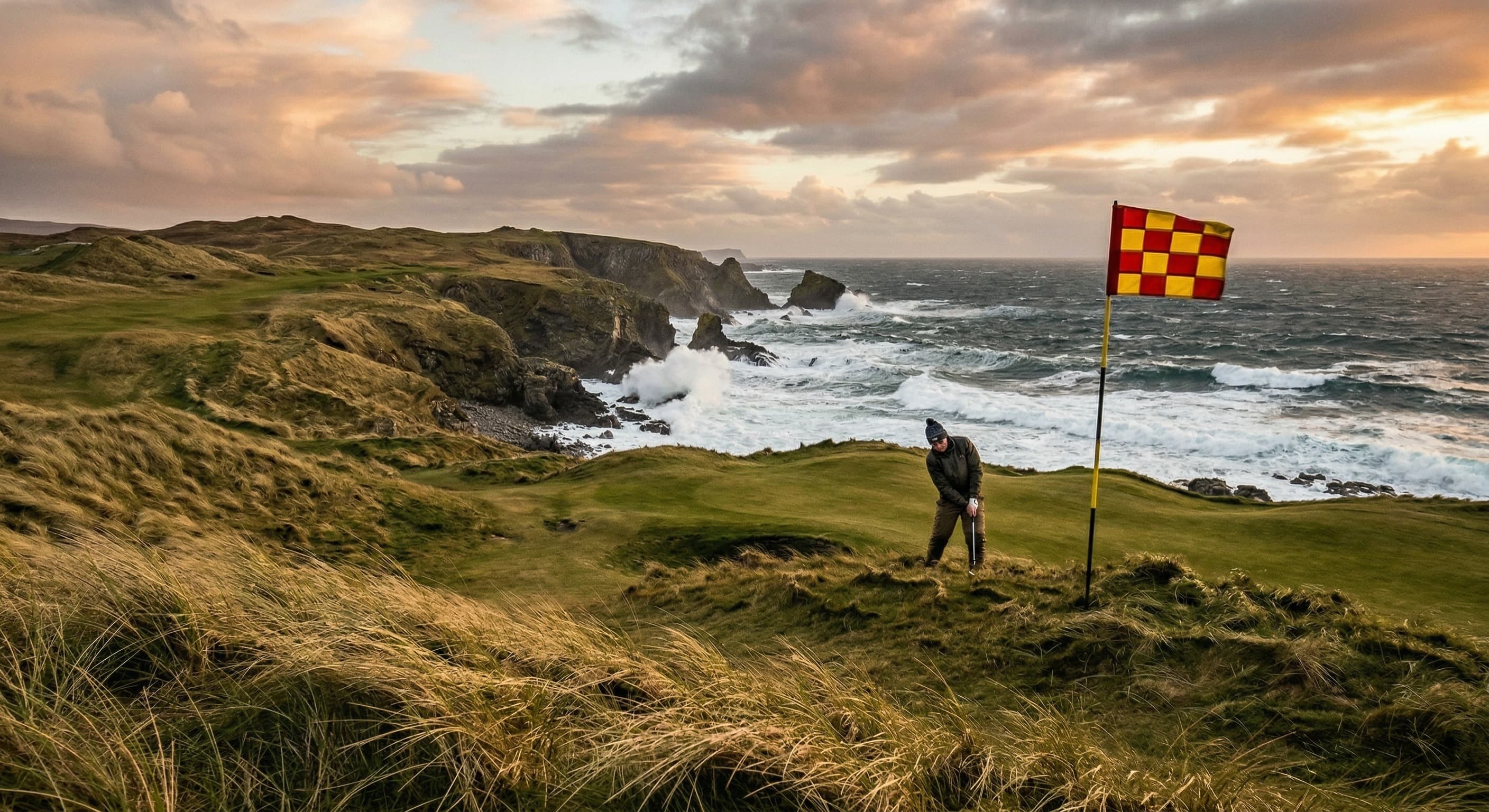
America's 20 Windiest Golf Courses: A G-Score Wind Analysis
We ranked America's 20 windiest golf courses using G-Score wind penalty data. See how coastal gusts and prairie gales reshape playability scores.
Read Story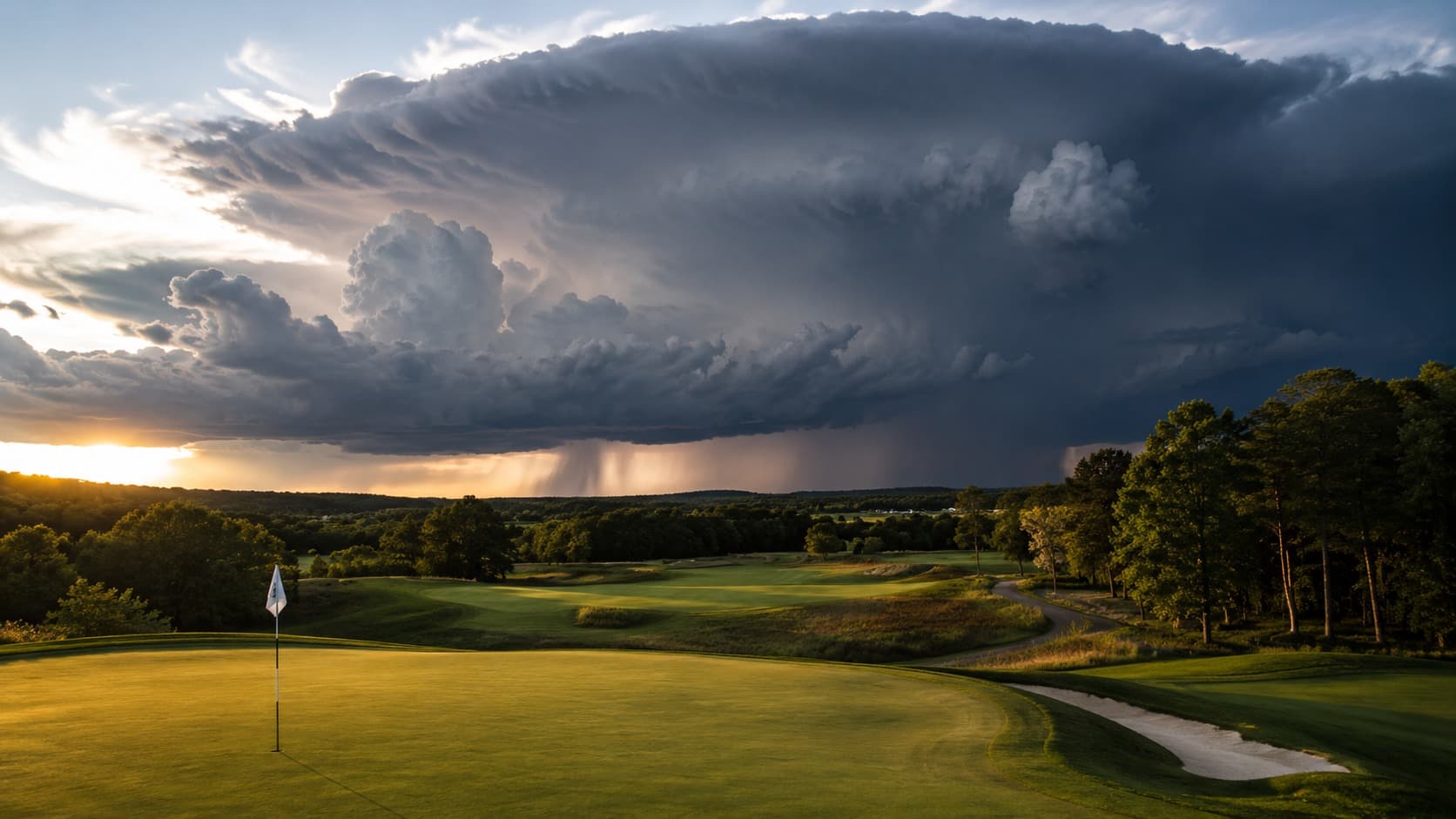
The Three O’Clock Storm: Reading Summer’s Convective Cycle to Protect Your Round
A 40% chance of afternoon thunderstorms does not mean a 40% chance of getting rained on. In the summer convective season it means the morning is nearly clear and the afternoon carries a fast-building, high-energy storm risk driven by a daily heating cycle. Here is the meteorology behind the pattern, the G-Score data on how the storm cycle punishes afternoon tee times across the Southeast, Midwest, and desert Southwest, the lightning-safety decision tree that actually matters, and the workflow that gets you off the course before the first bolt.
Read StoryMinSu Kim
Founder & Golf Data Analyst
MinSu is a data analyst and golfer with 10+ years on the course. He built Golf Weather Score to answer one question: is today a good day to play? He combines weather data, course intelligence, and the proprietary G-Score algorithm to help golfers make smarter decisions.
Every Friday Morning
When American Lake Veterans Golf Course plays best next weekend.
Friday 6am ET: peak G-Score windows for American Lake Veterans Golf Course, wind direction by hour, and one gear call. Three minutes to read, save you the round.
One email a week. Unsubscribe in one click.
The Caddie's Oracle
Draw your luck before the tee off