
Caddie's Gear Advisor
Curated for today's 76°F · Thunderstorm
Storm-Ready Outerwear
Waterproof layers built for 18 holes in the rain
Tour-Grade Umbrellas
68" double-canopy wind-resistant coverage
Wet-Weather Gloves
All-weather grip that performs in the rain
Waterproof Golf Shoes
Keep your feet dry through every fairway
Your Golf Trip, Handled
The Ultimate Golf Trip Planner
Everything you need to play Angel Fire Country Club — from booking your flight to checking in course-side.
Course-Side Stays
Luxury hotels, resorts, and stay-and-play packages just minutes from the first tee.
Flights
Compare fares across 700+ airlines for the best route to your tee time.
SUV Rentals for Golf Bags
Spacious vehicles with room for clubs, bags, and your foursome.
Travel Insurance
Coverage for medical, weather delays, and gear at your destination.
Angel Fire Country Club: Course Intelligence
Signature Setup
Angel Fire Country Club sits in the Moreno Valley of northern New Mexico, the resort course laid out by Frank Hummel and opened in 1972. At roughly 8,500 feet above sea level, it is one of the highest regulation courses in the United States — and that single fact reshapes everything about how it plays. The par-72 layout runs about 6,600 yards from the back tees, which sounds short until you account for the thin air, the cold mornings, and the mountain wind that does not behave like coastal wind. The Sangre de Cristo range walls in the eastern side of the property, and the signature short hole asks you to carry a high-meadow gully with that ridgeline sitting directly behind the green. I have not played Angel Fire in the dead of its short season, so the hole-by-hole numbers below lean on layout data and historical New Mexico mountain-weather records rather than a personal card from every tee.
Hole-by-Hole Wind & Playing Lines
Mountain wind here is thermal, not synoptic. On clear mornings, cold air drains downslope off the Sangre de Cristos into the valley, so the first few holes after a 7:30 tee often play into a light, dense downhill draft. By early afternoon the flow reverses as the slopes heat, and upslope wind picks up — sometimes 12–18 mph by 2 p.m. The #1-handicap par-4 climbs toward the eastern slope; even with altitude adding distance, the uphill grade plus the cool valley air eats your gain, so I would club up rather than trust the 8,500-foot bounce. The signature par-3 plays shorter than the card whenever a tailwind rolls off the ridge, but a crosswind off the gully will push a high ball hard right — keep it low and let the firm green release.
Green & Fairway Characteristics
The greens run bentgrass, which holds up well in the cold high-desert nights, and they get firm and fast once the dawn frost lifts. Fairways are fescue-edged and tighten as the dry summer wears on. Expect roll: a well-struck drive in thin, dry air can run 10–12% farther than your sea-level number, so a 250-yard carry can finish near 280. Front-nine and back-nine both work across rolling valley-floor terrain with enough elevation change to demand uphill/downhill club adjustments on nearly every approach.
Seasonal Weather Pattern
Angel Fire's golf season is short — roughly mid-May through mid-October, bracketed by snow on either side at this altitude. June mornings can start near 38–42°F and reach the low 70s by afternoon. July and August bring the North American monsoon: clear bright mornings give way to building cumulus and afternoon thunderstorms, often firing between 1 and 4 p.m. September is the steadiest window — cool, dry, low wind, gold aspen on the slopes.
Local Play Tips
Watch the frost, then watch the sky. Because nights drop so cold even in summer, dawn tee times frequently sit through a frost delay; the turf and your hands both warm up after 10 a.m. Then beat the monsoon — lightning in this valley is not a maybe in July and August, it is a near-daily 2 p.m. event. The practical play is a 9:30–10:30 a.m. start: warmest air, longest carry, finished before the storm cells stack up over the ridge.
Pre-Round Weather Workflow
Use the 7-day G-Score to find your window. At Angel Fire the highest scores cluster in the mid-morning band — frost gone, air warm, monsoon not yet built. Check the windExposure rating before booking an afternoon slot: a high reading here usually means the upslope thermal is running, which both stiffens your approaches and signals storm development. If the forecast shows a sharp afternoon drop in G-Score during July or August, that is the monsoon signature — move your tee time earlier rather than risk a lightning evacuation mid-round.
Related Reading
Before you tee off at Angel Fire Country Club
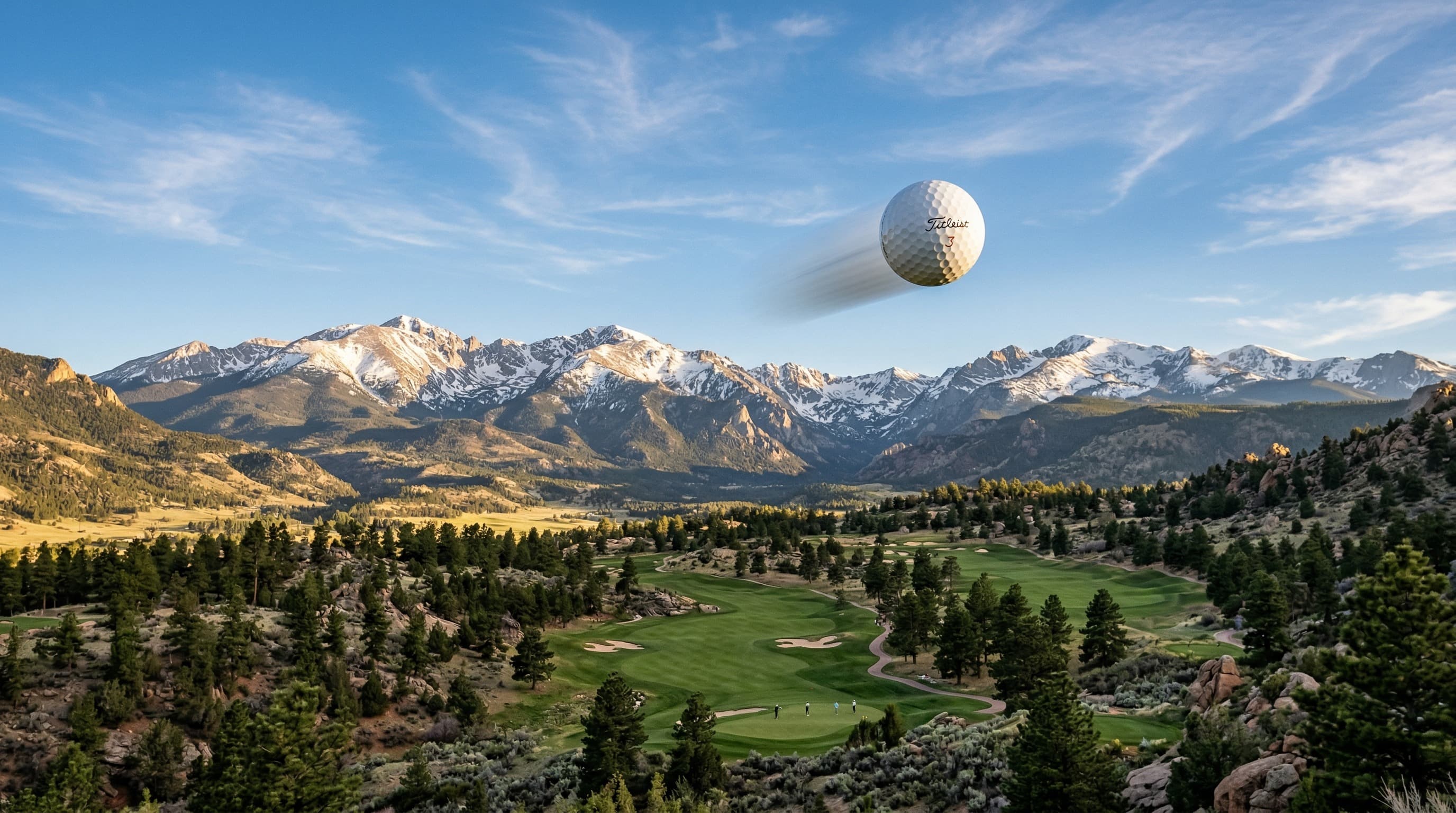
How Altitude Affects Golf Ball Distance: The Science Behind Every Extra Yard
At elevation, your golf ball flies farther than you expect. We break down exactly how altitude changes carry distance, spin rates, and club selection using real data from high-altitude courses across America.
Read Story
Best Golf Weather by State: Ranking America by Average G-Score
We ranked all 50 US states by average G-Score golf playability. California tops the list, but the results beyond the top five may surprise you.
Read StoryMinSu Kim
Founder & Golf Data Analyst
MinSu is a data analyst and golfer with 10+ years on the course. He built Golf Weather Score to answer one question: is today a good day to play? He combines weather data, course intelligence, and the proprietary G-Score algorithm to help golfers make smarter decisions.
Every Friday Morning
When Angel Fire Country Club plays best next weekend.
Friday 6am ET: peak G-Score windows for Angel Fire Country Club, wind direction by hour, and one gear call. Three minutes to read, save you the round.
One email a week. Unsubscribe in one click.
The Caddie's Oracle
Draw your luck before the tee off