
Caddie's Gear Advisor
Curated for today's 84°F · Clear
Tour-Level Drivers
Engineered for maximum distance and forgiveness
Laser Rangefinders
Pin-seeking technology for precision approaches
Premium Golf Balls
Tour-caliber spin and distance performance
Performance Sunglasses
Polarized lenses optimized for reading greens
Your Golf Trip, Handled
The Ultimate Golf Trip Planner
Everything you need to play Angel Park Golf Club — from booking your flight to checking in course-side.
Course-Side Stays
Luxury hotels, resorts, and stay-and-play packages just minutes from the first tee.
Flights
Compare fares across 700+ airlines for the best route to your tee time.
SUV Rentals for Golf Bags
Spacious vehicles with room for clubs, bags, and your foursome.
Travel Insurance
Coverage for medical, weather delays, and gear at your destination.
Angel Park Golf Club: Course Intelligence
Signature Setup
Angel Park Golf Club sits in Summerlin, on the west edge of the Las Vegas valley, and opened in 1989 as an Arnold Palmer Design Company layout (Palmer with Ed Seay). It is a 36-hole public facility — the Mountain Course and the Palm Course — plus the thing that makes the place unusual: Cloud Nine, a 12-hole lighted par-3 course whose holes are modeled on famous par-3s from around the world. The Mountain plays the longer and firmer of the two big courses, a par-71 in the high-6,000s from the back tees; the Palm is shorter and more forgiving, the better walk for a guest round. Backed against the Spring Mountains with the Strip glittering to the east, this is a resort-grade desert daily-fee, not a private club.
TL;DR: A 36-hole Palmer desert facility in Summerlin. Play early before the afternoon wind, account for thin high-desert air adding carry, and respect bermuda-into-rye lies in the cool months.
Hole-by-Hole Wind & Playing Lines
The wind here is valley wind, not coastal — air heats over the Mojave floor and pushes up toward the Spring Mountains from the west-southwest as the day warms.
- Mountain Course #1-handicap par-4: On a typical afternoon this plays into the WSW push. A 150-yard approach can stretch to 170+. I club up and start the ball at the upwind (right) edge, letting the breeze walk it back to center.
- An exposed Mountain par-3 over desert scrub: Still at sunrise, it is a flat mid-iron. By 2 p.m. the crossing left-to-right wind shoves a high ball into the right-side native area — I knock it down a club lower and aim at the left bunker.
- A downhill Palm par-4 toward the valley: The land falls away east and the prevailing wind is often helping here in the afternoon; the green runs out fast, so I take less club off the tee and leave a full wedge rather than a half.
Green & Fairway Characteristics
The greens are bentgrass and, on a dry desert afternoon, they firm up and get quick — downgrain putts and downhill desert slopes both run out, so I read more break and less brake than I would on a soft course. Fairways are a bermuda base overseeded with ryegrass through the cool season, which changes the lie meaningfully: in winter the rye is lush and the ball sits up; in late summer the bermuda is tighter and grainier and wedges check less. Plan landing spots accordingly — into firm summer fairways, land it short and let it release. The Mountain has more elevation change and desert carries off the tee; the Palm is flatter and friendlier for a higher-handicap partner.
Seasonal Weather Pattern
This is high Mojave desert at roughly 2,800 feet, and the altitude matters: the thinner air lets a well-struck ball carry a few percent farther than at sea level, which I factor into every long club. Summer is brutal — June through August routinely runs 100–110°F, and the smart play is a sunrise tee time and a cart, off the course before the worst heat. Winter is the reason people fly in: December–February days often sit in the 50s–60s°F with bright sun, cold enough early that the ball flies short until the air warms. Spring and fall are the sweet spots — mild mornings, but that is also when afternoon wind is most reliable. Rain is rare year-round; this is one of the driest metros in the U.S.
Local Play Tips
Cloud Nine is the local secret — a genuine 12-hole par-3 layout with lights, so you can play famous-replica short holes after dark when summer days are too hot to be out at noon. Bring more water than you think on the Mountain in summer; the desert pulls it out of you faster than the temperature suggests. And know that the two big courses play differently in wind: the Mountain's elevation and exposure make it the harder read on a breezy afternoon, so if the forecast is gusty and you have a choice, the Palm is the kinder round.
Pre-Round Weather Workflow
Use the 7-day G-Score on golfweatherscore before you book. For Angel Park, the single biggest lever is tee time, not the day — the windExposure rating climbs every afternoon as the valley heats, so a morning slot with low wind can score 8–12 points higher than the same course at 3 p.m. In summer, filter for the earliest available time and a high G-Score, then get off before the 100°F+ peak. In winter, watch the morning low — a cold start means the ball flies short until midday, so check the hourly temperature trend and adjust your club selection for the first few holes.
Related Reading
Before you tee off at Angel Park Golf Club
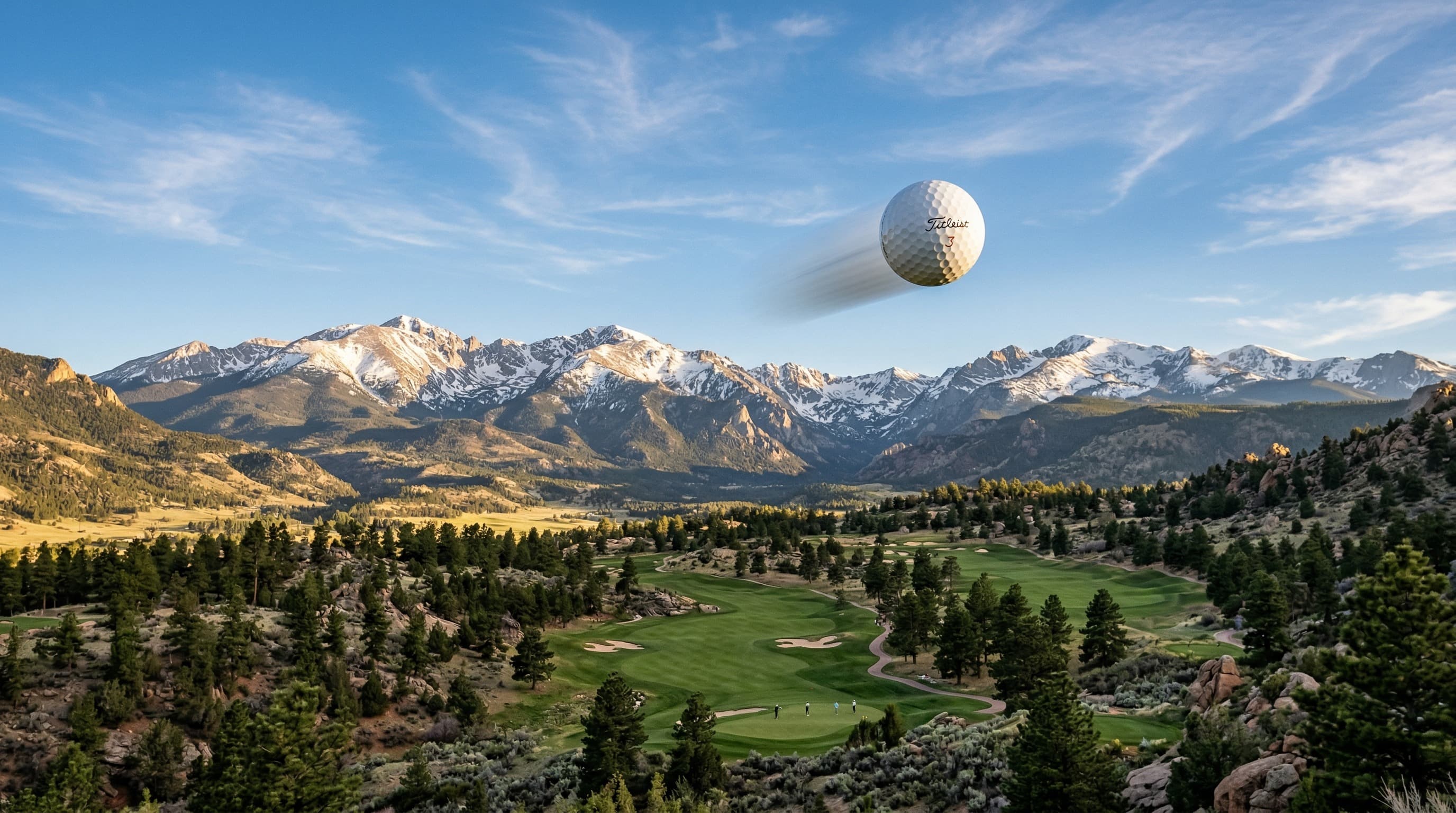
How Altitude Affects Golf Ball Distance: The Science Behind Every Extra Yard
At elevation, your golf ball flies farther than you expect. We break down exactly how altitude changes carry distance, spin rates, and club selection using real data from high-altitude courses across America.
Read Story
Best Golf Weather by State: Ranking America by Average G-Score
We ranked all 50 US states by average G-Score golf playability. California tops the list, but the results beyond the top five may surprise you.
Read StoryMinSu Kim
Founder & Golf Data Analyst
MinSu is a data analyst and golfer with 10+ years on the course. He built Golf Weather Score to answer one question: is today a good day to play? He combines weather data, course intelligence, and the proprietary G-Score algorithm to help golfers make smarter decisions.
Every Friday Morning
When Angel Park Golf Club plays best next weekend.
Friday 6am ET: peak G-Score windows for Angel Park Golf Club, wind direction by hour, and one gear call. Three minutes to read, save you the round.
One email a week. Unsubscribe in one click.
The Caddie's Oracle
Draw your luck before the tee off