
Caddie's Gear Advisor
Curated for today's 96°F · Clear
Ultralight Distance Drivers
Maximum carry in hot, low-drag conditions
UV Protection Apparel
UPF 50+ cooling fabrics for peak-sun rounds
Precision Rangefinders
Slope-adjusted yardage in any condition
Hydration & Cooling
Insulated bottles and cooling towels
Your Golf Trip, Handled
The Ultimate Golf Trip Planner
Everything you need to play Antelope Hills Golf Course — from booking your flight to checking in course-side.
Course-Side Stays
Luxury hotels, resorts, and stay-and-play packages just minutes from the first tee.
Flights
Compare fares across 700+ airlines for the best route to your tee time.
SUV Rentals for Golf Bags
Spacious vehicles with room for clubs, bags, and your foursome.
Travel Insurance
Coverage for medical, weather delays, and gear at your destination.
Antelope Hills Golf Course: Course Intelligence
Signature Setup
Antelope Hills sits in Prescott, Arizona, at about 5,100 feet — high desert, not the saguaro-and-cactus golf people picture when they think of the state. There are two full 18s here. The North Course opened in 1956 and plays as the older, more traditional layout. The South Course came later, designed by Gary Panks and opened in 1992, and it's the one with more bunkering, more water in play, and a finishing stretch that gets your attention. As a municipal facility owned by the City of Prescott, it stays busy with locals year-round, which tells you something: people who play it every week keep coming back.
Hole-by-Hole Wind & Playing Lines
The South Course closing holes are where wind and water collide. The 18th is a par-4 that runs alongside a wash, with trouble short and right of the green. On a SW afternoon breeze — common from spring into early summer — your approach gets pushed toward that right-side water, so I aim at the left-center of the green and let the wind feed it back.
On the North Course, Hole 2 is the #1 handicap, a par-4 around 430 yards. The green sheds anything landing short-right, and into a morning headwind off the higher ground to the west, the hole stretches well past its yardage. I take the extra club and play to the fat left half rather than flirting with the right edge.
The third tough hole to respect is the North's long par-3 over the seventh — exposed, with no tree cover to block a crosswind. When it blows from the north, a mid-iron drifts; I'd rather be pin-high left than chase the flag.
Green & Fairway Characteristics
The greens are bentgrass and at this elevation they run firm and quick, especially in the dry afternoons of May and June before the monsoon softens things. Fairways are ryegrass and bluegrass, generally generous but with enough movement that a downwind drive can run out into the rough. The South Course front nine plays a touch tighter than the back; the North gives you more room to miss. Slope and rating sit in the mid-range for a muni — playable for a 9 like me, but the firm greens punish a careless approach.
Seasonal Weather Pattern
Prescott's altitude makes the seasons real. I've teed off here in early October with the thermometer reading 52°F at 8 a.m. and climbing to the low 70s by noon — ideal golf, and the ball still carries because the air is thin. July and August bring the monsoon: clear, hot mornings around 88–92°F, then afternoon thunderstorms that roll in fast after 2 p.m. Winter can drop below freezing overnight and you'll see frost delays. The sweet spot is late spring and fall.
Local Play Tips
The single most useful thing I tell visitors: respect the altitude before you respect the yardage book. At ~5,100 feet the ball flies roughly 6–7% farther than at sea level, so my stock 7-iron plays closer to a 6. I've watched out-of-towners air it over greens all morning because they trusted their home numbers. Walk the range, hit three or four mid-irons, and recalibrate before the first tee — then book a morning slot to beat the monsoon window in summer.
Pre-Round Weather Workflow
Use the 7-day G-Score on golfweatherscore for Antelope Hills before you commit to a tee time. In summer, prioritize the earliest slot — G-Score typically reads higher in the 7–10 a.m. window before afternoon storm risk builds. Check windExposure for the exposed North-Course par-3s and the South finish: a SW reading means favoring left-side approach lines into 17 and 18. In shoulder season, watch overnight lows for frost-delay risk, and remember the altitude club adjustment stays constant regardless of the forecast.
Related Reading
Before you tee off at Antelope Hills Golf Course

America's 20 Windiest Golf Courses: A G-Score Wind Analysis
We ranked America's 20 windiest golf courses using G-Score wind penalty data. See how coastal gusts and prairie gales reshape playability scores.
Read Story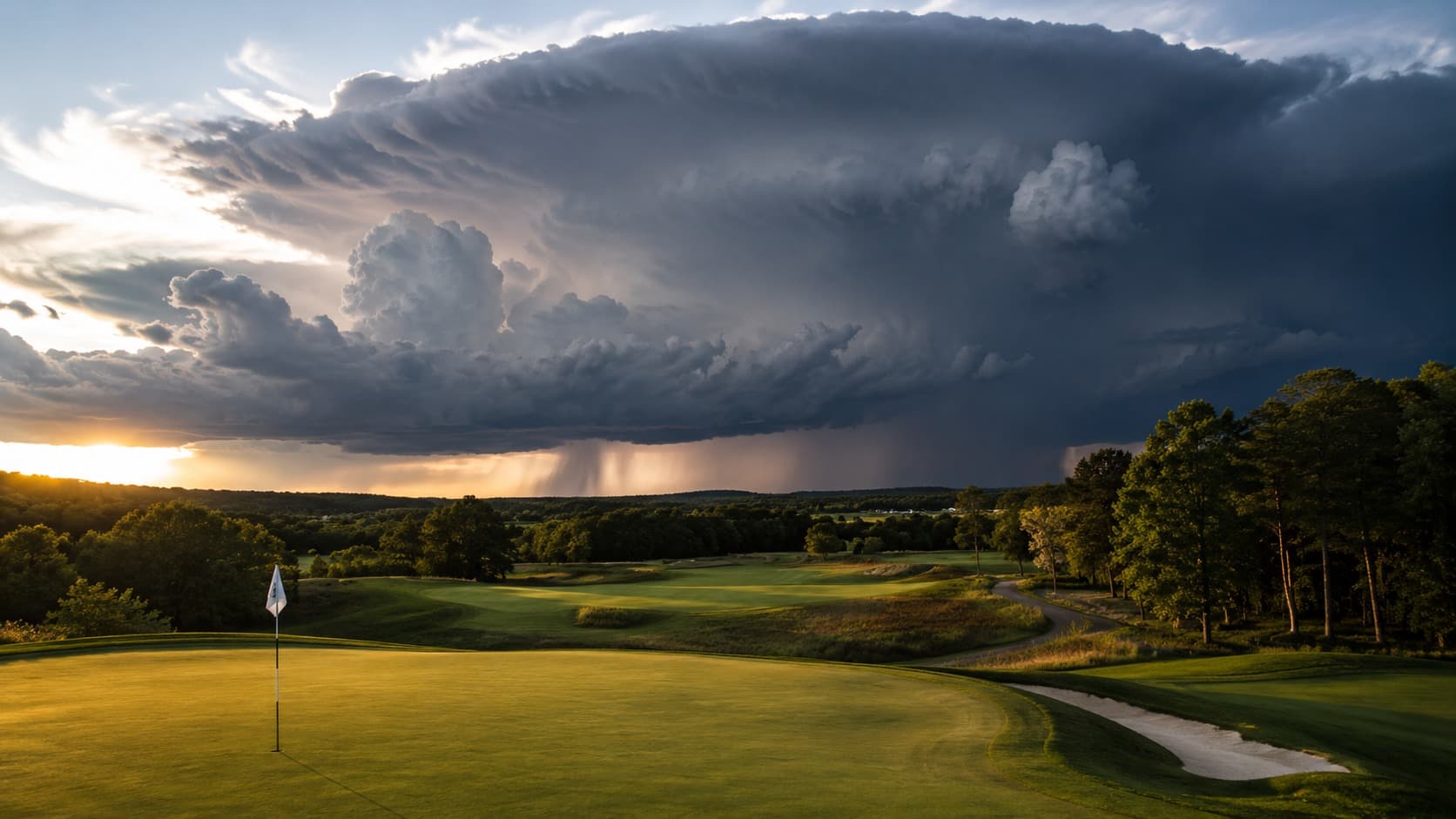
The Three O’Clock Storm: Reading Summer’s Convective Cycle to Protect Your Round
A 40% chance of afternoon thunderstorms does not mean a 40% chance of getting rained on. In the summer convective season it means the morning is nearly clear and the afternoon carries a fast-building, high-energy storm risk driven by a daily heating cycle. Here is the meteorology behind the pattern, the G-Score data on how the storm cycle punishes afternoon tee times across the Southeast, Midwest, and desert Southwest, the lightning-safety decision tree that actually matters, and the workflow that gets you off the course before the first bolt.
Read StoryMinSu Kim
Founder & Golf Data Analyst
MinSu is a data analyst and golfer with 10+ years on the course. He built Golf Weather Score to answer one question: is today a good day to play? He combines weather data, course intelligence, and the proprietary G-Score algorithm to help golfers make smarter decisions.
Every Friday Morning
When Antelope Hills Golf Course plays best next weekend.
Friday 6am ET: peak G-Score windows for Antelope Hills Golf Course, wind direction by hour, and one gear call. Three minutes to read, save you the round.
One email a week. Unsubscribe in one click.
The Caddie's Oracle
Draw your luck before the tee off