
Caddie's Gear Advisor
Curated for today's 96°F · Clear
Ultralight Distance Drivers
Maximum carry in hot, low-drag conditions
UV Protection Apparel
UPF 50+ cooling fabrics for peak-sun rounds
Precision Rangefinders
Slope-adjusted yardage in any condition
Hydration & Cooling
Insulated bottles and cooling towels
Your Golf Trip, Handled
The Ultimate Golf Trip Planner
Everything you need to play Anthony Country Club — from booking your flight to checking in course-side.
Course-Side Stays
Luxury hotels, resorts, and stay-and-play packages just minutes from the first tee.
Flights
Compare fares across 700+ airlines for the best route to your tee time.
SUV Rentals for Golf Bags
Spacious vehicles with room for clubs, bags, and your foursome.
Travel Insurance
Coverage for medical, weather delays, and gear at your destination.
Anthony Country Club: Course Intelligence
TL;DR: Anthony Country Club is a short, honest prairie nine in Harper County, south-central Kansas, just north of the Oklahoma line. Nobody scores here because of the yardage — they score, or don't, because of the wind. South-central Kansas runs some of the steadiest, strongest surface wind in the Lower 48, and at this exposed, tree-light layout a calm morning and a 25-mph afternoon are effectively two different golf courses. Play early, club up into the southerly, and treat the forecast as your most important read of the day.
Signature Setup
Anthony Country Club sits on the edge of Anthony, Kansas, a small Harper County town near the Oklahoma border. It's a club nine of the kind that anchored a lot of Kansas farm towns a century ago — established, by the town's own history, in the early 1920s. I'll be straight: firm records on the original architect are thin, and I won't invent a name to fill the line. What I can tell you is the course type, because it's unmistakable — a flat-to-gently-rolling prairie routing, modest total yardage, generous fairways, and very little tree cover to break the horizon.
That last point is the whole story. On a wooded course, trees hide and blunt the wind. Here there's almost nothing between you and the open plain, so the weather lands on you undiluted.
Hole-by-Hole Wind & Playing Lines
The prevailing warm-season wind in this part of Kansas comes out of the south and south-southeast, and it does not arrive gently.
- #1-handicap par-4 (into the wind): When the nine routes a longer par-4 straight south, a roughly 400-yard hole becomes a genuine three-quarter-bag problem in the afternoon. A drive that carries 250 in still air gives back 30–40 yards into a 20-mph headwind. Club up twice on the approach and aim at the upwind edge of the green so the wind walks the ball back to center.
- Downwind par-5: The reciprocal hole plays the opposite way — a downwind par-5 a strong player can reach in two becomes very reachable. The trap is the green: a following wind that adds carry also strips backspin, so land it short and let it run rather than trying to fly it to the flag.
- Crosswind par-3: A mid-length one-shotter with the southerly across it can need a two-club aim adjustment. Pick a start line into the wind and let it bring the ball back; do not aim at the pin.
Green & Fairway Characteristics
This is classic transition-zone turf country. Expect bermuda-based fairways that go firm and fast through the dry heat of mid-summer, giving meaningful roll on downwind tee shots, alongside cool-season greens that bake and quicken in July and August. When the prairie dries out, this is not a course where you fly approaches in and spin them to a stop — you play the ground game, releasing into firm surfaces. The terrain is gentle, so the defense is exposure and firmness, not severe contour. Walk it once and you'll see there's little to stop a wind-aided ball.
Seasonal Weather Pattern
South-central Kansas summers are hot, dry, and persistently windy. Afternoon highs in July and August routinely sit in the low-to-mid 90s°F and push toward 100°F, with humidity low enough that the firm-and-fast turf described above is the norm rather than the exception. The defining variable is wind: this stretch of the southern Plains records some of the highest average sustained surface wind in the continental U.S., and 20–25 mph afternoons are unremarkable from late spring through early fall. Spring carries the added risk of severe storms — this is squarely in the region's active convective belt — so a clear, calm morning can deteriorate fast. Autumn is the quiet reward: cooler air, lighter mornings, and the most scoreable conditions of the year.
Local Play Tips
The single highest-value local move costs nothing: chase the early tee time. The southerly here follows a daily rhythm — calmest near sunrise, building steadily through mid-morning, hardest in the afternoon. A round started at 7 a.m. and one started at 2 p.m. on the same day will not feel like the same course, and the gap is worth several strokes for a mid-handicapper. If you can only play afternoons, accept that you're playing a wind game and commit to lower ball flight off the tee. I haven't played this specific nine across all four seasons, so I'm leaning on south-central Kansas climate patterns for the timing — but that daily wind curve is as reliable as anything in golf out here.
Pre-Round Weather Workflow
Use the 7-day G-Score the way you would anywhere, but weight wind speed and direction above everything else — at an exposed prairie nine it moves your effective yardage more than temperature does. Check the windExposure rating against a south/SSE flow: a strong southerly reading means the #1-handicap par-4 plays a full one-to-two clubs longer and the reachable par-5 turns very gettable. If the forecast shows sustained 20-mph-plus by midday, book the earliest tee time you can and plan to be on the closing holes before the wind peaks. In spring, scan for storm risk and play the morning window; in fall, that calm 70°F day is your scoring round — take it.
Related Reading
Before you tee off at Anthony Country Club
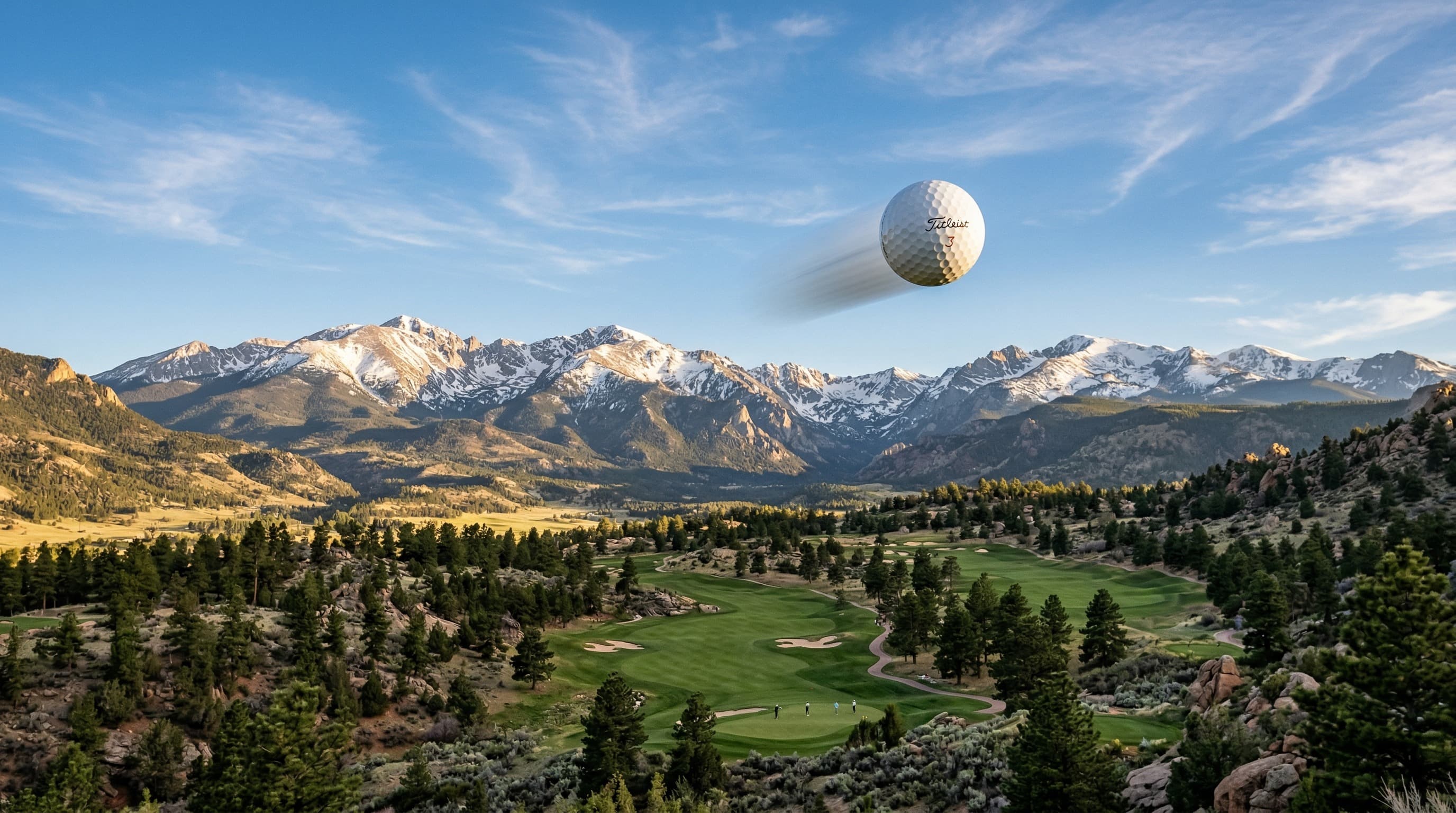
How Altitude Affects Golf Ball Distance: The Science Behind Every Extra Yard
At elevation, your golf ball flies farther than you expect. We break down exactly how altitude changes carry distance, spin rates, and club selection using real data from high-altitude courses across America.
Read Story
Best Golf Weather by State: Ranking America by Average G-Score
We ranked all 50 US states by average G-Score golf playability. California tops the list, but the results beyond the top five may surprise you.
Read StoryMinSu Kim
Founder & Golf Data Analyst
MinSu is a data analyst and golfer with 10+ years on the course. He built Golf Weather Score to answer one question: is today a good day to play? He combines weather data, course intelligence, and the proprietary G-Score algorithm to help golfers make smarter decisions.
Every Friday Morning
When Anthony Country Club plays best next weekend.
Friday 6am ET: peak G-Score windows for Anthony Country Club, wind direction by hour, and one gear call. Three minutes to read, save you the round.
One email a week. Unsubscribe in one click.
The Caddie's Oracle
Draw your luck before the tee off