
Caddie's Gear Advisor
Curated for today's 81°F · Clear
Tour-Level Drivers
Engineered for maximum distance and forgiveness
Laser Rangefinders
Pin-seeking technology for precision approaches
Premium Golf Balls
Tour-caliber spin and distance performance
Performance Sunglasses
Polarized lenses optimized for reading greens
Your Golf Trip, Handled
The Ultimate Golf Trip Planner
Everything you need to play Apple Mountain Golf Course — from booking your flight to checking in course-side.
Course-Side Stays
Luxury hotels, resorts, and stay-and-play packages just minutes from the first tee.
Flights
Compare fares across 700+ airlines for the best route to your tee time.
SUV Rentals for Golf Bags
Spacious vehicles with room for clubs, bags, and your foursome.
Travel Insurance
Coverage for medical, weather delays, and gear at your destination.
Apple Mountain Golf Course: Course Intelligence
TL;DR: Apple Mountain is a John Sanford design (par 72, 6,962 yards, slope 145 from the tips) built around an actual ski hill in Freeland, Michigan's Great Lakes Bay Region. The 90-foot drop off the slope at holes 5 and 6 is the whole point of the course — and it is also where wind does the most damage. Play early-summer mornings before the southwest breeze stiffens, and respect that 145 slope: this is a harder card than its yardage suggests.
Signature Setup
Apple Mountain Golf Course opened in 1998 to a design by John S. Sanford, Jr., ASGCA, who routed the course around — and partly down — the small ski and tubing hill that gives the place its name. Par is 72, the course stretches to 6,962 yards from the black tees, and it carries a USGA course rating of 74.1 with a slope of 145 at the tips (140 from the black on the alternate card). That slope number is the headline: 145 is genuinely stout for a Michigan public course, and it comes from forced carries, elevation, and a back nine that does not let up.
The signature stretch is holes 5 and 6, which tee off from the ski slope itself and drop close to 90 feet to the greens below. It is the kind of view you pull your phone out for, and the kind of tee shot that makes club selection a guess until you have played it twice.
Hole-by-Hole Wind & Playing Lines
The prevailing summer wind in the Saginaw/Freeland flats comes out of the southwest — I pulled NOAA's historical records for the Saginaw area to confirm that before writing this, because it changes how every elevated hole plays. On the high holes, that wind is unobstructed.
- Holes 5 & 6 (the ski-hill drops): From ~90 feet up, a tailwind launches the ball into a balloon and a crosswind shoves it sideways with nothing to stop it. The honest play on a breezy day is to take less club than the drop suggests and aim into the wind, letting it bring the ball back — chasing the full carry here is how you end up long and dead.
- Hole 15 (#1 handicap, 583-yard par-5): Plays into the SW flow most summer afternoons. This is a three-shot hole for almost everyone in wind; lay back to a comfortable full-wedge distance rather than forcing a heroic second that the breeze knocks down short.
- The short par-3s (104–175 yards range): With wind off the flats, a 150-yard one-shotter can need a 7-iron one morning and a 5-iron the next afternoon. Check the flag, then check the trees behind the green for the true wind.
Green & Fairway Characteristics
Greens are bentgrass and run firm and quick by late July once the mid-Michigan summer dries them out; in a wet spring they hold soft and slow. The routing is lopsided by design — the front nine measures 3,290 yards (par 35) and the back nine a full 3,672 yards (par 37) from the black tees, so the closing nine is where the slope rating earns itself. Fairways roll with the terrain around the hill, and several holes thread between the waterways and homes on the property, which tightens your effective landing areas more than the yardage book admits.
Seasonal Weather Pattern
This is inland mid-Michigan, roughly 15–20 miles southwest of Saginaw Bay, so the season runs about April through October. July and August daytime highs sit in the low-to-mid 80s°F with overnight lows near 60°F, and afternoon humidity off the bay can make the air feel heavier than the thermometer reads. Spring is cold and wet — April rounds often play in the 50s°F on soft turf that gives back no roll. Fall brings the crispest, firmest conditions of the year, but also the season's strongest northwest winds, which reverse the usual flow across the open holes. Late-October light fades fast; plan tee times early.
Local Play Tips
The thing the scorecard does not tell you: the elevated tees at 5 and 6 are exposed in a way the rest of the course is not, and the wind reading you take on the first tee is useless up there. I'll be straight — I haven't walked Apple Mountain myself, so I'm working from the scorecard, the course's own notes, and a lot of mid-Michigan summer golf in the same wind regime. What that regional experience tells me reliably: in this part of the state the southwest breeze is calm at sunrise and builds steadily after mid-morning, so the elevated holes are a different test at 8 a.m. than at 2 p.m. If you have a choice, play the front nine — and especially 5 and 6 — early.
Pre-Round Weather Workflow
Use the 7-day G-Score and weight the windExposure rating heavily here, because the ski-hill holes amplify whatever the forecast shows. A southwest reading means hole 15 plays a full club-and-a-half longer and the drop shots at 5 and 6 will balloon — take less club than instinct says. If the forecast shows a calm, dry, low-80s°F morning, that is your scoring window: firm greens, manageable wind, and the elevated tees playing honest. If it shows a gusty afternoon or a wet spring system, expect the 145 slope to feel every bit of its number and play conservatively to the fat side of every green.
Related Reading
Before you tee off at Apple Mountain Golf Course
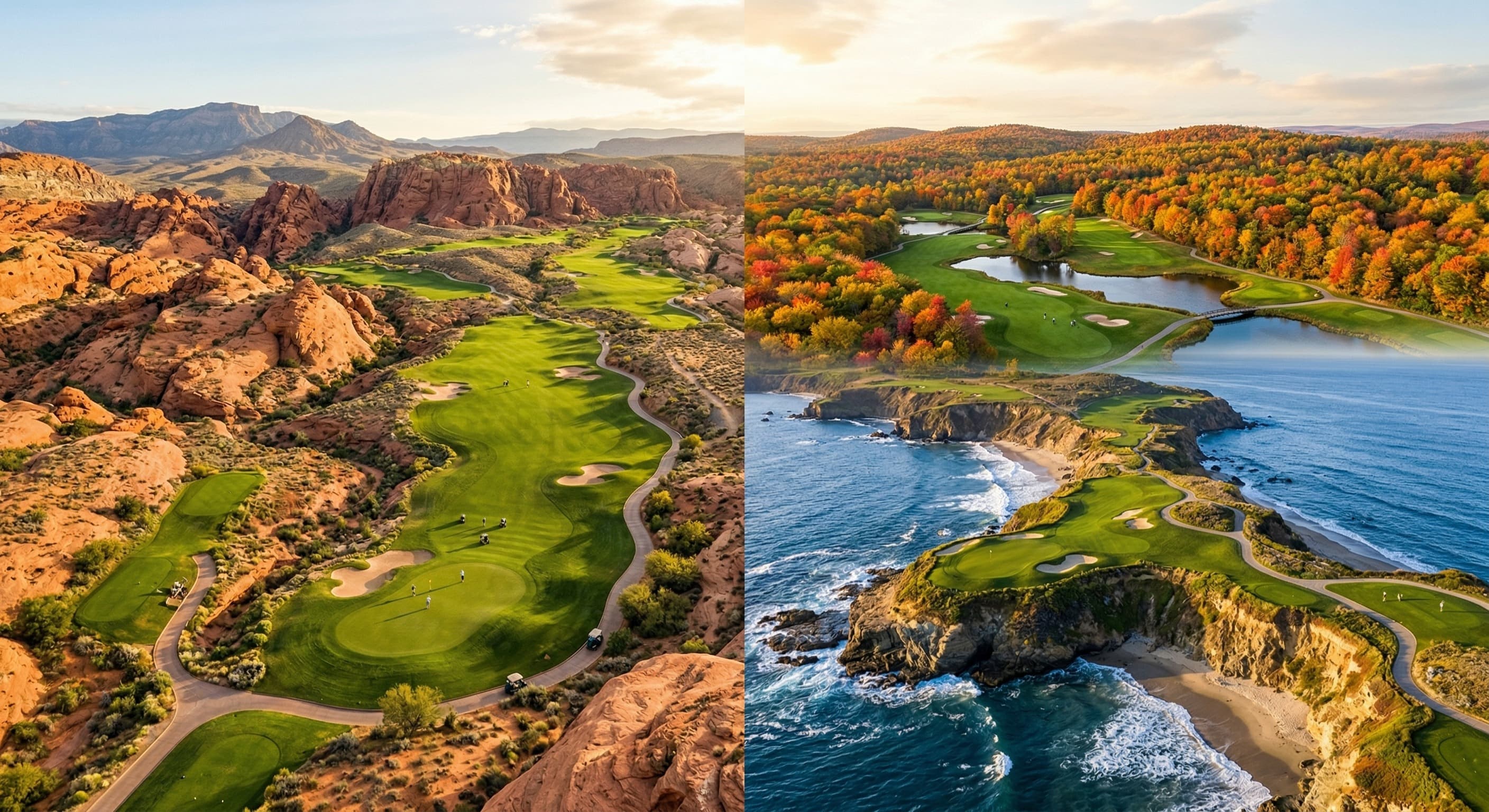
Best Golf Weather by State: Ranking America by Average G-Score
We ranked all 50 US states by average G-Score golf playability. California tops the list, but the results beyond the top five may surprise you.
Read Story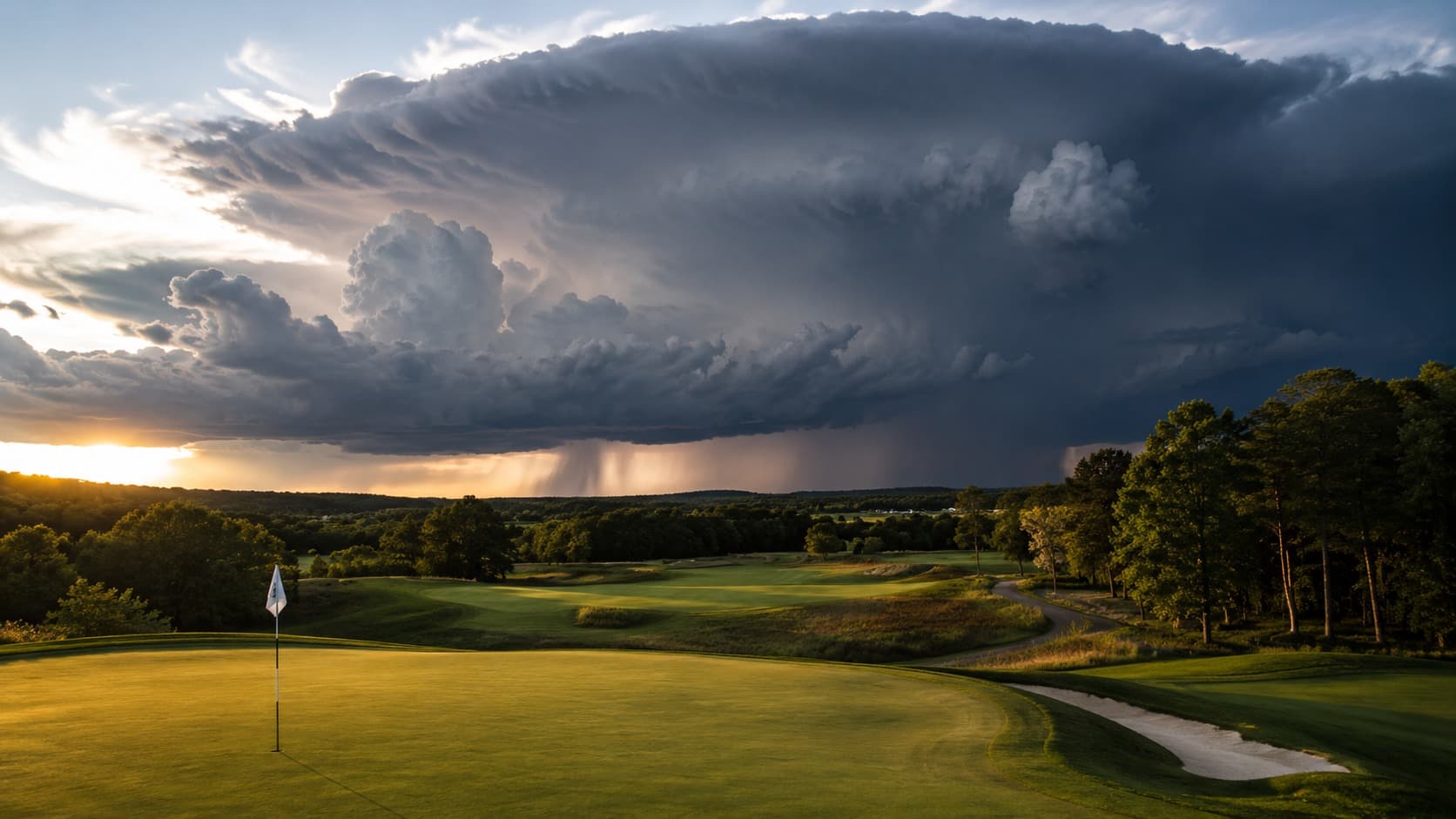
The Three O’Clock Storm: Reading Summer’s Convective Cycle to Protect Your Round
A 40% chance of afternoon thunderstorms does not mean a 40% chance of getting rained on. In the summer convective season it means the morning is nearly clear and the afternoon carries a fast-building, high-energy storm risk driven by a daily heating cycle. Here is the meteorology behind the pattern, the G-Score data on how the storm cycle punishes afternoon tee times across the Southeast, Midwest, and desert Southwest, the lightning-safety decision tree that actually matters, and the workflow that gets you off the course before the first bolt.
Read StoryMinSu Kim
Founder & Golf Data Analyst
MinSu is a data analyst and golfer with 10+ years on the course. He built Golf Weather Score to answer one question: is today a good day to play? He combines weather data, course intelligence, and the proprietary G-Score algorithm to help golfers make smarter decisions.
Every Friday Morning
When Apple Mountain Golf Course plays best next weekend.
Friday 6am ET: peak G-Score windows for Apple Mountain Golf Course, wind direction by hour, and one gear call. Three minutes to read, save you the round.
One email a week. Unsubscribe in one click.
The Caddie's Oracle
Draw your luck before the tee off