
Caddie's Gear Advisor
Curated for today's 60°F · Thunderstorm
Storm-Ready Outerwear
Waterproof layers built for 18 holes in the rain
Tour-Grade Umbrellas
68" double-canopy wind-resistant coverage
Wet-Weather Gloves
All-weather grip that performs in the rain
Waterproof Golf Shoes
Keep your feet dry through every fairway
Your Golf Trip, Handled
The Ultimate Golf Trip Planner
Everything you need to play Apple Valley Golf Club — from booking your flight to checking in course-side.
Course-Side Stays
Luxury hotels, resorts, and stay-and-play packages just minutes from the first tee.
Flights
Compare fares across 700+ airlines for the best route to your tee time.
SUV Rentals for Golf Bags
Spacious vehicles with room for clubs, bags, and your foursome.
Travel Insurance
Coverage for medical, weather delays, and gear at your destination.
Apple Valley Golf Club: Course Intelligence
Signature Setup
There's a particular feeling to a high-desert tee box at 7 a.m. in October: 52°F, the air bone-dry, the San Bernardino mountains still holding shadow to the south, and not a breath of wind yet. I've started rounds in the Victor Valley on mornings like that and watched a stock 7-iron fly five yards past where it had any right to — thin Mojave air does that. The catch is that the same desert is dead calm at dawn and breezy-to-gusty by lunch, so the course you start is not the course you finish.
Apple Valley Golf Club sits in the Mojave high desert of San Bernardino County, California, at roughly 2,900 feet of elevation. It's a daily-fee, walkable layout from the mid-century era when golf spread across the Victor Valley, and its defining variables aren't water hazards or elevation drops — they're altitude, dry firm turf, and a wind that wakes up on a schedule. That makes a weather read worth more here than a yardage book. I'm working partly from regional high-desert rounds rather than a long history on this exact track, so where I give a number I'll tell you whether it's measured or illustrative.
Hole-by-Hole Wind & Playing Lines
The #1-handicap par-4 (~430–440y). This is the hole that decides your card. Early, in still air at altitude, it's reachable in two with a mid-iron approach. By late morning the W/SW up-valley wind is in your face and the same hole stretches a club-and-a-half longer. Aim down the firm left side off the tee to catch the rollout, then take two extra clubs into the green and play for the front-center — a thin long iron won't hold baked desert turf.
A mid-round par-3 over open desert scrub. Wind here quarters across rather than straight, and on a gusty afternoon a held shot drifts hard. I'd favor the upwind edge of the green and let the breeze walk the ball back to the middle, rather than aiming at a tucked pin and getting pushed long into the native.
A finishing-stretch par-4 angled west. Late in the round you're playing straight into the strongest part of the day's wind. Resist the hero line; club up, swing easy to keep the ball flight down, and accept that par into a 15–20 mph dry headwind is a small victory.
Green & Fairway Characteristics
High-desert turf behaves nothing like coastal Bermuda or northern bentgrass. Expect a cool-season rye overseed through winter sitting over a dormant Bermuda base — fairways run fast and firm in the dry air, so plan for meaningful rollout and a ball that won't check on approach. The greens get grainy and quick once the afternoon wind has scoured moisture off them; reads that look flat can be deceptively fast down-grain. There's modest elevation movement across the property but nothing dramatic — the real defense is firmness plus wind, the classic desert combination where the ground game matters as much as the air game.
Seasonal Weather Pattern
The Mojave high desert has a wide thermal spread that drives everything about playing here. The prime window is roughly October through April: dawn temperatures in the 40s–50s°F, comfortable 60s–70s afternoons, very low humidity, and that reliable up-valley breeze building after mid-morning. Winter mornings can dip near freezing and frost-delay an early tee. Summer is the opposite extreme — June through August routinely hits 95–105°F by afternoon, with the dry heat and wind making midday play punishing; it's a sunrise-tee game or nothing. Spring brings the strongest, gustiest winds of the year as desert low-pressure systems track through, so a benign forecast can still mean a 25 mph afternoon. The single biggest scoring lever in any season is simply what time you tee off.
Local Play Tips
Here's the read that a tee-sheet description won't give you: at this elevation the altitude bonus and the afternoon wind penalty roughly cancel on west-facing holes. Beginners hear "2,900 feet, the ball flies farther" and over-club nothing all day — then wonder why their afternoon back nine fell apart. The truth is that the calm dawn air is when you actually collect the altitude carry; by the time the up-valley wind fills in, that gain is gone and then some on every hole pointed west. So treat the first 9 to 10 holes, played before 10 a.m., as your scoring holes, and play the back of the round conservatively into the wind. I haven't played this specific course in the dead of a 105°F July afternoon, so I won't pretend to know how the greens behave fully baked out — I'd plan any summer round purely off an early tee and historical heat data.
Pre-Round Weather Workflow
Use the 7-day G-Score on this page the way I'd prep any high-desert round. Two to three days out, watch two things: the overnight low (a near-freezing morning means a likely frost delay and dense, short-flying air for the first hour) and the afternoon wind forecast. The morning of, open the windExposure panel — if it flags a strengthening late-morning up-valley breeze, commit to the earliest tee you can get and plan to be making the turn before the wind tops 15 mph. On any west-facing hole, let the panel set your club: calm-and-early, trust the altitude and take one less; windy-and-late, club up two and keep the ball down. In summer, check the afternoon heat and wind first and treat a dawn tee as non-negotiable — the desert rewards the early riser and punishes everyone else.
Related Reading
Before you tee off at Apple Valley Golf Club
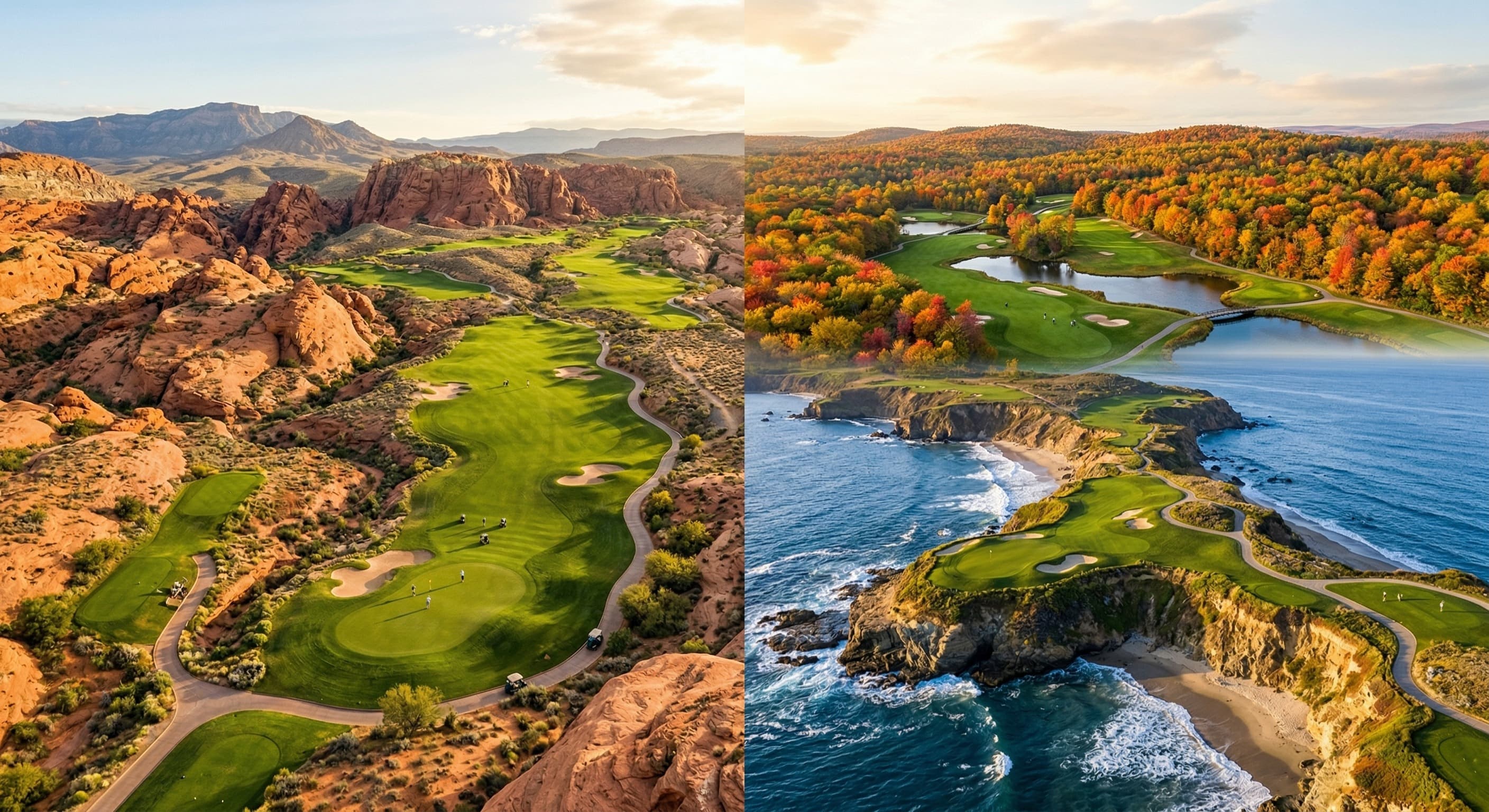
Best Golf Weather by State: Ranking America by Average G-Score
We ranked all 50 US states by average G-Score golf playability. California tops the list, but the results beyond the top five may surprise you.
Read Story
Data-Driven Golf: How Strokes Gained, Launch Monitors, and Weather Intelligence Are Reshaping the Game
From Mark Broadie's strokes gained to TrackMan launch monitors, real data and weather intelligence are transforming how golfers train and score.
Read StoryMinSu Kim
Founder & Golf Data Analyst
MinSu is a data analyst and golfer with 10+ years on the course. He built Golf Weather Score to answer one question: is today a good day to play? He combines weather data, course intelligence, and the proprietary G-Score algorithm to help golfers make smarter decisions.
Every Friday Morning
When Apple Valley Golf Club plays best next weekend.
Friday 6am ET: peak G-Score windows for Apple Valley Golf Club, wind direction by hour, and one gear call. Three minutes to read, save you the round.
One email a week. Unsubscribe in one click.
The Caddie's Oracle
Draw your luck before the tee off