
Introduction: Golf Is in a Data Revolution
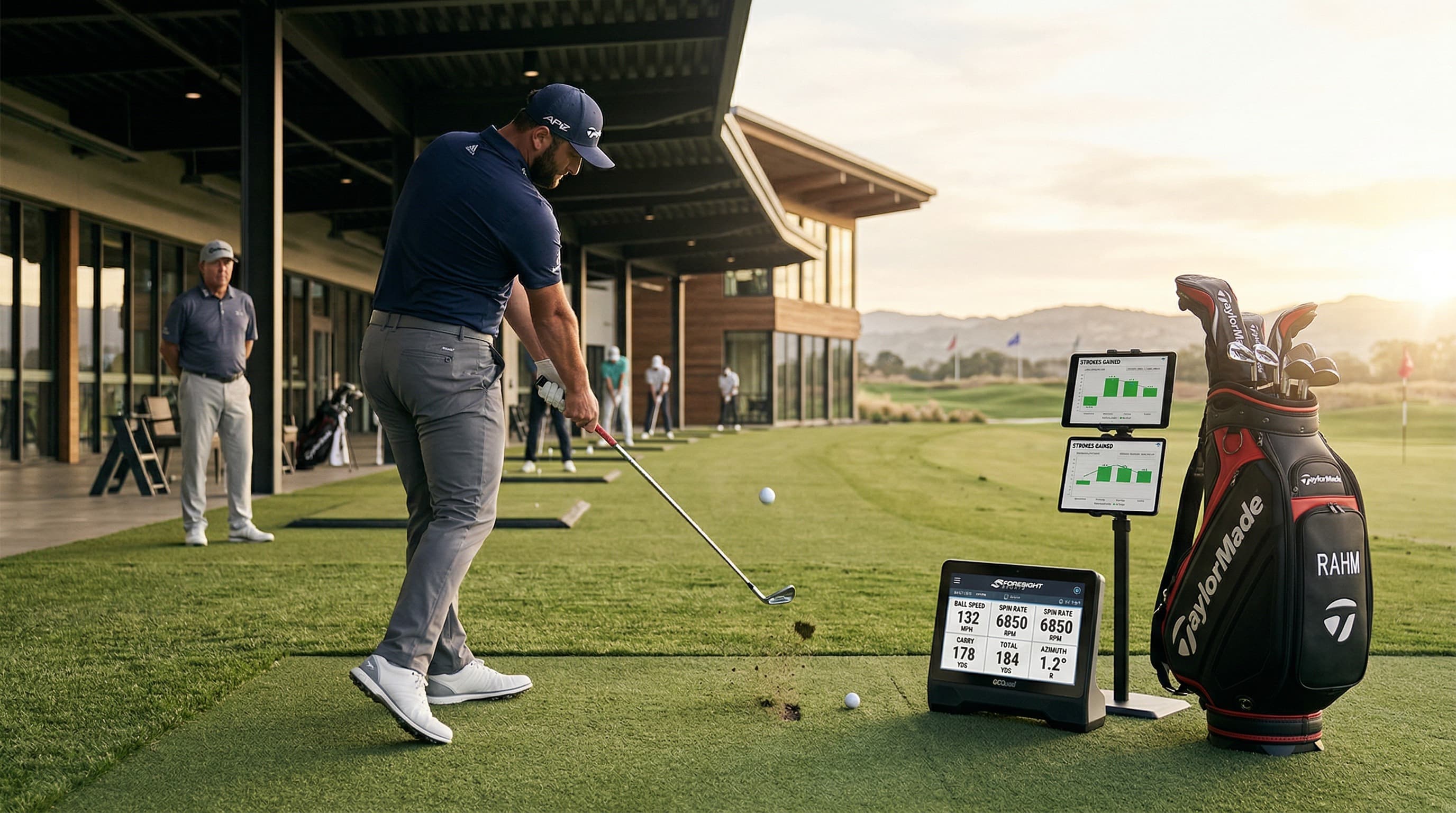
Golf has always been a game of inches, but in the last decade it has become a game of data points. From Mark Broadie's groundbreaking strokes gained methodology, developed at Columbia University and published in his 2014 book Every Shot Counts, to $25,000 TrackMan launch monitors that sit behind every tour player on the range, data has fundamentally transformed how players train, compete, and improve.
Consider the scope of the shift. In 2003, the PGA Tour installed ShotLink, a laser-based system that tracks every shot hit by every player in every round of every tournament. That system now captures more than 10 million data points per season. It enabled an entirely new statistical framework that replaced vague categories like 'greens in regulation' with precise measurements of exactly where each player gains or loses strokes relative to the field.
But the revolution is no longer limited to tour professionals with six-figure coaching budgets. Consumer-grade launch monitors like the Garmin Approach R10, priced around $600, now deliver ball speed, spin rate, launch angle, and carry distance data that would have required a $100,000 facility just fifteen years ago. Shot-tracking systems like Arccos and Shot Scope attach sensors to every club in your bag and automatically log every swing, building a statistical portrait of your game over hundreds of rounds.
Meanwhile, a crucial and often overlooked data layer is emerging: weather intelligence. Standard weather apps tell you the temperature and whether it might rain. But for golfers, the difference between a 12 mph headwind and a 12 mph tailwind on a 180-yard approach shot can mean two full clubs of difference. The difference between a 9 AM tee time with calm winds and a 1 PM tee time with 20 mph gusts can be the difference between breaking 80 and shooting 88.
This is the new reality of data-driven golf. It is not about turning the game into a spreadsheet exercise. It is about replacing guesswork with evidence, turning vague feelings into specific action items, and ultimately shooting lower scores with less wasted practice time. Whether you are a scratch player chasing a mini-tour card or a 15-handicap trying to break 80 for the first time, the tools now exist to show you exactly where your strokes are hiding.
In this deep dive, we will explore every major pillar of the data-driven golf revolution: strokes gained analysis, launch monitor technology, weather intelligence, GPS and rangefinder data, AI-powered club design, and practical steps any amateur can take to start using data immediately.
Strokes Gained: The Stat That Changed Everything
Before strokes gained, golf statistics were crude instruments. Fairways hit told you nothing about where on the fairway the ball landed or how far it traveled. Greens in regulation did not distinguish between a 6-footer for birdie and a 45-footer that was effectively a lag putt. Putts per round penalized players who hit more greens, since they had more birdie putts from distance, and rewarded players who chipped close from missed greens.
Mark Broadie, a professor at Columbia Business School, saw through these limitations. His insight was elegant: instead of counting outcomes in isolation, compare every shot to the average result a tour player would achieve from the same position. If the average tour player takes 2.92 strokes to hole out from 150 yards in the fairway, and you hit your approach to 8 feet (where the average is 1.47 strokes to finish), you gained 2.92 minus 1.47 minus 1 equals 0.45 strokes on that single shot.
Broadie published his methodology in Every Shot Counts in 2014, and it fundamentally overturned decades of conventional wisdom. The most explosive finding was this: the long game matters far more than putting for separating good players from great ones. Broadie's analysis showed that roughly two-thirds of the scoring difference between a scratch golfer and a 90-shooter comes from shots outside 100 yards. Putting, which every weekend golfer obsesses over, accounts for only about one-third of the gap.
On the PGA Tour, the data tells the same story at the elite level. The correlation between strokes gained: approach the green and final season earnings is stronger than the correlation for any other category. Players who hit the ball closer to the hole from the fairway win more often, period.
Strokes Gained Categories on the PGA Tour
The PGA Tour breaks strokes gained into four primary categories, each measured against the field average:
- Strokes Gained: Off the Tee (SG:OTT) measures driving performance, combining distance and accuracy. It accounts for the advantage gained from tee shots on par-4s and par-5s.
- Strokes Gained: Approach the Green (SG:APP) measures the quality of approach shots, typically from 100+ yards. This is widely considered the single most predictive stat for scoring on Tour.
- Strokes Gained: Around the Green (SG:ARG) covers chipping, pitching, and bunker play from inside 30 yards when the player is not on the putting surface.
- Strokes Gained: Putting (SG:PUTT) measures putting performance relative to the field, accounting for putt distance and green difficulty.
The total of all four categories equals Strokes Gained: Total, which measures a player's overall performance relative to the field. In the 2024 PGA Tour season, Scottie Scheffler led the Tour with a Strokes Gained: Total of approximately +2.56 per round, meaning he was nearly 2.6 strokes better than the average Tour player every time he teed it up. That margin is historically dominant. Scheffler's advantage came primarily from his ball-striking: he led the Tour in SG: Approach and was among the leaders in SG: Off the Tee.
On the other end of the spectrum, Patrick Cantlay has built his reputation partly on elite putting performance. Cantlay consistently ranks in the top 10 in SG: Putting, compensating for more modest ball-striking numbers. His career demonstrates that while approach play is the strongest predictor of success, elite putting can still elevate a player into the winner's circle.
Strokes Gained for Amateurs: Apps and Systems
The truly exciting development is that strokes gained analysis is no longer locked inside the PGA Tour's ShotLink trailers. Several consumer products now bring this framework to everyday golfers:
- Arccos Caddie: Founded in 2013, Arccos uses lightweight sensors that screw into the butt end of each club grip. Paired with a smartphone app, it automatically detects every shot using GPS and accelerometer data. Arccos then calculates strokes gained statistics benchmarked against players of similar handicap. The system also provides an AI-powered caddie feature that recommends clubs and targets based on your personal shot patterns. Over 500 million shots have been recorded in the Arccos system, creating a massive dataset for benchmarking.
- Shot Scope: A Scottish company that offers the V5 GPS watch with automatic shot tracking. The V5 maps over 36,000 courses worldwide and provides strokes gained data, club-by-club performance breakdowns, and detailed round analytics. The watch itself serves as a GPS rangefinder during play, making it a dual-purpose tool.
- The DECADE System by Scott Fawcett: DECADE is not a hardware product but a course management philosophy built on strokes gained math. Fawcett, a former mini-tour player, analyzed decades of ShotLink data to develop optimal aiming strategies for every situation on the course. The core principle is that most golfers aim at the pin when they should be aiming at the fat side of the green, and they attempt hero shots when the math clearly favors conservative play. Fawcett's system has been adopted by numerous college golf programs and has become a cult favorite among competitive amateurs. His data shows that smart course management alone can save the average golfer 2 to 4 strokes per round without any swing changes.
The bottom line: if you have never seen your own strokes gained data, you are almost certainly misdiagnosing your game. Most amateurs blame their putter when the real damage is happening with their 7-iron through wedges.
Launch Monitors: Democratizing Data
If strokes gained tells you where you are losing shots, launch monitors tell you why. These devices measure the physics of every swing in granular detail, capturing the interaction between club and ball at the moment of impact and tracking the resulting ball flight.
The technology falls into two broad categories: Doppler radar systems that track the ball from impact to landing, and photometric/camera-based systems that capture high-speed images at impact to calculate launch conditions.
The Professional Standard: TrackMan
TrackMan, made by a Danish company founded in 2003, is the gold standard of launch monitors. It uses dual Doppler radar to track the club through the downswing and the ball from launch to landing. TrackMan units cost $25,000 or more, and they are used by an estimated 90 percent or more of PGA Tour players during practice. Every major equipment manufacturer uses TrackMan in their research and development process, and it is the official measurement system for many Tour events.
TrackMan captures an extraordinary number of data points per swing, including club head speed, ball speed, smash factor (the ratio of ball speed to club speed, indicating strike quality), launch angle, spin rate, spin axis (which indicates curvature), carry distance, total distance, attack angle, face angle at impact, club path, dynamic loft, and face-to-path relationship. For a skilled fitter or coach, these numbers paint a complete picture of what happened and why.
Premium Consumer Options
FlightScope Mevo+ uses 3D Doppler radar technology and retails for approximately $2,000. It provides club head speed, ball speed, spin rate, launch angle, carry distance, and several other parameters. The Mevo+ can be used both outdoors and in indoor simulator setups, making it popular among serious amateurs and teaching professionals who want TrackMan-level data categories without the TrackMan price tag. FlightScope also offers the X3, a premium unit priced around $15,000 that competes directly with TrackMan at the tour level.
Full Swing KIT entered the market with significant buzz, partly due to Tiger Woods' partnership and endorsement. Priced at approximately $3,200, the KIT uses radar technology and provides real-time data on ball speed, launch angle, spin rate, carry distance, and shot shape. The Tiger connection gave the product instant credibility, and it has found a niche among golfers willing to invest more than Mevo+ pricing but not ready for the full TrackMan commitment.
The Budget Revolution: Garmin Approach R10
Perhaps the most important product in the democratization of launch monitor data is the Garmin Approach R10, which retails for approximately $600. This portable, radar-based unit sits behind the ball and delivers a remarkable amount of data for its price point: club head speed, ball speed, smash factor, launch angle, spin rate, spin axis, carry and total distance, and even club path and face angle estimates.
The R10 connects via Bluetooth to the Garmin Golf app and is compatible with home simulator software like E6 Connect. Its small size means it can be tossed in a golf bag and used at any driving range. While its accuracy does not match TrackMan or FlightScope Mevo+ on every metric, particularly spin rate and club path, it provides more than enough data for the average golfer to identify trends and track improvement over time.
Key Launch Monitor Metrics Every Golfer Should Know
Understanding launch monitor data requires knowing what the numbers mean and what 'good' looks like. Here are the most important metrics with benchmark values for a mid-handicap male golfer hitting a 7-iron:
- Ball Speed: How fast the ball leaves the clubface. A 7-iron should produce roughly 120 to 130 mph for an average male golfer, with tour players reaching 135 to 145 mph.
- Launch Angle: The vertical angle of the ball's initial trajectory. For a 7-iron, the optimal launch angle is typically 16 to 18 degrees for most swing speeds.
- Spin Rate: Backspin measured in revolutions per minute. A 7-iron should produce approximately 6,500 to 7,000 rpm for a mid-handicap player. Too much spin causes ballooning in the wind; too little causes the ball to run out and not hold greens.
- Carry Distance: How far the ball flies before first hitting the ground. This is the most important distance number because it excludes roll, which varies by course conditions. Knowing your carry with every club is essential for proper club selection.
- Smash Factor: Ball speed divided by club head speed. A ratio of 1.49 to 1.50 for a driver indicates near-center contact. With irons, 1.34 to 1.38 is typical. Low smash factor means off-center hits, which cost distance and accuracy.
The single biggest benefit of a launch monitor for an amateur golfer is this: you learn your actual distances, not what you think your distances are. Most golfers overestimate their carry distances by 10 to 20 yards per club. They remember their best-ever 7-iron that flew 170 yards downwind on a firm fairway and use that as their baseline. In reality, their average carry might be 148 yards. That 20-yard gap between perceived and actual distance causes more missed greens than any swing flaw.
Weather Intelligence: The Missing Data Layer
You can own the best launch monitor on the market, track every shot with Arccos, and memorize your strokes gained splits, but if you are ignoring weather data, you are leaving strokes on the table. Weather is the single largest external variable in golf, and most golfers treat it as an afterthought.
Standard weather apps are designed for the general public. They give you a temperature reading, a precipitation percentage, and maybe a small wind icon. That is almost useless for golf-specific decision making.
What Golfers Actually Need from Weather Data
Golf-specific weather intelligence requires several data points that general weather apps either omit or present poorly:
- Wind Speed and Direction by Hour: A steady 15 mph wind affects club selection on every single shot. But wind speed varies dramatically throughout the day. Morning rounds often feature calm conditions that build into afternoon gusts. Knowing the hourly wind forecast allows you to optimize your tee time and adjust your strategy.
- 'Feels Like' Temperature: Air temperature alone does not tell you how comfortable you will be or how the ball will fly. A 55-degree day with 20 mph wind and high humidity feels drastically different from a 55-degree calm day with low humidity. Cold, dense air reduces ball flight. The 'feels like' temperature, which incorporates wind chill and humidity, is a better predictor of actual playing conditions.
- Precipitation Probability by Time Window: A 40 percent chance of rain for the day is unhelpful. What you need is the probability of rain between 8 AM and 12 PM versus 1 PM and 5 PM. Hourly precipitation data lets you choose the driest window for your round.
- UV Index: Prolonged sun exposure affects concentration, energy, and physical comfort over a 4-plus hour round. Knowing the UV index helps golfers prepare with proper sun protection and hydration, which directly impacts performance on the back nine.
- Barometric Pressure and Altitude: Lower barometric pressure and higher altitude both reduce air density, which means the ball flies farther. A golfer playing at sea level on a high-pressure day might carry a 7-iron 150 yards, while the same swing at 5,000 feet elevation on a low-pressure day could carry 162 yards.
The G-Score: Quantifying Playability
This is where GolfWeatherScore.com introduces a concept that pulls all of these weather variables together: the G-Score. The G-Score is a proprietary algorithm that combines temperature, wind speed, wind gusts, precipitation probability, humidity, UV index, and cloud cover into a single 0-to-100 playability score.
A G-Score of 90 to 100 means near-perfect conditions: mild temperature, light winds, zero rain probability, and comfortable humidity. A G-Score below 40 signals challenging conditions that will likely add strokes to your round regardless of how well you are swinging.
But the G-Score is not just a number for deciding whether to play. It is a planning tool. By displaying hourly G-Scores across the day, golfers can identify the optimal tee time window. Perhaps the morning starts with a G-Score of 72 due to cool temperatures and fog, rises to 88 by 10 AM as conditions warm, then drops to 55 by 2 PM as afternoon winds pick up. That data point alone, choosing the 10 AM window over the 2 PM window, could be worth 3 to 5 strokes over 18 holes.
Real-Time Adjustments on the Course
Weather intelligence is not just a pre-round planning tool. During the round, conditions change. A wind shift on the back nine can turn a 150-yard 8-iron into a 150-yard 6-iron. A sudden temperature drop as clouds roll in can reduce ball flight by 5 to 8 yards per club.
Golfers who check hourly weather updates during the round, or who use GPS watches with weather integration, can adjust their club selection and strategy in real time. This is not overcomplicating the game. It is simply replacing the old method of licking your finger and holding it up to guess the wind with actual data.
GPS and Rangefinder Data: Precision on Every Shot
The foundation of good course management is knowing your exact distance to the target, and the modern golfer has never had better tools for this.
Laser Rangefinders
Laser rangefinders bounce an infrared beam off the flagstick or other targets and return a precise distance measurement. The best models on the market include:
- Bushnell Pro XE: The Tour standard, used by the majority of professional caddies. The Pro XE features slope compensation (which adjusts the displayed distance based on elevation change), magnetic mount for cart attachment, and accuracy to within 0.1 yards. It also includes Bushnell's Elements feature, which factors in temperature and altitude to provide a 'plays like' distance. Retail price is approximately $500.
- Precision Pro NX10: A strong value alternative at around $300, offering slope compensation, pulse vibration to confirm target lock, and accuracy to 0.1 yards. Precision Pro also offers a free slope replacement program, meaning if your unit ever breaks, they replace it free of charge.
The key advantage of a laser rangefinder over GPS alone is precision. GPS watches rely on pre-mapped pin positions that may be set by the course staff that morning or defaulted to the center of the green. A laser gives you the exact distance to the actual pin location in real time.
GPS Watches
GPS watches sacrifice some precision for convenience and breadth of information. Rather than zapping individual targets, they display distances to the front, center, and back of the green, as well as hazard distances and layup targets, all automatically as you move around the course.
- Garmin Approach S70: The most feature-rich golf GPS watch on the market, with a bright AMOLED touchscreen display, full-color CourseView maps for over 43,000 courses, virtual caddie recommendations powered by Garmin's shot-tracking data, and integration with the Garmin Golf app for detailed post-round analysis. The S70 also tracks fitness metrics like heart rate and steps, making it a daily wearable. Retail price is approximately $700.
- Apple Watch with Golfshot or Arccos: For golfers already in the Apple ecosystem, the Apple Watch paired with the Golfshot app or Arccos app provides GPS distances, score tracking, and shot detection. The Apple Watch Ultra offers better battery life and a brighter display for outdoor visibility.
Shot Tracking: The Complete Picture
GPS and rangefinder data becomes exponentially more valuable when combined with automatic shot tracking. Two systems stand out:
- Arccos Smart Sensors: As discussed earlier, Arccos sensors attach to every club and automatically detect shots via the paired smartphone app. Over time, this builds a complete statistical profile: average distances per club, dispersion patterns, miss tendencies (left versus right, long versus short), and strokes gained breakdowns by category and by club. The Arccos system also provides a smart caddie that recommends optimal clubs and targets on every hole based on your personal data and current conditions.
- Shot Scope V5: The Shot Scope V5 watch combines GPS functionality with automatic shot tracking using lightweight tags that screw into each club grip. With over 36,000 mapped courses, the V5 provides detailed performance analytics including strokes gained data, club averages, and shot dispersion maps. It is a particularly strong option for golfers who want an all-in-one wrist solution without carrying a phone on the course.
The power of shot tracking is cumulative. After 5 rounds, you have interesting data. After 20 rounds, you have statistically meaningful trends. After 50 rounds, you have a genuine performance profile that reveals exactly where your strengths and weaknesses lie, often in ways that contradict your gut instincts.
AI and Machine Learning in Golf
Artificial intelligence has moved beyond buzzword status in golf and is now actively shaping equipment design, swing analysis, and strategic decision-making.
AI-Designed Club Faces
Callaway has been at the forefront of AI-driven equipment design. Starting with the Epic Flash driver in 2019, Callaway used machine learning and supercomputer optimization to design clubface architectures that maximize ball speed across a wider area of the face. The process involved generating and testing thousands of virtual face designs, each evaluated for ball speed, forgiveness, and spin characteristics. The result was a face pattern that no human designer would have conceived, with seemingly random thickness variations that optimized energy transfer at impact. Callaway has continued this approach with subsequent models, using increasingly powerful computing to refine the designs.
TaylorMade has taken a similar path with their AI-driven SpeedFrame face technology, introduced in recent driver and iron lines. TaylorMade's AI process evaluates millions of virtual face thickness configurations to optimize ball speed and forgiveness. Their 60X Carbon Twist Face design in recent Qi-series drivers used AI to create a flexible face structure that reduces side spin on off-center hits, effectively straightening mishits that would have curved more severely with traditional face designs.
The key point is that AI is not replacing human engineering in golf equipment. It is exploring design spaces that are too vast for human designers to navigate manually. A clubface has thousands of individual thickness points, each of which interacts with every other point. The number of possible configurations is astronomical. AI can test virtual permutations in hours that would take human engineers decades to evaluate physically.
AI Swing Analysis
On the instruction side, AI-powered swing analysis apps are becoming increasingly sophisticated:
- Sportsbox AI: Uses a single smartphone camera and 3D pose estimation technology to create a full biomechanical model of the golf swing. Originally developed with input from biomechanics researchers, Sportsbox measures parameters like chest turn, hip sway, pelvis thrust, and arm structure at key positions in the swing. What makes it powerful is that it does not require any sensors or special equipment beyond a smartphone propped on the ground at the range.
- V1 Golf: One of the original video analysis apps, V1 has evolved to include AI-assisted features that automatically identify key swing positions, compare them to reference swings, and highlight areas of deviation. V1 is widely used by teaching professionals as a communication tool, allowing them to annotate video with lines, circles, and side-by-side comparisons during lessons.
Predictive Analytics and Strategy
The next frontier for AI in golf is predictive decision-making: given a specific situation (lie, distance, wind, pin position, hazard layout, and the player's personal shot data), what club and target give the highest probability of the best outcome? Arccos Caddie already provides a version of this with its AI-powered club recommendations, which factor in wind, elevation, temperature, and the golfer's historical performance with each club. As these systems ingest more data, their recommendations will become increasingly precise and personalized.
Looking further ahead, the integration of real-time weather data with personal shot data and course mapping data could produce on-course AI caddies that adjust recommendations shot by shot as conditions change. Imagine standing on a par-3 with a 165-yard carry over water. Your AI caddie knows your 7-iron carry averages 158 yards, your 6-iron averages 171 yards, the current headwind will reduce carry by approximately 6 yards, the temperature is 58 degrees which costs another 2 yards of carry, and you miss right 60 percent of the time with your 6-iron. It recommends a 6-iron aimed at the left-center of the green with a specific landing zone that accounts for your miss pattern. That is not science fiction. The individual data components already exist. The integration is the remaining challenge.
How to Start Using Data as an Amateur: Practical Steps
The sheer volume of available golf technology can be overwhelming. Here is a practical, prioritized roadmap for amateur golfers who want to start leveraging data without drowning in it.
Step 1: Know Your Real Distances
This is the single highest-value data investment you can make. Go to a facility with a launch monitor, even a Topgolf bay will do in a pinch, and hit 10 shots with every club in your bag. Record the average carry distance, not the longest one or the shortest one. Write these numbers on a card and tape it to the inside of your bag or save it in your phone. Most amateurs will discover they have been overestimating their distances by 10 to 15 yards per club. Correcting this misconception alone can eliminate 3 to 5 missed greens per round.
Step 2: Track Your Rounds
Invest in a shot-tracking system. If you want minimal effort, Arccos sensors or the Shot Scope V5 watch automate the process. If you prefer a free option, use an app like The Grint, 18Birdies, or GolfLogix to manually log scores and putts per hole. Track at least 10 rounds before drawing conclusions. You need a sample size large enough to distinguish patterns from noise.
Step 3: Identify Your Biggest Leak
Once you have 10 rounds of data, look for the category where you are losing the most strokes relative to your target handicap. For most amateurs, the ranking of impact is typically: approach shots (especially from 100 to 175 yards), followed by off-the-tee penalties (out of bounds, lost balls, and recovery shots), followed by short game, followed by putting. Do not assume putting is your problem until the data confirms it.
Step 4: Practice With a Purpose
Direct your practice time toward your biggest leak. If approach shots are the issue, spend 60 percent of your range time on irons and wedges, working on consistent carry distances. If tee shots are the problem, consider whether the issue is truly your swing or whether a smarter strategy (hitting 3-wood instead of driver on tight holes, for example) would reduce penalties. Use Scott Fawcett's DECADE principles to evaluate your course management: aim at the center of greens, avoid short-sided misses, and never bring double bogey into play when a bogey save is the smart play.
Step 5: Use Weather Data to Choose Your Tee Time and Prepare
Before your next round, check the hourly weather forecast with golf-specific detail. On GolfWeatherScore.com, review the G-Score for your course throughout the day. If you have flexibility, book the tee time with the highest playability score. Before you play, note the expected wind direction and speed so you can plan your strategy on wind-exposed holes. Dress for the 'feels like' temperature, not the raw temperature. These small preparations compound over 18 holes.
Step 6: Review and Repeat
After every 5 rounds, review your data. Are your strokes gained splits improving in the category you targeted? Are new weaknesses emerging as old ones improve? The goal is not perfection. It is a continuous cycle of measure, identify, practice, and reassess. This is how tour players improve, and the same framework works at every level of the game.
Conclusion: Data Is the Caddie You Never Had
The data-driven golf revolution is not about turning an art into a science. It is about giving every golfer access to the kind of insight that used to require a touring professional's budget and coaching staff. Mark Broadie's strokes gained methodology showed us where shots are won and lost. Launch monitors from TrackMan, FlightScope, Garmin, and Full Swing show us why the ball does what it does. Shot-tracking systems from Arccos and Shot Scope show us how our performance trends over time. AI-designed equipment optimizes the tools in our hands. And weather intelligence, the often-overlooked data layer, shows us when and how to adjust for conditions that change by the hour.
At GolfWeatherScore.com, we built the G-Score system specifically to fill this gap. We believe that the best round of golf is not just about swing mechanics and course knowledge. It is about playing in the right conditions, with the right preparation, armed with the right data. Our course-specific weather intelligence, with hourly playability scores for premier courses around the world, is designed to be the final piece of your data-driven golf toolkit.
The tools are here. The data is accessible. The only question is whether you will use it. The golfers who embrace evidence-based improvement, who replace 'I think' with 'I know,' will be the ones who see the fastest and most durable improvement in the years ahead. That is not a prediction. It is what the data already shows.