
Caddie's Gear Advisor
Curated for today's 86°F · Thunderstorm
Storm-Ready Outerwear
Waterproof layers built for 18 holes in the rain
Tour-Grade Umbrellas
68" double-canopy wind-resistant coverage
Wet-Weather Gloves
All-weather grip that performs in the rain
Waterproof Golf Shoes
Keep your feet dry through every fairway
Your Golf Trip, Handled
The Ultimate Golf Trip Planner
Everything you need to play Arizona National Golf Club — from booking your flight to checking in course-side.
Course-Side Stays
Luxury hotels, resorts, and stay-and-play packages just minutes from the first tee.
Flights
Compare fares across 700+ airlines for the best route to your tee time.
SUV Rentals for Golf Bags
Spacious vehicles with room for clubs, bags, and your foursome.
Travel Insurance
Coverage for medical, weather delays, and gear at your destination.
Arizona National Golf Club: Course Intelligence
Signature Setup
The drive up to the clubhouse climbs into the Santa Catalina foothills, and you feel the temperature drop a few degrees before you even tee off. Robert Trent Jones Jr. routed Arizona National in 1996 across the high desert bench north of Tucson, at roughly 2,800 feet of elevation. This is desert target golf in its honest form — fairways are islands stitched between saguaro stands and dry washes, and the University of Arizona men's and women's teams have used it as a home track. Par is 71, and from the back markers it stretches to roughly 6,800 yards. The course leans on elevation change rather than length to defend itself.
Hole-by-Hole Wind & Playing Lines
The three holes that decide your card are 8, 14, and 18.
Hole 8 is the #1 handicap, a par-4 around 430 yards with a desert wash cutting across the landing zone. On afternoon SW breezes the tee shot plays into the wind — bail slightly right of center, take the carry out of play, and accept a longer mid-iron in rather than flirting with the wash left.
Hole 14, the signature par-3, plays downhill toward the foothills. On calm mornings the elevation drop takes nearly a full club off; I played it once in March at about 55°F at 8 a.m. and a smooth 8-iron that felt short carried the front bunker easily. By midday, a canyon updraft pushes back, and that same shot needs a 7.
Hole 18 finishes uphill into a prevailing afternoon headwind off the valley — club up one and favor the left side away from the right-side trouble.
Green & Fairway Characteristics
Fairways run firm and fast in the dry desert air, so tee shots release more than the yardage suggests — factor in 10–15 yards of roll on the downhill holes. The course overseeds with ryegrass over Bermuda for the winter season, giving tight, true lies. Greens are medium-sized with real internal movement, running in the mid-10s on the stimp during peak season. The front nine plays a touch shorter; the back nine is where the elevation swings get dramatic.
Seasonal Weather Pattern
Tucson's desert winters are the prize: November through March highs sit in the 60s–low 70s°F with dry, stable mornings — ideal scoring conditions. April warms quickly. Summer is brutal — June daytime highs routinely top 100°F, and the July–August monsoon brings sharp afternoon thunderstorms off the Catalinas. I haven't played it in mid-summer monsoon season, so I lean on NOAA Tucson historicals there rather than personal rounds.
Local Play Tips
The morning canyon updraft off the Santa Catalinas is the local secret. In spring the air is dead calm at sunrise but the foothill thermal builds by 9–10 a.m., turning the downhill par-3s into half-club guessing games. Book the earliest tee time you can — the course also plays softer and the greens hold better before the afternoon firms them up.
Pre-Round Weather Workflow
Check the 7-day G-Score the night before and the morning of. For Arizona National, two signals matter most: morning wind onset (the foothill updraft) and afternoon heat. If G-Score is 8+ before 9 a.m. but drops sharply by noon, lock an early tee time. Use the windExposure read to club correctly on 8, 14, and 18 — the three holes most exposed to the valley and canyon flow. In summer, scan the monsoon afternoon storm window and finish before it builds.
Related Reading
Before you tee off at Arizona National Golf Club
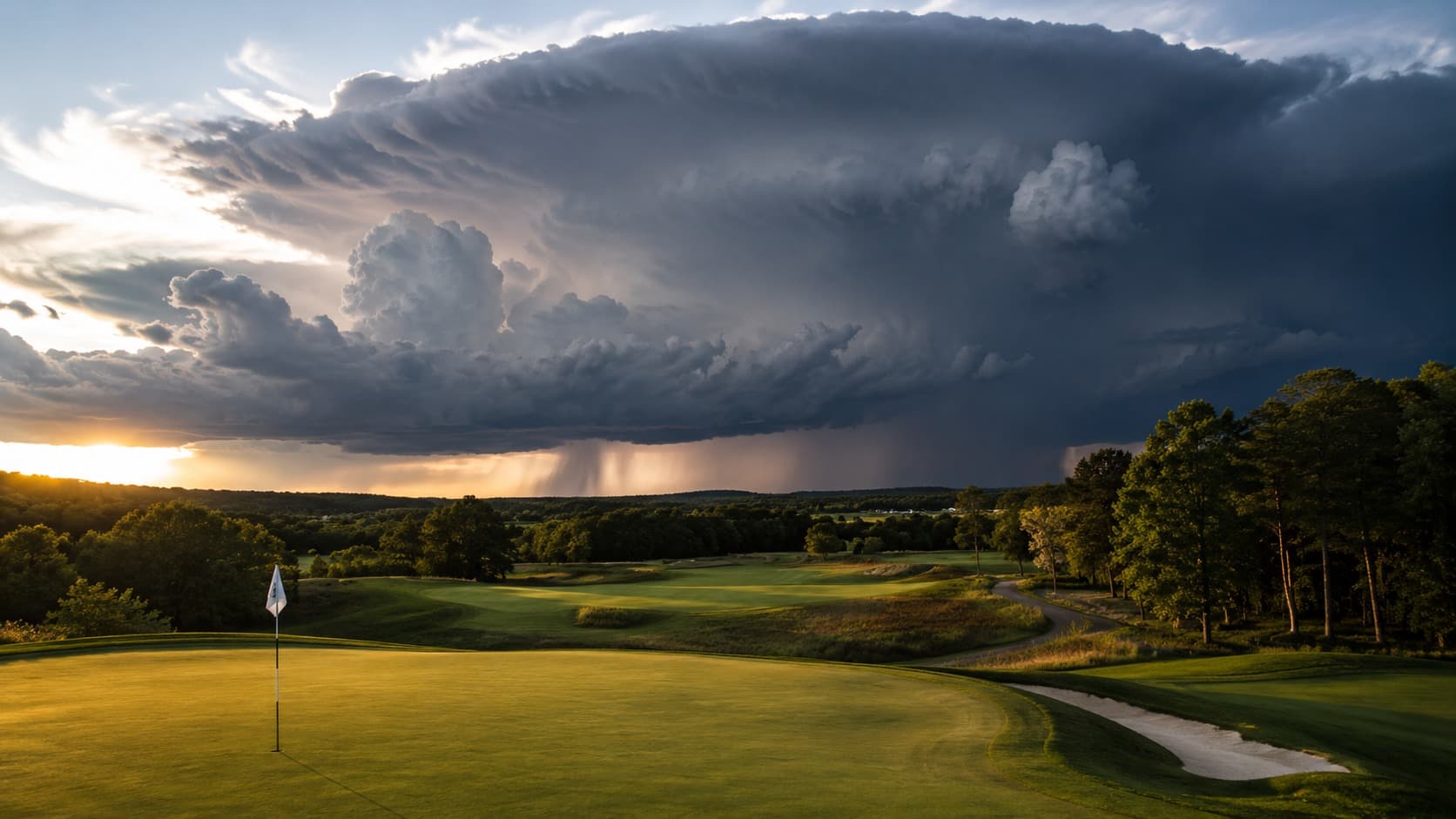
The Three O’Clock Storm: Reading Summer’s Convective Cycle to Protect Your Round
A 40% chance of afternoon thunderstorms does not mean a 40% chance of getting rained on. In the summer convective season it means the morning is nearly clear and the afternoon carries a fast-building, high-energy storm risk driven by a daily heating cycle. Here is the meteorology behind the pattern, the G-Score data on how the storm cycle punishes afternoon tee times across the Southeast, Midwest, and desert Southwest, the lightning-safety decision tree that actually matters, and the workflow that gets you off the course before the first bolt.
Read Story
How to Read a G-Score: The 0–100 Golf Playability Number, Decoded
A G-Score on this site is a single 0–100 number that tells you whether today is worth tee-up. Here is exactly what each band means, what drives the calculation, and how to use it to plan a round you will actually score on.
Read StoryMinSu Kim
Founder & Golf Data Analyst
MinSu is a data analyst and golfer with 10+ years on the course. He built Golf Weather Score to answer one question: is today a good day to play? He combines weather data, course intelligence, and the proprietary G-Score algorithm to help golfers make smarter decisions.
Every Friday Morning
When Arizona National Golf Club plays best next weekend.
Friday 6am ET: peak G-Score windows for Arizona National Golf Club, wind direction by hour, and one gear call. Three minutes to read, save you the round.
One email a week. Unsubscribe in one click.
The Caddie's Oracle
Draw your luck before the tee off