
Caddie's Gear Advisor
Curated for today's 79°F · Rain
Storm-Ready Outerwear
Waterproof layers built for 18 holes in the rain
Tour-Grade Umbrellas
68" double-canopy wind-resistant coverage
Wet-Weather Gloves
All-weather grip that performs in the rain
Waterproof Golf Shoes
Keep your feet dry through every fairway
Your Golf Trip, Handled
The Ultimate Golf Trip Planner
Everything you need to play Arlington Lakes Golf Course — from booking your flight to checking in course-side.
Course-Side Stays
Luxury hotels, resorts, and stay-and-play packages just minutes from the first tee.
Flights
Compare fares across 700+ airlines for the best route to your tee time.
SUV Rentals for Golf Bags
Spacious vehicles with room for clubs, bags, and your foursome.
Travel Insurance
Coverage for medical, weather delays, and gear at your destination.
Arlington Lakes Golf Course: Course Intelligence
Signature Setup
Arlington Lakes is a compact, walkable municipal course run by the Arlington Heights Park District in Chicago's northwest suburbs, and it opened in 1979 as a public daily-fee layout rather than a championship test. I'll be straight with you: I haven't walked a full loop here, so the seasonal and wind notes below lean on northern-Illinois historical weather data and the course's published numbers rather than a personal scorecard. What the layout is built for is honest suburban golf — a par-70 routing in the 5,900-to-6,000-yard range from the back markers, with a slope that sits in the low-to-mid 120s. The "Lakes" in the name is the point: several ponds thread through the property, and they convert a short course into a placement test. This is a course where club selection and a calm wind window matter more than raw distance.
Hole-by-Hole Wind & Playing Lines
The property is flat and only lightly treed in spots, so on the exposed holes the prevailing W/NW wind common to the Chicago suburbs is the defining variable.
- The #1-handicap par-4 (low-410s): Into a steady W/NW breeze this hole plays a full club or two longer — a 410-yard hole can feel like 440. Club up on the approach and favor the more open side off the tee so a pushed drive doesn't bring a pond or fairway bunker into the second shot.
- The signature par-3 over water (~150 yards): Short is the only number that's wet. Into a 10–15 mph headwind the carry inflates fast, so take enough club to reach the center-back of the green and let it feed toward a front pin rather than flirting with the water's edge.
- A water-guarded par-4 on the inward half: With the lakes more in play coming home, keep the tee ball under the gusts. A lower flight holds its line in crosswind and leaves a cleaner angle away from the hazard.
Green & Fairway Characteristics
This is cool-season turf — bentgrass, bluegrass and ryegrass through the fairways, with mid-sized bentgrass greens, not the Bermuda you'd find in the South. That matters for how the course plays: fairways stay receptive and don't produce much summer roll-out, so you're hitting longer approaches than the scorecard yardage suggests. The greens run a medium pace and hold a well-struck mid-iron, but they firm up in a dry late-summer stretch and punish a downhill putt left above the hole. Front and back nines are similar in length, with little elevation change — the test is water, wind and pin position rather than slope or forced carries.
Seasonal Weather Pattern
Northern Illinois gives this course a hard four-season swing, and it closes for winter — there's no year-round play here. The season opens cool in April, with mornings often in the 40s–50s°F and the calmest air before midday. May and June are prime: mild highs in the 70s°F and firmer turf before the heat. July and August bring highs in the upper 80s°F, high humidity, and the region's afternoon thunderstorm pattern, so an early tee time both beats the wind and lowers your odds of a lightning delay. September into mid-October is the sweet spot — moderate temperatures, lighter morning wind windows, and crisp air for clean ball-striking before the course shuts down for the season.
Local Play Tips
If you can choose, book a weekday morning in May or September. On a flat, water-laced municipal layout the morning isn't just cooler — it's calmer, and calm air around these ponds is worth more strokes than any swing thought. As a public Park District course it fills with afternoon and weekend league traffic, so an early weekday window means faster pace and softer, more receptive greens. One practical adjustment for the cool-season turf: don't count on summer roll the way you would down South — plan your approach distances off where the ball actually carries and lands, not where it might run.
Pre-Round Weather Workflow
Check the 7-day G-Score for the course location two or three days out, then again the night before, and watch two metrics here: windExposure and the afternoon storm risk. On a flat, open suburban layout the wind forecast is the single best predictor of your score, and in July–August the convective storm pattern can erase an afternoon round entirely. The G-Score typically reads several points higher in the morning because the W/NW wind builds through the day and storms fire in the heat. Pair the G-Score with the wind-direction forecast: an into-wind read on the long par-4 and the water-fronted par-3 tells you to club up and flight it low before you ever reach the first tee — and if the afternoon storm probability climbs, take the earliest window you can get.
Related Reading
Before you tee off at Arlington Lakes Golf Course

Best Golf Weather by State: Ranking America by Average G-Score
We ranked all 50 US states by average G-Score golf playability. California tops the list, but the results beyond the top five may surprise you.
Read Story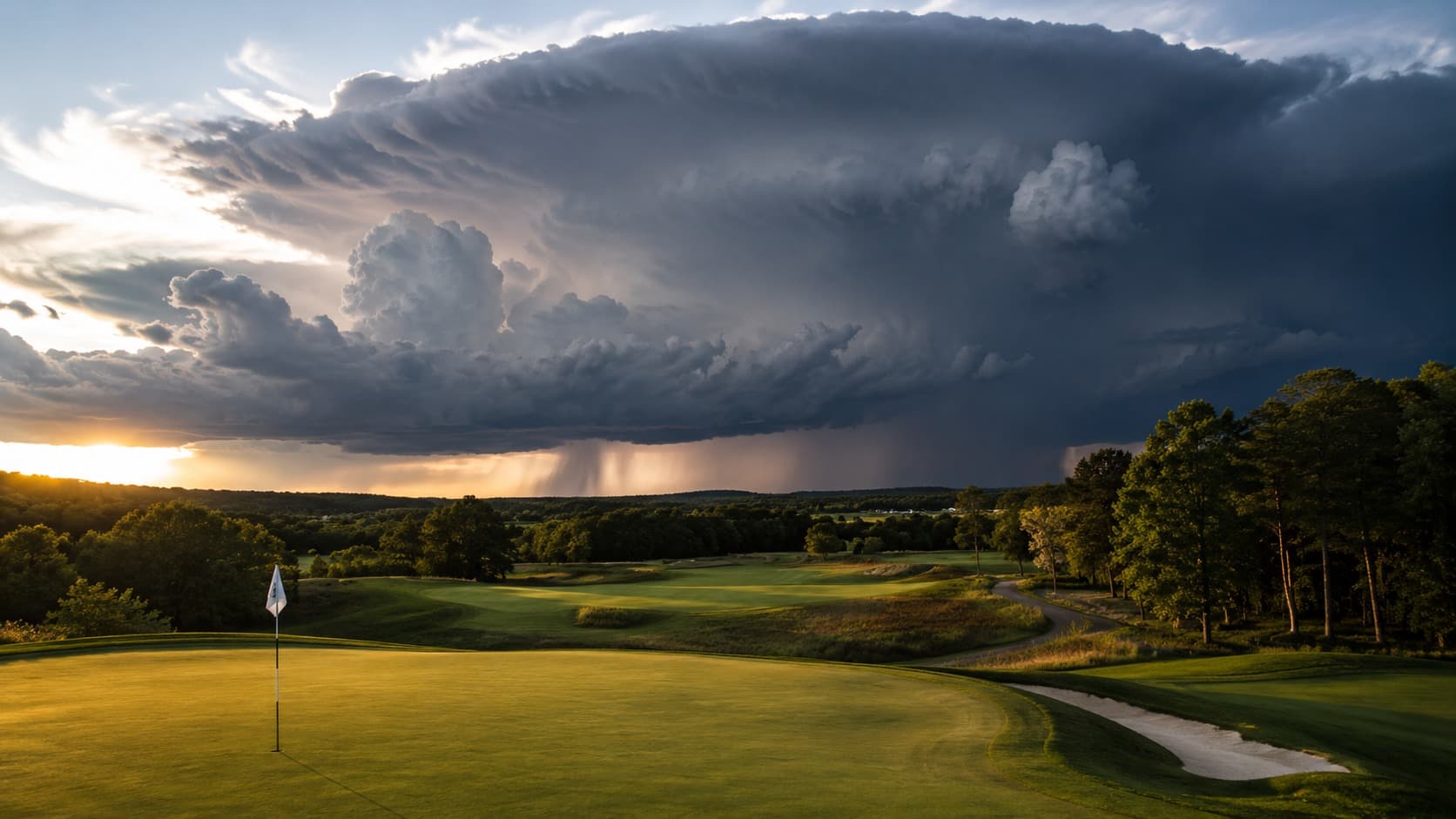
The Three O’Clock Storm: Reading Summer’s Convective Cycle to Protect Your Round
A 40% chance of afternoon thunderstorms does not mean a 40% chance of getting rained on. In the summer convective season it means the morning is nearly clear and the afternoon carries a fast-building, high-energy storm risk driven by a daily heating cycle. Here is the meteorology behind the pattern, the G-Score data on how the storm cycle punishes afternoon tee times across the Southeast, Midwest, and desert Southwest, the lightning-safety decision tree that actually matters, and the workflow that gets you off the course before the first bolt.
Read StoryMinSu Kim
Founder & Golf Data Analyst
MinSu is a data analyst and golfer with 10+ years on the course. He built Golf Weather Score to answer one question: is today a good day to play? He combines weather data, course intelligence, and the proprietary G-Score algorithm to help golfers make smarter decisions.
Every Friday Morning
When Arlington Lakes Golf Course plays best next weekend.
Friday 6am ET: peak G-Score windows for Arlington Lakes Golf Course, wind direction by hour, and one gear call. Three minutes to read, save you the round.
One email a week. Unsubscribe in one click.
The Caddie's Oracle
Draw your luck before the tee off