
Caddie's Gear Advisor
Curated for today's 79°F · Thunderstorm
Storm-Ready Outerwear
Waterproof layers built for 18 holes in the rain
Tour-Grade Umbrellas
68" double-canopy wind-resistant coverage
Wet-Weather Gloves
All-weather grip that performs in the rain
Waterproof Golf Shoes
Keep your feet dry through every fairway
Your Golf Trip, Handled
The Ultimate Golf Trip Planner
Everything you need to play Arlington Ridge Golf Club — from booking your flight to checking in course-side.
Course-Side Stays
Luxury hotels, resorts, and stay-and-play packages just minutes from the first tee.
Flights
Compare fares across 700+ airlines for the best route to your tee time.
SUV Rentals for Golf Bags
Spacious vehicles with room for clubs, bags, and your foursome.
Travel Insurance
Coverage for medical, weather delays, and gear at your destination.
Arlington Ridge Golf Club: Course Intelligence
Signature Setup
Arlington Ridge sits in Leesburg, in Lake County, the stretch of central Florida between Ocala and Orlando that locals call golf country. The course was designed by Gary Koch — six-time PGA Tour winner and the NBC voice behind "better than most" — and opened in 2005 as the centerpiece of an active-adult community. It's a par 71 that stretches to 6,610 yards from the back tees and folds in to 4,877 up front, with five sets of tee boxes so the routing fits a wide handicap range. Koch built it to be playable rather than punishing, but the water and the wind keep it honest.
Hole-by-Hole Wind & Playing Lines
I haven't walked every tee box here in peak summer, so the lines below lean on the scorecard and Koch's routing more than on my own card — I'll flag where I'm reading the wind rather than the yardage book. The defining force is central Florida's afternoon sea-breeze, which on the Lake County peninsula tends to swing out of the south-southwest by early afternoon. On those mornings the longest par-4s play dead into it: a 410-yard hole off the back tees plays closer to 435, and the smart move is one extra club with a miss left short of the green rather than long into the back collars. The lake-guarded par-3s are where scores leak — a 165-yard one-clubber becomes a 180-yard carry once the breeze stiffens, and Koch leaves no bail-out on the water side. Early, before the breeze, the same holes are gettable.
Green & Fairway Characteristics
The greens and fairways are Bermuda, which changes how the course plays by season more than most northern golfers expect. In the spring dry season the fairways run firm and the greens get grainy and quick — putts break hard toward the low water and toward the late-day sun, and downgrain chips release twice as far as you'd plan. After the summer rains the whole property softens and holds, so target golf into the par-3s gets easier even as the air gets heavier. From 6,610 yards the par-71 setup is not long by tournament standards, but the doglegs reward placement off the tee over raw distance.
Seasonal Weather Pattern
Winter is the season here. December through February brings cool mornings in the 45–55°F range and pleasant 70s by afternoon — peak snowbird traffic, firm turf, and almost no rain delay. Summer is the opposite math: highs in the low 90s, dew points in the 70s, and a near-daily thunderstorm that builds inland off the lake-and-coast convergence and usually fires between 2 and 4 p.m. June through September is morning-only golf if you want to finish.
Local Play Tips
One thing the booking pages won't tell you: this is a community-anchored course, so weekday mornings in winter fill with resident foursomes and pace slows after 9 a.m. Book the first hour or wait until the 11 a.m. lull. In summer, the maintenance crews mow greens early, so the 7 a.m. tee times get the truest, fastest surfaces before the heat swells the Bermuda.
Pre-Round Weather Workflow
Pull the 7-day G-Score for Arlington Ridge two days out. In winter, look for the morning low — anything under 50°F means slower greens and a softer-flying ball, so factor a half-club more on every iron until it warms. In summer, the single most important read is the afternoon storm timing: check the windExposure and precipitation window, and if the G-Score collapses after 1 p.m., move your tee time to the morning rather than gamble on the back nine. On any SW-wind day, replan your approach clubs on the long par-4s before you leave the house — that's where the round is won or lost here.
Related Reading
Before you tee off at Arlington Ridge Golf Club

Best Golf Weather by State: Ranking America by Average G-Score
We ranked all 50 US states by average G-Score golf playability. California tops the list, but the results beyond the top five may surprise you.
Read Story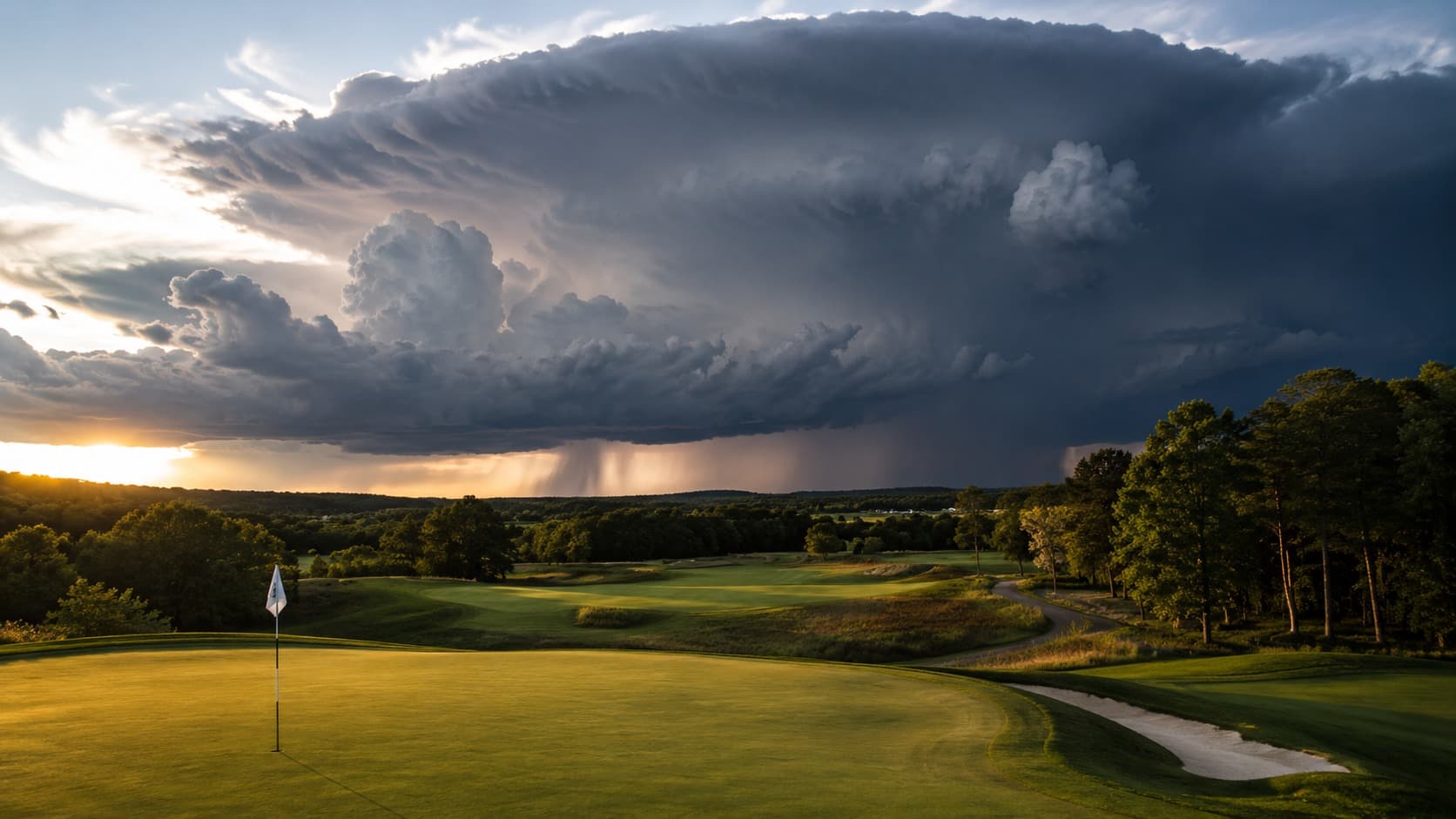
The Three O’Clock Storm: Reading Summer’s Convective Cycle to Protect Your Round
A 40% chance of afternoon thunderstorms does not mean a 40% chance of getting rained on. In the summer convective season it means the morning is nearly clear and the afternoon carries a fast-building, high-energy storm risk driven by a daily heating cycle. Here is the meteorology behind the pattern, the G-Score data on how the storm cycle punishes afternoon tee times across the Southeast, Midwest, and desert Southwest, the lightning-safety decision tree that actually matters, and the workflow that gets you off the course before the first bolt.
Read StoryMinSu Kim
Founder & Golf Data Analyst
MinSu is a data analyst and golfer with 10+ years on the course. He built Golf Weather Score to answer one question: is today a good day to play? He combines weather data, course intelligence, and the proprietary G-Score algorithm to help golfers make smarter decisions.
Every Friday Morning
When Arlington Ridge Golf Club plays best next weekend.
Friday 6am ET: peak G-Score windows for Arlington Ridge Golf Club, wind direction by hour, and one gear call. Three minutes to read, save you the round.
One email a week. Unsubscribe in one click.
The Caddie's Oracle
Draw your luck before the tee off