
Caddie's Gear Advisor
Curated for today's 78°F · Thunderstorm
Storm-Ready Outerwear
Waterproof layers built for 18 holes in the rain
Tour-Grade Umbrellas
68" double-canopy wind-resistant coverage
Wet-Weather Gloves
All-weather grip that performs in the rain
Waterproof Golf Shoes
Keep your feet dry through every fairway
Your Golf Trip, Handled
The Ultimate Golf Trip Planner
Everything you need to play Arrowhead Lakes Golf Course — from booking your flight to checking in course-side.
Course-Side Stays
Luxury hotels, resorts, and stay-and-play packages just minutes from the first tee.
Flights
Compare fares across 700+ airlines for the best route to your tee time.
SUV Rentals for Golf Bags
Spacious vehicles with room for clubs, bags, and your foursome.
Travel Insurance
Coverage for medical, weather delays, and gear at your destination.
Arrowhead Lakes Golf Course: Course Intelligence
TL;DR
Arrowhead Lakes is a water-defined parkland layout where six holes touch open water and the wind funnels along the lake corridors. The course is short on paper (about 6,400 yards from the tips) but the carries over water — most notably the 16th — punish a tentative club selection. Morning play is meaningfully easier here than mid-afternoon, and the difference is almost entirely about wind off the lakes.
Signature Setup
Arrowhead Lakes opened in 1972 to a Ken Killian routing built around an existing chain of small lakes rather than over them — the water came first, the holes second. That sequencing is why the layout feels tight in spots a modern architect would have widened: the corridors were dictated by the shoreline. The headline hole is the 16th, a 168-yard par-3 that asks for a full carry over the main lake to a green that sits only a few feet above the waterline. It is not a long shot, but it is an exposed one. I have not played in a club championship here, so I won't pretend to know how the committee tucks the Sunday pins — what I can speak to is the everyday tee, where the green opens up front-left and rejects anything pushed right.
Hole-by-Hole Wind & Playing Lines
The three holes that decide most rounds:
- Hole 4 (par-4, 438y, #1 handicap): The hardest hole on the card. On the NW crosswinds that dominate spring mornings, the tee shot wants to ride left toward the tree line. Aim right-center off the tee; the approach, normally a 6-iron, plays closer to a 4-iron into a quartering breeze. A par here is a stroke gained on the field.
- Hole 11 (par-4, 402y, dogleg right): A downwind hole on prevailing SW afternoons, which tempts longer hitters to cut the corner. The risk is the lake hugging the inside of the dogleg — bail too aggressively and a downwind drive runs through the fairway into hazard. Club down off the tee when the wind is at your back.
- Hole 16 (par-3, 168y): Pure wind math. Into a 10–12 mph headwind, the 168 yards plays like 185–190; with the same breeze helping, it can drop to a soft 150. Take one more club than your gut says and trust the front-left bailout.
Green & Fairway Characteristics
The greens are bentgrass and run on the slower side of medium — figure around 9 to 9.5 on the Stimpmeter for daily play, firmer and a half-foot faster in a dry August. They are mid-sized with subtle back-to-front tilt, so uphill putts are the safe miss. Fairways are a bluegrass/rye mix, generous in the middle of the course but pinched near the water on 4, 11, and 16. Front-nine yardage sits a touch longer than the back; the back nine packs in the water holes and the scoring opportunities, so a round can swing late. Slope rating runs in the low-130s from the back tees — demanding for a course of this length, almost entirely because of the forced carries.
Seasonal Weather Pattern
The defining seasonal variable is the lakes' thermal lag. From April into early June, surface water stays cold and holds a cool layer over the low-lying holes well past sunrise; I'd plan for fairway temps in the upper 50s on a morning the parking lot already reads 64°F. That cold air keeps the fairways soft and the ball running short — roll-out you'd expect in July simply isn't there in May. Mid-summer flips it: July and August afternoons bring firm, fast turf and a steady SW breeze that builds after noon. Fall is the sweet spot — stable air, firm greens, and the lakes still warm enough not to chill the lows.
Local Play Tips
The lakes hold cold, still air past sunrise, and that's the edge most visitors miss: the first two or three groups off the tee play fairways 5 to 7 degrees cooler and noticeably softer than the 10 a.m. wave, and — more importantly — they beat the afternoon wind off the water entirely. If you have any choice in tee time, take the earliest you can get. A second, quieter tip: the cart-path side of 16 sits lower than the green, so a chunked layup short doesn't just come up short, it funnels back toward the water — lay up long of your comfort number, not short of it.
Pre-Round Weather Workflow
Use the 7-day G-Score and the windExposure readout to time this round, because at Arrowhead Lakes the weather window matters more than your swing. Two days out, check the G-Score trend and target the morning with the highest score — here that almost always means the calmest, pre-breeze block. The night before, look at the windExposure direction: a NW reading flags Hole 4 as the day's crux (club up on the approach), while an SW reading shifts the danger to the downwind dogleg at 11 (club down off the tee) and turns 16 into a helping-wind hole. On the tee, glance at the live wind one more time before pulling a club on 16 — the lake corridor amplifies whatever the forecast said.
Related Reading
Before you tee off at Arrowhead Lakes Golf Course

Best Golf Weather by State: Ranking America by Average G-Score
We ranked all 50 US states by average G-Score golf playability. California tops the list, but the results beyond the top five may surprise you.
Read Story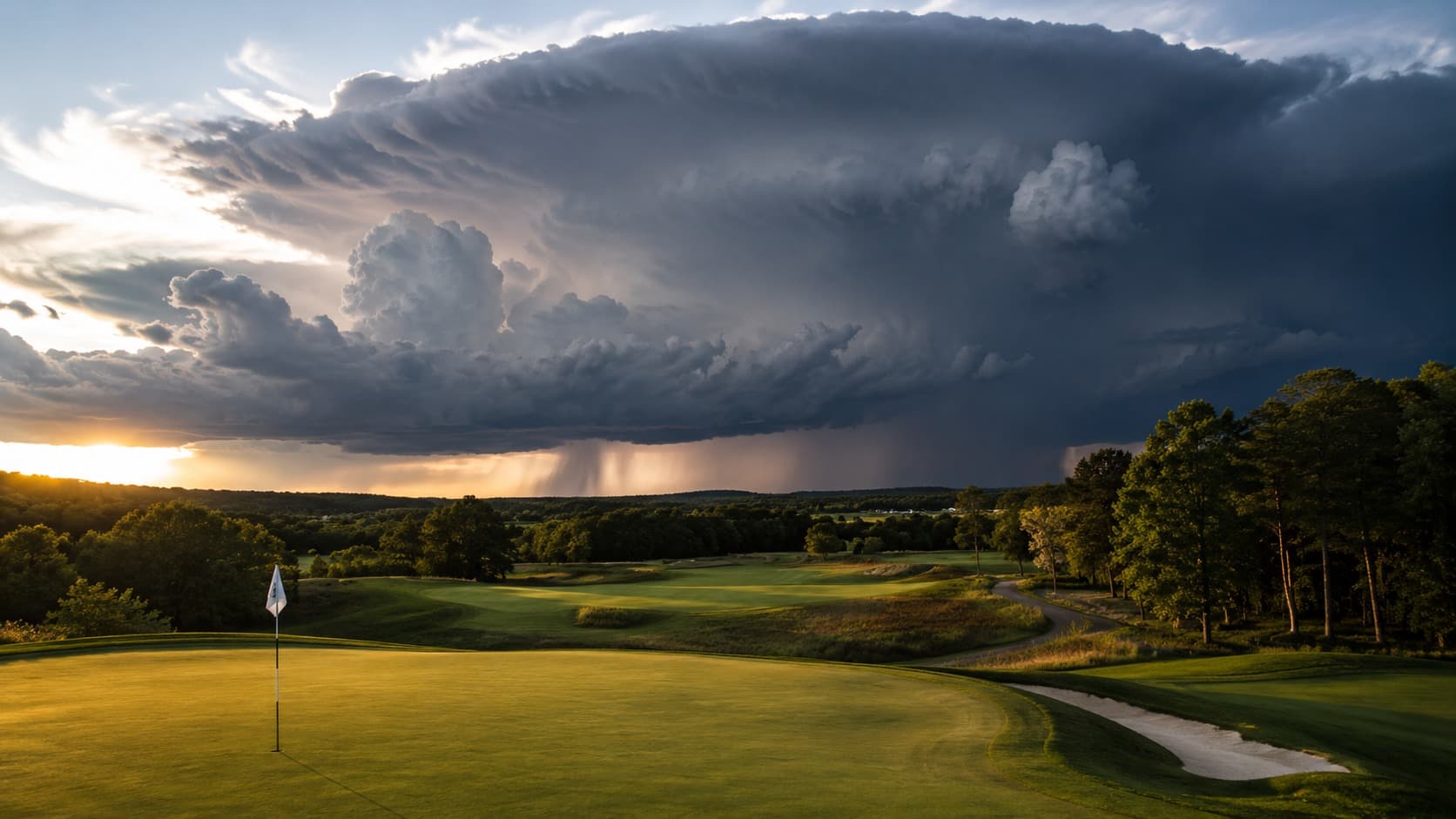
The Three O’Clock Storm: Reading Summer’s Convective Cycle to Protect Your Round
A 40% chance of afternoon thunderstorms does not mean a 40% chance of getting rained on. In the summer convective season it means the morning is nearly clear and the afternoon carries a fast-building, high-energy storm risk driven by a daily heating cycle. Here is the meteorology behind the pattern, the G-Score data on how the storm cycle punishes afternoon tee times across the Southeast, Midwest, and desert Southwest, the lightning-safety decision tree that actually matters, and the workflow that gets you off the course before the first bolt.
Read StoryMinSu Kim
Founder & Golf Data Analyst
MinSu is a data analyst and golfer with 10+ years on the course. He built Golf Weather Score to answer one question: is today a good day to play? He combines weather data, course intelligence, and the proprietary G-Score algorithm to help golfers make smarter decisions.
Every Friday Morning
When Arrowhead Lakes Golf Course plays best next weekend.
Friday 6am ET: peak G-Score windows for Arrowhead Lakes Golf Course, wind direction by hour, and one gear call. Three minutes to read, save you the round.
One email a week. Unsubscribe in one click.
The Caddie's Oracle
Draw your luck before the tee off