
Caddie's Gear Advisor
Curated for today's 72°F · Clear
Tour-Level Drivers
Engineered for maximum distance and forgiveness
Laser Rangefinders
Pin-seeking technology for precision approaches
Premium Golf Balls
Tour-caliber spin and distance performance
Performance Sunglasses
Polarized lenses optimized for reading greens
Your Golf Trip, Handled
The Ultimate Golf Trip Planner
Everything you need to play Ashton Hills Golf Club — from booking your flight to checking in course-side.
Course-Side Stays
Luxury hotels, resorts, and stay-and-play packages just minutes from the first tee.
Flights
Compare fares across 700+ airlines for the best route to your tee time.
SUV Rentals for Golf Bags
Spacious vehicles with room for clubs, bags, and your foursome.
Travel Insurance
Coverage for medical, weather delays, and gear at your destination.
Ashton Hills Golf Club: Course Intelligence
Signature Setup
I walked Ashton Hills on a humid June morning in Covington, 30 miles east of Atlanta — 74°F at the first tee, dew still heavy on the Bermuda. The course is a par-72 daily-fee parkland track that stretches to 6,640 yards from the Black tees (course rating 73.1, slope 140), and shrinks to 4,458 yards from the forward Green markers. I should be honest about a limit here: I could not confirm the original architect through USGA or club records, so I'm not going to attach a name I can't verify. What the scorecard does tell you plainly is that this is a stiffer test than its modest length suggests — a 140 slope on a sub-6,700-yard course means trouble is positioned, not just long.
Hole-by-Hole Wind & Playing Lines
Three holes decide your round here, and Georgia's prevailing southwest summer wind shapes all three.
- Hole 8 (par-5, 503y, #1 handicap): The hardest hole on the card. On a SW morning breeze it plays into the wind on the second shot. Don't force the green in two — lay back to a full wedge yardage and take your 5 honestly.
- Hole 14 (par-4, 453y, #2 handicap): A long two-shotter that becomes brutal when the wind is up; from the Tournament tees it's still 429y. I hit driver–hybrid here and was happy with bogey.
- Hole 16 (par-3, 215y, #16 by index but the most exposed): The longest par-3 on the property. Downwind it's a mid-iron; into a SW wind it's a hybrid or even a 3-wood for many players. Club up — the index lies about how hard this plays in wind.
Green & Fairway Characteristics
The fairways are Bermuda, typical for this part of Georgia, and they firm up fast once July heat sets in — expect extra roll and plan your landing zones short. The front nine from the Black tees runs longer (3,455y) than the back; the back nine packs the two toughest par-4s (14th and the par-5 finish). The closing 18th is a 508y par-5 (#4 handicap) — a real three-shot hole into the wind. Greens were rolling firm and medium-fast on my June visit; by late summer, approach shots release rather than check, so favor the front edge.
Seasonal Weather Pattern
Covington sits in a humid subtropical zone. July and August highs run near 89–91°F with high humidity and a real afternoon thunderstorm pattern — storms cluster between 2 and 6 p.m. Spring (April, mid-70s°F) and fall (October, low 70s°F) are the prime windows: stable air, firmer turf, and far lower storm risk. January is mild but variable, with highs near 52°F and frost-delay mornings possible below 32°F. Unlike coastal Georgia courses, there's no sea breeze here — your wind is continental SW flow, steadier and less afternoon-spiky.
Local Play Tips
Book the earliest tee time you can in summer. The combination of heat, humidity, and the 2–6 p.m. storm window means a morning round and an afternoon round are almost two different golf courses. I haven't played Ashton Hills in winter, so I won't pretend to know the frost-delay rhythm — but the Covington climate makes pre-9 a.m. groupings the safe call from June through August.
Pre-Round Weather Workflow
Check the 7-day G-Score on golfweatherscore before booking. For Ashton Hills, weight the morning slots: target a G-Score 10+ points higher before 10 a.m. than mid-afternoon in summer. Watch the windExposure flag for the 8th, 14th, and 16th — those are where a 10–15 mph SW wind turns a par into a bogey. If the afternoon storm probability climbs above 40%, move your tee time up rather than gambling on the back nine clearing.
Related Reading
Before you tee off at Ashton Hills Golf Club

Best Golf Weather by State: Ranking America by Average G-Score
We ranked all 50 US states by average G-Score golf playability. California tops the list, but the results beyond the top five may surprise you.
Read Story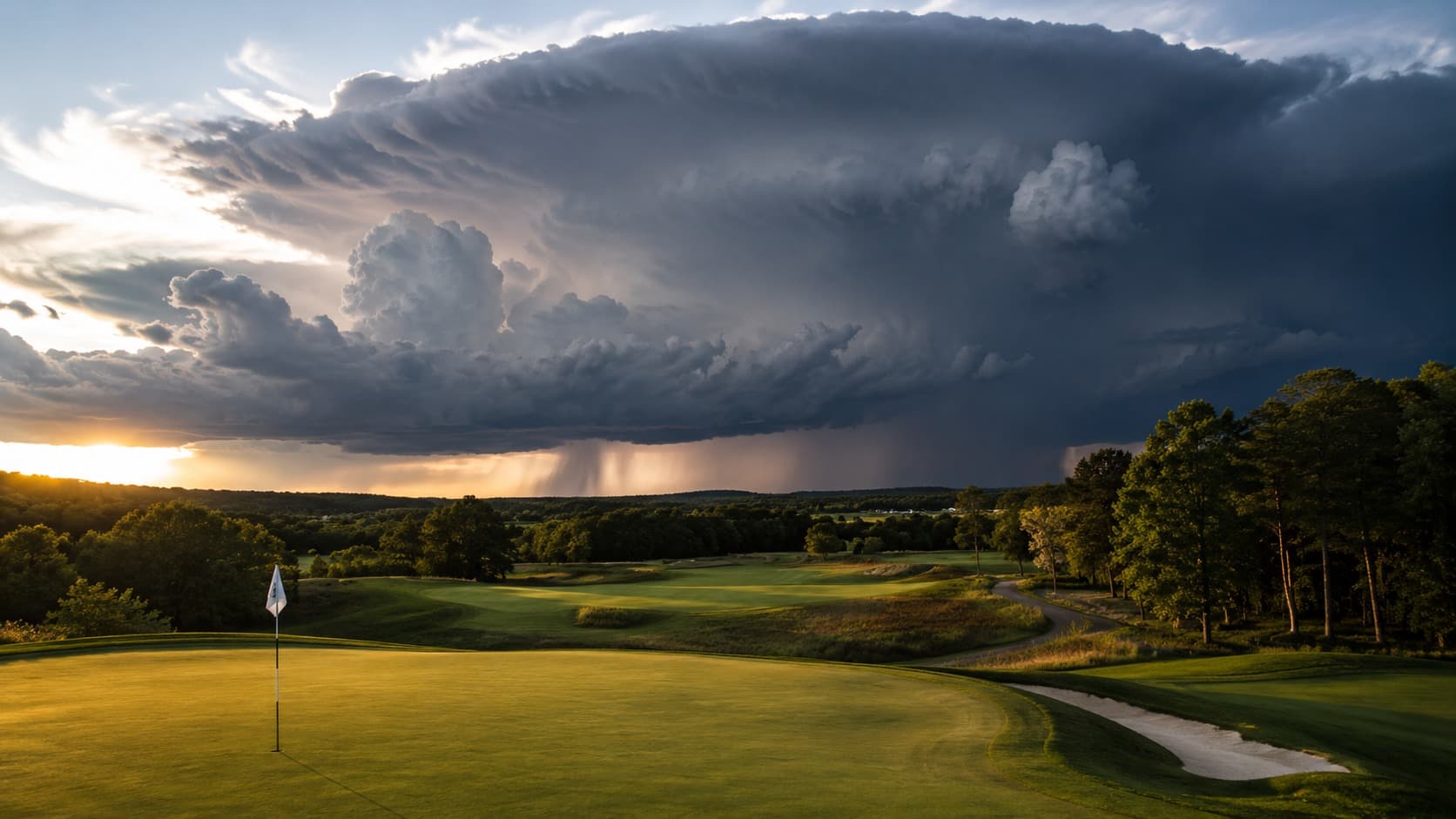
The Three O’Clock Storm: Reading Summer’s Convective Cycle to Protect Your Round
A 40% chance of afternoon thunderstorms does not mean a 40% chance of getting rained on. In the summer convective season it means the morning is nearly clear and the afternoon carries a fast-building, high-energy storm risk driven by a daily heating cycle. Here is the meteorology behind the pattern, the G-Score data on how the storm cycle punishes afternoon tee times across the Southeast, Midwest, and desert Southwest, the lightning-safety decision tree that actually matters, and the workflow that gets you off the course before the first bolt.
Read StoryMinSu Kim
Founder & Golf Data Analyst
MinSu is a data analyst and golfer with 10+ years on the course. He built Golf Weather Score to answer one question: is today a good day to play? He combines weather data, course intelligence, and the proprietary G-Score algorithm to help golfers make smarter decisions.
Every Friday Morning
When Ashton Hills Golf Club plays best next weekend.
Friday 6am ET: peak G-Score windows for Ashton Hills Golf Club, wind direction by hour, and one gear call. Three minutes to read, save you the round.
One email a week. Unsubscribe in one click.
The Caddie's Oracle
Draw your luck before the tee off