
Caddie's Gear Advisor
Curated for today's 72°F · Clouds
Tour-Level Drivers
Engineered for maximum distance and forgiveness
Laser Rangefinders
Pin-seeking technology for precision approaches
Premium Golf Balls
Tour-caliber spin and distance performance
Performance Sunglasses
Polarized lenses optimized for reading greens
Your Golf Trip, Handled
The Ultimate Golf Trip Planner
Everything you need to play Bally's Golf Links at Ferry Point — from booking your flight to checking in course-side.
Course-Side Stays
Luxury hotels, resorts, and stay-and-play packages just minutes from the first tee.
Flights
Compare fares across 700+ airlines for the best route to your tee time.
SUV Rentals for Golf Bags
Spacious vehicles with room for clubs, bags, and your foursome.
Travel Insurance
Coverage for medical, weather delays, and gear at your destination.
Bally's Golf Links at Ferry Point: Course Intelligence
Signature Setup
The Bronx-Whitestone Bridge sits closer than you expect from the 5th tee — the steel hums when traffic is heavy, and the fescue between you and the green moves before you feel the wind on your face. I played here on a gray April morning, 49°F at 8:10 a.m., zipped to the collar.
Bally's Golf Links at Ferry Point is a Jack Nicklaus (Nicklaus Design) layout that opened in April 2015 on a capped former landfill at Throggs Neck, where the East River meets Long Island Sound. It is one of the only true treeless links-style courses inside New York City limits, built as a municipal public course and rebranded from its prior Trump branding to Bally's in 2023. From the championship tees it stretches past 7,400 yards to a par 72.
Hole-by-Hole Wind & Playing Lines
This is an exposed site. There is almost no tree cover, so the wind off the water — most often from the southwest — is the defining variable, not the bunkering.
- Hole 18 (#1 handicap, par-4 ~470y): Into a prevailing SW river breeze this is the hardest swing on the property. The fescue right of the fairway is penal; I aim up the left edge with a 3-wood to take the long carry out of play, then lay back to a full 8-iron. A knockdown wedge from that rough rarely holds the green.
- Hole 5 (par-3, ~200y from the back): With the bridge behind the green, a left-to-right wind pushes anything cut into the right fescue. On a quartering breeze I club up one and start it at the left bunker.
- Hole 12 (par-4 dogleg): A NNE wind — common on cold, clear winter mornings — turns this into a help-then-hurt hole: downwind off the tee, dead into you on the approach. The 150-yard board often plays 170.
Green & Fairway Characteristics
The greens are bentgrass and ran in the mid-10s on Stimp the morning I played — quick but not glassy, with enough movement that pace matters more than read. The fairways are fescue-lined and sit on a firm, sandy landfill cap, so the ball releases. Expect run-out on the firmer summer days and very little carry-and-stop. Front-nine yardages from the regular tees sit around 3,400–3,500; the back is the longer, more exposed half and where most of the par-72 difficulty lives.
Seasonal Weather Pattern
Ferry Point is a shoulder-season course more than a midsummer one. April and October mornings run roughly 45–55°F with the heaviest river wind; I have started rounds here near 49°F with a steady 12–15 mph SW breeze that did not settle until midday. July and August bring humidity and afternoon haze off the Sound, with greens firming and fairways running fast. Winter clear-sky mornings can drop into the 30s with that NNE wind I mentioned on Hole 12 — playable, but two-club cold.
Local Play Tips
The walk back to the clubhouse from the far corner of the property is genuinely long, and there is little shelter if a squall rolls in off the water — carry a shell layer even on a mild forecast. I have not played here in deep summer heat, so I will not pretend to know how the greens hold at peak firmness in August; my notes are from spring and fall mornings. One practical detail: the par-3 5th near the bridge is the photo everyone stops for, which can back up play — let the group behind through if you linger.
Pre-Round Weather Workflow
Use the 7-day G-Score with windExposure on this course specifically — it is one of the most wind-sensitive layouts in the city. Check the forecast wind direction the night before: a SW reading means the back nine and 18 will be a grind, so plan to tee off early before the sea breeze builds. A NNE winter pattern flips which holes help and hurt. If the G-Score is meaningfully higher in the early window than at midday, take the early tee time — on an open links like Ferry Point, that single decision is worth more strokes than any club choice.
Related Reading
Before you tee off at Bally's Golf Links at Ferry Point

How Cold Weather Steals Distance: The Ball Compression Physics Every Golfer Should Know
Every 10°F drop costs the average golfer two to four yards of driver carry. Here is the physics — ball compression, air density, muscle temperature — and the field data we pulled from G-Score-monitored cold rounds to show exactly how distance loss compounds, and how to compensate without changing your swing.
Read Story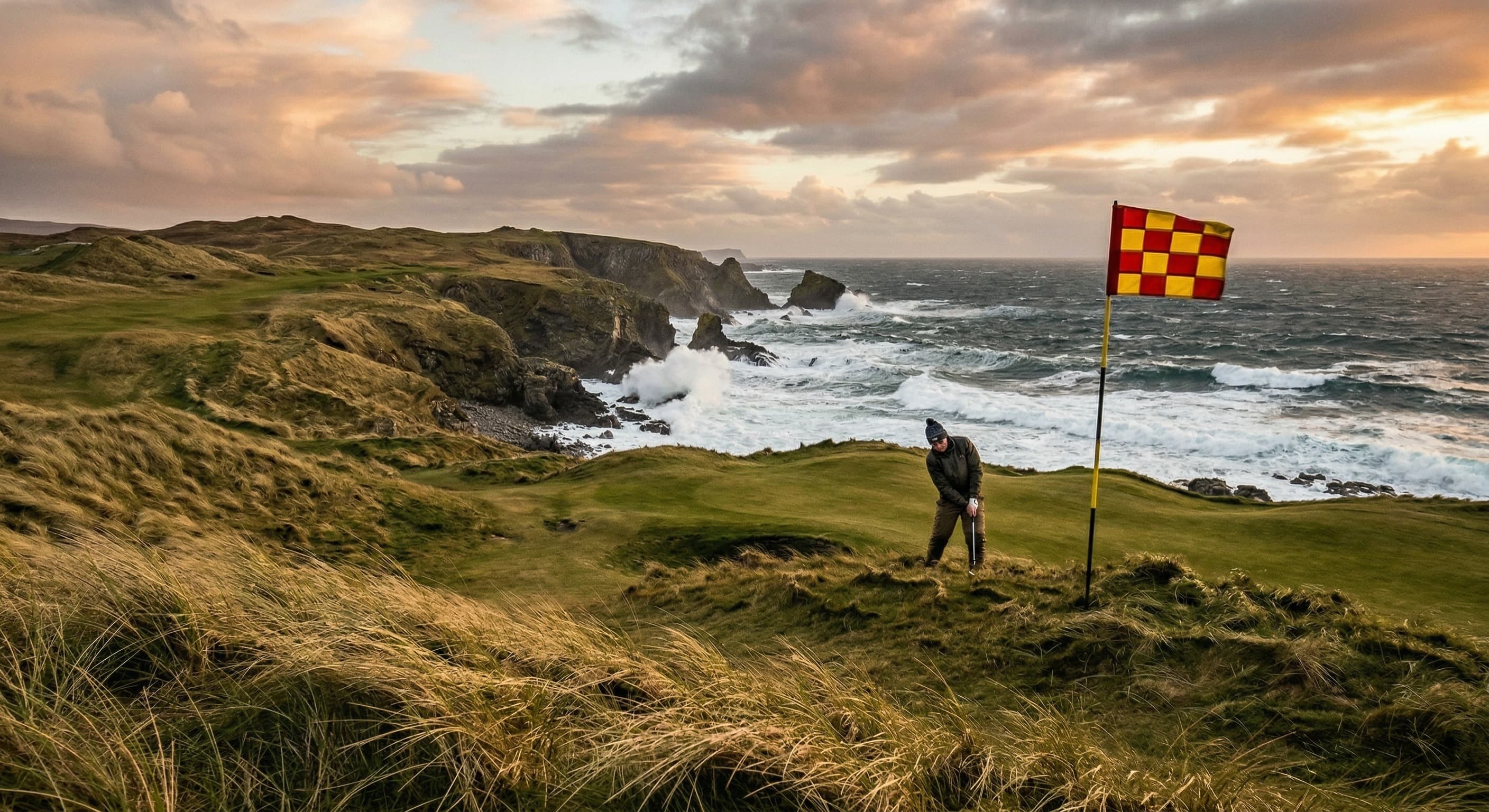
America's 20 Windiest Golf Courses: A G-Score Wind Analysis
We ranked America's 20 windiest golf courses using G-Score wind penalty data. See how coastal gusts and prairie gales reshape playability scores.
Read StoryMinSu Kim
Founder & Golf Data Analyst
MinSu is a data analyst and golfer with 10+ years on the course. He built Golf Weather Score to answer one question: is today a good day to play? He combines weather data, course intelligence, and the proprietary G-Score algorithm to help golfers make smarter decisions.
Every Friday Morning
When Bally's Golf Links at Ferry Point plays best next weekend.
Friday 6am ET: peak G-Score windows for Bally's Golf Links at Ferry Point, wind direction by hour, and one gear call. Three minutes to read, save you the round.
One email a week. Unsubscribe in one click.
The Caddie's Oracle
Draw your luck before the tee off