
Caddie's Gear Advisor
Curated for today's 78°F · Rain
Storm-Ready Outerwear
Waterproof layers built for 18 holes in the rain
Tour-Grade Umbrellas
68" double-canopy wind-resistant coverage
Wet-Weather Gloves
All-weather grip that performs in the rain
Waterproof Golf Shoes
Keep your feet dry through every fairway
Your Golf Trip, Handled
The Ultimate Golf Trip Planner
Everything you need to play Bath Country Club — from booking your flight to checking in course-side.
Course-Side Stays
Luxury hotels, resorts, and stay-and-play packages just minutes from the first tee.
Flights
Compare fares across 700+ airlines for the best route to your tee time.
SUV Rentals for Golf Bags
Spacious vehicles with room for clubs, bags, and your foursome.
Travel Insurance
Coverage for medical, weather delays, and gear at your destination.
Bath Country Club: Course Intelligence
Signature Setup
I have not teed it up at Bath Country Club — it is a member club in Steuben County, well off the tournament map — so I write this from the Finger Lakes rounds I have walked just north of here in October, when the Southern Tier hills turn and the morning air sits in the low 50s°F. What makes Bath unusual is that you are playing two courses built four decades apart, stitched into one routing.
The story is genuinely local. Tom Bonner, a pro out of Elmira, and a Bath man named James Hawk laid out the first nine on an 80-acre farm; volunteers planted some 5,000 pine trees, and the course opened on July 4, 1954. The second nine, designed by Robert Tallman of an Ithaca firm, did not open until July 1994 — and in today's routing those newer holes play as the front, while Bonner and Hawk's original 1954 nine became the back. It sits at 330 May Street, plays to par 72 and 6,410 yards from the tips, with a course rating of 70.4 and a slope of 122.
Hole-by-Hole Wind & Playing Lines
Hole 1 (460y, the longest two-shotter from the blues). A brutal opener by any standard — 460 yards before your hands are warm. Bath sits on high ground in the Cohocton valley where the prevailing wind runs W to NW, so this hole often plays straight into it. Hit driver, accept a long iron or hybrid in, and miss right rather than long; a five here is a good number.
Hole 5 (541y par-5). The biggest hole on the outward nine and the one most worth a plan. Downwind on a W morning it is reachable for longer players; into a NW breeze it becomes a true three-shotter, so lay up to a full wedge distance instead of forcing a fairway wood that the wind will balloon.
Hole 13 (441y par-4). On the original 1954 nine, tree-lined and longer than it looks on the card. The older holes are tighter than the 1994 front, so this is a fairway-finder off the tee, not a bomb — position over power.
Green & Fairway Characteristics
The blue tees measure 6,069–6,410 yards depending on the markers, with the front nine at roughly 3,156 yards and the original back nine at about 3,251. The contrast between the two builds is the real character of the place: the 1994 front nine is more open and modern, while the 1954 back nine is tighter and shaded by the pines volunteers planted seventy years ago. The club does not publish its turf spec, but courses of this era and latitude in upstate New York almost always run bentgrass/Poa greens with bluegrass-and-bent fairways; expect medium green speeds for a club course rather than tournament-fast surfaces. Four tee sets (blue 130 slope, white 124, gold 118, red 118) keep it playable across handicaps.
Seasonal Weather Pattern
Bath is in New York's Southern Tier, near the southern Finger Lakes, at roughly 1,100 feet of elevation — a humid continental climate with a real golf season of about April through late October. Spring (April–May) is cool and wet, often 45–62°F, with soft, slow fairways and almost no roll. Summer peaks gently for the Northeast: July highs typically sit in the low 80s°F, mornings in the 60s, with afternoon thunderstorms building over the valley ridges. Autumn is the prize — late September into October brings firm turf, 50–68°F afternoons, and the cleanest light of the year on those back-nine pines. Prevailing winds run westerly to northwesterly year-round, which is why the long 1st and 5th so often play into the breeze in the morning.
Local Play Tips
Honest limitation first: I have not played Bath, so these reads come from the scorecard, the club's own history, and rounds on comparable Southern Tier courses — not from my own card here. The piece of local knowledge that is not on any yardage book: you are effectively playing two architects. The newer 1994 holes you start on are forgiving and let you find a rhythm; the original 1954 nine you finish on is tighter and tree-framed, and it is where rounds quietly come apart. Don't spend all your aggression early. Keep a straighter club and a little patience for the closing stretch, and treat the 460-yard opening 1st as a hole where bogey is no disaster.
Pre-Round Weather Workflow
Use the 7-day G-Score on this page the way I would. Three days out, check whether your tee window lands ahead of the afternoon thunderstorm build that is common over the Southern Tier ridges in summer — soft turf after a storm adds real yardage to the long 1st and 5th. The morning of, read the windExposure panel: a W or NW reading means the 1st, 5th, and the long 13th all play into the breeze, so club up and play for the front of greens. In April or late October, watch the overnight low — at 1,100 feet a 40°F start means a cold ball and a fairway that won't release, so take one more club until the sun gets on the course.
Related Reading
Before you tee off at Bath Country Club
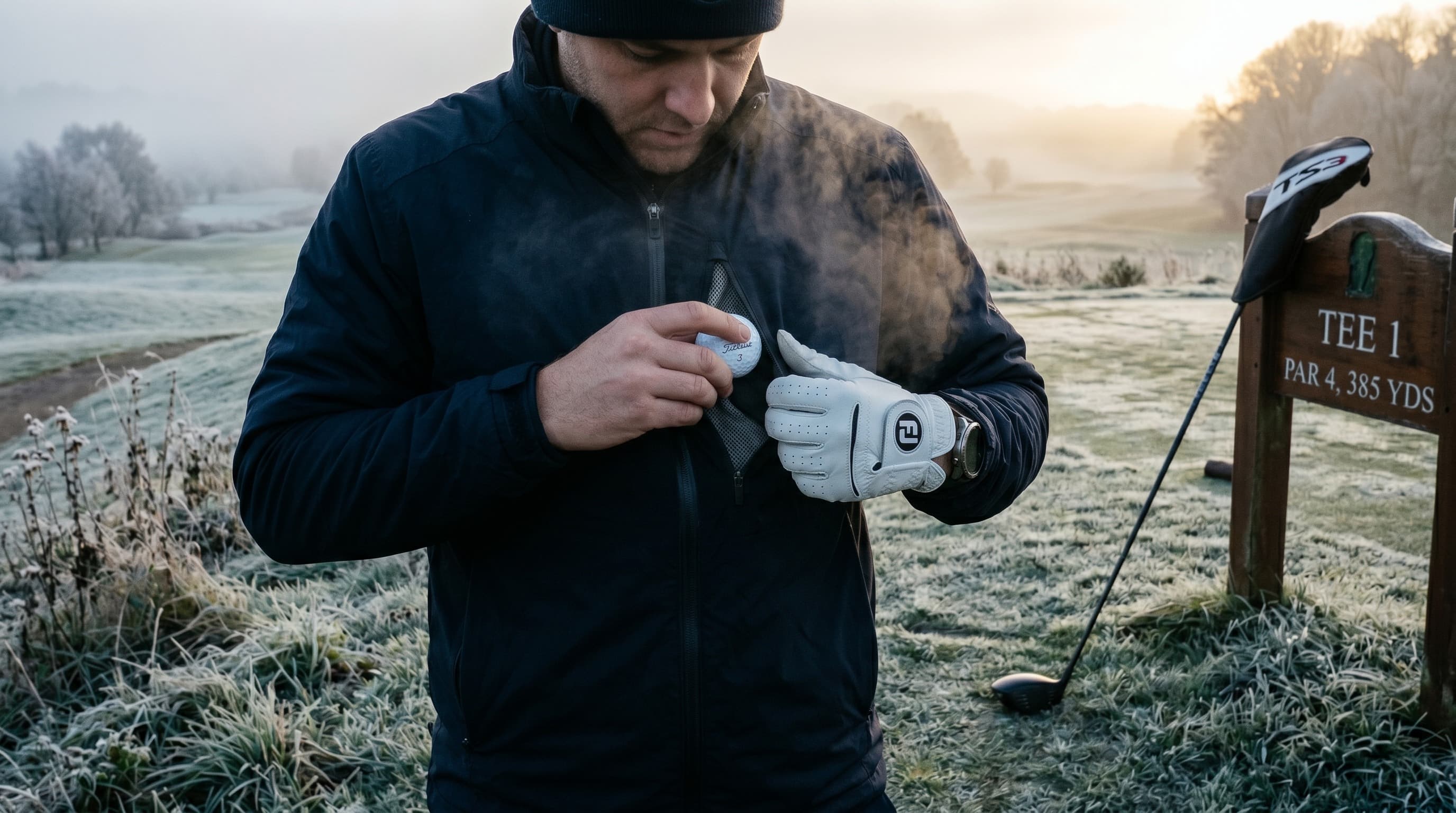
How Cold Weather Steals Distance: The Ball Compression Physics Every Golfer Should Know
Every 10°F drop costs the average golfer two to four yards of driver carry. Here is the physics — ball compression, air density, muscle temperature — and the field data we pulled from G-Score-monitored cold rounds to show exactly how distance loss compounds, and how to compensate without changing your swing.
Read Story
America's 20 Windiest Golf Courses: A G-Score Wind Analysis
We ranked America's 20 windiest golf courses using G-Score wind penalty data. See how coastal gusts and prairie gales reshape playability scores.
Read StoryMinSu Kim
Founder & Golf Data Analyst
MinSu is a data analyst and golfer with 10+ years on the course. He built Golf Weather Score to answer one question: is today a good day to play? He combines weather data, course intelligence, and the proprietary G-Score algorithm to help golfers make smarter decisions.
Every Friday Morning
When Bath Country Club plays best next weekend.
Friday 6am ET: peak G-Score windows for Bath Country Club, wind direction by hour, and one gear call. Three minutes to read, save you the round.
One email a week. Unsubscribe in one click.
The Caddie's Oracle
Draw your luck before the tee off