
Caddie's Gear Advisor
Curated for today's 88°F · Clear
Ultralight Distance Drivers
Maximum carry in hot, low-drag conditions
UV Protection Apparel
UPF 50+ cooling fabrics for peak-sun rounds
Precision Rangefinders
Slope-adjusted yardage in any condition
Hydration & Cooling
Insulated bottles and cooling towels
Your Golf Trip, Handled
The Ultimate Golf Trip Planner
Everything you need to play Bayville Golf Club — from booking your flight to checking in course-side.
Course-Side Stays
Luxury hotels, resorts, and stay-and-play packages just minutes from the first tee.
Flights
Compare fares across 700+ airlines for the best route to your tee time.
SUV Rentals for Golf Bags
Spacious vehicles with room for clubs, bags, and your foursome.
Travel Insurance
Coverage for medical, weather delays, and gear at your destination.
Bayville Golf Club: Course Intelligence
Signature Setup
I have not played Bayville — it is a private club outside Virginia Beach and stays that way — but I drove out to the Lynnhaven side of town one October on a 61°F morning, watched the wind ruffle the marsh grass off the inlet, and understood immediately why Tom Fazio routed it the way he did. The land actually rolls here, which almost no Tidewater course can claim.
Tom Fazio built Bayville Golf Club in 1996 on the north edge of Virginia Beach, Virginia, along the Lynnhaven River where it opens toward the Chesapeake Bay. It plays to a par of 72 at roughly 7,000 yards from the back tees. Fazio used the rare elevation on the property — old dune ridges rather than the dead-flat coastal plain — to give the course movement, and it has sat at or near the top of Golf Digest's Virginia rankings since it opened. It remains member-and-guest only.
Hole-by-Hole Wind & Playing Lines
The long inward par-4 (the card's hardest two-shotter). Into the prevailing summer SW breeze off the bay, this hole eats its yardage. A 410-yard hole on paper plays like 440 once the wind is up after 10 a.m. Take one more club into the green than the number suggests and aim for the wide half of the fairway, away from Fazio's flashed waste sand.
The bay-facing par-3. On a NNW wind — common behind an autumn front — the shot plays straight downwind and runs out fast on the firm bentgrass; on the summer SW sea breeze the same tee shot is a two-club knockdown. Read the flag and the marsh grass before you pull a club here.
A short par-4 turn near the inlet. Tempting to take driver, but the tidal marsh runs down one side and the breeze pushes long. The smart line is a 3-wood or hybrid to the corner, leaving a full wedge rather than an awkward half-shot the wind can balloon.
Green & Fairway Characteristics
Bayville's greens are bentgrass kept firm and fast on a sandy base that drains hard — Tidewater soil is essentially beach sand once you get below the turf, so the course plays dry and runs out even a day after rain. Slope from the back tees sits in the mid-130s, fair for the length. The fairways are the surprise: Fazio carved genuine roll and sand-flashed bunkering into them, so you get uneven lies and blind-ish landing areas that are almost unheard of on the flat Virginia coast. Front nine and back nine split close to evenly around the 7,000-yard total, with the wind, not raw length, doing most of the defending.
Seasonal Weather Pattern
Virginia Beach sits in a humid subtropical zone, and the bay governs everything. Spring (March–May) runs cool to mild, 55–72°F, with the firmest, calmest mornings of the year before the sea breeze machine wakes up. Summer (June–August) is hot and humid, frequently 84–90°F, with a reliable Chesapeake sea breeze that fills in from the SW by late morning and afternoon thunderstorms that build off the heat. Hurricane and tropical-storm season peaks August through early October — NOAA's Norfolk-area records show the heaviest wind and rain risk in that window. Autumn (late September–November) is the prime golf stretch: 58–74°F, lower humidity, and post-frontal NNW winds that swing the bay-facing holes the opposite direction from summer.
Local Play Tips
Honest limitation first: this is a private club, so my read comes from studying the routing, the Tidewater climate, and the inlet from outside the ropes, not from my own scorecard. The local knowledge that matters most here is the clock, not the yardage book — the Chesapeake sea breeze is a daily event in summer, not a maybe. An 8 a.m. tee time and an 11 a.m. tee time on the same July day are effectively two different golf courses, and the bay-facing holes are where you feel it. The other thing: because the sand base drains so fast, this course stays playable and firm when inland Virginia tracks are still soggy after a storm.
Pre-Round Weather Workflow
Use the 7-day G-Score on this page the way I would for any bay course. Three days out, check which way the wind is forecast: a summer SW reading means the sea breeze, so book the earliest tee time you can get and expect the bay-facing holes to play two clubs longer after mid-morning. A post-frontal NNW reading in autumn flips that — those same holes turn downwind and firm, so guard against running greens over the back. The morning of, read the windExposure panel before you warm up: if it shows the breeze already building, club up early and play for the fat side of every fairway, because Fazio's waste sand punishes the wind-blown miss. And in late summer, watch the tropical-storm line in the forecast — this stretch of coast can go from calm to unplayable in a single afternoon.
Related Reading
Before you tee off at Bayville Golf Club

The May 2026 G-Score Heatmap: Where American Golf Peaks This Spring
May is the most underrated month on the American golf calendar. Five regions hit their annual peak this spring, three turn quietly hostile, and the data tells a clearer story than the brochures. Here is where to play, where to avoid, and how to time your booking window.
Read Story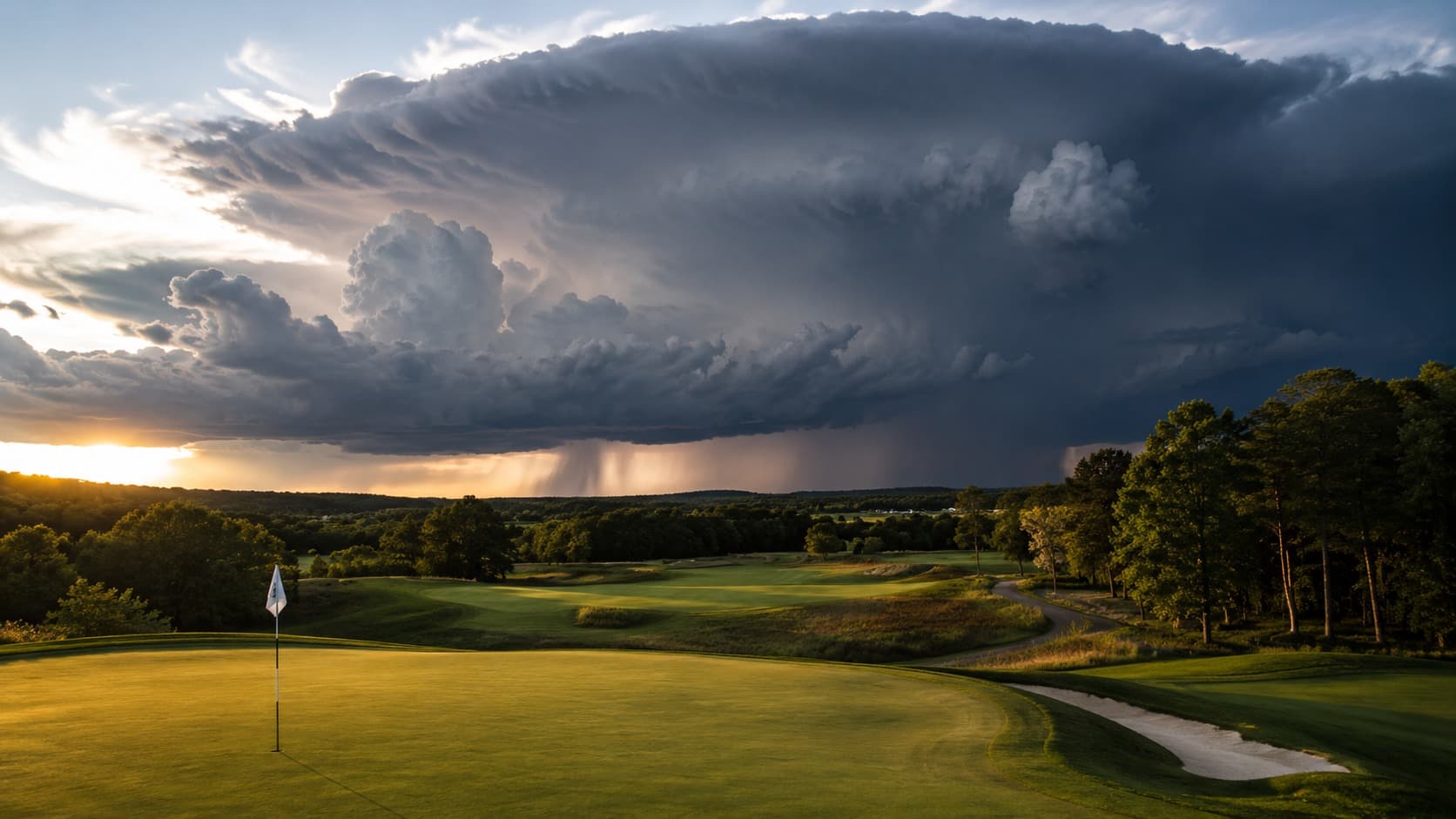
The Three O’Clock Storm: Reading Summer’s Convective Cycle to Protect Your Round
A 40% chance of afternoon thunderstorms does not mean a 40% chance of getting rained on. In the summer convective season it means the morning is nearly clear and the afternoon carries a fast-building, high-energy storm risk driven by a daily heating cycle. Here is the meteorology behind the pattern, the G-Score data on how the storm cycle punishes afternoon tee times across the Southeast, Midwest, and desert Southwest, the lightning-safety decision tree that actually matters, and the workflow that gets you off the course before the first bolt.
Read StoryMinSu Kim
Founder & Golf Data Analyst
MinSu is a data analyst and golfer with 10+ years on the course. He built Golf Weather Score to answer one question: is today a good day to play? He combines weather data, course intelligence, and the proprietary G-Score algorithm to help golfers make smarter decisions.
Every Friday Morning
When Bayville Golf Club plays best next weekend.
Friday 6am ET: peak G-Score windows for Bayville Golf Club, wind direction by hour, and one gear call. Three minutes to read, save you the round.
One email a week. Unsubscribe in one click.
The Caddie's Oracle
Draw your luck before the tee off