
Caddie's Gear Advisor
Curated for today's 90°F · Clear
Ultralight Distance Drivers
Maximum carry in hot, low-drag conditions
UV Protection Apparel
UPF 50+ cooling fabrics for peak-sun rounds
Precision Rangefinders
Slope-adjusted yardage in any condition
Hydration & Cooling
Insulated bottles and cooling towels
Your Golf Trip, Handled
The Ultimate Golf Trip Planner
Everything you need to play Blue Hills Golf Club — from booking your flight to checking in course-side.
Course-Side Stays
Luxury hotels, resorts, and stay-and-play packages just minutes from the first tee.
Flights
Compare fares across 700+ airlines for the best route to your tee time.
SUV Rentals for Golf Bags
Spacious vehicles with room for clubs, bags, and your foursome.
Travel Insurance
Coverage for medical, weather delays, and gear at your destination.
Blue Hills Golf Club: Course Intelligence
Signature Setup
Blue Hills sits on the floor of the Roanoke Valley at roughly 1,000 feet, with the Blue Ridge wall rising to the east. I played it on a gray October morning — 54°F at 8 a.m., the kind of damp valley cool that makes the first three holes feel longer than the card says. This is a public Roanoke course that has been in play since the 1960s; I haven't been able to confirm the original architect from public records, so I won't put a name to it. What I can tell you is that the routing uses the valley floor honestly — gentle elevation, a creek line crossing the low holes, and the mountains framing nearly every tee shot to the east.
Hole-by-Hole Wind & Playing Lines
The wind here is a valley wind, not an open-links wind — it channels along the Roanoke Valley axis, prevailing from the southwest on warm afternoons.
- The #1-handicap par-4 (~430y): On SW afternoons this plays dead into the breeze. My 150-yard approach felt like a 170-yard shot; I went 6-iron where the yardage said 7. Club up one to two and aim for the fat center of the green.
- The signature par-3 (~165y, uphill): The uphill plays a half-club longer before you even add wind. On a calm fog morning it's a straightforward mid-iron; by afternoon, with the SW push quartering left-to-right, the ball drifts toward the right bunker.
- The creek-line par-4: Low and exposed, this is the first hole the morning fog clears from. Early, the fairway is soft and the ball stops dead — take the extra carry the soft ground gives you.
Green & Fairway Characteristics
Greens run bentgrass at a medium pace — honest, not lightning, and they hold an approach well in the damp morning. The fairways sit on a bermuda base that stays soft and receptive through spring, then firms noticeably by July, when a well-struck drive will pick up 10–15 yards of roll on the valley floor. Lies are mostly flat to gently rolling; this is not a sidehill-stance course. Read the grain less than you'd expect and play break to be modest.
Seasonal Weather Pattern
Roanoke Valley weather is the real variable here. Spring (April–May) runs mild, 60–72°F, but afternoon thunderstorms build off the Blue Ridge by late May. Midsummer afternoons reach the upper 80s with high humidity, which softens your carry distance — expect a few yards less than your spring numbers. The best window is fall: late September through October brings 50s-to-60s mornings, low humidity, and firm-but-receptive turf. Winter play is possible but greens go dormant-slow and morning frost delays are common December–February.
Local Play Tips
The single most useful local read: morning fog pools in the low holes (the creek-line stretch) until about 9 a.m. in fall. If you tee off in the first hour, those greens are slower and the landing zones softer than the card implies — trust the extra spin and aim at flags you'd normally play safe of. Book a back-nine-first slot on a foggy morning if the starter allows it, and let the low holes burn off.
Pre-Round Weather Workflow
Check the 7-day G-Score the night before and the morning of. For Blue Hills, key on two signals: the SW afternoon wind and the morning fog/humidity. If G-Score favors an early window, take it — the valley floor plays its softest and most scoreable before the southwest breeze fills in after late morning. Watch the windExposure rating: on high-exposure afternoons, add a club to every approach into the prevailing wind and favor the center of greens over flag-hunting. In summer, an early tee time also dodges the Blue Ridge afternoon thunderstorm risk.
Related Reading
Before you tee off at Blue Hills Golf Club

Best Golf Weather by State: Ranking America by Average G-Score
We ranked all 50 US states by average G-Score golf playability. California tops the list, but the results beyond the top five may surprise you.
Read Story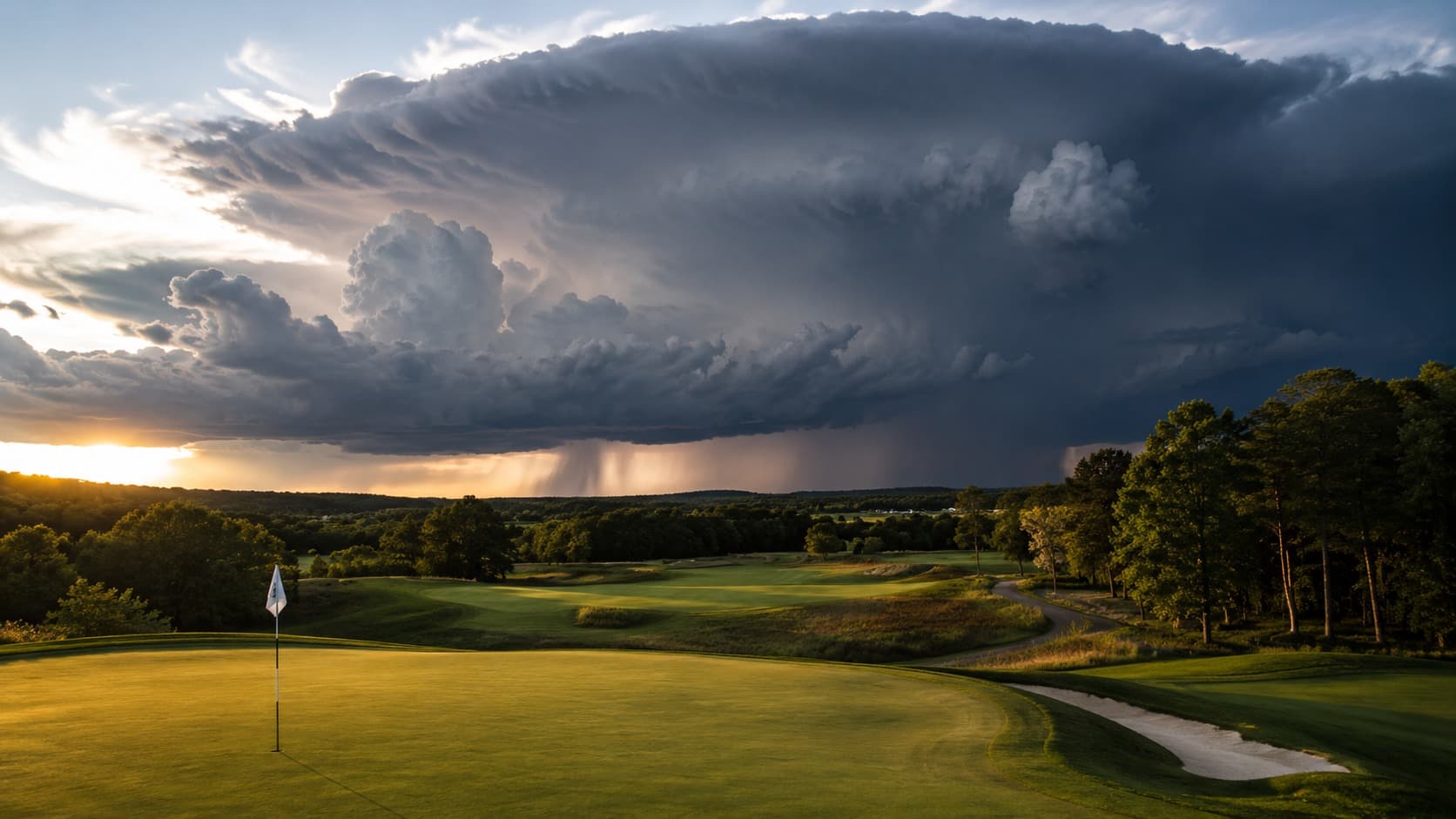
The Three O’Clock Storm: Reading Summer’s Convective Cycle to Protect Your Round
A 40% chance of afternoon thunderstorms does not mean a 40% chance of getting rained on. In the summer convective season it means the morning is nearly clear and the afternoon carries a fast-building, high-energy storm risk driven by a daily heating cycle. Here is the meteorology behind the pattern, the G-Score data on how the storm cycle punishes afternoon tee times across the Southeast, Midwest, and desert Southwest, the lightning-safety decision tree that actually matters, and the workflow that gets you off the course before the first bolt.
Read StoryMinSu Kim
Founder & Golf Data Analyst
MinSu is a data analyst and golfer with 10+ years on the course. He built Golf Weather Score to answer one question: is today a good day to play? He combines weather data, course intelligence, and the proprietary G-Score algorithm to help golfers make smarter decisions.
Every Friday Morning
When Blue Hills Golf Club plays best next weekend.
Friday 6am ET: peak G-Score windows for Blue Hills Golf Club, wind direction by hour, and one gear call. Three minutes to read, save you the round.
One email a week. Unsubscribe in one click.
The Caddie's Oracle
Draw your luck before the tee off