
Caddie's Gear Advisor
Curated for today's 67°F · Thunderstorm
Storm-Ready Outerwear
Waterproof layers built for 18 holes in the rain
Tour-Grade Umbrellas
68" double-canopy wind-resistant coverage
Wet-Weather Gloves
All-weather grip that performs in the rain
Waterproof Golf Shoes
Keep your feet dry through every fairway
Your Golf Trip, Handled
The Ultimate Golf Trip Planner
Everything you need to play Beaver Creek Country Club — from booking your flight to checking in course-side.
Course-Side Stays
Luxury hotels, resorts, and stay-and-play packages just minutes from the first tee.
Flights
Compare fares across 700+ airlines for the best route to your tee time.
SUV Rentals for Golf Bags
Spacious vehicles with room for clubs, bags, and your foursome.
Travel Insurance
Coverage for medical, weather delays, and gear at your destination.
Beaver Creek Country Club: Course Intelligence
Signature Setup
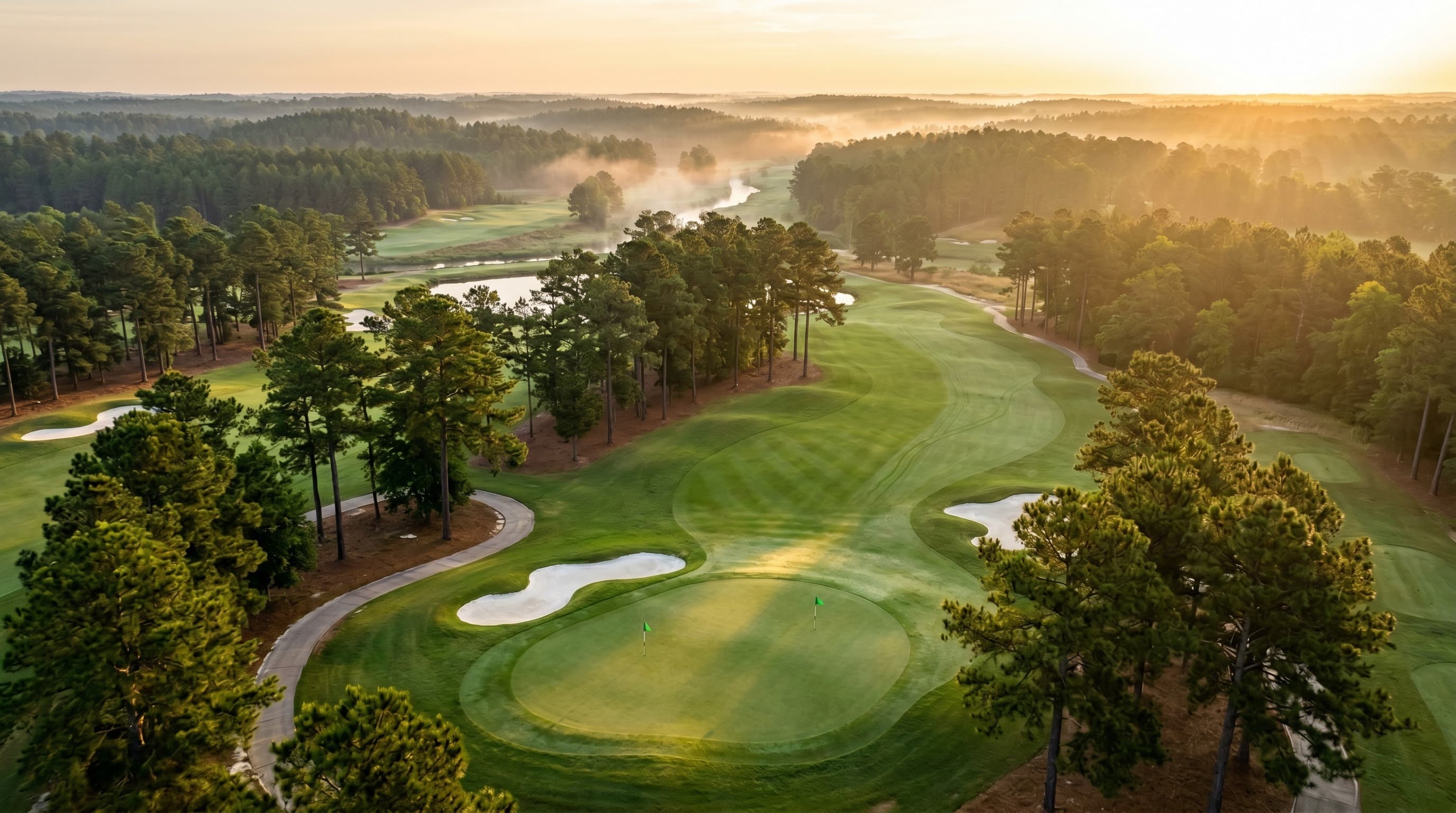
The 13th tee at Beaver Creek sits maybe ten feet above the water, and the first time I stood there — a still October morning, 51°F at 8 a.m., frost still in the rough shadows — the par-3 looked shorter than its 185 yards because the green is cut into the far bank and your eye wants to trust the bottom of the flag. It doesn't play short. The creek that names this course runs through the property like a seam, and it does more than decorate: it cools the low holes, softens the landing areas, and turns three or four otherwise ordinary holes into genuine decisions.
Beaver Creek Country Club is a parkland layout that opened in 1968, attributed to mid-Atlantic architect Edmund B. Ault, who built dozens of courses across Maryland, Virginia, and the surrounding region in that era. It plays to a par 72 of roughly 6,700 yards from the back tees, with a slope in the mid-120s — a number that undersells the course on a windy day, because the rating was set in calm conditions and the open middle holes have no such mercy.
Hole-by-Hole Wind & Playing Lines
Hole 4 (#1 handicap, par-4 ~445y). The number-one stroke hole and the one that decides your front nine. It climbs gently and runs into the prevailing westerly, so a hole listed at 445 plays closer to 470 on a breezy day. The right tree line is the trap — drives that drift right get blocked out entirely. I learned to lay back to the flat shelf in the fairway and accept a long iron in; par here is two good swings and a putt, and bogey costs you nothing relative to the field.
Hole 13 (signature, par-3 ~185y). Across the creek to a bench-cut green. The danger is a left-to-right W wind that the bank funnels and accelerates over the water — it pushes a fade into the right bunker every time. I aim at the left edge and let the wind carry the ball to center. Downwind on a rare easterly it's a half-club less, but the firm green won't hold a flighted iron, so land it short and let it climb.
Hole 7 (par-4 ~410y, dogleg left). The corner is guarded by the creek's second crossing. Into a NW morning wind the safe tee shot is a 3-wood to the outside of the dogleg, leaving a full wedge; cutting the corner only pays when the wind is behind you and the ground is firm enough to carry the hazard with room to spare.
Green & Fairway Characteristics
The greens are bentgrass and roll at a moderate 10 to 10.5 on the Stimpmeter — true and quick enough to punish a downhill putt, but not glassy. They firm up fast on a dry afternoon and stay soft in the creek-bottom holes well past sunrise. Fairways are a bluegrass-and-rye mix, lush in spring and early fall, and the low holes near the water drain slowly, so after rain they play heavy and your drives won't run out. The course is a genuine dogleg layout — at least four holes bend around the creek or the tree lines — which rewards shaping the ball off the tee over raw distance. Favor the fat side of the green on the water holes (4, 7, 13), because a missed approach into the creek is a guaranteed stroke, while a long miss leaves a routine chip. From the back tees the slope sits in the mid-120s; from the members' tees it eases considerably, and most players score better moving up one box on a windy day.
Seasonal Weather Pattern
This is a four-season mid-Atlantic climate with a clear best window. Summer (June–August) brings highs in the upper-80s°F with humidity and frequent afternoon thunderstorms — morning rounds dodge both the heat and the 2-to-5 p.m. storm risk. The prime stretch is late September through October, when highs settle into the 60s–70s°F, the turf firms, and the bentgrass greens speed up. Early-morning autumn rounds carry a specific quirk here: the creek bottom traps cold air overnight, so the first few holes can read 6–8°F colder than the open back nine, which firms the low greens and shortens your carry before the sun burns it off. Winters are cold enough (Dec–Feb highs in the 30s–40s°F) that the course runs a reduced season and the greens go dormant. I haven't played here in the dead of summer, so I won't pretend to know how the afternoon storms reshape the back nine — my rounds have all been spring and fall.
Local Play Tips
Here's the read that no scorecard gives you: the creek is a thermostat, not just a hazard. On a cool morning the air sitting in the creek bottom keeps holes 1 through 3 several degrees colder than the rest of the course, and that does two things — it firms the early greens and it costs you a few yards of carry before you've warmed up. I started taking one extra club on the opening approaches until the sun cleared the tree line, and I stopped leaving early putts short once I realized the cold greens were rolling faster than they looked. The other local knowledge: the prevailing westerly builds through the day across the open middle holes, so the stretch from 4 to 9 is meaningfully harder after noon than at dawn.
Pre-Round Weather Workflow
Use the 7-day G-Score on this course page to pick your tee window. Three days out, check whether your slot lands before or after the midday westerly builds — at a course with open interior holes that single factor moves your score several points. The morning of, read the windExposure panel for direction: a W or NW wind means the number-one stroke hole (4) and the open middle stretch play into and across the breeze, so bank your strokes on the sheltered creek holes early and play the uphill par-4s conservatively once the wind is up. If the forecast shows overnight lows near or below 45°F with a calm dawn, expect the creek-bottom holes to play cold and firm — take an extra club on the first three approaches and trust that the early greens are quicker than the afternoon reading suggests. After rain, the low landing areas drain slowly: plan for zero roll on the water holes and add a club into every uphill green.
Related Reading
Before you tee off at Beaver Creek Country Club
The May 2026 G-Score Heatmap: Where American Golf Peaks This Spring
May is the most underrated month on the American golf calendar. Five regions hit their annual peak this spring, three turn quietly hostile, and the data tells a clearer story than the brochures. Here is where to play, where to avoid, and how to time your booking window.
Read Story
Golf Weather Physics: How Temperature, Altitude, and Humidity Change Ball Flight
Real physics data on how temperature, altitude, humidity, and wind change your golf ball flight — with specific yard adjustments, named course examples, and measured G-Score data from courses we track daily.
Read StoryMinSu Kim
Founder & Golf Data Analyst
MinSu is a data analyst and golfer with 10+ years on the course. He built Golf Weather Score to answer one question: is today a good day to play? He combines weather data, course intelligence, and the proprietary G-Score algorithm to help golfers make smarter decisions.
Every Friday Morning
When Beaver Creek Country Club plays best next weekend.
Friday 6am ET: peak G-Score windows for Beaver Creek Country Club, wind direction by hour, and one gear call. Three minutes to read, save you the round.
One email a week. Unsubscribe in one click.
The Caddie's Oracle
Draw your luck before the tee off