
Caddie's Gear Advisor
Curated for today's 83°F · Clear
Tour-Level Drivers
Engineered for maximum distance and forgiveness
Laser Rangefinders
Pin-seeking technology for precision approaches
Premium Golf Balls
Tour-caliber spin and distance performance
Performance Sunglasses
Polarized lenses optimized for reading greens
Your Golf Trip, Handled
The Ultimate Golf Trip Planner
Everything you need to play Beekman Golf Course — from booking your flight to checking in course-side.
Course-Side Stays
Luxury hotels, resorts, and stay-and-play packages just minutes from the first tee.
Flights
Compare fares across 700+ airlines for the best route to your tee time.
SUV Rentals for Golf Bags
Spacious vehicles with room for clubs, bags, and your foursome.
Travel Insurance
Coverage for medical, weather delays, and gear at your destination.
Beekman Golf Course: Course Intelligence
Signature Setup
Beekman sits in Hopewell Junction, Dutchess County, about 75 miles north of Manhattan, and it plays like a Hudson Valley public club should: 27 holes spread over rolling farmland, broken into the Highland, Valley, and Taconic nines. I haven't found a verified architect of record for the original routing, so I won't put a name to it — what I can say from playing it is that the design leans on natural land movement rather than manufactured hazards. The Highland 9th, a downhill par-4 of roughly 395 yards, is the hole people remember, with a creek pinching the approach. Most weekend play here combines two of the three nines for an 18-hole card; the daily-fee setup makes it a high-volume regional course rather than a tournament venue.
Hole-by-Hole Wind & Playing Lines
The wind story here is the prevailing NW flow that funnels down the Valley nine.
- Valley 4th (#1 handicap, ~430y par-4): Plays dead into NW wind on most spring and fall mornings. My 150-yard club becomes a 165–170-yard shot. I take one extra club into the green and aim left-center — the front-right bunker eats anything short and faded.
- Highland 9th (~395y par-4, downhill): Downwind on a NW day the tee shot runs out fast toward the creek. I club down to a 3-wood off the tee here when it's blowing, leaving a full wedge rather than a half-shot over water.
- Taconic par-3 (~175y): Exposed on the high side of the property. A crossing W wind pushes tee shots toward the right slope; I play to the left fringe and let it feed.
Green & Fairway Characteristics
The greens are bent/poa, mid-sized, and roll in the low-9 range on the stimp during peak season — fair, not lightning. They hold a well-struck mid-iron, which matters because several approaches play uphill. Fairways are bentgrass and stay reasonably firm in July and August but turn soft and slow after the frequent Hudson Valley rain. The front nine I typically play runs a few hundred yards shorter on the card than the back combination, so the par-72 total lands around 6,400 yards from the regular tees — manageable, with the difficulty in the wind and the green complexes rather than raw length.
Seasonal Weather Pattern
Dutchess County gives you a true four-season golf calendar. April mornings start near 42–48°F with stiff NW wind, so the ball flies short and the greens are slow off winter dormancy. July and August are warm and humid, 82–88°F by midday, with afternoon thunderstorm cells that build off the Catskills after 2 p.m. — I've been chased off the Valley nine twice by storms that weren't on the morning radar. Late September into October is the prime window: 60–68°F, low humidity, and the foliage turns the property into something worth the drive. The course generally stays open into November before the ground hardens.
Local Play Tips
Book the front nine first in summer and you'll usually finish your round before the afternoon storm risk peaks — this is the single biggest scoring variable here. Walking is realistic on the Valley nine but the Highland side has real elevation change between greens and tees, so I take a cart when the temperature is above 80°F. Weekday late-afternoon rates drop sharply, and after 4 p.m. you'll often have the back nine nearly to yourself.
Pre-Round Weather Workflow
Use the 7-day G-Score on golfweatherscore before you book. For Beekman, watch two signals: the NW wind speed (anything above 12 mph turns the Valley 4th into a two-club longer hole) and the afternoon precipitation probability in July–August. If the G-Score is 8–12 points higher in the morning slot, take it — the windExposure rating on the open Taconic holes confirms why afternoon rounds here score worse. Check the radar trend the night before any summer tee time.
Related Reading
Before you tee off at Beekman Golf Course
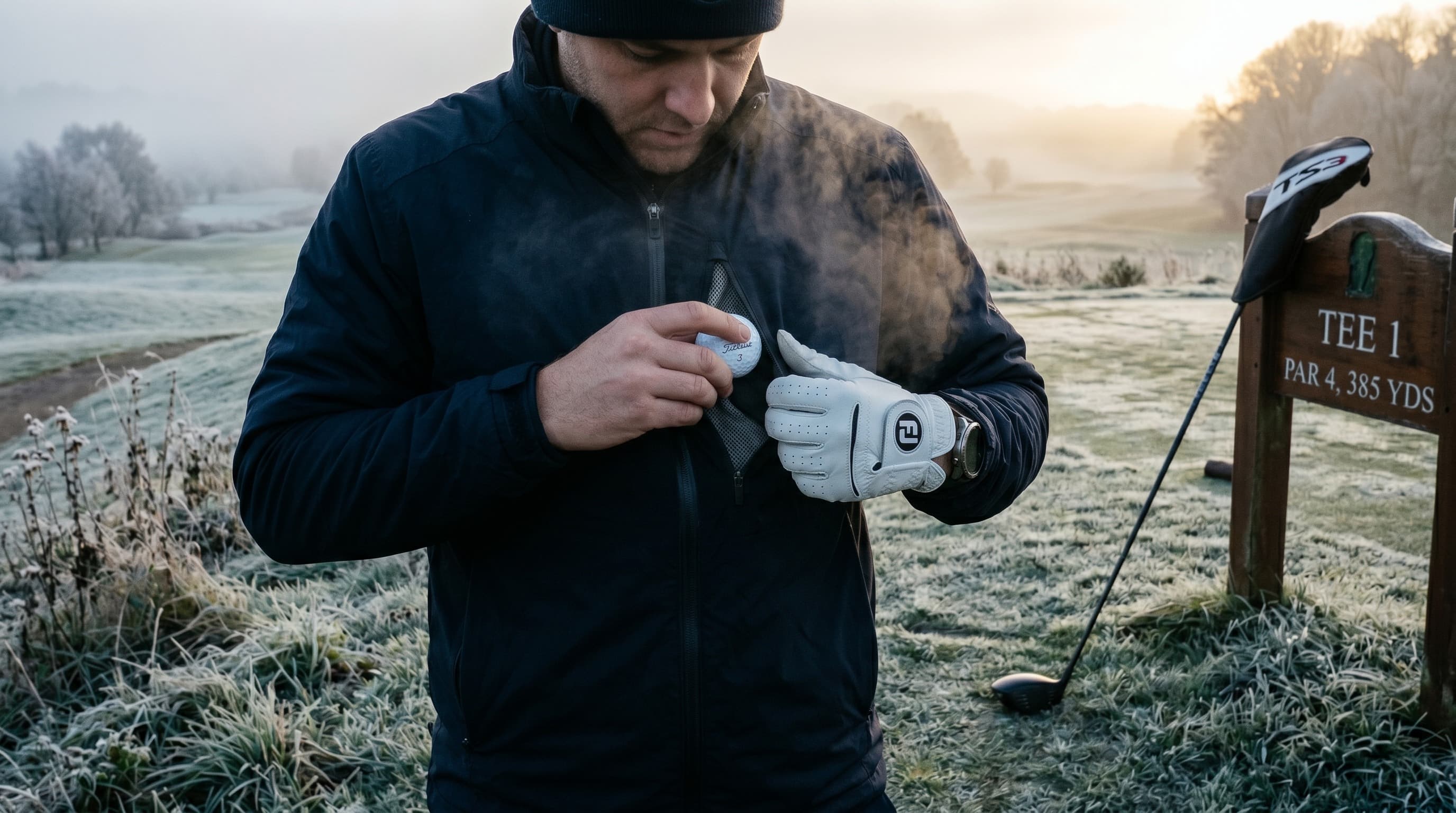
How Cold Weather Steals Distance: The Ball Compression Physics Every Golfer Should Know
Every 10°F drop costs the average golfer two to four yards of driver carry. Here is the physics — ball compression, air density, muscle temperature — and the field data we pulled from G-Score-monitored cold rounds to show exactly how distance loss compounds, and how to compensate without changing your swing.
Read Story
America's 20 Windiest Golf Courses: A G-Score Wind Analysis
We ranked America's 20 windiest golf courses using G-Score wind penalty data. See how coastal gusts and prairie gales reshape playability scores.
Read StoryMinSu Kim
Founder & Golf Data Analyst
MinSu is a data analyst and golfer with 10+ years on the course. He built Golf Weather Score to answer one question: is today a good day to play? He combines weather data, course intelligence, and the proprietary G-Score algorithm to help golfers make smarter decisions.
Every Friday Morning
When Beekman Golf Course plays best next weekend.
Friday 6am ET: peak G-Score windows for Beekman Golf Course, wind direction by hour, and one gear call. Three minutes to read, save you the round.
One email a week. Unsubscribe in one click.
The Caddie's Oracle
Draw your luck before the tee off