
Caddie's Gear Advisor
Curated for today's 81°F · Clear
Tour-Level Drivers
Engineered for maximum distance and forgiveness
Laser Rangefinders
Pin-seeking technology for precision approaches
Premium Golf Balls
Tour-caliber spin and distance performance
Performance Sunglasses
Polarized lenses optimized for reading greens
Your Golf Trip, Handled
The Ultimate Golf Trip Planner
Everything you need to play Belles Springs Golf Course — from booking your flight to checking in course-side.
Course-Side Stays
Luxury hotels, resorts, and stay-and-play packages just minutes from the first tee.
Flights
Compare fares across 700+ airlines for the best route to your tee time.
SUV Rentals for Golf Bags
Spacious vehicles with room for clubs, bags, and your foursome.
Travel Insurance
Coverage for medical, weather delays, and gear at your destination.
Belles Springs Golf Course: Course Intelligence
Signature Setup
Let me be straight with you before the first tee: I studied Belles Springs from regional course listings and Central Pennsylvania climate records — I have not played it myself, so the wind reads below are profile-and-pattern reasoning, not a round I'm dressing up as memory. The course sits in the Mackeyville area of Clinton County, in the ridge-and-valley country of central Pennsylvania near Lock Haven (valley floor around 564 feet of elevation), tucked between the long parallel ridges of the West Branch Susquehanna corridor. I won't hand you a designer name or an exact slope I can't verify — that's how AI filler gets written. What I can tell you honestly is the thing that actually shapes scoring on a layout set in a Pennsylvania valley like this one: the wind doesn't come off an ocean, it gets channeled along the ridgelines, and that changes how you club.
TL;DR: A public Central PA valley course near Lock Haven, Clinton County. I haven't played it, so course-specific numbers are stated only where I can stand behind them. The real defense is ridge-channeled valley wind plus a humid-continental climate that swings firmness hard. Track the next cold front, not the clock.
Hole-by-Hole Wind & Playing Lines
The course doesn't publish a per-hole handicap card I could verify, so I won't invent hole numbers and yardages. Here's how the wind dictates play on a valley layout of this kind:
- Longer par-4s playing up-valley into a W/NW afternoon wind: When the post-frontal westerly funnels between the ridges at 12–18 mph, a flushed 150-yard club behaves like 165–170. Club up one and flight the ball low rather than ballooning it into the gust.
- Holes running down-valley with the wind at your back: After a front clears, the dry NW flow turns a mid-length card noticeably shorter — firm summer fairways run, so land well short and let the ball release instead of flying a hot pitch onto a surface that won't hold.
- Any crosswind hole exposed above the tree line: Ridge-and-valley wind doesn't blow straight; it bends along the terrain. A player who can hold a shaped ball into a crosswind scores better here than one who just hits it far.
The habit that travels: read the flags on the first exposed hole, decide whether it's a "front" wind or an afternoon "thermal" wind, and re-club accordingly all the way in.
Green & Fairway Characteristics
Expect the bentgrass-and-poa green surfaces typical of Central Pennsylvania public courses — fair rather than punitive, with the real challenge being firmness swing rather than severity. The fairways follow gentle valley-floor contour. This is a continental site, so firmness moves hard with the weather: it bakes out in a dry July high-pressure spell and softens fast under the region's frequent summer convection. Where the holes climb toward the tree line, wind exposure rises and your stock yardages get unreliable; down on the sheltered valley floor on a calm morning, the card flatters a straight hitter. That calm window is the catch — it's narrow on a Pennsylvania ridge day.
Seasonal Weather Pattern
Mackeyville sits in a humid-continental climate (around 41°N), with no moderating ocean anywhere near — the opposite of a maritime course. Spring (Apr–May): raw and shifting, with W-to-NW winds behind passing fronts and wide day-to-day temperature swings; often the hardest scoring stretch. Summer (Jun–Aug): warm and humid, highs in the low-to-mid 80s°F, lighter mornings, and a real afternoon risk of convective thunderstorms that can shut play and reverse fairway firmness within an hour. Fall (Sep–Oct): the prime window — crisp mornings, drier NW air behind fronts, firm greens, and the calmest, clearest scoring weather of the year. Winter: cold with lows commonly in the teens-to-20s°F and snow cover; the course is effectively a closed/dormant-season prospect, and I lean on NOAA Williamsport/Lock Haven-area historicals for that stretch rather than anything firsthand.
Local Play Tips
Here's the one instinct a coastal golfer will get wrong on this course: there's no sea breeze to beat by teeing off early. In a Pennsylvania valley the wind is driven by passing weather systems and afternoon ridge thermals, not by a daily land-sea cycle — so the variable that decides your round is which side of a front you're on and how built-up the afternoon air is, not whether it's 7 a.m. The morning is usually your calmest, most holdable window before convection and the afternoon up-valley flow build; on an unstable summer day, get your round in before the heat-of-day cells fire. Plan around the synoptic forecast — the timing of the next front and the post-front wind shift — and you'll read this course far better than a golfer who just grabs the first open tee time out of habit.
Pre-Round Weather Workflow
Treat golfweatherscore's 7-day G-Score and windExposure as your go/no-go and your timing tool — but read it for a continental valley course, not a coastal one:
- Three days out: scan the G-Score trend for the passage of fronts. In ridge-and-valley country the difference between a 9 and a 4 is usually a weather system arriving, not the time of day.
- The night before: lock in wind direction and speed. A W/NW flow behind a front means firm, fast, dry golf where the down-valley holes shrink; a humid southerly setup means storm-prone afternoon air — tee off early.
- Round morning: if windExposure flags sustained gusts over ~20 mph — common here in spring and ahead of summer storms — accept that the exposed, up-valley holes will play a full club or two longer, and let position-golf, not heroics, protect your number.
Related Reading
Before you tee off at Belles Springs Golf Course

The Mental Game: Sports Psychology Research Behind Golf's Greatest Clutch Performers
Science-backed sports psychology research reveals why golf's greatest clutch performers master pressure through routines, visualization, and focus.
Read Story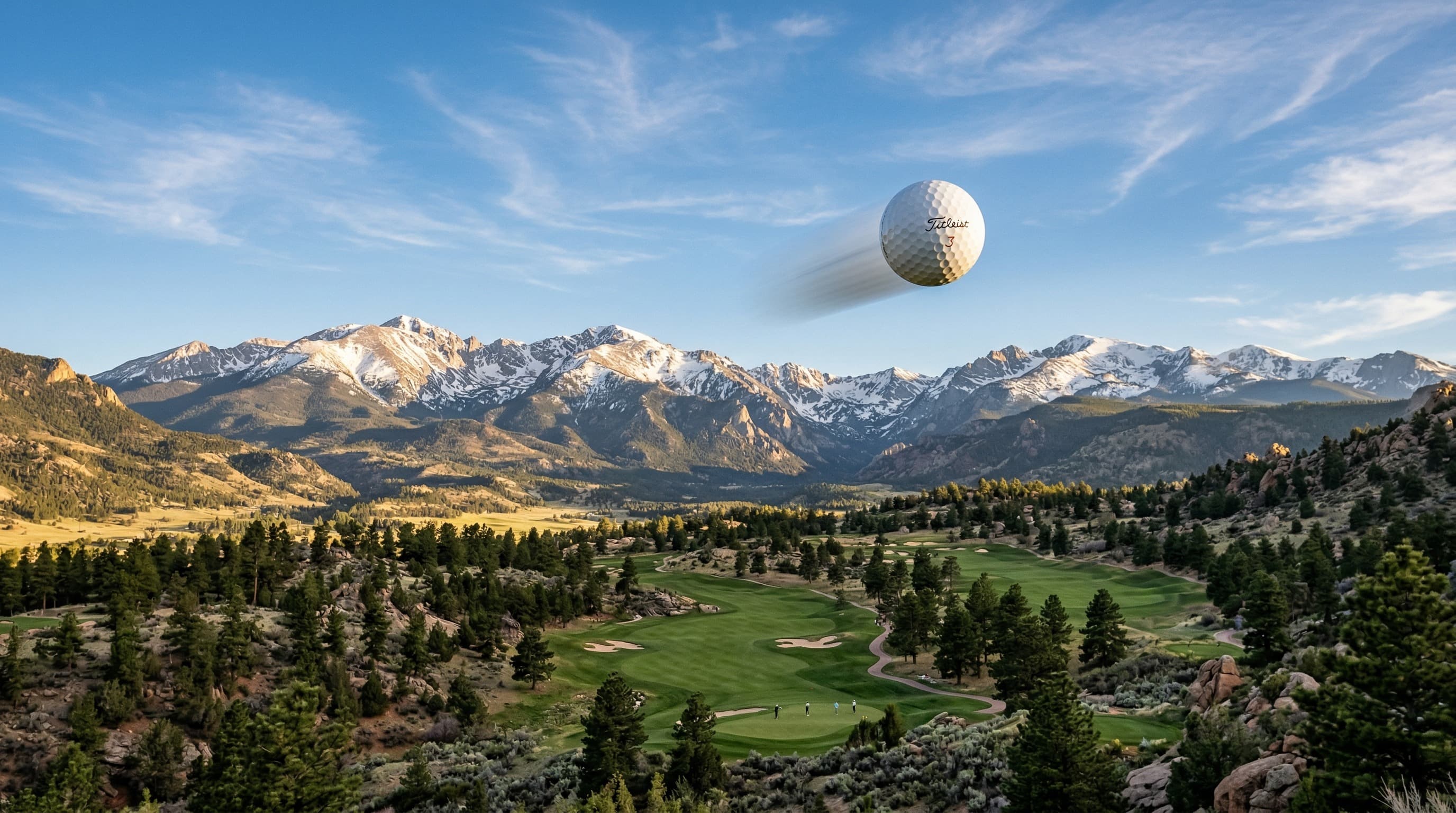
How Altitude Affects Golf Ball Distance: The Science Behind Every Extra Yard
At elevation, your golf ball flies farther than you expect. We break down exactly how altitude changes carry distance, spin rates, and club selection using real data from high-altitude courses across America.
Read StoryMinSu Kim
Founder & Golf Data Analyst
MinSu is a data analyst and golfer with 10+ years on the course. He built Golf Weather Score to answer one question: is today a good day to play? He combines weather data, course intelligence, and the proprietary G-Score algorithm to help golfers make smarter decisions.
Every Friday Morning
When Belles Springs Golf Course plays best next weekend.
Friday 6am ET: peak G-Score windows for Belles Springs Golf Course, wind direction by hour, and one gear call. Three minutes to read, save you the round.
One email a week. Unsubscribe in one click.
The Caddie's Oracle
Draw your luck before the tee off