
Caddie's Gear Advisor
Curated for today's 104°F · Clear
Ultralight Distance Drivers
Maximum carry in hot, low-drag conditions
UV Protection Apparel
UPF 50+ cooling fabrics for peak-sun rounds
Precision Rangefinders
Slope-adjusted yardage in any condition
Hydration & Cooling
Insulated bottles and cooling towels
Your Golf Trip, Handled
The Ultimate Golf Trip Planner
Everything you need to play Big Sugar Golf Club — from booking your flight to checking in course-side.
Course-Side Stays
Luxury hotels, resorts, and stay-and-play packages just minutes from the first tee.
Flights
Compare fares across 700+ airlines for the best route to your tee time.
SUV Rentals for Golf Bags
Spacious vehicles with room for clubs, bags, and your foursome.
Travel Insurance
Coverage for medical, weather delays, and gear at your destination.
Big Sugar Golf Club: Course Intelligence
Signature Setup
Honesty first: what follows comes from the course's published design record, the King-Collins body of work, and Northwest Arkansas climate data — I have not walked Big Sugar Golf Club myself, and I'd rather say that than fake a memory of a course I haven't played. The verifiable facts are strong enough to plan a round on. Big Sugar is a public course in Bentonville, Arkansas, opened in 2022 and designed by King-Collins — the Tad King and Rob Collins partnership behind Sweetens Cove in Tennessee and Landmand in Nebraska. That pedigree tells you almost everything about how it plays: this is not a long, aerial championship test. It is a ground-game, big-green, decision-heavy design where the defining hazard is the putting surface, not the yardage.
TL;DR: A 2022 King-Collins public course in Bentonville, Arkansas. Short-to-medium length on the card, defended by huge, wildly contoured greens and firm zoysia fairways. Humid subtropical climate — hot summers, a steady south wind, severe spring storm season. Play early, play the ground, and respect the greens over the distance.
Hole-by-Hole Wind & Playing Lines
I won't invent a hole-by-hole stroke index I can't verify, so here's how the prevailing wind rewrites the kind of holes a King-Collins routing serves up:
- The drivable/short par-4s into a south wind: Big Sugar's design language rewards the bold tee shot, but on summer afternoons a 10–15 mph south wind off the river valley turns a "drivable" green into a half-carry gamble over false fronts. The smart line is short and right of the green complex, letting the firm zoysia run the ball on.
- Long approaches downwind: with the same south wind at your back, a flighted iron will release hard across these tilted greens. Land it 10–15 yards short of the flag and let it chase — flying it pin-high almost guarantees a runoff into a collection area.
- Crosswind on the exposed holes: the land here is rolling open prairie-edge terrain, so there's little tree shelter. A crosswind plus a contoured green means the miss compounds: factor the wind into your start line, then add a club for the firm, fast surface.
The portable lesson: on a King-Collins green, the worst score doesn't come from a bad swing — it comes from short-siding yourself above the hole.
Green & Fairway Characteristics
The greens are the entire point. King-Collins is known for some of the largest, most aggressively contoured greens in modern American architecture, and Big Sugar follows that template: sweeping tiers, false fronts, and runoff areas that turn a marginal approach into a wedge-and-putt scramble. The fairways are zoysia, a heat-tolerant turf that firms up beautifully in the Arkansas summer and is built for a running ball rather than a target-golf carry. Practically, that means two things. First, your wedge distance control matters less than your green-reading and lag putting — a 40-foot putt across two tiers is the real test of the day. Second, on firm fairways the ball runs out far past a soft-course expectation, so your tee-shot landing zones, not your total yardage, dictate strategy. Treat the card length as a starting point and the green complexes as the actual difficulty.
Seasonal Weather Pattern
Bentonville sits in Northwest Arkansas, a humid subtropical climate (Köppen Cfa), and the golf calendar reflects it. Spring (Mar–May) is prime for scoring temperature but is the region's severe-weather season — this is the southern edge of tornado alley, with frequent afternoon thunderstorms and gusty fronts; expect wind to be the variable, not heat. Summer (Jun–Aug) runs hot and humid, with July highs commonly near 90°F and a persistent south-to-southwest breeze off the Arkansas River valley that strengthens through the afternoon. Fall (Sep–Oct) is the sweet spot: highs easing into the 70s°F, lower humidity, calmer mornings, and firm zoysia at its running best. Winter (Dec–Feb) is mild but real — January highs around 47°F and lows near 26°F, with cold NW fronts; playable on mild days, but the bermuda-belt turf goes dormant and the ball flies shorter in dense, cold air. Annual rainfall sits near 48 inches, much of it in spring storms.
Local Play Tips
The detail that separates a good round here from a frustrating one: this is firm-and-fast, ground-game golf, and the morning is your friend twice over. First, the south wind off the river valley is typically lightest at dawn and builds through the afternoon in summer — an early tee time means the firm zoysia gives you a running, controllable ball before the breeze starts pushing it around. Second, on greens this large and this contoured, the single most useful pre-round habit isn't hitting balls — it's spending fifteen minutes on the practice green learning the speed and the grain direction. A first-timer who lags well will out-score a better ball-striker who keeps three-putting these tiers. Aim your misses below the hole, every time.
Pre-Round Weather Workflow
Use golfweatherscore's 7-day G-Score and windExposure as decision tools, read for a firm, open, big-green course:
- Three days out: scan the G-Score curve's shape, not just its peak. A strong morning number that fades after midday is the summer south wind showing up — plan to tee off early and be on the closing holes before it builds.
- The evening before: check the spring/early-summer storm risk. In this part of Arkansas, an unstable afternoon can mean lightning delays — a morning round sidesteps the convective window entirely.
- Round morning: if windExposure flags a rising south flow, commit to the ground game — land approaches short and let the firm zoysia feed the ball, accept that downwind shots will release hard across the greens, and putt defensively below the hole rather than attacking flags you can't hold.
Related Reading
Before you tee off at Big Sugar Golf Club

Best Golf Weather by State: Ranking America by Average G-Score
We ranked all 50 US states by average G-Score golf playability. California tops the list, but the results beyond the top five may surprise you.
Read Story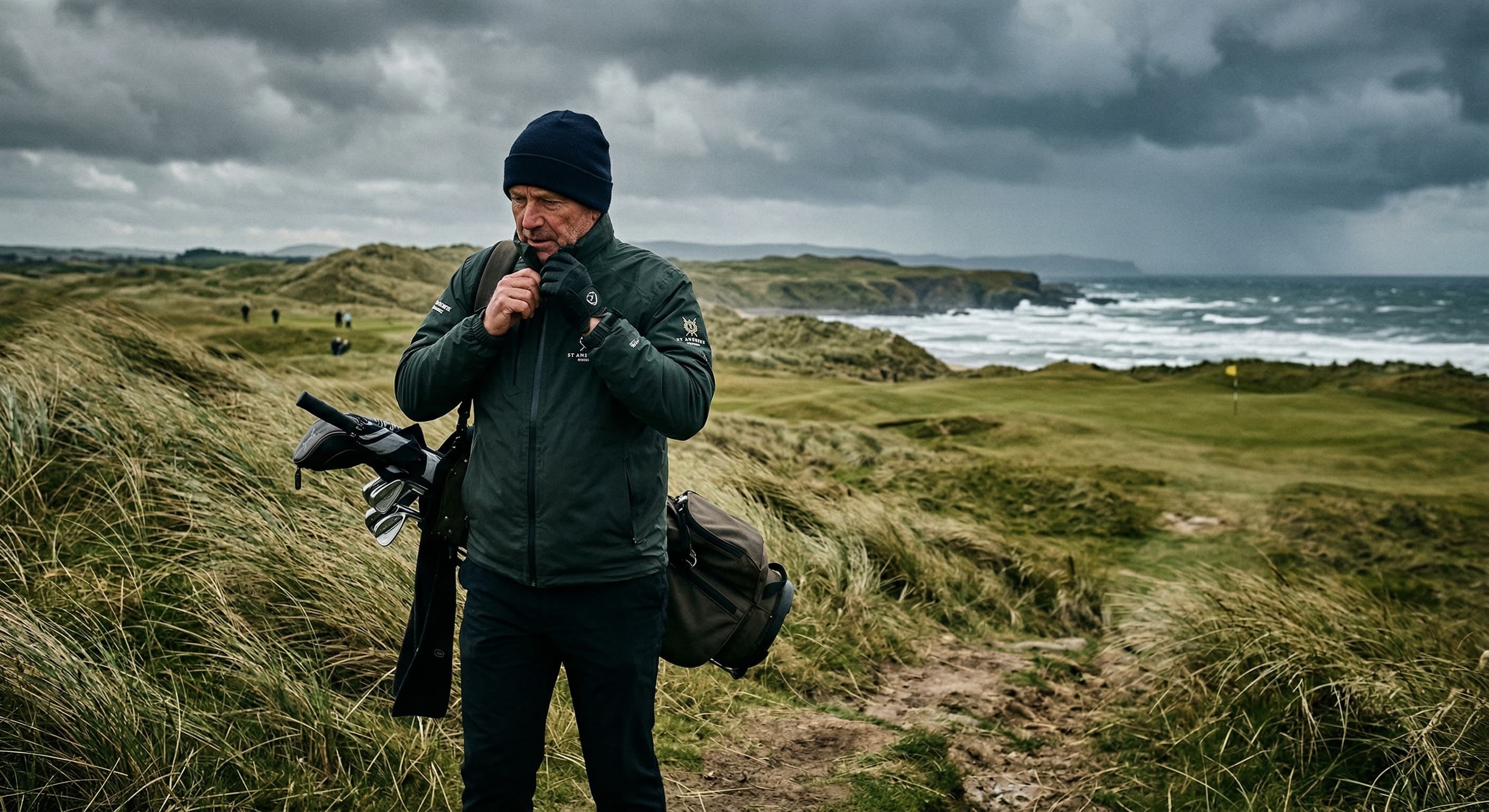
Why 'Feels Like' Temperature Matters More Than the Thermometer on the Golf Course
Standard weather apps lie to golfers. Learn how wind chill, heat index, and real-feel temperature affect your game and what to wear for every condition.
Read StoryMinSu Kim
Founder & Golf Data Analyst
MinSu is a data analyst and golfer with 10+ years on the course. He built Golf Weather Score to answer one question: is today a good day to play? He combines weather data, course intelligence, and the proprietary G-Score algorithm to help golfers make smarter decisions.
Every Friday Morning
When Big Sugar Golf Club plays best next weekend.
Friday 6am ET: peak G-Score windows for Big Sugar Golf Club, wind direction by hour, and one gear call. Three minutes to read, save you the round.
One email a week. Unsubscribe in one click.
The Caddie's Oracle
Draw your luck before the tee off