
Caddie's Gear Advisor
Curated for today's 80°F · Thunderstorm
Storm-Ready Outerwear
Waterproof layers built for 18 holes in the rain
Tour-Grade Umbrellas
68" double-canopy wind-resistant coverage
Wet-Weather Gloves
All-weather grip that performs in the rain
Waterproof Golf Shoes
Keep your feet dry through every fairway
Your Golf Trip, Handled
The Ultimate Golf Trip Planner
Everything you need to play Binghamton Country Club — from booking your flight to checking in course-side.
Course-Side Stays
Luxury hotels, resorts, and stay-and-play packages just minutes from the first tee.
Flights
Compare fares across 700+ airlines for the best route to your tee time.
SUV Rentals for Golf Bags
Spacious vehicles with room for clubs, bags, and your foursome.
Travel Insurance
Coverage for medical, weather delays, and gear at your destination.
Binghamton Country Club: Course Intelligence
Signature Setup
Straight answer before anything else: I have not walked Binghamton Country Club, and I'd rather say so than fake a round I didn't play — what follows comes from the club's published history, the scorecard, and Southern Tier weather records. The pedigree, though, is unusually real. The club was founded in 1889 as a nine-hole course down along the Susquehanna in Endicott, and in 1921 it brought in A.W. Tillinghast — the architect behind Winged Foot, Baltusrol, Bethpage Black and San Francisco Golf Club — to route the current eighteen across the rolling hillside north of the river in Endwell. That lineage matters: Tillinghast didn't design dull ground. The card reads 6,430 yards to par 71, with a course rating of 72.3 and a slope of 121. Notice the rating sits above par on a sub-6,500-yard layout. That gap is the whole story — the terrain defends, not the yardage.
TL;DR: An 1889 club with a 1921 A.W. Tillinghast routing on the Endwell hillside above the Susquehanna. Only 6,430y / par 71, but rating 72.3 / slope 121 because the elevation change and valley wind, not length, set the test. Club up on the uphill approaches and read the river-channeled breeze, not the regional forecast.
Hole-by-Hole Wind & Playing Lines
The club doesn't publish a hole-by-hole stroke index I can verify, so I won't invent hole numbers I haven't confirmed. What the terrain and the river geography do let me lay out is how wind and slope combine here:
- Uphill two-shotters climbing away from the river: the rating-over-par gap lives on these. Into a W/NW breeze funneling up-valley, a 150-yard flat number becomes a 165–170-yard playing number once you add the climb and the headwind together. Two extra clubs, ball below the hole, is the percentage play.
- Downhill holes dropping back toward the Susquehanna: here the elevation gives distance back. The mistake is flying the green long when an adrenaline swing meets a helping tailwind — take the shorter club you're tempted to discard.
- Crossing holes along the valley axis: because the river runs roughly east–west, the wind tends to channel along that line. A hole playing across it gets a flush crosswind that the open-field forecast won't warn you about.
The portable lesson: on this property, club selection is a two-variable problem — slope and wind — and you have to solve both on every approach.
Green & Fairway Characteristics
The greens are bentgrass set into glacial hillside ground, and at slope 121 the difficulty is contour and stance rather than raw size. Expect side-hill and uphill/downhill lies through the fairways — a Tillinghast hillside routing rarely hands you a level approach. From 6,430 yards the course flatters a straight, controlled iron player far more than a bomber, because length isn't the defense; holding the correct level of a tilted green is. Firmness tracks the upstate sky: bentgrass over hill drainage firms up under a summer high and softens fast after the Southern Tier's frequent rain, so the same uphill wedge can spin back or release depending on the week.
Seasonal Weather Pattern
Endwell sits in a humid continental climate with a real lake-effect signature off the Great Lakes to the northwest. Spring (Apr–May) comes late and wet up here; the hillside ground stays soft, approaches plug, and morning lows can still sit in the low-40s°F. Summer (Jun–Aug) is the prime stretch — highs in the low-to-mid 80s°F, the firmest the bentgrass gets all year, and the up-valley afternoon breeze most reliable. Fall (Sep–Oct) is the connoisseur's season: crisp, dry, brilliant color on the hillside, but cold mornings that take distance off the ball — budget a club. Winter closes the course for snow; the region's lake-effect bands can stack significant totals, so for that gap I lean on NOAA Binghamton-area historicals rather than firsthand play.
Local Play Tips
The detail that separates a good score here from a frustrating one isn't on any yardage book: the wind lies to you. Out in the open Southern Tier countryside the forecast might read a steady southwesterly, but down on the course the Susquehanna's east–west valley grabs the air and bends it along the river line. So a flag you read as "downwind" from the regional arrow can be quartering or even into you once you account for the channel. Before each approach, ignore your phone's wind direction and watch what the treetops nearest the river are actually doing — they tell the truth the forecast can't. Pair that with the elevation read and you've solved the course the way the terrain intends.
Pre-Round Weather Workflow
Use golfweatherscore's 7-day G-Score and windExposure as decision tools, read for a river-valley hillside:
- Three days out: scan the G-Score curve for the firmest, driest window. On this hillside the difference between soft spring mud and firm summer turf is worth several strokes of approach control.
- The evening before: check wind speed more than the headline direction — remember the valley will re-aim it. A strong W/NW reading means the uphill river-side approaches will play a full two clubs longer.
- Round morning: if windExposure shows a brisk valley flow and the morning is cold, stack both penalties — headwind plus dense cold air plus the climb — and accept that a 6,430-yard, slope-121 Tillinghast card will play longer than its number. Club up, aim for the low side, and let position beat power.
Related Reading
Before you tee off at Binghamton Country Club
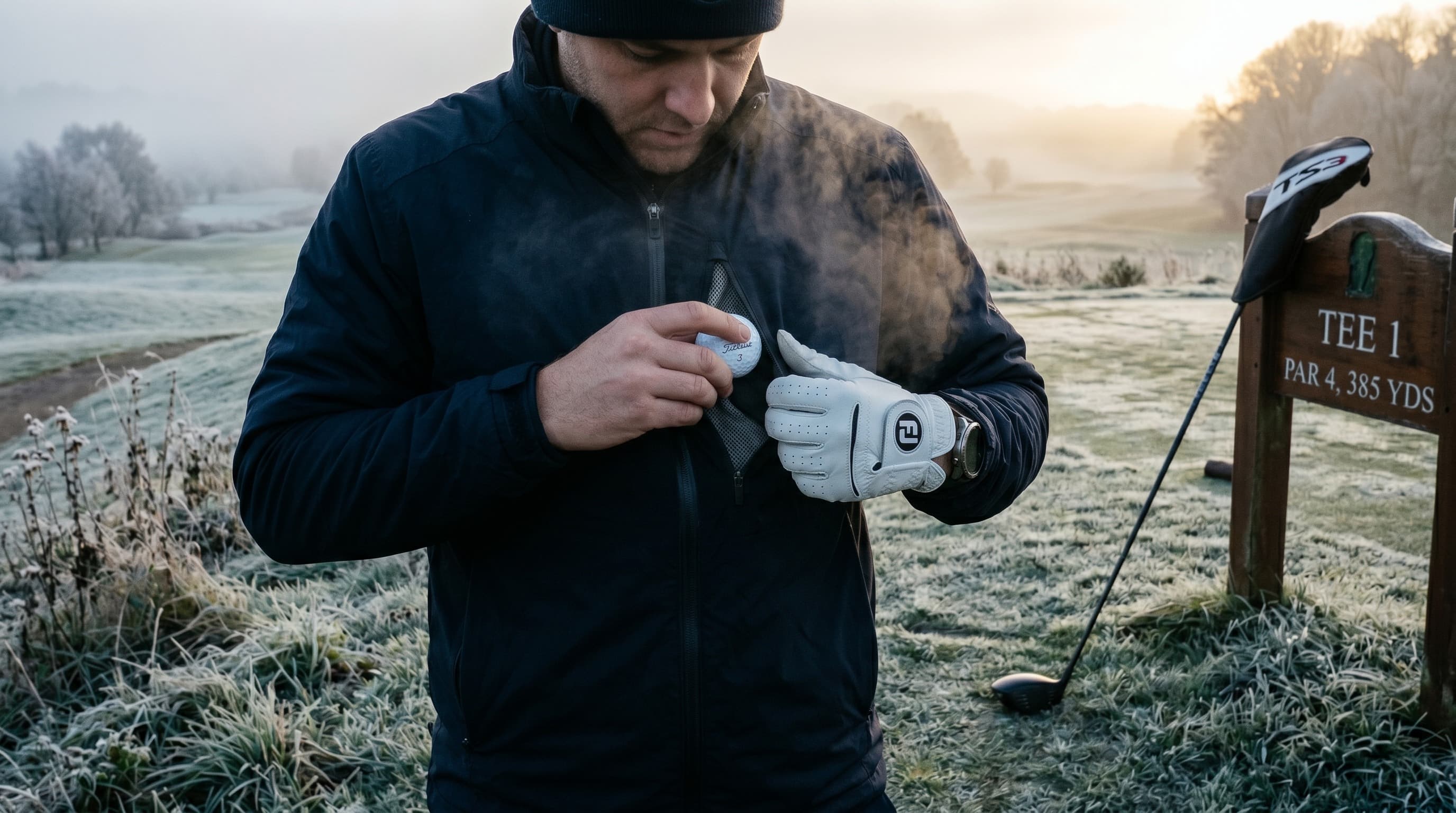
How Cold Weather Steals Distance: The Ball Compression Physics Every Golfer Should Know
Every 10°F drop costs the average golfer two to four yards of driver carry. Here is the physics — ball compression, air density, muscle temperature — and the field data we pulled from G-Score-monitored cold rounds to show exactly how distance loss compounds, and how to compensate without changing your swing.
Read Story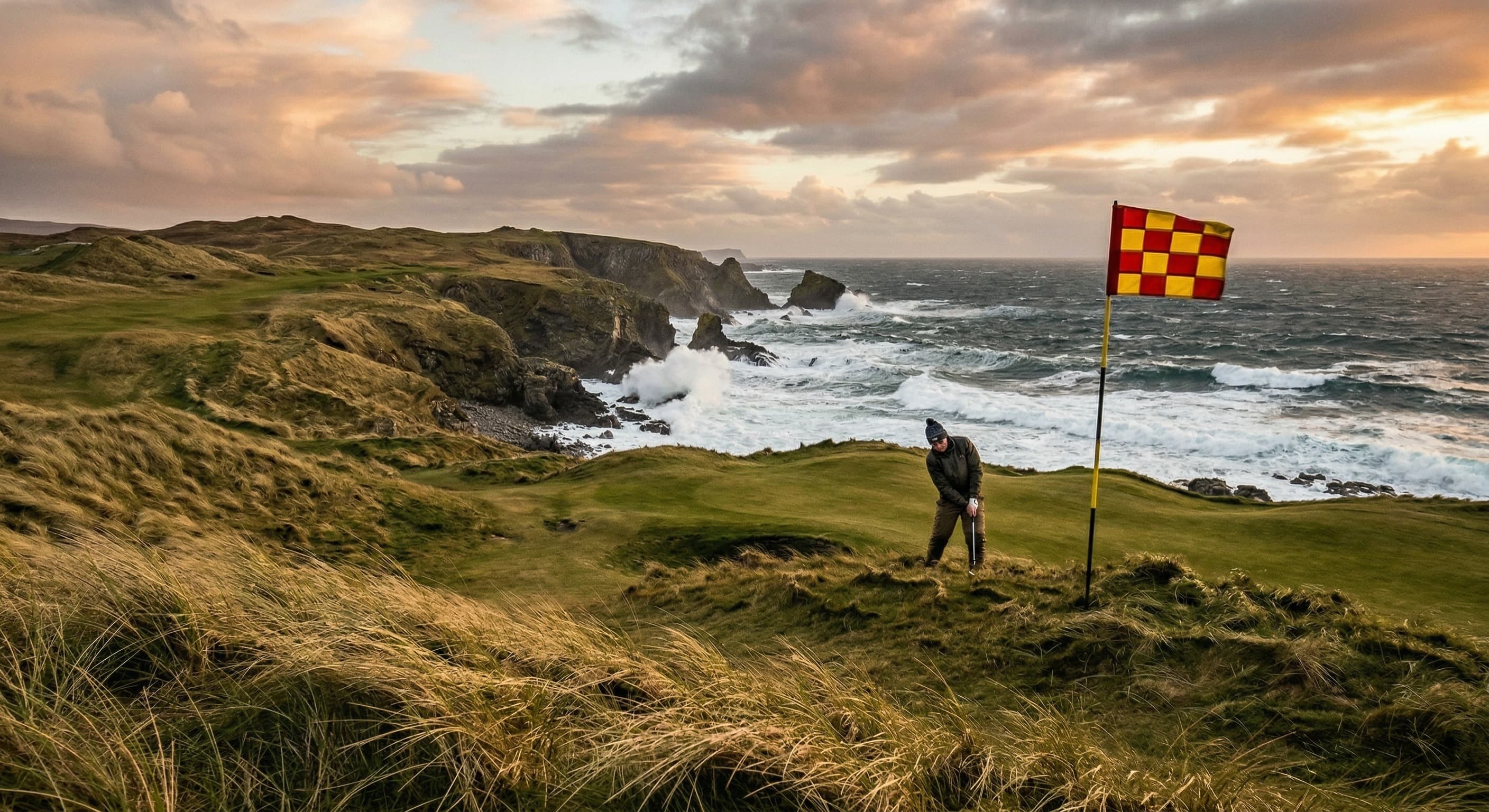
America's 20 Windiest Golf Courses: A G-Score Wind Analysis
We ranked America's 20 windiest golf courses using G-Score wind penalty data. See how coastal gusts and prairie gales reshape playability scores.
Read StoryMinSu Kim
Founder & Golf Data Analyst
MinSu is a data analyst and golfer with 10+ years on the course. He built Golf Weather Score to answer one question: is today a good day to play? He combines weather data, course intelligence, and the proprietary G-Score algorithm to help golfers make smarter decisions.
Every Friday Morning
When Binghamton Country Club plays best next weekend.
Friday 6am ET: peak G-Score windows for Binghamton Country Club, wind direction by hour, and one gear call. Three minutes to read, save you the round.
One email a week. Unsubscribe in one click.
The Caddie's Oracle
Draw your luck before the tee off