
Caddie's Gear Advisor
Curated for today's 78°F · Clear
Tour-Level Drivers
Engineered for maximum distance and forgiveness
Laser Rangefinders
Pin-seeking technology for precision approaches
Premium Golf Balls
Tour-caliber spin and distance performance
Performance Sunglasses
Polarized lenses optimized for reading greens
Your Golf Trip, Handled
The Ultimate Golf Trip Planner
Everything you need to play Black Hawk Golf Course — from booking your flight to checking in course-side.
Course-Side Stays
Luxury hotels, resorts, and stay-and-play packages just minutes from the first tee.
Flights
Compare fares across 700+ airlines for the best route to your tee time.
SUV Rentals for Golf Bags
Spacious vehicles with room for clubs, bags, and your foursome.
Travel Insurance
Coverage for medical, weather delays, and gear at your destination.
Black Hawk Golf Course: Course Intelligence
Signature Setup
Black Hawk doesn't try to fool you with the scorecard — it lets the Central Texas wind do the work. This is a daily-fee public course in Pflugerville, just north of Austin, opened in 1990 and laid out by Charles Howard alongside LPGA U.S. Open champion Hollis Stacy. From the back tees it runs about 7,072 yards to a par 72, slope 125. On paper that's a moderate test. In July, when the surface goes firm and the wind off the Gulf is steady out of the south, those numbers stop telling the truth. The first time I looked at the 18th from the fairway, 95°F at noon and the flag standing straight out, the 440-yard closer felt 60 yards longer than the card said.
Hole-by-Hole Wind & Playing Lines
Hole 1 (par-4, ~440y, #1 handicap): A long opener that usually plays straight into the prevailing south-southeast breeze in summer. Into 12–18 mph, this is a driver-then-long-iron hole, not a wedge approach. I gave up trying to hug the left line — bailing slightly right and accepting a 4-iron in is the smarter miss than a flyer from the left trouble.
Hole 18 (par-4, 440y, signature): The water-lined closer is the toughest finish on the property. With the wind quartering off the right in the afternoon, a held line drifts toward the hazard. I aim at the left-center of the fairway and let the breeze bring it back rather than start it over the water.
A mid-round par-3 into the south wind: Black Hawk's short holes are where the wind tax shows up most. A 165-yard number into a 15 mph headwind is a full 6-iron for me, not the 8 the yardage suggests. I haven't played every pin position here, so I trust the wind read over the sprinkler-head number.
Green & Fairway Characteristics
The course is bermuda through the green, which defines how it plays by season. In summer the fairways firm up and the ball runs, so a downwind drive can chase well past your carry number — useful on the longer par-4s, dangerous when the run feeds into a hazard. The greens, also bermuda, hold a firm roll in the dry months and grain becomes a real factor on short putts, especially toward the late-afternoon sun line. Through the cooler, wetter stretch the same fairways soften and roll dies, so your carry number becomes your total. The routing has enough water and length that distance control off the tee matters more than raw power.
Seasonal Weather Pattern
Pflugerville sits in the Texas Hill Country fringe, and the weather is the dominant variable here. Summer (Jun–Aug) means highs of 95–100°F, intense sun, and a persistent south to southeast wind that builds through the day — mornings are calmer, afternoons can gust past 20 mph. Spring and fall are the prime scoring windows: highs in the 70s–80s, lighter wind early, and firmer-but-fairer turf. Winter is mild and playable, with daytime temps often in the 50s–60s, but cold fronts swing the wind hard to the north for a day or two and flip every into-the-wind hole into a downwind one. Rain is concentrated in spring storms rather than steady soaking.
Local Play Tips
The single biggest edge here is the clock. From June through August, the wind is your scorecard — and it is meaningfully calmer before 9 a.m. than at 1 p.m. Book the earliest tee time you can stand in the heat, get the long into-the-wind holes (1 and 18 especially) behind you while the air is still, and you'll save several strokes over an identical afternoon round. As a public course outside Austin, twilight rates are reasonable and the back nine empties out late — but in summer that twilight slot is also the windiest, so it's a trade between price and conditions.
Pre-Round Weather Workflow
Check the 7-day G-Score before you book, and for Black Hawk weight wind speed and direction above everything else. If the forecast shows a south wind under 10 mph, almost any tee time scores well. If it's building past 15 mph, target the earliest morning slot so you reach the long par-4s before the Gulf breeze peaks. Use the windExposure read to plan holes 1 and 18: into a stiff south wind, club up two and play for the fat side of the fairway. In summer, assume firm, fast turf and plan for roll; in the wet season, assume soft fairways and club up because the ball stops where it lands. After a winter cold front, re-check direction — a north wind reverses the playbook entirely.
Related Reading
Before you tee off at Black Hawk Golf Course

The Mental Game: Sports Psychology Research Behind Golf's Greatest Clutch Performers
Science-backed sports psychology research reveals why golf's greatest clutch performers master pressure through routines, visualization, and focus.
Read Story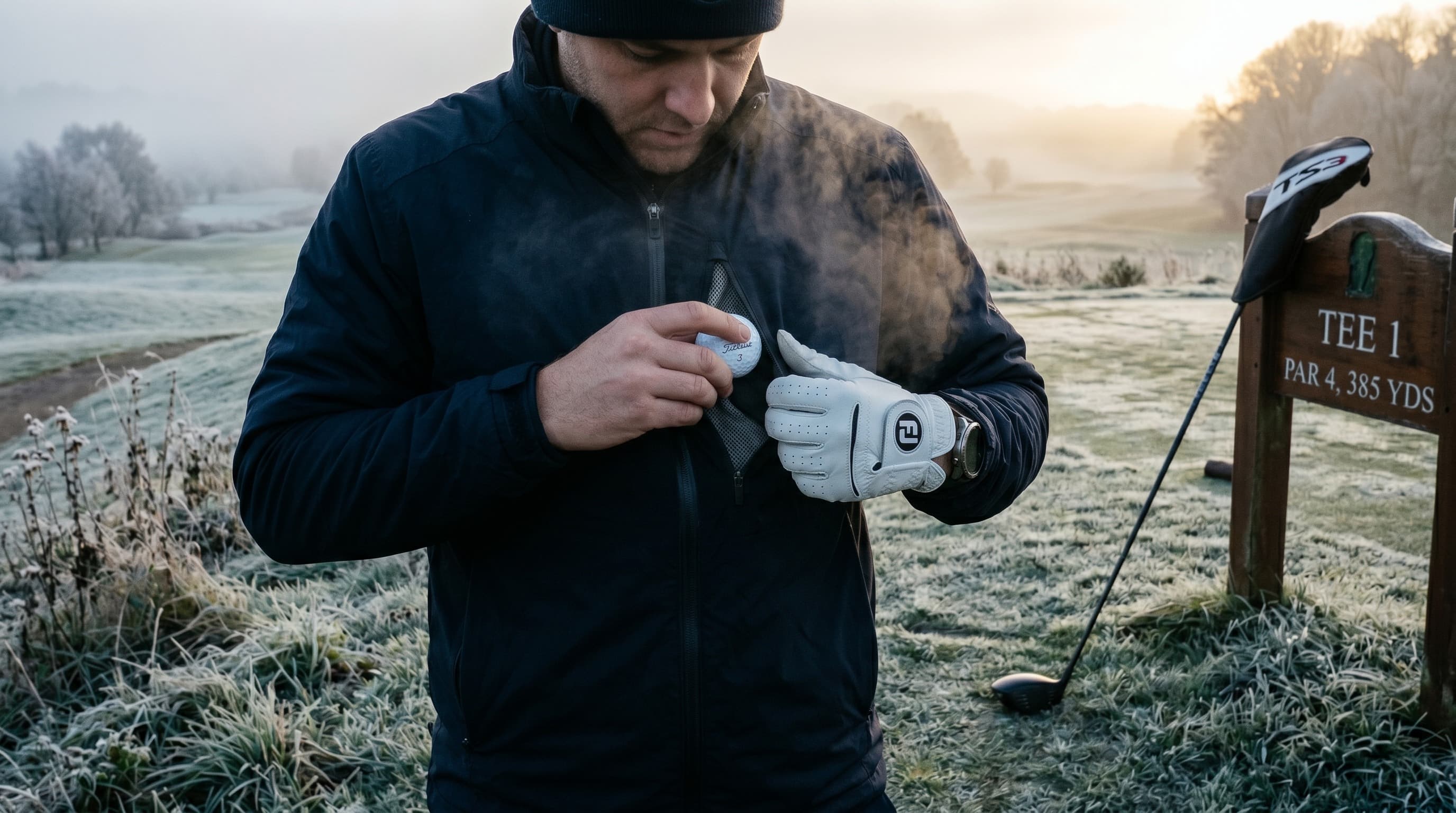
How Cold Weather Steals Distance: The Ball Compression Physics Every Golfer Should Know
Every 10°F drop costs the average golfer two to four yards of driver carry. Here is the physics — ball compression, air density, muscle temperature — and the field data we pulled from G-Score-monitored cold rounds to show exactly how distance loss compounds, and how to compensate without changing your swing.
Read StoryMinSu Kim
Founder & Golf Data Analyst
MinSu is a data analyst and golfer with 10+ years on the course. He built Golf Weather Score to answer one question: is today a good day to play? He combines weather data, course intelligence, and the proprietary G-Score algorithm to help golfers make smarter decisions.
Every Friday Morning
When Black Hawk Golf Course plays best next weekend.
Friday 6am ET: peak G-Score windows for Black Hawk Golf Course, wind direction by hour, and one gear call. Three minutes to read, save you the round.
One email a week. Unsubscribe in one click.
The Caddie's Oracle
Draw your luck before the tee off