
Caddie's Gear Advisor
Curated for today's 61°F · Clouds
Tour-Level Drivers
Engineered for maximum distance and forgiveness
Laser Rangefinders
Pin-seeking technology for precision approaches
Premium Golf Balls
Tour-caliber spin and distance performance
Performance Sunglasses
Polarized lenses optimized for reading greens
Your Golf Trip, Handled
The Ultimate Golf Trip Planner
Everything you need to play Black Mesa Golf Club — from booking your flight to checking in course-side.
Course-Side Stays
Luxury hotels, resorts, and stay-and-play packages just minutes from the first tee.
Flights
Compare fares across 700+ airlines for the best route to your tee time.
SUV Rentals for Golf Bags
Spacious vehicles with room for clubs, bags, and your foursome.
Travel Insurance
Coverage for medical, weather delays, and gear at your destination.
Black Mesa Golf Club: Course Intelligence
Signature Setup
I'll be straight before the first tee: I have not played Black Mesa myself, so you won't get invented hole-by-hole heroics from me. What I have done is recalibrate my whole bag for thin-air New Mexico golf on comparable high-desert rounds, and that calibration transfers directly to this mesa. Black Mesa Golf Club sits in La Mesilla, just south of Española and about 25 minutes north of Santa Fe, on broken high-desert ground near 6,000 feet. It opened in 2003 to a Baxter Spann design (Finger Dye Spann, now Spann Golf Design), and it has earned a steady place near the top of New Mexico's public-course rankings ever since — largely because Spann routed it through the land's arroyos and native grasses rather than bulldozing them flat.
TL;DR: Par-72 Baxter Spann desert course (~7,307y, slope into the 140s) on La Mesilla mesa near 6,000 ft. Altitude and wind define play, not just length — the ball flies ~12% farther, the southwest afternoon wind builds daily, and firm bentgrass greens release rather than hold. Play early, club down for the thin air, and respect the firmness.
Hole-by-Hole Wind & Playing Lines
I won't fabricate per-hole yardages I can't verify. What I can give you is the wind logic for a fully exposed mesa layout near 6,000 ft:
- The hardest two-shotter into the SW afternoon flow: Northern New Mexico draws a daytime southwest wind that strengthens through the afternoon as the high desert heats. Into it, remember altitude is already adding ~12% carry — so club down relative to the gust, take one less than instinct says, and flight the ball low under the wind instead of ballooning it.
- The exposed par-3s across the arroyos: Depth perception lies against open red-rock terrain — the green looks closer than it plays, and there's usually a native-grass wash short of it that swallows the bailout. Trust the rangefinder, subtract for altitude, and carry the full number rather than flirting with the front.
- Any downwind hole on firm turf: With the mesa baked dry, a downwind release runs a wedge well past the pin. Land it short and let it chase to a surface that won't grab a hot, high shot.
The habit that travels: read the wind off the flag on the first open hole, decide whether the southwest flow is already up, and re-club for altitude on every single shot — the thin air never switches off.
Green & Fairway Characteristics
This is high-desert golf at roughly 6,000 feet, so firmness is the dominant variable. The bentgrass greens run true but release on approach, and the fairways turn fast in the dry air — particularly through a high-pressure stretch when no monsoon moisture has touched the turf. From the tips it stretches to about 7,307 yards at par 72, and the slope climbing into the 140s tells you Spann's defense isn't length alone: it's forced carries over arroyos, native-grass framing that punishes the wide miss, and elevation changes that distort club selection. Play it from a tee that lets you carry the trouble, not from the back simply because the scorecard tempts you.
Seasonal Weather Pattern
Northern New Mexico is high, arid, and continental — nothing like a coastal track. Spring (Apr–May): dry, with the year's strongest and gustiest winds and wide day-to-night temperature swings; layers and sunblock decide comfort, not the calendar. Summer (Jun): hot and dry pre-monsoon, with intense UV at altitude. Monsoon (Jul–Aug): warm mornings give way to real afternoon thunderstorm and lightning risk building off the surrounding peaks — get out early. Fall (Sep–Oct): the prime window, with crisp calm mornings, firm greens, and the steadiest scoring air of the year. Winters are cold but the course often stays playable on mild days; for that stretch I lean on NOAA Española-area historicals rather than anything firsthand.
Local Play Tips
Here's what flatland golfers get wrong at 6,000 feet: it isn't a vague "ball goes a little farther." Carry scales at roughly 2% per 1,000 feet above sea level, which puts you near a 12% gain here — a 150-yard club becomes a 168-yard club. Most visitors leave every approach long for the first three holes before they trust it. Recalibrate deliberately on the range or the opening hole, write your adjusted numbers on the card, and commit. And tee off early: the southwest afternoon wind is a daily, predictable build off the Jemez and Sangre de Cristo gaps, so the calmest, most makeable scoring window is the first few hours after sunrise.
Pre-Round Weather Workflow
Treat golfweatherscore's 7-day G-Score and windExposure as your timing tool — read for a high-altitude continental desert, not a coast:
- Three days out: scan the G-Score trend for the cleanest morning. At this elevation the swing between a 9 and a 4 is usually afternoon wind and monsoon storm risk, not the date itself.
- The night before: check wind direction and the afternoon build. If the southwest flow is forecast strong by early afternoon, lock an early tee time — the morning is your calm window.
- Round morning: if windExposure flags midday gusts, accept that the par-72 card plays a club longer into the desert wind, then layer altitude on top: club down ~12% for carry, but back up when hitting into a strong afternoon breeze. Sunscreen and water are non-negotiable at 6,000 ft.
Related Reading
Before you tee off at Black Mesa Golf Club
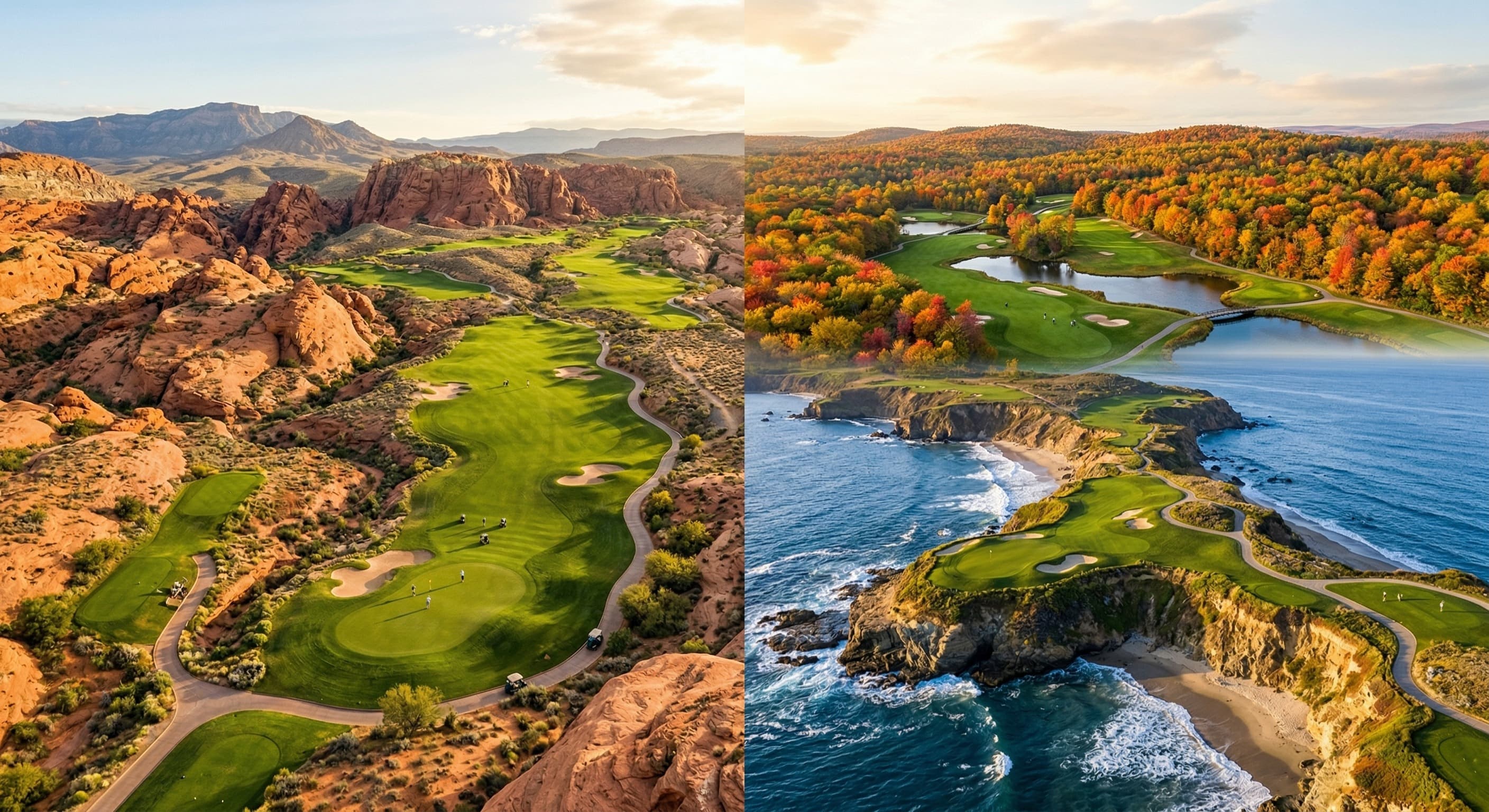
Best Golf Weather by State: Ranking America by Average G-Score
We ranked all 50 US states by average G-Score golf playability. California tops the list, but the results beyond the top five may surprise you.
Read Story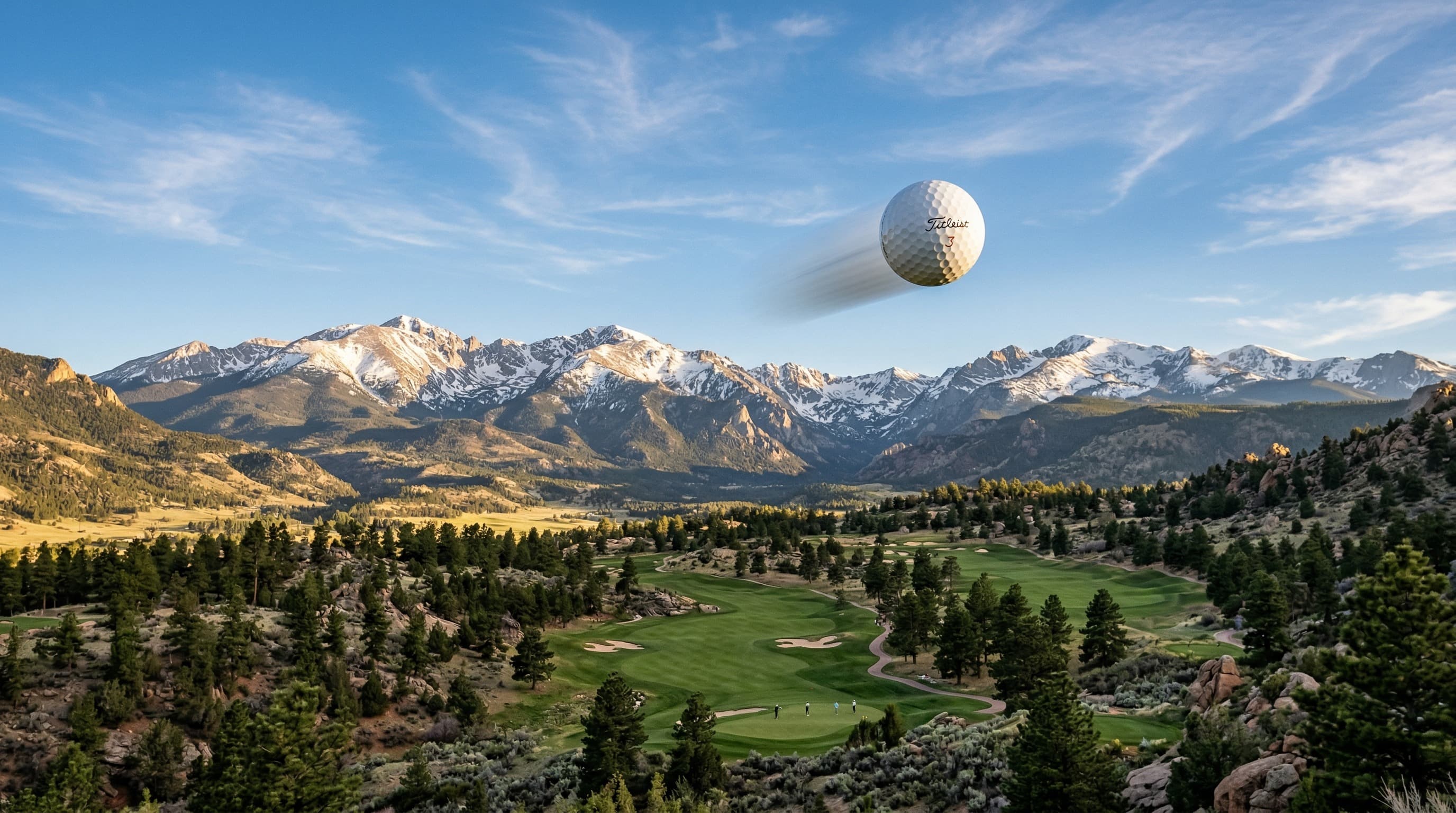
How Altitude Affects Golf Ball Distance: The Science Behind Every Extra Yard
At elevation, your golf ball flies farther than you expect. We break down exactly how altitude changes carry distance, spin rates, and club selection using real data from high-altitude courses across America.
Read StoryMinSu Kim
Founder & Golf Data Analyst
MinSu is a data analyst and golfer with 10+ years on the course. He built Golf Weather Score to answer one question: is today a good day to play? He combines weather data, course intelligence, and the proprietary G-Score algorithm to help golfers make smarter decisions.
Every Friday Morning
When Black Mesa Golf Club plays best next weekend.
Friday 6am ET: peak G-Score windows for Black Mesa Golf Club, wind direction by hour, and one gear call. Three minutes to read, save you the round.
One email a week. Unsubscribe in one click.
The Caddie's Oracle
Draw your luck before the tee off