
Caddie's Gear Advisor
Curated for today's 71°F · Mist
Tour-Level Drivers
Engineered for maximum distance and forgiveness
Laser Rangefinders
Pin-seeking technology for precision approaches
Premium Golf Balls
Tour-caliber spin and distance performance
Performance Sunglasses
Polarized lenses optimized for reading greens
Brambleton Golf Club: Course Intelligence
Signature Setup
The 12th at Brambleton is shorter than its reputation — 145 to 160 yards depending on the markers — but it falls downhill to a green hemmed by water on three sides, and on a still morning the only honest club is the one that carries the front edge. I played it on an October Tuesday at 9 a.m., 54°F, no wind off the pond, and still left an 8-iron short because the downhill fooled my eyes. That hole tells you what this course is about.
Brambleton Golf Course sits in Ashburn, Virginia, in Loudoun County's Brambleton community, operated by NOVA Parks. William H. "Hank" Gordon laid it out and it opened in 1994. From the Blue tees it measures 6,797 yards, par 72, rating 72.2, slope 133 — a real test for a public regional-park course, with water in play on six of the nine front holes and two on the back.
Hole-by-Hole Wind & Playing Lines
Hole 7 (par-5, ~600y): The toughest scoring hole here. The landing area off the tee is narrow, and Northern Virginia's prevailing summer wind out of the southwest pushes into you on the second shot. On those SW mornings I treat it as a three-shot hole and lay back to a full 110-yard wedge — going for it in two leaves a long-iron into trouble you can't see from the fairway.
Hole 12 (par-3, 145–160y): Downhill to the three-sided water green. When the late-morning breeze fills in from the south, the shot gains roughly half a club of carry but the green won't hold a hot long-iron — favor the back-center pin position and take the front bunker out of the picture.
Hole 3 area (front-nine water stretch): With water on six front holes, a WNW winter wind (the November–February prevailing direction here) turns the right-side ponds into a magnet for a bleeding fade. I aim a hair left of the fairway center on those cold mornings.
Green & Fairway Characteristics
The greens are bentgrass — tiered, smooth, and quick when NOVA Parks has them dialed in, easily a tier faster than the Bermuda-fairway approach surfaces feed you to expect. Fairways are Bermuda, which firm up and run in July–August heat, so a drive that carries 250 can finish 270 on the rolling terrain. Large sand traps and bunkered fairways frame the landing zones; the back nine plays slightly longer in feel because the rolling ground hides several second-shot yardages.
Seasonal Weather Pattern
Ashburn runs humid-subtropical. July highs sit near 88°F with thick humidity that deadens ball flight — your 150-yard 8-iron in May can play 145 in August's heavy air. Winters drop into the 30s–40s°F, fairways go dormant and firm, and the WNW wind is steady. The honest windows are mid-April to early June and again mid-September to late October, when daytime highs hold in the 65–75°F band and the greens hold a well-struck iron.
Local Play Tips
The front-nine ponds sit dead calm for roughly the first 90 minutes of the tee sheet, before the valley draws a late-morning breeze up the rolling terrain. An early tee time isn't just about pace — on the water holes (7, 12, and the front cluster) the still air is worth a stroke or two against an afternoon round. I haven't played Brambleton in full summer, so I'm leaning on historical NOAA temperature norms for the August humidity note rather than my own card.
Pre-Round Weather Workflow
Pull the 7-day G-Score before you book. Aim your tee time at the highest-scoring morning slot — at Brambleton that almost always means the earliest available block, when the front-nine water is calm. Check the windExposure direction: a SW reading means Hole 7 plays as a three-shot hole, and a WNW winter wind means guard against the right-side ponds on the front. If the afternoon G-Score craters on heat and humidity, move up rather than fighting dead air over water all day.
More Courses in Virginia
View AllRelated Reading
Before you tee off at Brambleton Golf Club
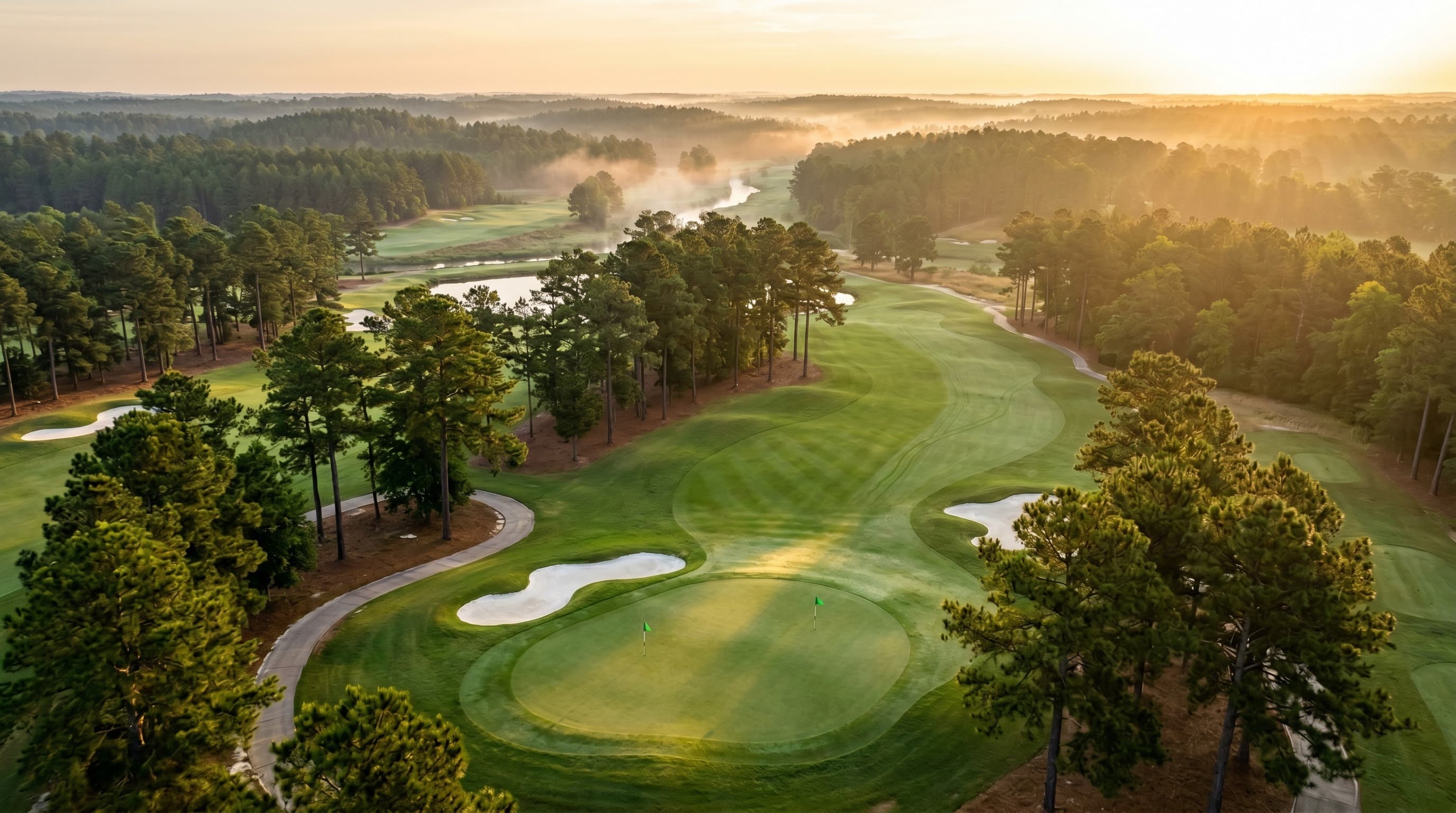
The May 2026 G-Score Heatmap: Where American Golf Peaks This Spring
May is the most underrated month on the American golf calendar. Five regions hit their annual peak this spring, three turn quietly hostile, and the data tells a clearer story than the brochures. Here is where to play, where to avoid, and how to time your booking window.
Read Story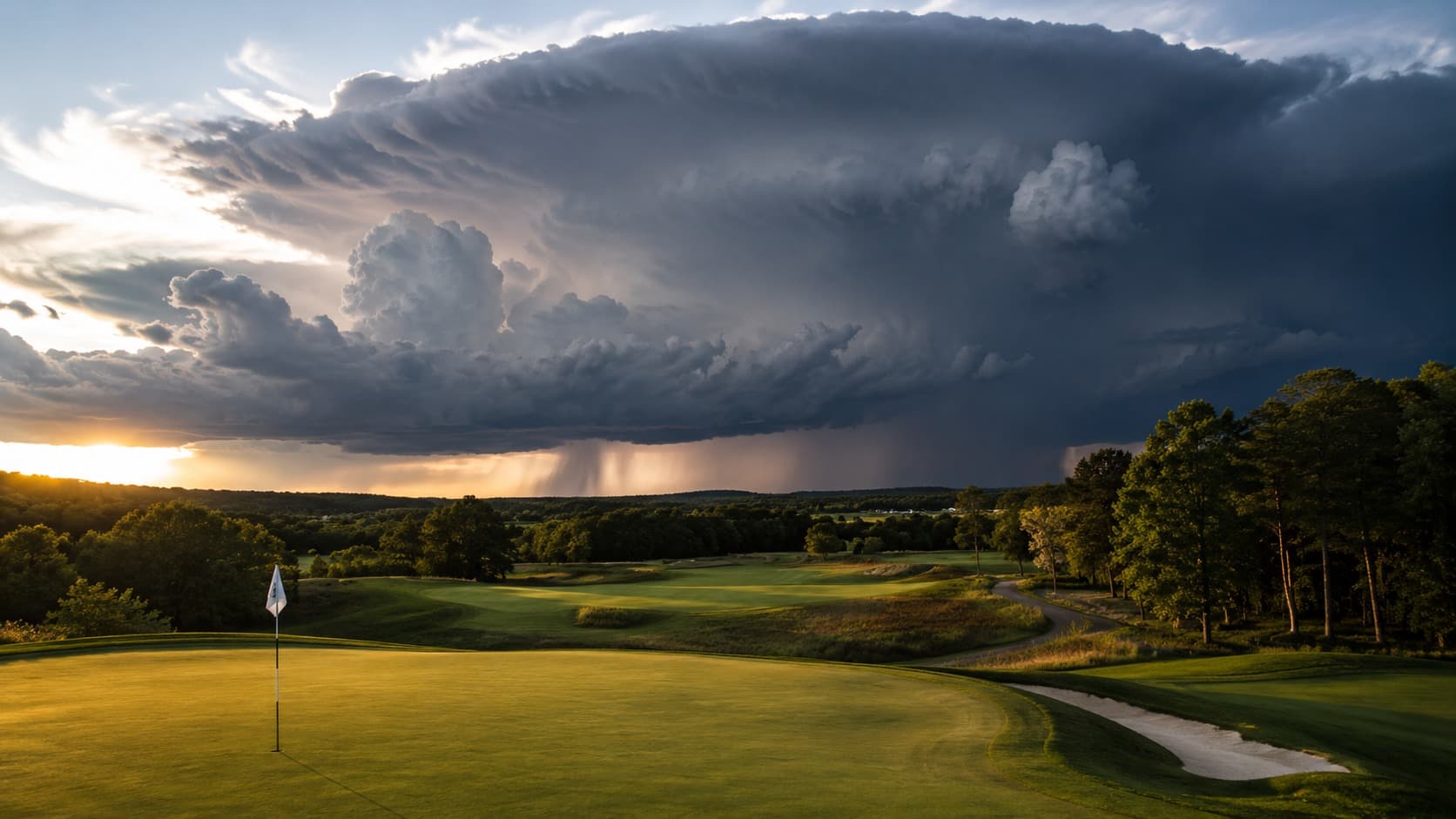
The Three O’Clock Storm: Reading Summer’s Convective Cycle to Protect Your Round
A 40% chance of afternoon thunderstorms does not mean a 40% chance of getting rained on. In the summer convective season it means the morning is nearly clear and the afternoon carries a fast-building, high-energy storm risk driven by a daily heating cycle. Here is the meteorology behind the pattern, the G-Score data on how the storm cycle punishes afternoon tee times across the Southeast, Midwest, and desert Southwest, the lightning-safety decision tree that actually matters, and the workflow that gets you off the course before the first bolt.
Read StoryDanorie
Editorial & Data
Golf Weather Score is built by Danorie. We compute the G-Score — our own playability rating — from live NOAA forecasts and published course scorecards, so any US course can be compared on any day with a single number. Methodology and data sources are documented on every page.
Every Friday Morning
When Brambleton Golf Club plays best next weekend.
Friday 6am ET: peak G-Score windows for Brambleton Golf Club, wind direction by hour, and one gear call. Three minutes to read, save you the round.
One email a week. Unsubscribe in one click.
The Caddie's Oracle
Draw your luck before the tee off