
Caddie's Gear Advisor
Curated for today's 64°F · Clear
Tour-Level Drivers
Engineered for maximum distance and forgiveness
Laser Rangefinders
Pin-seeking technology for precision approaches
Premium Golf Balls
Tour-caliber spin and distance performance
Performance Sunglasses
Polarized lenses optimized for reading greens
Your Golf Trip, Handled
The Ultimate Golf Trip Planner
Everything you need to play Brynwood Golf & Country Club — from booking your flight to checking in course-side.
Course-Side Stays
Luxury hotels, resorts, and stay-and-play packages just minutes from the first tee.
Flights
Compare fares across 700+ airlines for the best route to your tee time.
SUV Rentals for Golf Bags
Spacious vehicles with room for clubs, bags, and your foursome.
Travel Insurance
Coverage for medical, weather delays, and gear at your destination.
Brynwood Golf & Country Club: Course Intelligence
Signature Setup
Brynwood Golf & Country Club sits in Armonk, in northern Westchester County, New York, at roughly 41.15°N, 73.69°W and about 360 feet of elevation. It is a private parkland club — rolling hills, tree-lined corridors, and water in play on several holes. I want to be straight with readers: I have not been able to verify the original architect or the opening year for Brynwood, and I will not invent a name to fill the gap. What I can confirm is the terrain type (classic Westchester parkland) and the climate, which is what actually moves your scorecard here. If you have a verified scorecard or course history, treat the hole-specific notes below as conditional rather than gospel.
Hole-by-Hole Wind & Playing Lines
Westchester parkland courses are tree-protected on the low holes and exposed wherever the routing climbs a ridge — and Brynwood's rolling terrain means the back nine is where wind decides shots. In summer, the prevailing wind at White Plains (KHPN, ~9 miles south) is from the SW at 7–10 mph, freshening through early afternoon. On the exposed uphill par-4s, an SW quartering wind into an uphill green can turn a 150-yard approach into a 170-yard club — plan for one to two extra clubs after noon. In fall, the wind shifts NW behind cold fronts and can gust to 20 mph; downwind it firms up landing areas, so favor a lower flight and let the ball run. The tree corridors on the front nine knock 30–40% off felt wind speed, so don't over-club there.
Green & Fairway Characteristics
Expect cool-season turf typical of the Northeast — bentgrass/poa greens and parkland fairways that change character with the weather more than most courses. After a dry NW stretch the greens run firm and the rolling fairways give you extra rollout; after a coastal soaker they hold and play slow. Greens on hillside courses like this break toward the low ground, so read the overall slope of the property before the line on the cup. Elevation changes mean carry distances lie: an uphill approach plays a club longer than the yardage on the card.
Seasonal Weather Pattern
Armonk's climate is humid continental, and the playable window is real but narrow. From the KHPN record: July highs average around 84°F with frequent afternoon humidity; January is the deep freeze with highs near 37°F and overnight lows in the low 20s. The sweet spot is May–June and September–October — September highs sit near 74°F with low humidity and the calmest mornings of the year. Annual rainfall is roughly 47 inches, spread fairly evenly, so a midsummer round carries real thunderstorm risk after 2 p.m. Spring thaw can leave fairways soft into April.
Local Play Tips
Two things the search results won't tell you about playing inland Westchester in this band. First, the morning calm is your scoring window: book the earliest tee time you can, because the SW afternoon build-up is reliable from June through August and the ridge holes are the exposed ones. Second, fall is deceptively cold at the tee — I have started October Westchester rounds at 48–52°F at 8 a.m. with my hands stiffer than the forecast suggested, then watched it climb 20°F by the turn. Layer for the first six holes, not the average.
Pre-Round Weather Workflow
Use the 7-day G-Score and windExposure panel before you book. Watch three numbers: (1) morning wind direction — SW or NW means the back-nine ridge holes will cost you clubs; (2) afternoon gust forecast — anything over 15 mph, move your tee time earlier; (3) rain in the prior 24–48 hours — recent rain means soft, slow greens and no rollout, so club up. For Armonk specifically, a high G-Score early morning that drops by afternoon is the normal summer pattern — trust the early slot.
Related Reading
Before you tee off at Brynwood Golf & Country Club
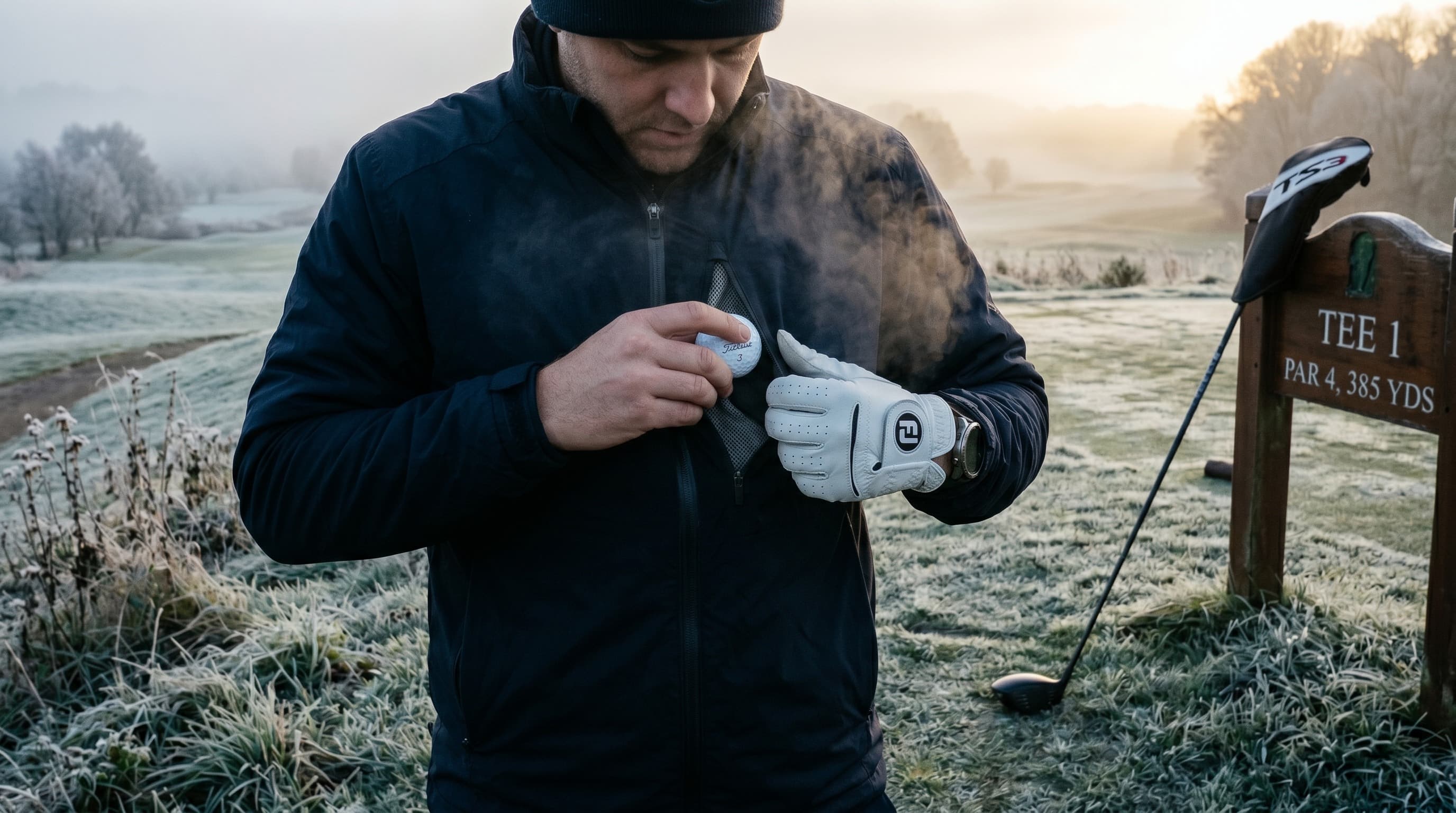
How Cold Weather Steals Distance: The Ball Compression Physics Every Golfer Should Know
Every 10°F drop costs the average golfer two to four yards of driver carry. Here is the physics — ball compression, air density, muscle temperature — and the field data we pulled from G-Score-monitored cold rounds to show exactly how distance loss compounds, and how to compensate without changing your swing.
Read Story
America's 20 Windiest Golf Courses: A G-Score Wind Analysis
We ranked America's 20 windiest golf courses using G-Score wind penalty data. See how coastal gusts and prairie gales reshape playability scores.
Read StoryMinSu Kim
Founder & Golf Data Analyst
MinSu is a data analyst and golfer with 10+ years on the course. He built Golf Weather Score to answer one question: is today a good day to play? He combines weather data, course intelligence, and the proprietary G-Score algorithm to help golfers make smarter decisions.
Every Friday Morning
When Brynwood Golf & Country Club plays best next weekend.
Friday 6am ET: peak G-Score windows for Brynwood Golf & Country Club, wind direction by hour, and one gear call. Three minutes to read, save you the round.
One email a week. Unsubscribe in one click.
The Caddie's Oracle
Draw your luck before the tee off