
Caddie's Gear Advisor
Curated for today's 77°F · Thunderstorm
Storm-Ready Outerwear
Waterproof layers built for 18 holes in the rain
Tour-Grade Umbrellas
68" double-canopy wind-resistant coverage
Wet-Weather Gloves
All-weather grip that performs in the rain
Waterproof Golf Shoes
Keep your feet dry through every fairway
Your Golf Trip, Handled
The Ultimate Golf Trip Planner
Everything you need to play Buffalo Golf Club — from booking your flight to checking in course-side.
Course-Side Stays
Luxury hotels, resorts, and stay-and-play packages just minutes from the first tee.
Flights
Compare fares across 700+ airlines for the best route to your tee time.
SUV Rentals for Golf Bags
Spacious vehicles with room for clubs, bags, and your foursome.
Travel Insurance
Coverage for medical, weather delays, and gear at your destination.
Buffalo Golf Club: Course Intelligence
Signature Setup
Buffalo sits at the eastern foot of the Bighorn Mountains, where the high plains of north-central Wyoming run straight into a 13,000-foot wall of rock. The golf club is a municipal course — the kind of community layout that grew from a mid-century nine into a full eighteen over the decades, rather than a marquee design with a famous name attached to it. I'll be honest about that: I can't verify a single signature architect for this course, and I won't invent one. What makes it worth a stop isn't a designer's pedigree. It's the ground it's built on — roughly 4,645 feet of elevation, mountain-front terrain, and air thin enough to change how your bag behaves.
At about 6,600 yards from the back tees and par 72, the scorecard yardage understates the course. Two factors fight each other here: altitude that adds carry, and a near-constant wind off the mountains that takes it back.
Hole-by-Hole Wind & Playing Lines
I have not carded a personal round at Buffalo, so the playing lines below come from the routing, the regional wind pattern, and the physics of golf at altitude — not from my own green-reading notes.
The dominant wind is a westerly/southwesterly flow off the Bighorn front, often funneled and accelerated as it spills down out of the canyons. It is light at dawn and strengthens through the afternoon, regularly reaching 15–25 mph.
- The uphill par-4 (#1 stroke hole): the hole climbs back toward the foothills directly into that W/SW wind. Altitude wants to give you 8–10% extra carry; a 20-mph headwind takes more than that away. Net result, a 150-yard marker plays like 175. Club up two, play the front edge, and putt uphill.
- The downhill mountain-backed par-3: the Bighorn wall sits directly behind the green and destroys your depth perception — the eye reads the green as closer than it is and you under-club. Trust the yardage book, add for the wind, ignore the mountain.
- Open plains holes: crosswinds here are steady, not gusty like a tree-lined course. You can actually play a committed knock-down into them rather than guessing.
Green & Fairway Characteristics
This is cool-season turf, as you'd expect at altitude in Wyoming — bentgrass/poa green complexes over bluegrass-and-rye fairways. In the dry heart of summer the fairways firm up and you get real roll-out, which stacks on top of the altitude carry; your driver number can surprise you. The greens sit in a moderate slope range and run quicker than a flatlander expects once they dry out. The defense here isn't tricked-up contour — it's wind, length that plays longer uphill, and the optical illusion the mountains create on the elevated holes. Read greens for grain toward the lower elevation and don't over-borrow.
Seasonal Weather Pattern
Buffalo's golf season is short and weather-defined. June through August is prime: daytime highs in the low-to-mid 80s°F, low humidity, and cool mornings that can start in the 40s–50s before climbing fast. That morning chill matters — a 48°F dawn ball flies measurably shorter than the same swing at midday, briefly offsetting the altitude bonus until the air warms. May and September are shoulder months where a cold front off the mountains can drop a 30-degree swing in an afternoon and bring wind that ends the round's accuracy. Afternoon thunderstorms build over the Bighorns on summer days and roll east onto the plains — the lightning risk, not the rain, is what you watch. By October frost delays and early snow off the range close the window quickly.
Local Play Tips
The altitude is the local knowledge most visitors get wrong. At 4,645 feet you are not playing the course on the card — every iron flies roughly a club longer than your sea-level baseline, and a player coming up from Texas or the coast will fly greens for the first six holes until they recalibrate. Take one fewer club than the yardage suggests, then re-adjust for wind separately. Second tip: this is mountain-front golf, so play early. The wind is genuinely calmer at 7 a.m. than at 3 p.m., and the storm-and-lightning risk is almost entirely an afternoon problem in summer.
Pre-Round Weather Workflow
Before you book Buffalo, run the 7-day G-Score and read it through a high-plains, high-altitude lens:
- Check morning temperature, not just the high. A 45°F tee-off shortens your carry; wait for the 60s and the altitude works for you instead.
- Read wind speed and direction by hour. The W/SW canyon wind builds through the day — an early slot is a calmer, fairer test, especially on the uphill par-4.
- Watch the afternoon storm timing. Summer convection fires over the Bighorns and pushes east; treat lightning as the hard stop and get off the open holes early.
- Factor altitude into every club. Subtract a club for the 4,645-ft elevation first, then add back for any headwind — do them as two separate adjustments, not one guess.
Mornings here grade out several G-Score points higher than afternoons in summer: less wind, lower storm risk, and air warm enough that the altitude carry is working in your favor. Tee off early and let the mountains do the rest.
Related Reading
Before you tee off at Buffalo Golf Club

Best Golf Weather by State: Ranking America by Average G-Score
We ranked all 50 US states by average G-Score golf playability. California tops the list, but the results beyond the top five may surprise you.
Read Story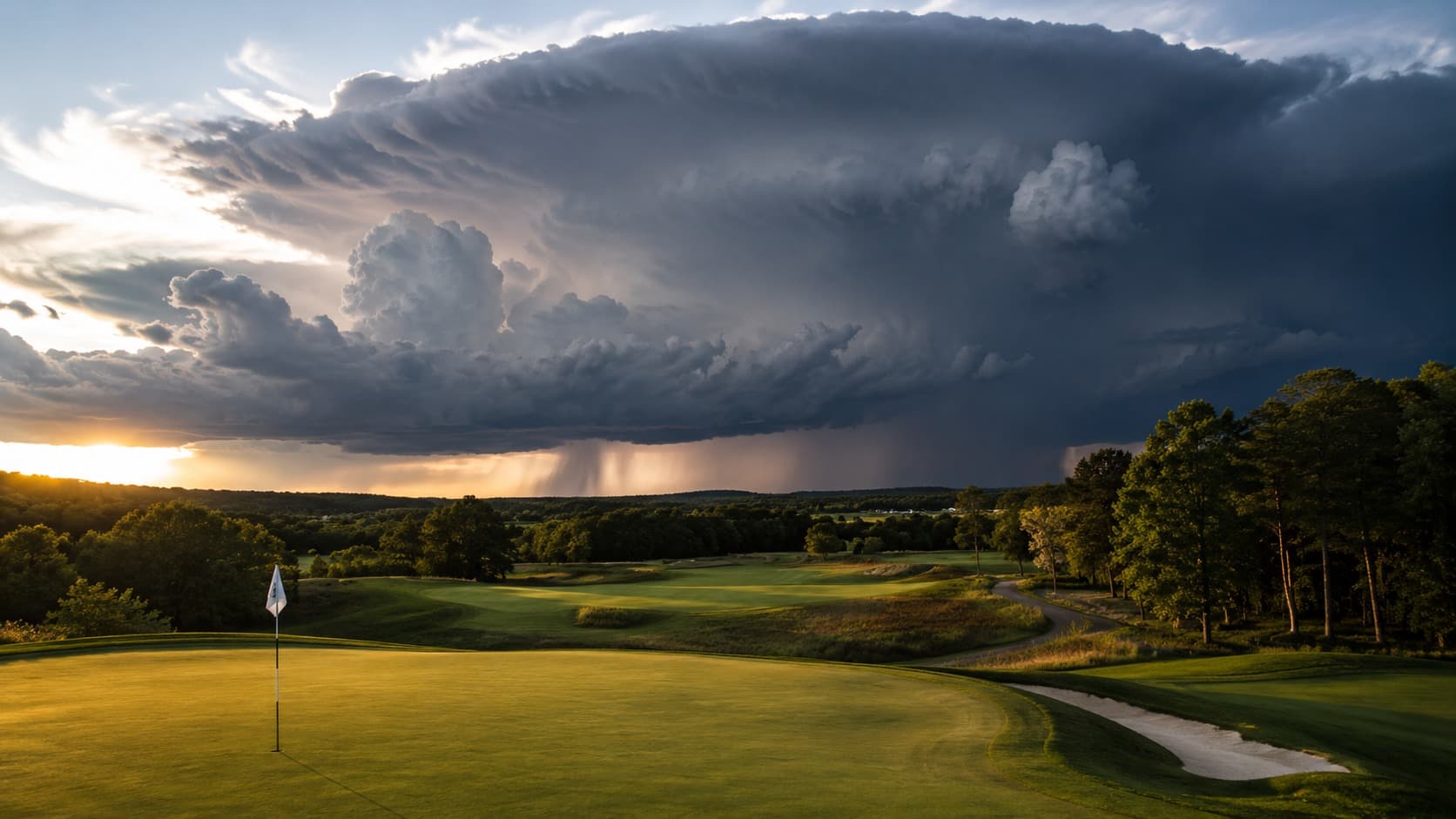
The Three O’Clock Storm: Reading Summer’s Convective Cycle to Protect Your Round
A 40% chance of afternoon thunderstorms does not mean a 40% chance of getting rained on. In the summer convective season it means the morning is nearly clear and the afternoon carries a fast-building, high-energy storm risk driven by a daily heating cycle. Here is the meteorology behind the pattern, the G-Score data on how the storm cycle punishes afternoon tee times across the Southeast, Midwest, and desert Southwest, the lightning-safety decision tree that actually matters, and the workflow that gets you off the course before the first bolt.
Read StoryMinSu Kim
Founder & Golf Data Analyst
MinSu is a data analyst and golfer with 10+ years on the course. He built Golf Weather Score to answer one question: is today a good day to play? He combines weather data, course intelligence, and the proprietary G-Score algorithm to help golfers make smarter decisions.
Every Friday Morning
When Buffalo Golf Club plays best next weekend.
Friday 6am ET: peak G-Score windows for Buffalo Golf Club, wind direction by hour, and one gear call. Three minutes to read, save you the round.
One email a week. Unsubscribe in one click.
The Caddie's Oracle
Draw your luck before the tee off