
Caddie's Gear Advisor
Curated for today's 88°F · Clear
Ultralight Distance Drivers
Maximum carry in hot, low-drag conditions
UV Protection Apparel
UPF 50+ cooling fabrics for peak-sun rounds
Precision Rangefinders
Slope-adjusted yardage in any condition
Hydration & Cooling
Insulated bottles and cooling towels
Your Golf Trip, Handled
The Ultimate Golf Trip Planner
Everything you need to play Burke Lake Golf — from booking your flight to checking in course-side.
Course-Side Stays
Luxury hotels, resorts, and stay-and-play packages just minutes from the first tee.
Flights
Compare fares across 700+ airlines for the best route to your tee time.
SUV Rentals for Golf Bags
Spacious vehicles with room for clubs, bags, and your foursome.
Travel Insurance
Coverage for medical, weather delays, and gear at your destination.
Burke Lake Golf: Course Intelligence
Signature Setup
Burke Lake Golf Center is an 18-hole, par-54 short course run by the Fairfax County Park Authority on Ox Road in Fairfax Station, Virginia, inside Burke Lake Park. It opened in 1971 as a county recreation course, so there is no marquee architect name attached — it was built as municipal pitch-and-putt golf, and it still plays that honest role. The full routing measures roughly 2,700 yards of all par-3s, every hole between about 50 and 165 yards. There is no tournament pedigree here and I won't pretend otherwise; what it has is a driving range, a relaxed pace, and a layout that teaches iron play. The longest holes run toward the wood line on the park's edge, and the 8th is the one I'd call the signature — a mid-iron that looks open but funnels short.
Hole-by-Hole Wind & Playing Lines
This is a par-3 course, so "hardest holes" means the longest carries, not doglegs. The three that matter most in wind:
- The longest one-shotter (~165y, the #1-handicap shot of the round): On a southwest summer breeze it stretches to a 180-yard carry. I played it on a July morning at 79°F with the wind already up at 9 a.m. — my 6-iron came up a club short. Take two extra clubs and aim dead center; the flag is a trap here.
- The 8th (~155y): Plays toward the tree line, which kills a tailwind and amplifies a headwind. On still mornings it's a clean 7-iron; on a NW gust it's a punchy 5.
- A mid-length hole near the lake side (~140y): Open to crosswind off the water. A west wind pushes everything right of the green, so I start it at the left bunker lip and let it ride back.
Green & Fairway Characteristics
The greens are cool-season turf (bentgrass and Poa, common for Northern Virginia munis) and run firm and a touch slow — they hold a well-struck iron but release on anything thin. Fairway corridors are short and bermuda-leaning, so summer lies sit up while spring lies stay tight. Because every hole is a one-shotter, there is no front-nine/back-nine yardage swing to learn; the variety is purely in length, 50 to 165 yards, and in how the tree line on the park boundary shapes wind on the longer holes. Greens are small to medium and crowned enough that a missed approach rolls off — up-and-down practice is the real value of a round here.
Seasonal Weather Pattern
Northern Virginia gives this course four distinct seasons, and they change the math. April–May mornings sit in the low 50s°F with soft greens that grab spin — scoring season. July–August runs 78–88°F with high humidity off Burke Lake, and the afternoon air gets heavy enough to shave a few yards off carry; play before 9 a.m. October is the window I'd circle — 55–65°F, foliage around the lake, and firm greens. Winter rounds happen on the warmer days but the cool-season greens go dormant-slow. Unlike a links or a desert par-3, the dominant weather variable here isn't wind speed, it's humidity and morning dew load.
Local Play Tips
The course drains slowly because the terrain is gentle and the soil holds water — so the firmest, fastest greens you'll see all day are in the first two hours after an overnight rain clears, before the surface softens again under sun and foot traffic. Walk it at dawn before Burke Lake Park fills with weekend trail and lake-loop traffic; the par-3 pace is best early. Bring more wedges than you think — half the round is inside 120 yards and the small greens reward a high, soft ball over a runner.
Pre-Round Weather Workflow
Use the 7-day G-Score the night before. For Burke Lake, the highest-value signal is the morning dew-and-humidity window, not wind: a G-Score peak in the 7–9 a.m. block almost always beats afternoon here, because cooler air keeps the greens firm and carry distances honest. Check the windExposure flag for the longer holes — when it shows a sustained SW or NW component above ~10 mph, add a club on the 8th and the longest one-shotter and aim center-green rather than at flags. If the forecast shows overnight rain clearing by sunrise, move your tee time earlier, not later: you'll catch the firm window before the surface softens.
Related Reading
Before you tee off at Burke Lake Golf
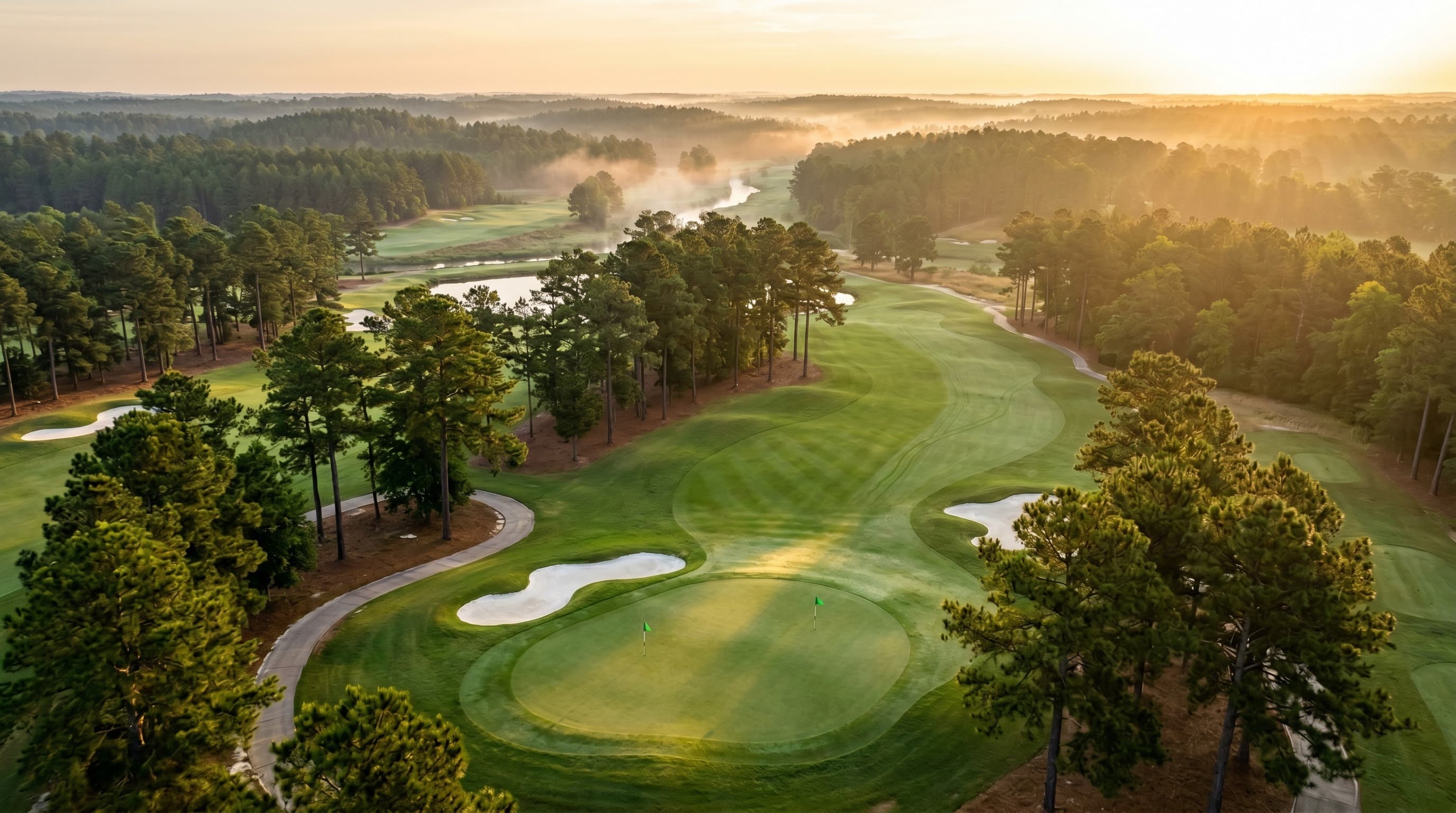
The May 2026 G-Score Heatmap: Where American Golf Peaks This Spring
May is the most underrated month on the American golf calendar. Five regions hit their annual peak this spring, three turn quietly hostile, and the data tells a clearer story than the brochures. Here is where to play, where to avoid, and how to time your booking window.
Read Story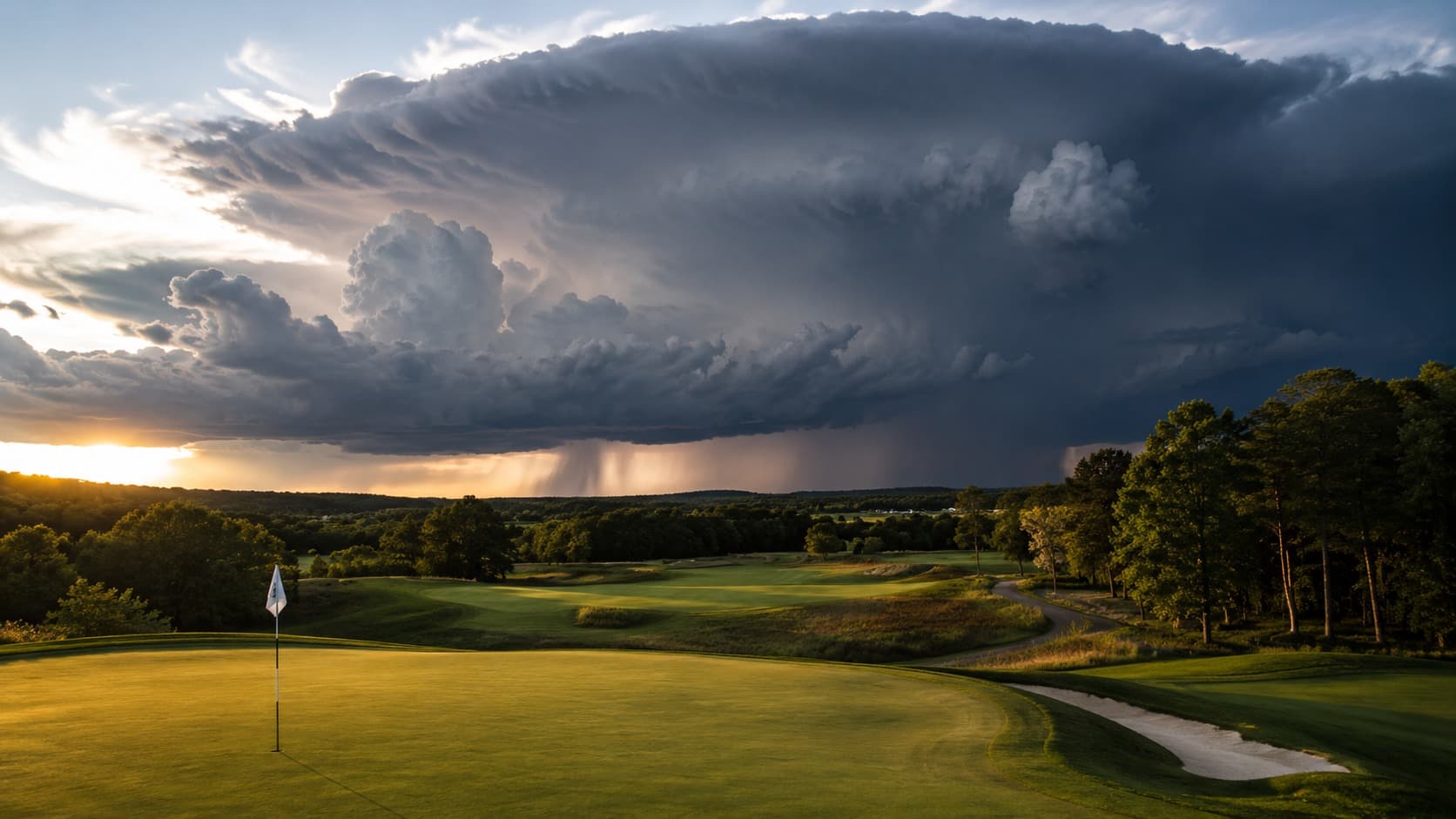
The Three O’Clock Storm: Reading Summer’s Convective Cycle to Protect Your Round
A 40% chance of afternoon thunderstorms does not mean a 40% chance of getting rained on. In the summer convective season it means the morning is nearly clear and the afternoon carries a fast-building, high-energy storm risk driven by a daily heating cycle. Here is the meteorology behind the pattern, the G-Score data on how the storm cycle punishes afternoon tee times across the Southeast, Midwest, and desert Southwest, the lightning-safety decision tree that actually matters, and the workflow that gets you off the course before the first bolt.
Read StoryMinSu Kim
Founder & Golf Data Analyst
MinSu is a data analyst and golfer with 10+ years on the course. He built Golf Weather Score to answer one question: is today a good day to play? He combines weather data, course intelligence, and the proprietary G-Score algorithm to help golfers make smarter decisions.
Every Friday Morning
When Burke Lake Golf plays best next weekend.
Friday 6am ET: peak G-Score windows for Burke Lake Golf, wind direction by hour, and one gear call. Three minutes to read, save you the round.
One email a week. Unsubscribe in one click.
The Caddie's Oracle
Draw your luck before the tee off