
Caddie's Gear Advisor
Curated for today's 58°F · Clear
Tour-Level Drivers
Engineered for maximum distance and forgiveness
Laser Rangefinders
Pin-seeking technology for precision approaches
Premium Golf Balls
Tour-caliber spin and distance performance
Performance Sunglasses
Polarized lenses optimized for reading greens
Your Golf Trip, Handled
The Ultimate Golf Trip Planner
Everything you need to play Camelback Golf Club — from booking your flight to checking in course-side.
Best time to golf in ArizonaCourse-Side Stays
Luxury hotels, resorts, and stay-and-play packages just minutes from the first tee.
Flights
Compare fares across 700+ airlines for the best route to your tee time.
SUV Rentals for Golf Bags
Spacious vehicles with room for clubs, bags, and your foursome.
Travel Insurance
Coverage for medical, weather delays, and gear at your destination.
Camelback Golf Club: Course Intelligence
Signature Setup
Camelback Golf Club sits in Scottsdale, Arizona, at the foot of the McDowell range as part of the JW Marriott Camelback Inn property. It runs two distinct 18s. The Ambiente Course is the modern one — Jason Straka of the Hurdzan/Fry design group rebuilt it and reopened it in 2014 as a desert links hybrid, with no homes crowding the fairways and broad, exposed turf corridors that let the wind do real work. The Padre Course is the older, traditional layout dating to Jack Snyder's original 1970s routing, tighter and lined with mature tamarisk and eucalyptus. Most travelers play Ambiente for the openness and Padre for the shade and the throwback feel. Scottsdale's tournament-season conditioning is firm and fast, which matters more here than the scorecard yardage suggests.
Hole-by-Hole Wind & Playing Lines
On Ambiente, the prevailing afternoon wind out of the southwest is the variable that decides your card.
- Hole 4 (par-4, the #1 handicap, ~440y tips): Into a SW breeze this plays a full club-and-a-half longer. I'd rather hit 5-iron from a fairway lie than force a 7-iron and come up short of the front bunker.
- Hole 11 (par-3, ~200y): A crosswind from the right shoves anything held high toward the desert-scrub left. Take an extra club and start it at the right edge — let the wind bring it back.
- Hole 18 (par-5): Downwind in the afternoon, the dry air turns this into a genuine two-shot hole for a low single-digit player. Morning, into the calm, it's a clean three-shot par.
The Padre Course, ringed by trees, masks the wind at ground level — but on its taller par-3s the gusts still grab the ball above the canopy line.
Green & Fairway Characteristics
Winter play is on overseeded ryegrass fairways that hold a tight, fast lie — the ball sits down clean and you can nip it. Greens run a bentgrass blend, stimping in the mid-10s on a tournament setup and noticeably quicker downhill given the firm desert base. Ambiente's greens are large and contoured with run-off collection areas, so a miss long leaves an awkward putt-or-chip decision. Front nine plays a touch shorter than the back; the closing stretch is where the yardage and the wind stack up together. Padre's greens are smaller and better protected by trees, rewarding a flighted, controlled approach over a high one.
Seasonal Weather Pattern
Scottsdale's desert climate is the whole story. Peak season is November through April: mornings start around 45–50°F in December and warm to the low 70s by afternoon, low humidity throughout. May to September is brutal — afternoon highs routinely hit 105–115°F, and the July–September monsoon brings sudden late-day thunderstorms with violent outflow gusts that can spike from calm to 35+ mph in minutes (NOAA Phoenix monsoon records). The dry, thin air at roughly 1,300 ft elevation adds a few yards of carry year-round, but in summer the heat-softened concentration costs you more than the air gives you back.
Local Play Tips
The single best edge here is tee-time timing, not club selection. Desert wind is a reliable afternoon phenomenon, not a morning one — an 8 a.m. Ambiente tee time often plays in dead-calm air, then the same holes are a club-and-a-half different by 1 p.m. In monsoon months, watch the radar: storms build over the McDowells to the east, so an eastern sky going gray is your 30-minute warning to finish or shelter. I haven't played Camelback in the dead of July, so I won't pretend to know how the greens hold up under monsoon humidity — that read is for someone who's done it.
Pre-Round Weather Workflow
Use the 7-day G-Score and windExposure panel before you book. For Camelback Ambiente, an exposed links-style layout, the windExposure rating carries more weight than at a tree-lined course — a high afternoon wind reading should push you toward the earliest available tee time. Check the hourly trend: if G-Score is 8–12 points higher in the morning block, that gap is real strokes, not noise. In summer, set the alert for the monsoon window and treat any afternoon thunderstorm probability above 30% as a morning-only golf day.
Related Reading
Before you tee off at Camelback Golf Club
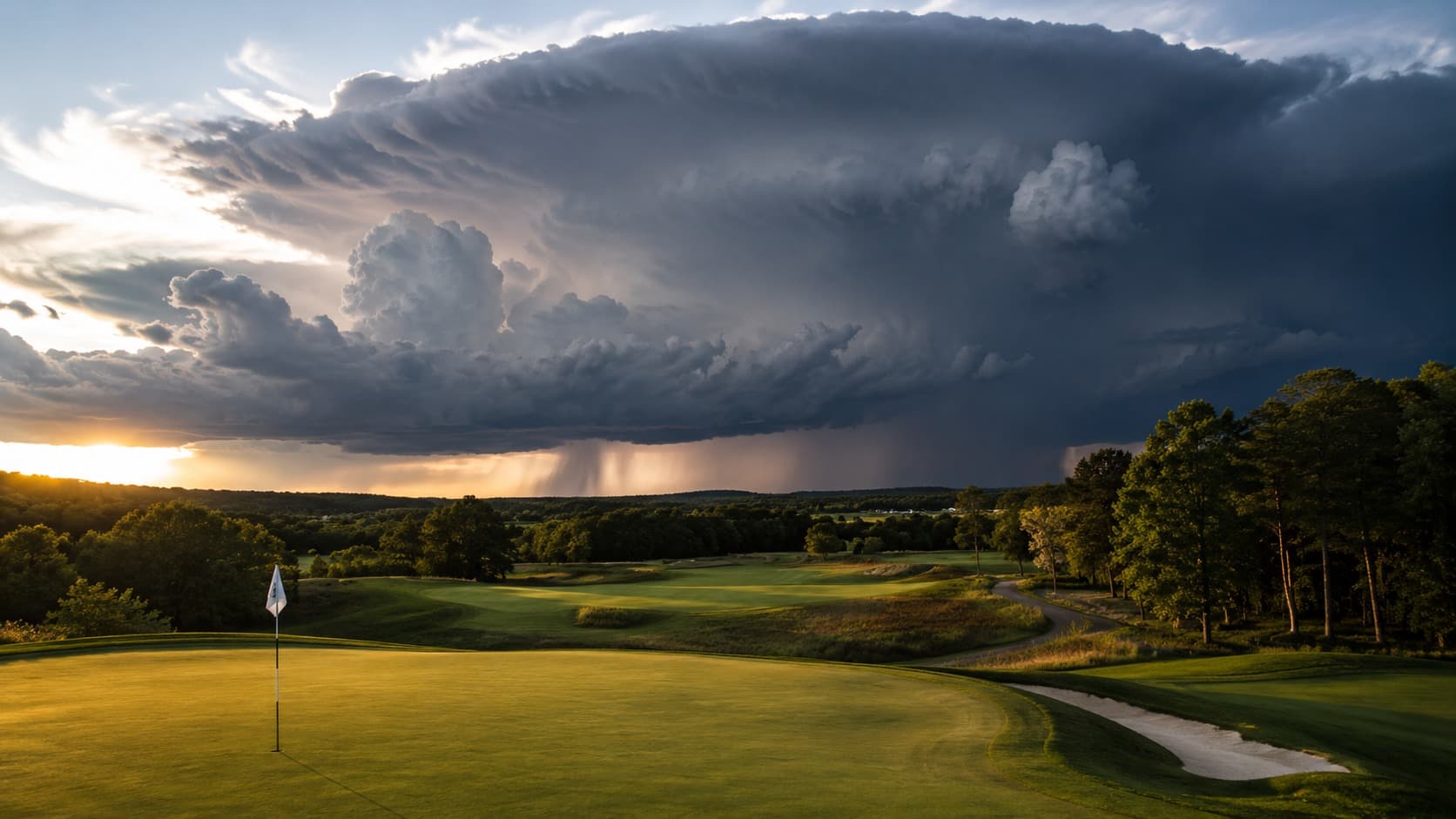
The Three O’Clock Storm: Reading Summer’s Convective Cycle to Protect Your Round
A 40% chance of afternoon thunderstorms does not mean a 40% chance of getting rained on. In the summer convective season it means the morning is nearly clear and the afternoon carries a fast-building, high-energy storm risk driven by a daily heating cycle. Here is the meteorology behind the pattern, the G-Score data on how the storm cycle punishes afternoon tee times across the Southeast, Midwest, and desert Southwest, the lightning-safety decision tree that actually matters, and the workflow that gets you off the course before the first bolt.
Read Story
How to Read a G-Score: The 0–100 Golf Playability Number, Decoded
A G-Score on this site is a single 0–100 number that tells you whether today is worth tee-up. Here is exactly what each band means, what drives the calculation, and how to use it to plan a round you will actually score on.
Read StoryDanorie
Editorial & Data
Golf Weather Score is built by Danorie. We compute the G-Score — our own playability rating — from NOAA forecasts and published course scorecards, so any US course can be compared on any day with a single number. Methodology and data sources are documented on every page.
Every Friday Morning
When Camelback Golf Club plays best next weekend.
Friday 6am ET: peak G-Score windows for Camelback Golf Club, wind direction by hour, and one gear call. Three minutes to read, save you the round.
One email a week. Unsubscribe in one click.
The Caddie's Oracle
Draw your luck before the tee off