
Caddie's Gear Advisor
Curated for today's 74°F · Clear
Tour-Level Drivers
Engineered for maximum distance and forgiveness
Laser Rangefinders
Pin-seeking technology for precision approaches
Premium Golf Balls
Tour-caliber spin and distance performance
Performance Sunglasses
Polarized lenses optimized for reading greens
Your Golf Trip, Handled
The Ultimate Golf Trip Planner
Everything you need to play Canoa Ranch Golf Club — from booking your flight to checking in course-side.
Course-Side Stays
Luxury hotels, resorts, and stay-and-play packages just minutes from the first tee.
Flights
Compare fares across 700+ airlines for the best route to your tee time.
SUV Rentals for Golf Bags
Spacious vehicles with room for clubs, bags, and your foursome.
Travel Insurance
Coverage for medical, weather delays, and gear at your destination.
Canoa Ranch Golf Club: Course Intelligence
Signature Setup
Lee Schmidt and Brian Curley built Canoa Ranch in 2003 on the desert floor below the Santa Rita Mountains in Green Valley, about 25 miles south of Tucson. From the tips it measures 6,701 yards at par 71, rated 71.6 with a slope of 143 — a steep number for its length, which tells you the trouble here is lateral and vertical, not distance. Five tee sets run down to 4,440 yards. The mountain you keep looking at is Elephant Head, the granite point that anchors the eastern skyline and frames most of the back-nine tee shots. I haven't teed it up at Canoa myself, so the playing notes below lean on published scorecard data and on what high-desert Sonoran golf consistently does to a round at this elevation.
Hole-by-Hole Wind & Playing Lines
Green Valley sits near 2,900 ft, and the prevailing daytime flow comes up out of the southwest as the valley heats. That matters most on the longer two-shotters. On a SW afternoon, the longest par-4s play dead into it: a 150-yard approach becomes a 160–165-yard club, so take one to two extra and aim for the fat, high side of the green rather than flirting with desert short-siding. Schmidt-Curley routing uses elevated tees with 25–40 ft drops on several par-3s — downhill into a headwind, the ball balloons and comes up short, so trust the back of the green. On those elevated par-3s I trust the back number over my eyes — into a headwind off a thirty-foot drop the ball hangs and dies, so I take the club that covers the front with room to spare. On the rare calm dawn, the same holes give a stroke back. The desert washes and transition areas are penal; on crosswinds, bail to the wide side, not the canyon side. When I plan a high-desert round like this, the SW afternoon build is the first thing I check, so I'd club up by feel on those long two-shotters the instant the valley wind turns on rather than trust the flat morning number.
Green & Fairway Characteristics
The greens are bentgrass — unusual for southern Arizona, where most courses run bermuda or paspalum putting surfaces — sitting on bermuda fairways and tees. Bent at this elevation stays receptive in the cool months but bakes firm and fast through summer afternoons, so morning rounds hold approaches far better than 2 p.m. ones. The slope of 143 comes from forced desert carries and strategic bunkering rather than raw yardage; with the course only 6,701 yards from the back, the premium is on position and angle, not length. Expect meaningful elevation change throughout — uphill second shots eat a club, downhill ones add carry, compounded by the thinner air.
Seasonal Weather Pattern
This is a winter-peak desert course. December–February delivers the postcard days: highs in the mid-60s, but dawn starts in the low 40s, so the ball flies shorter off cold-morning contact — soft hands, expect 5–8 fewer yards until it warms. April–June is the dry, windy stretch; afternoons gust hard out of the SW and the bent greens firm up. July through September is monsoon: humid mornings, then violent afternoon thunderstorm cells that build over the Santa Ritas after about 1–2 p.m. — the reason the pro shop closes by 1 p.m. in summer. October–November is the underrated window: warm, stable, low wind.
Local Play Tips
Two things the tee-time sites won't tell you. First, the summer pro-shop hours (sunrise–1 p.m., closing earlier above 95°F) aren't just a staffing quirk — they're a tell that afternoon play here is genuinely unpleasant from June through September, so don't book a 2 p.m. summer slot expecting a normal round. Second, with bentgrass greens in a bermuda region, off-season aerification and overseed timing differ from neighboring Tucson courses — call ahead in late summer/early fall to confirm greens condition before you drive down. Reading bent greens in a bermuda desert, I never assume Tucson conditioning here — I plan for firm, fast afternoon surfaces and land approaches well short of any back pin, because these greens release more than the grass type would suggest.
Pre-Round Weather Workflow
Use the 7-day G-Score on this course page to lock your tee time. Two checks: (1) wind direction and speed — a SW reading above ~12 mph means add a club or two on every approach and plan bail-outs to the wide side; (2) the afternoon convective risk in monsoon season — if storm probability climbs after 1 p.m., take the earliest slot available. The windExposure flag here trends higher on dry-season afternoons; a dawn G-Score will typically run 8–12 points better than the same day's afternoon. Bottom line: at Canoa, the right tee time is worth more strokes than the right club.
Related Reading
Before you tee off at Canoa Ranch Golf Club
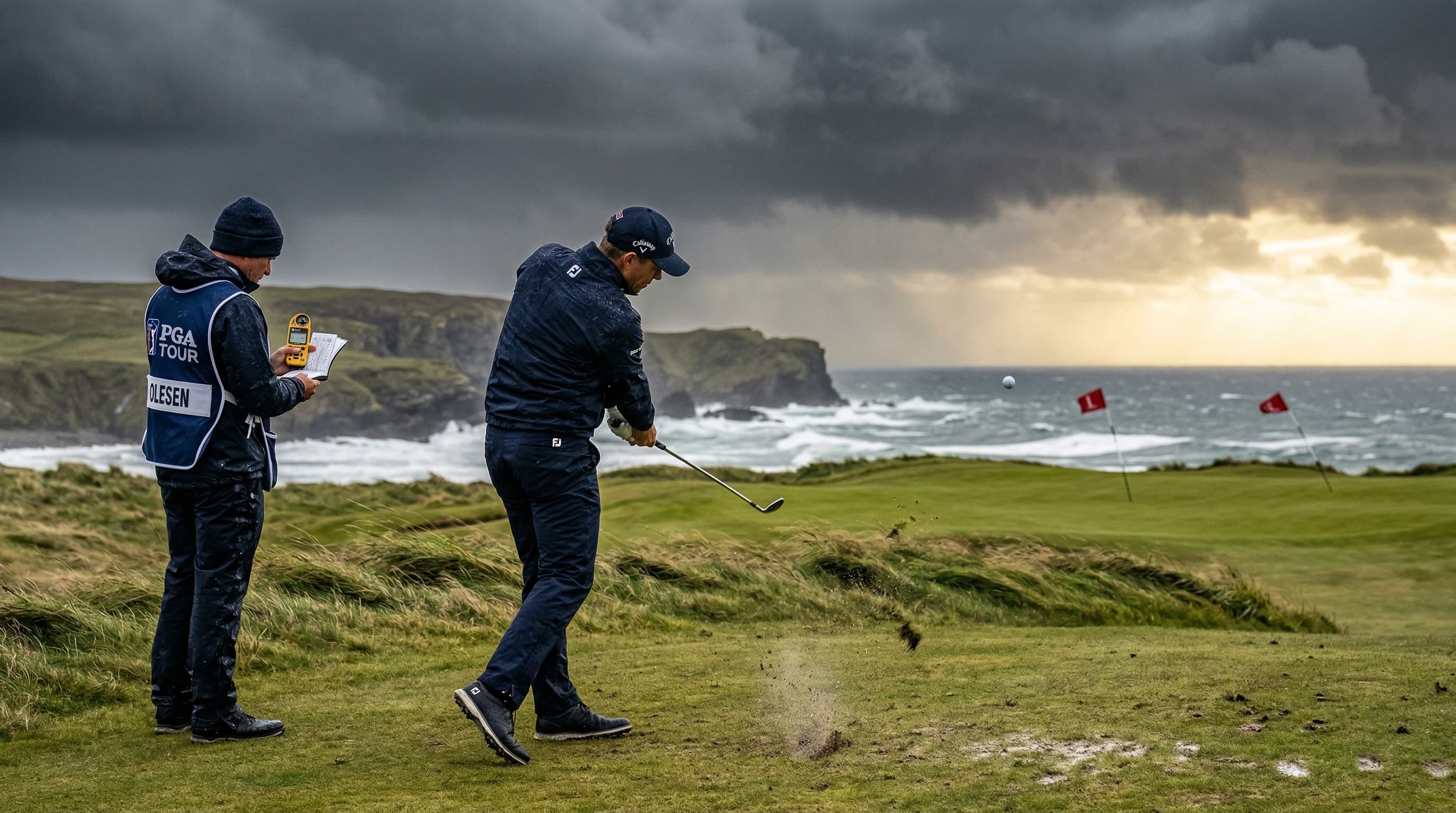
Golf Weather Physics: How Temperature, Altitude, and Humidity Change Ball Flight
Real physics data on how temperature, altitude, humidity, and wind change your golf ball flight — with specific yard adjustments, named course examples, and measured G-Score data from courses we track daily.
Read Story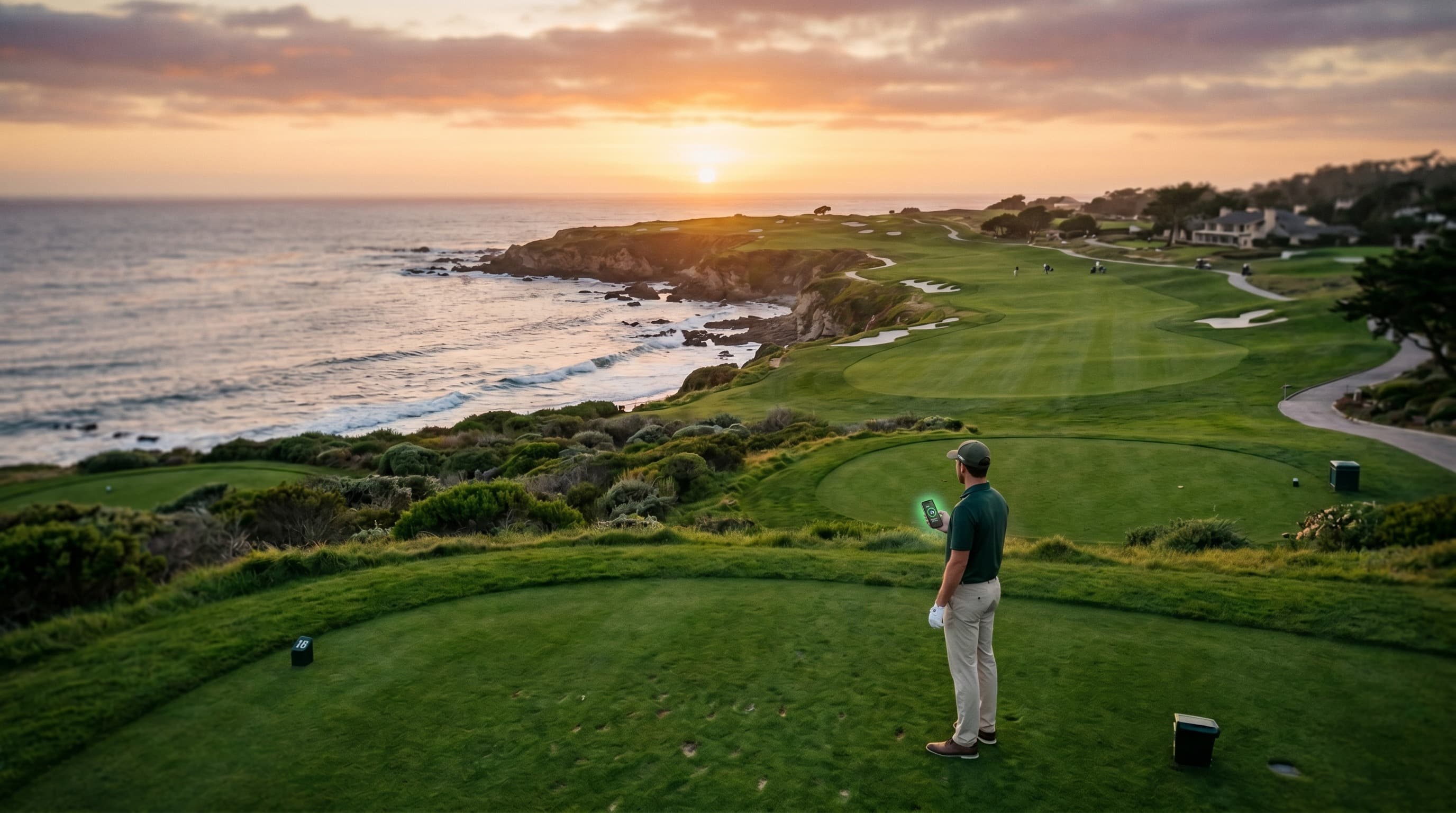
How to Read a G-Score: The 0–100 Golf Playability Number, Decoded
A G-Score on this site is a single 0–100 number that tells you whether today is worth tee-up. Here is exactly what each band means, what drives the calculation, and how to use it to plan a round you will actually score on.
Read StoryMinSu Kim
Founder & Golf Data Analyst
MinSu is a data analyst and golfer with 10+ years on the course. He built Golf Weather Score to answer one question: is today a good day to play? He combines weather data, course intelligence, and the proprietary G-Score algorithm to help golfers make smarter decisions.
Every Friday Morning
When Canoa Ranch Golf Club plays best next weekend.
Friday 6am ET: peak G-Score windows for Canoa Ranch Golf Club, wind direction by hour, and one gear call. Three minutes to read, save you the round.
One email a week. Unsubscribe in one click.
The Caddie's Oracle
Draw your luck before the tee off