
Caddie's Gear Advisor
Curated for today's 65°F · Clouds
Tour-Level Drivers
Engineered for maximum distance and forgiveness
Laser Rangefinders
Pin-seeking technology for precision approaches
Premium Golf Balls
Tour-caliber spin and distance performance
Performance Sunglasses
Polarized lenses optimized for reading greens
Your Golf Trip, Handled
The Ultimate Golf Trip Planner
Everything you need to play Canyon Farms Golf Club — from booking your flight to checking in course-side.
Course-Side Stays
Luxury hotels, resorts, and stay-and-play packages just minutes from the first tee.
Flights
Compare fares across 700+ airlines for the best route to your tee time.
SUV Rentals for Golf Bags
Spacious vehicles with room for clubs, bags, and your foursome.
Travel Insurance
Coverage for medical, weather delays, and gear at your destination.
Canyon Farms Golf Club: Course Intelligence
Signature Setup
TL;DR — Tom Jackson's 2007 layout in Lenexa is a 7,011-yard, par-71 quarry course with a 141 slope and a 74.4 rating from the gold tees. It is not a flat Midwest parkland; the land moves.
Canyon Farms sits on the western edge of the Kansas City metro, and the routing uses an old limestone quarry as its spine. CE Golf Design touched up bunkering and a few green complexes in 2016, but Jackson's original idea — ask the golfer to manage elevation before anything else — still drives the round. The card stretches from 4,878 yards at the red tees to 7,011 at the gold, and the gap between those two numbers is the whole story: this is a course where the wrong tee box turns a good day into a grind. I have not played it in winter (the KC season effectively closes it from December through February), so everything below assumes the March–November window.
Hole-by-Hole Wind & Playing Lines
Kansas City's summer wind is the variable nobody on the first tee accounts for. The prevailing flow June through August is SSW at roughly 10–12 mph, building through the afternoon as the ground heats.
- The longest par-4 (the #1 handicap) runs into that SSW wind on most summer afternoons. From an elevated tee the ball hangs and the wind eats it — a 165-yard approach plays closer to 190. Club up one to two and aim right-center; the left side feeds toward trouble.
- The quarry-edge par-3 plays downhill off a raised box. Downhill plus a helping morning breeze means it plays two clubs shorter than the yardage — most golfers fly the green long. Trust the elevation, take less.
- The doglegs on the back nine are where the SSW wind crosses rather than helps. A drive that holds the high right side leaves a flat look; bail left and you are hitting blind across the slope.
Green & Fairway Characteristics
The greens are bentgrass and roll in the mid-130s on calm mornings, firming up by midday once the sun is on them. They hold subtle borrows that lean toward the low ground — read everything a touch more toward the quarry than your eye wants. Fairways are zoysia, which sits the ball up cleanly but gets fast and bouncy when dry; a well-struck drive on a firm August fairway can run out 20–30 yards down the elevated landing areas. Front nine and back nine play to similar lengths, but the back carries more of the severe elevation, so it walks longer than the card reads.
Seasonal Weather Pattern
KC's shoulder seasons are the play. April and October bring daytime highs in the 60s–70s°F with lighter, more stable wind — the elevation changes are still demanding but the air is honest. July and August are the hard months: highs near 89–90°F, high humidity, and a heat index that climbs well past the air temperature by 1 p.m. The annual rainfall sits around 38 inches, much of it in spring thunderstorms that leave the zoysia soft and the greens receptive for a day or two afterward. Late fall firms everything up fast.
Local Play Tips
The single most useful thing I can tell you: do not play the gold tees on a first visit just to say you did. At a 141 slope and 7,011 yards into prevailing wind, that combination is built for low single-digit handicaps. Walk the gold boxes for the quarry views, then tee it one set forward and the course rewards good golf instead of punishing average golf. The course is now private under the GreatLIFE Kansas City network, so confirm access before you drive out.
Pre-Round Weather Workflow
Use the 7-day G-Score on this page to time your round. Two signals matter most at Canyon Farms: morning vs. afternoon wind, and post-rain firmness. Book the earliest tee time you can — the G-Score typically runs 8–12 points higher before the SSW thermal wind builds after 11 a.m. Check the windExposure rating the night before; on a forecast SSW day, plan to club up into the long par-4s and club down on the downhill par-3s. If rain cleared in the last 24 hours, expect softer zoysia and more receptive greens — attack the pins while it lasts.
Related Reading
Before you tee off at Canyon Farms Golf Club

America's 20 Windiest Golf Courses: A G-Score Wind Analysis
We ranked America's 20 windiest golf courses using G-Score wind penalty data. See how coastal gusts and prairie gales reshape playability scores.
Read Story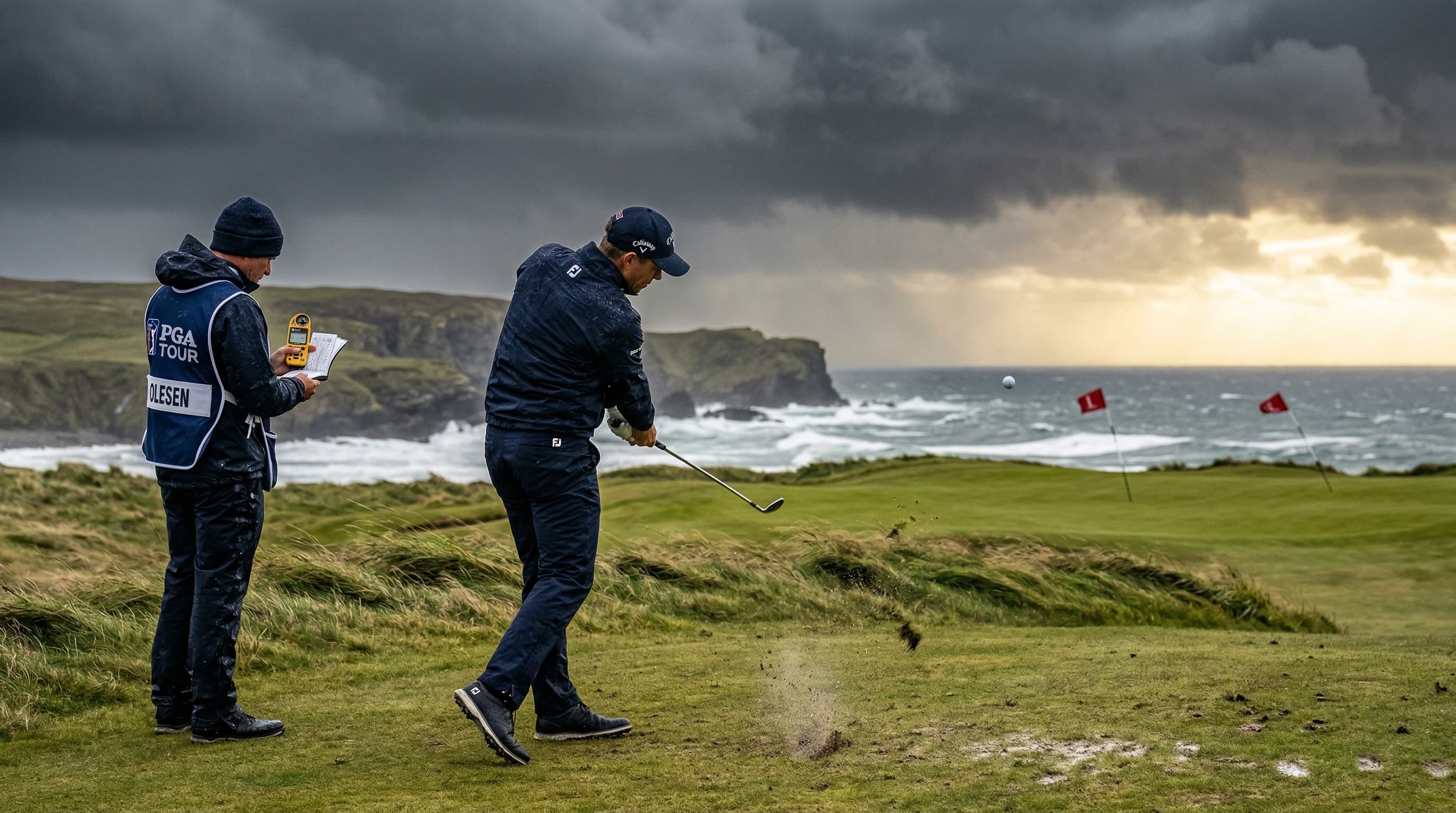
Golf Weather Physics: How Temperature, Altitude, and Humidity Change Ball Flight
Real physics data on how temperature, altitude, humidity, and wind change your golf ball flight — with specific yard adjustments, named course examples, and measured G-Score data from courses we track daily.
Read StoryMinSu Kim
Founder & Golf Data Analyst
MinSu is a data analyst and golfer with 10+ years on the course. He built Golf Weather Score to answer one question: is today a good day to play? He combines weather data, course intelligence, and the proprietary G-Score algorithm to help golfers make smarter decisions.
Every Friday Morning
When Canyon Farms Golf Club plays best next weekend.
Friday 6am ET: peak G-Score windows for Canyon Farms Golf Club, wind direction by hour, and one gear call. Three minutes to read, save you the round.
One email a week. Unsubscribe in one click.
The Caddie's Oracle
Draw your luck before the tee off