
Caddie's Gear Advisor
Curated for today's 64°F · Clear
Tour-Level Drivers
Engineered for maximum distance and forgiveness
Laser Rangefinders
Pin-seeking technology for precision approaches
Premium Golf Balls
Tour-caliber spin and distance performance
Performance Sunglasses
Polarized lenses optimized for reading greens
Your Golf Trip, Handled
The Ultimate Golf Trip Planner
Everything you need to play Canyon West Golf Course — from booking your flight to checking in course-side.
Best time to golf in TexasCourse-Side Stays
Luxury hotels, resorts, and stay-and-play packages just minutes from the first tee.
Flights
Compare fares across 700+ airlines for the best route to your tee time.
SUV Rentals for Golf Bags
Spacious vehicles with room for clubs, bags, and your foursome.
Travel Insurance
Coverage for medical, weather delays, and gear at your destination.
Canyon West Golf Course: Course Intelligence
Signature Setup
Canyon West sits in the rolling foothills of Parker County, just west of Fort Worth near Weatherford, Texas. Wes Mickle designed and opened the course in 1997, and the build itself shaped the identity: crews uncovered huge limestone slabs during construction and used them to frame elevated tees and a waterfall feature that has become the course's calling card. From the Gold tees it measures 6,653 yards at par 72, rating 72.6 with a slope of 136 — a stout number for a public layout — easing to 6,636 yards, 71.0 / 124 from the Champions deck. The terrain runs across canyon edges and limestone outcrops at roughly 1,000 feet of elevation, with water and meaningful grade changes rather than a flat North Texas prairie track. There is no single tournament "signature" hole on the card; the property is best known for the limestone-and-waterfall corridor and the canyon-edge tee shots.
Hole-by-Hole Wind & Playing Lines
The dominant weather variable here is the South Plains wind. Parker County mornings can start near calm, but a steady south-to-southeast breeze builds through the day for much of spring and summer.
- Long par-4s into the afternoon wind: Into a 15–20 mph southerly, a 150-yard approach can stretch to 170–175. Club up and aim for the fat, high side of the green rather than flirting with a canyon-edge short-side miss.
- Canyon-edge elevated tees: On the dropping tee shots, the wind that's blocked at ground level can still grab the ball at the top of its flight. I'd trust a slightly lower, flighted shot here and resist the urge to over-hit the canyon carry.
- Downwind par-4s and the reachable holes: When the south wind is at your back, firm Bermuda fairways add real rollout — your driving-zone math changes, and a normally safe layup can run through the fairway into trouble.
I'll be honest: I haven't played Canyon West across all four seasons, so these reads lean on the course's published routing and North Texas wind patterns rather than a personal scorecard from each month. The official stroke-index #1 hole isn't listed on the public card, so I've framed strategy around the toughest hole type — the long par-4s into wind — rather than guess a hole number.
Green & Fairway Characteristics
The fairways and greens run Bermuda, standard for this part of Texas, and they firm up and quicken noticeably once the summer heat sets in. Expect releasing fairways from June through August that add roll on the downwind holes and reward a lower ball flight. The canyon framing means several greens sit near grade changes and limestone edges, so a long approach that leaks toward the high side leaves a far better next shot than the short-side bailout. Greens are mid-paced and grainy in heat — read the grain with the slope, especially on late-day putts.
Seasonal Weather Pattern
Weatherford summers are hot and humid: July and August highs routinely sit in the mid-to-upper 90s°F and touch 100°F, with the south wind a near-daily companion. Spring (April–May) is the storm season — expect gusty fronts, occasional severe weather, and the windiest conditions of the year. Fall (late September–October) is the local sweet spot: highs settling into the 70s–low 80s°F, lower humidity, and more stable morning air. Winters are mild but punctuated by sharp cold snaps and the odd ice day that shuts play down entirely.
Local Play Tips
The single most useful piece of local knowledge is the daily wind clock. Book the earliest tee time you can stand — the Parker County breeze is far gentler at dawn and commonly climbs to 15–20 mph by midday, turning the elevated canyon tee shots into a guessing game. In peak July–August heat, the firm Bermuda also means an early round plays measurably differently from an afternoon one: cooler, softer turf in the morning versus fast, running fairways after the sun bakes them.
Pre-Round Weather Workflow
Use the 7-day G-Score on golfweatherscore for Canyon West to lock in your tee time, and aim for the highest morning G-Score window — at this course that almost always means a pre-noon slot before the south wind builds. Check the windExposure indicator the night before: low exposure confirms the calm-morning round where the canyon-edge tees play honestly; rising afternoon exposure is your cue to tee off earlier or pack an extra club for every approach into the southerly. In mid-summer, cross-reference the heat index alongside the G-Score so a 100°F afternoon doesn't catch you on the back nine.
---
*Sources: course design, opening year, and tee/slope-rating data from Canyon West Golf Club and GolfLink/BlueGolf course databases; Parker County / Weatherford seasonal climate and prevailing-wind patterns from NOAA/National Weather Service historical records.*
Related Reading
Before you tee off at Canyon West Golf Course

The May 2026 G-Score Heatmap: Where American Golf Peaks This Spring
May is the most underrated month on the American golf calendar. Five regions hit their annual peak this spring, three turn quietly hostile, and the data tells a clearer story than the brochures. Here is where to play, where to avoid, and how to time your booking window.
Read Story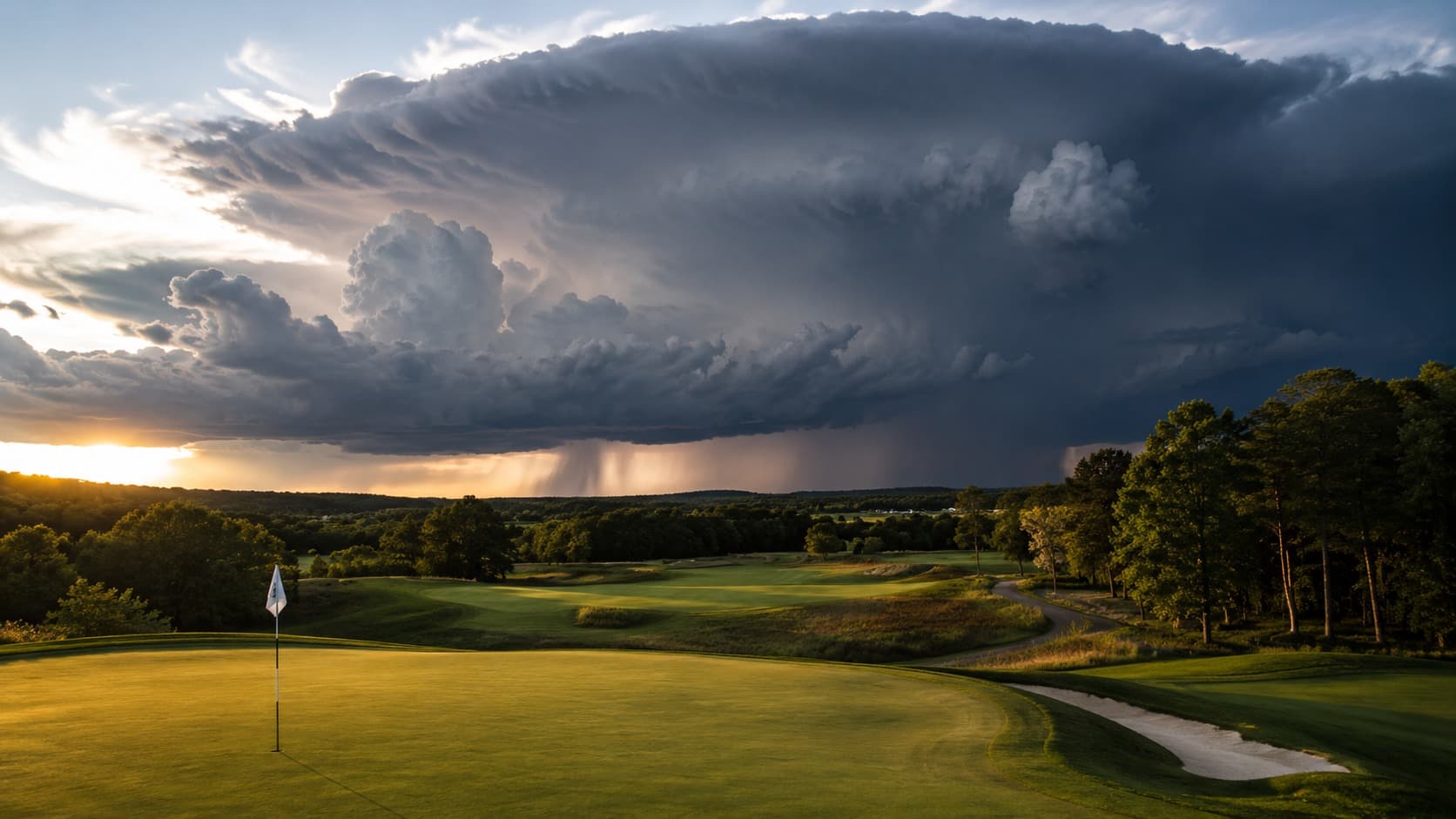
The Three O’Clock Storm: Reading Summer’s Convective Cycle to Protect Your Round
A 40% chance of afternoon thunderstorms does not mean a 40% chance of getting rained on. In the summer convective season it means the morning is nearly clear and the afternoon carries a fast-building, high-energy storm risk driven by a daily heating cycle. Here is the meteorology behind the pattern, the G-Score data on how the storm cycle punishes afternoon tee times across the Southeast, Midwest, and desert Southwest, the lightning-safety decision tree that actually matters, and the workflow that gets you off the course before the first bolt.
Read StoryDanorie
Editorial & Data
Golf Weather Score is built by Danorie. We compute the G-Score — our own playability rating — from live NOAA forecasts and published course scorecards, so any US course can be compared on any day with a single number. Methodology and data sources are documented on every page.
Every Friday Morning
When Canyon West Golf Course plays best next weekend.
Friday 6am ET: peak G-Score windows for Canyon West Golf Course, wind direction by hour, and one gear call. Three minutes to read, save you the round.
One email a week. Unsubscribe in one click.
The Caddie's Oracle
Draw your luck before the tee off