
Caddie's Gear Advisor
Curated for today's 80°F · Clear
Tour-Level Drivers
Engineered for maximum distance and forgiveness
Laser Rangefinders
Pin-seeking technology for precision approaches
Premium Golf Balls
Tour-caliber spin and distance performance
Performance Sunglasses
Polarized lenses optimized for reading greens
Your Golf Trip, Handled
The Ultimate Golf Trip Planner
Everything you need to play Capital City Golf Club — from booking your flight to checking in course-side.
Course-Side Stays
Luxury hotels, resorts, and stay-and-play packages just minutes from the first tee.
Flights
Compare fares across 700+ airlines for the best route to your tee time.
SUV Rentals for Golf Bags
Spacious vehicles with room for clubs, bags, and your foursome.
Travel Insurance
Coverage for medical, weather delays, and gear at your destination.
Capital City Golf Club: Course Intelligence
Signature Setup
The first thing I check at Capital City Golf Club isn't the scorecard — it's the wind sock by the cart barn. This is a public 27-hole layout in the South Puget Sound region of Washington, a marine-climate course where the weather, not the slope rating, writes most of your scores. It is not a championship tournament venue, and I won't pretend it has a famous architect's name attached — it's an honest, walkable muni-style track that rewards local knowledge over raw distance. What makes it worth a weather-first writeup is exactly that: the same hole can play two clubs different depending on whether the marine air off the Sound has filled in yet. The routing crosses low wetland gullies and stands of Douglas fir that funnel wind in ways the yardage book never tells you.
Hole-by-Hole Wind & Playing Lines
On a typical southwest morning — the prevailing flow here — the three hardest stretches behave like this:
- The long par-4 (#1 handicap, ~440y): Plays dead into the SW wind off the water. A 150-yard approach by the GPS becomes a 170-to-175-yard shot. I take one extra club minimum, two when the flag is back. On still mornings before the breeze fills, it's a different, gettable hole.
- The wetland par-3: Short on the card, but the gully in front breathes a cold, damp draft. Into a wet south wind the ball drops fast — I've watched a stock 7-iron come up a full club short here on a 52°F morning. Club up and aim center, never at a tucked pin.
- The fir-lined dogleg par-4 on the back: The trees block the wind off the tee, so you feel calm and pull the wrong club, then the approach pops out into the open and the crosswind shoves it. Trust the flags on the green, not the still air at the tee box.
Green & Fairway Characteristics
The greens are a poa/bent mix typical of the Pacific Northwest — soft, receptive, and on the slower side, especially in the wet half of the year. In dry late-summer conditions they'll run around a 9 on the Stimp; soaked through the winter they're noticeably slower and grain-heavy, so I add pace and play less break than my eyes want. Fairways are generous off the tee but hold water from October through April, killing roll — a drive that runs out 25 yards in August will plug and stop in January. Plan your approach yardages from where the ball *lands*, not where it would normally finish. Front-nine yardages favor placement; the back stretches out and exposes you to the open wind.
Seasonal Weather Pattern
This is a marine west-coast climate, and it does not behave like the Southwest or the Southeast courses I write about. Roughly half the calendar — November through March — runs cool and wet, with daytime highs commonly in the 40s°F and persistent drizzle rather than downpours. Morning fog and dew are routine. The dry window is tight but glorious: July and August bring low humidity, highs in the 70s to low 80s°F, and the firmest, fastest conditions of the year. Shoulder months (April–June, September–October) are the gamble — a 55°F morning can turn into a perfect 68°F afternoon, or the marine layer can sit all day. Always check the dew point and wind timing, not just the rain icon.
Local Play Tips
The detail you won't find on a tee-time site: the southwest breeze here is a *clock*, not a coin flip. It is usually calm at dawn and fills in predictably by late morning as the land heats and pulls air off the Sound. That means the front nine and the back nine can play in completely different conditions on the same round. If you tee off early, you bank the calm holes first — get aggressive on the longer par-4s before the wind arrives. If you can only play midday, accept that the exposed back-nine holes will demand an extra club and plan a more conservative, center-of-green game. Walking is realistic here for a fit player, but in winter the wet turf makes it a slog — take a cart Nov–Mar.
Pre-Round Weather Workflow
Before you drive out, run the course through the 7-day G-Score and windExposure panel:
1. Check G-Score for your exact tee window. A summer 8 a.m. slot will score 8–12 points higher than the same course at 1 p.m. once the SW breeze is up — that gap is real strokes. 2. Read wind direction, not just speed. A 10 mph SW wind here is far more punishing than a 10 mph easterly, because the hardest holes face into it. 3. Watch the dew point in shoulder season to predict morning fog and how long the marine layer will hang before the fairways dry and start giving you roll. 4. In Nov–Apr, assume soft and slow — pre-set your approach clubs one longer and your putts one pace firmer before you even reach the first tee.
Related Reading
Before you tee off at Capital City Golf Club

Best Golf Weather by State: Ranking America by Average G-Score
We ranked all 50 US states by average G-Score golf playability. California tops the list, but the results beyond the top five may surprise you.
Read Story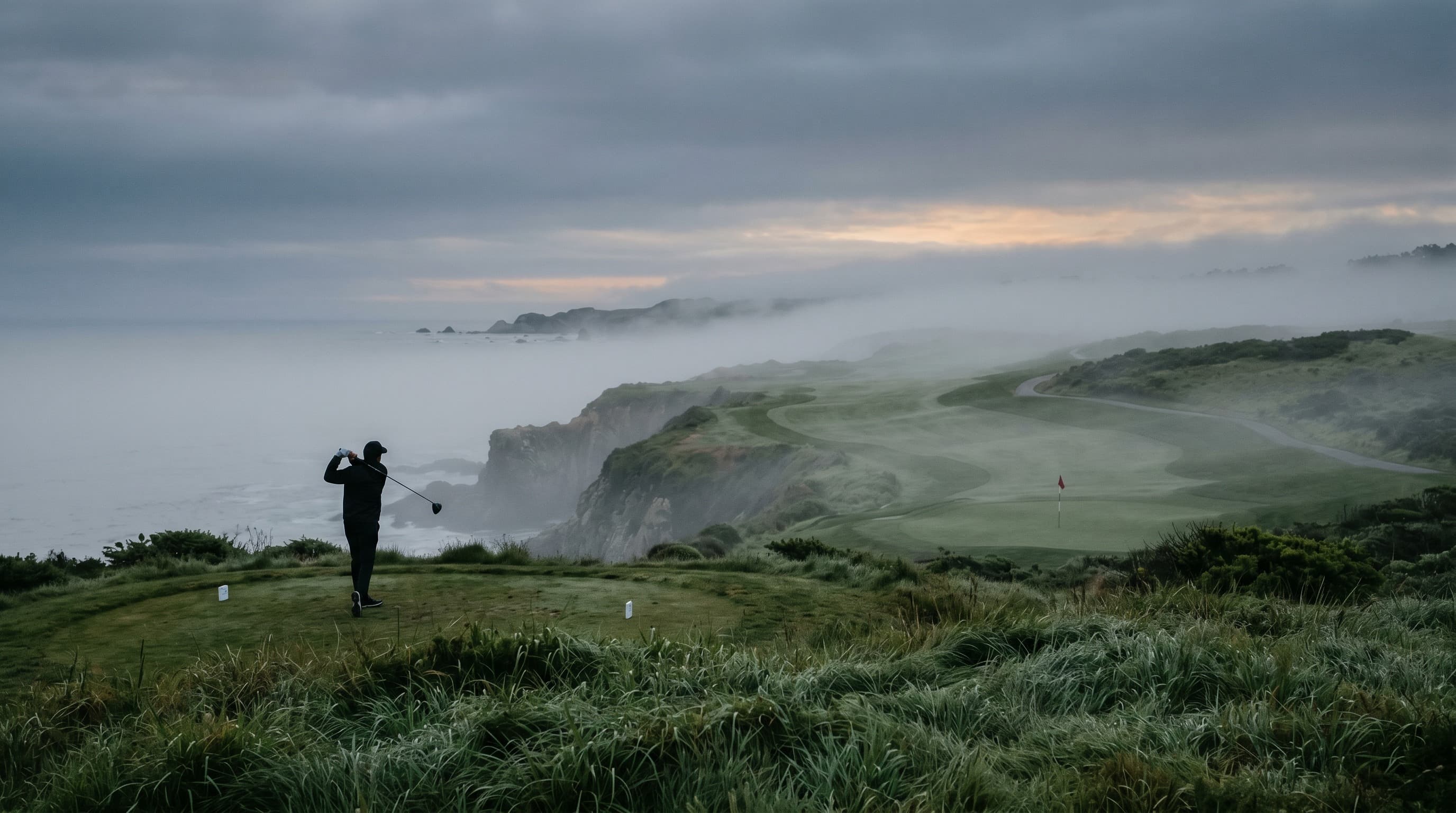
Reading Coastal Wind: How the Marine Layer Reshapes Pebble Beach, Bandon, and the Pacific Coast Game
Coastal golf does not play by inland rules. The marine layer suppresses wind in the morning, then releases it through midday in a thermal cycle that turns a calm 7am tee into a 22mph back nine. Here is the meteorology behind the pattern, the G-Score data that confirms it across the Pacific coast, and the morning workflow that turns the marine layer from a confusion into a competitive advantage.
Read StoryMinSu Kim
Founder & Golf Data Analyst
MinSu is a data analyst and golfer with 10+ years on the course. He built Golf Weather Score to answer one question: is today a good day to play? He combines weather data, course intelligence, and the proprietary G-Score algorithm to help golfers make smarter decisions.
Every Friday Morning
When Capital City Golf Club plays best next weekend.
Friday 6am ET: peak G-Score windows for Capital City Golf Club, wind direction by hour, and one gear call. Three minutes to read, save you the round.
One email a week. Unsubscribe in one click.
The Caddie's Oracle
Draw your luck before the tee off