
Caddie's Gear Advisor
Curated for today's 69°F · Rain
Storm-Ready Outerwear
Waterproof layers built for 18 holes in the rain
Tour-Grade Umbrellas
68" double-canopy wind-resistant coverage
Wet-Weather Gloves
All-weather grip that performs in the rain
Waterproof Golf Shoes
Keep your feet dry through every fairway
Your Golf Trip, Handled
The Ultimate Golf Trip Planner
Everything you need to play Garden City Golf Club — from booking your flight to checking in course-side.
Course-Side Stays
Luxury hotels, resorts, and stay-and-play packages just minutes from the first tee.
Flights
Compare fares across 700+ airlines for the best route to your tee time.
SUV Rentals for Golf Bags
Spacious vehicles with room for clubs, bags, and your foursome.
Travel Insurance
Coverage for medical, weather delays, and gear at your destination.
Garden City Golf Club: Course Intelligence
Signature Setup
I have not played Garden City — it is a men-only private club that has guarded its tee sheet for more than a century, and I won't fake a scorecard I don't own. I have stood on the Stewart Avenue side on a raw April morning, 49°F a little after 8 a.m., and what struck me was how flat and exposed the ground is: a treeless plain, low sand bunkers with sharp grass lips, and wind that arrives with nothing to slow it down.
The course was laid out by Devereux Emmet and opened in 1899 on the Hempstead Plains, the old glacial-outwash flat that drains like a beach. Walter J. Travis — a club member and U.S. Amateur champion — spent two decades reworking its bunkering into the deep, penal hazards that still define the round. Garden City hosted the 1902 U.S. Open (won by Laurie Auchterlonie), the U.S. Amateur in 1900 and 1908, and the 1936 Walker Cup. Par is 73, and from the back it stretches only about 6,910 yards — short by modern numbers, defended by firmness, bunkering, and a wind that never quits.
Hole-by-Hole Wind & Playing Lines
18th (par-4, ~430y). The finisher climbs gently and runs into the prevailing southwest summer breeze. A solid drive still leaves a mid-iron to a small green ringed by Travis bunkers — into that wind, take one more club than your eye wants, favor the front-center, and accept a long putt over a short-sided miss.
The long back-nine two-shotters (par-4s, ~440–460y). With no trees to break it, a steady SW push turns these into the hardest holes on the card. A 270-yard drive can still leave a full mid-iron, so stop forcing the green: lay short of the deep cross-bunkers, putt for par, and let the field bleed strokes here.
The long par-3 (~190–210y). On a flat, exposed site a par-3 of this length is a brute when the wind crosses or hurts. Pick the club for the gust, not the lull, and aim for the fat of the green — bailing to the bunkers brings Travis's deep sand into play with a buried-lip recovery.
Green & Fairway Characteristics
The fairways sit on fast-draining Hempstead Plains sand, so they run firm and a drive landing on dry turf gains 20–30 yards of roll — and loses every yard of it into the wind. The greens are the test: small, firm, and quick, call it 11–12 on the Stimp for member play, with subtle internal contour rather than wild tiers. The penalty here is the bunkering, not the speed. Travis dug his hazards deep with steep grass faces, and a short-sided miss often costs a full stroke just to get back in play. The routing crosses the open plain in both directions, so on any given hole the same wind can be a help going out and a wall coming home — re-read it at the turn.
Seasonal Weather Pattern
Garden City sits inland on Nassau County's plain, roughly ten miles north of the Great South Bay, so it is wind-exposed without being a true seaside course. Spring (April–May) is raw and gusty, 47–63°F, with the year's stiffest cold pushes. Summer (June–August) runs 74–85°F and humid, and the dependable pattern is a southwest sea breeze that builds through the afternoon as the bay air drives inland. Early autumn (mid-September–October) is the prize: 56–70°F, the firmest turf of the year, and the calmest mornings. NOAA Long Island records show summer afternoon winds commonly 8–16 mph from the southwest, often swinging northwest and cooler behind an autumn front.
Local Play Tips
The detail no yardage book gives you: this is a course you must play along the ground. The greens are small and the surrounds firm, so a high ball that flies all the way to a back pin spins or bounds away, while a flighted approach that lands short and releases holds the surface. Plan the bump, not the bomb — especially on the long finishers into the wind. And because the site is so open, the flag on a tee tucked near the clubhouse will read calmer than the true wind out in the fairway; trust the lay of the fescue over the nearest flag before you pull a club.
Pre-Round Weather Workflow
Use the 7-day G-Score on this page the way I would. Three days out, check whether your tee window lands before or after the afternoon southwest sea breeze builds — on a short, firm par 73, that one factor is worth several strokes. The morning of, read the windExposure panel: a SW reading means the 18th and the long back-nine two-shotters all play into the wind, so favor the front-center of those small greens and club up. If the forecast pairs low humidity with a dry stretch, expect the Hempstead sand fairways and Travis greens at their fastest — land everything short and let the ground carry it, because on this course it is firmness and wind, never raw yardage, that writes your score.
Related Reading
Before you tee off at Garden City Golf Club
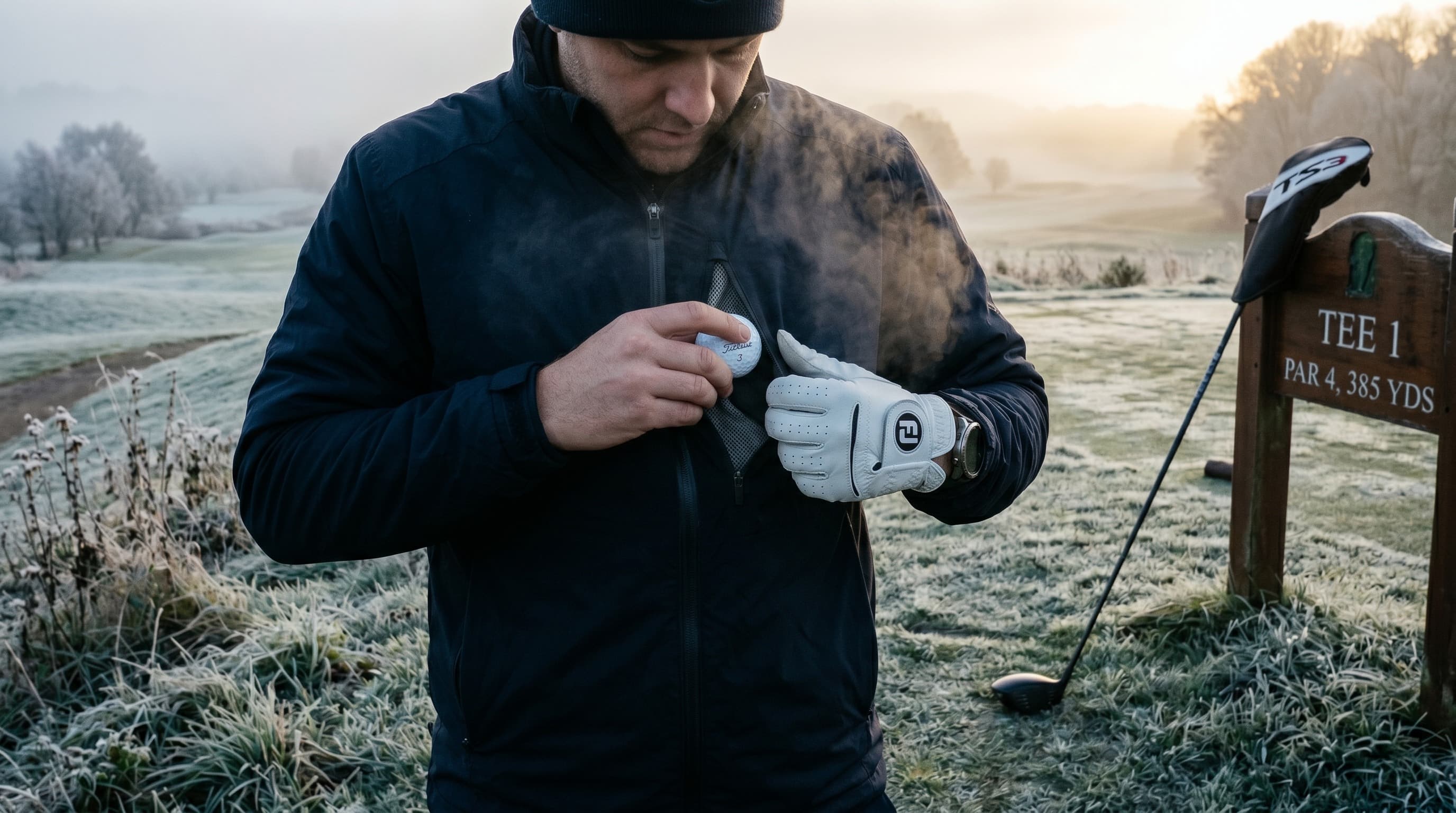
How Cold Weather Steals Distance: The Ball Compression Physics Every Golfer Should Know
Every 10°F drop costs the average golfer two to four yards of driver carry. Here is the physics — ball compression, air density, muscle temperature — and the field data we pulled from G-Score-monitored cold rounds to show exactly how distance loss compounds, and how to compensate without changing your swing.
Read Story
America's 20 Windiest Golf Courses: A G-Score Wind Analysis
We ranked America's 20 windiest golf courses using G-Score wind penalty data. See how coastal gusts and prairie gales reshape playability scores.
Read StoryMinSu Kim
Founder & Golf Data Analyst
MinSu is a data analyst and golfer with 10+ years on the course. He built Golf Weather Score to answer one question: is today a good day to play? He combines weather data, course intelligence, and the proprietary G-Score algorithm to help golfers make smarter decisions.
Every Friday Morning
When Garden City Golf Club plays best next weekend.
Friday 6am ET: peak G-Score windows for Garden City Golf Club, wind direction by hour, and one gear call. Three minutes to read, save you the round.
One email a week. Unsubscribe in one click.
The Caddie's Oracle
Draw your luck before the tee off