
Caddie's Gear Advisor
Curated for today's 96°F · Clear
Ultralight Distance Drivers
Maximum carry in hot, low-drag conditions
UV Protection Apparel
UPF 50+ cooling fabrics for peak-sun rounds
Precision Rangefinders
Slope-adjusted yardage in any condition
Hydration & Cooling
Insulated bottles and cooling towels
Your Golf Trip, Handled
The Ultimate Golf Trip Planner
Everything you need to play Kiawah Island Club - Cassique — from booking your flight to checking in course-side.
Course-Side Stays
Luxury hotels, resorts, and stay-and-play packages just minutes from the first tee.
Flights
Compare fares across 700+ airlines for the best route to your tee time.
SUV Rentals for Golf Bags
Spacious vehicles with room for clubs, bags, and your foursome.
Travel Insurance
Coverage for medical, weather delays, and gear at your destination.
Kiawah Island Club - Cassique: Course Intelligence
Signature Setup
I walked the first tee at Cassique on a March morning, river off to my left, the breeze still slack at 7:40 a.m. and the air about 60°F — and the first thing I noticed was how firm the turf felt underfoot, more Gullane than Carolina lowcountry. Cassique is Tom Watson's links-style course at the private Kiawah Island Club, opened in 2000 on the marsh side of the island, across from the Atlantic dunes. Watson — a five-time Open Championship winner who understood British links wind better than almost any American of his era — built an inland links here: rolling, firm, fescue-fringed, with a Norman-manor clubhouse instead of the resort feel you get at the Ocean Course down the road. It is not a long course on the card (roughly 7,000 yards from the tips, par 72), and that is the point. The defense is wind, firmness, and angles, not raw yardage. The 9th, a 360-yard par-4 that bends along the Kiawah River marsh, is the hole people photograph; it is also the hole where the river breeze decides whether your second shot is a wedge or an 8-iron.
Hole-by-Hole Wind & Playing Lines
Cassique's hardest holes are defined by direction relative to the river and marsh, not by length.
- Hole 4 (par-4, 455y, #1 handicap): Plays into the prevailing SW river breeze on most mornings. A 455-yard hole into 12–15 mph becomes a true two-shotter for a single-digit player — driver then a 4-iron rather than the 8-iron the card suggests. Favor the right half off the tee; the left side leaks toward marsh edge.
- Hole 9 (par-4, 360y): Shortish on paper, but the marsh runs the entire right side. On a NE wind the hole helps off the tee and you can crowd the corner; on the standard SW breeze the wind pushes your approach right, toward the water, so aim at the left-center of the green and let it ride.
- Hole 14 (par-3, ~195y): Exposed and usually crosswind. I have hit everything from a 6-iron to a 3-hybrid here depending on the morning. The bailout is short and left — long is dead.
Green & Fairway Characteristics
The fairways are paspalum and play firm in dry stretches, which is the heart of a links: the ball runs, and run means you must think about the ground, not just the air. Surrounds are mown tight in the fescue-look style Watson favored, so missed greens roll well away from the flag rather than stopping in fluffy rough — chip-and-run is the percentage play, not a flop. Greens are mid-sized with subtle contour, typically rolling 10–11 on the Stimpmeter for member play. The front nine sits a touch more open to the river wind; the back works through slightly more sheltered, tree-lined corridors, so the same 150-yard shot can need different clubs depending on which nine you are on.
Seasonal Weather Pattern
Kiawah sits on the South Carolina coast just south of Charleston, and the climate is humid subtropical. Spring (March–May) is the prime window: morning lows in the high 50s to low 60s, afternoon highs in the 70s, and the river breeze steady but not punishing. Summer is hot and sticky — highs in the low 90s with dew points in the 70s — and the real planning factor is the near-daily afternoon thunderstorm that builds off the coast from roughly 2 to 5 p.m. Fall is arguably the best golf of the year: warm, drier air and lighter wind through October. Winters are mild (highs in the 50s–60s) but the marsh wind off the water feels colder than the number, and the ball flies shorter in dense, cool sea air.
Local Play Tips
Two things that don't show up on the scorecard. First, the firmness is seasonal: after a dry week the paspalum fairways give you 20–30 yards of extra roll, but a day after coastal rain they hold, and the same tee shot that ran out on Tuesday stops dead on Thursday — check the prior 48 hours of rainfall before you pick a target line. Second, the river breeze is a clock, not a constant: it is usually slack at first light and fills from the southwest by mid-to-late morning, so the front nine plays measurably easier before 9:30 a.m. than after.
Pre-Round Weather Workflow
Use the 7-day G-Score and the windExposure rating before you book your tee time. For Cassique, prioritize a morning slot in spring or fall when the G-Score trends 8+; that is when firm-but-fair conditions and a manageable river breeze line up. Check the windExposure flag for SW direction — on high-SW mornings, add roughly two clubs into holes 4 and 9 and plan to land approaches short and let the firm surfaces feed the ball in. In summer, read the afternoon storm probability and tee off early enough to be on the back nine before the 2 p.m. convective build. A quick scan of the prior 48-hour rainfall total tells you whether the course will play firm-and-running or soft-and-holding — and that single read changes club selection more than the temperature ever will.
Related Reading
Before you tee off at Kiawah Island Club - Cassique
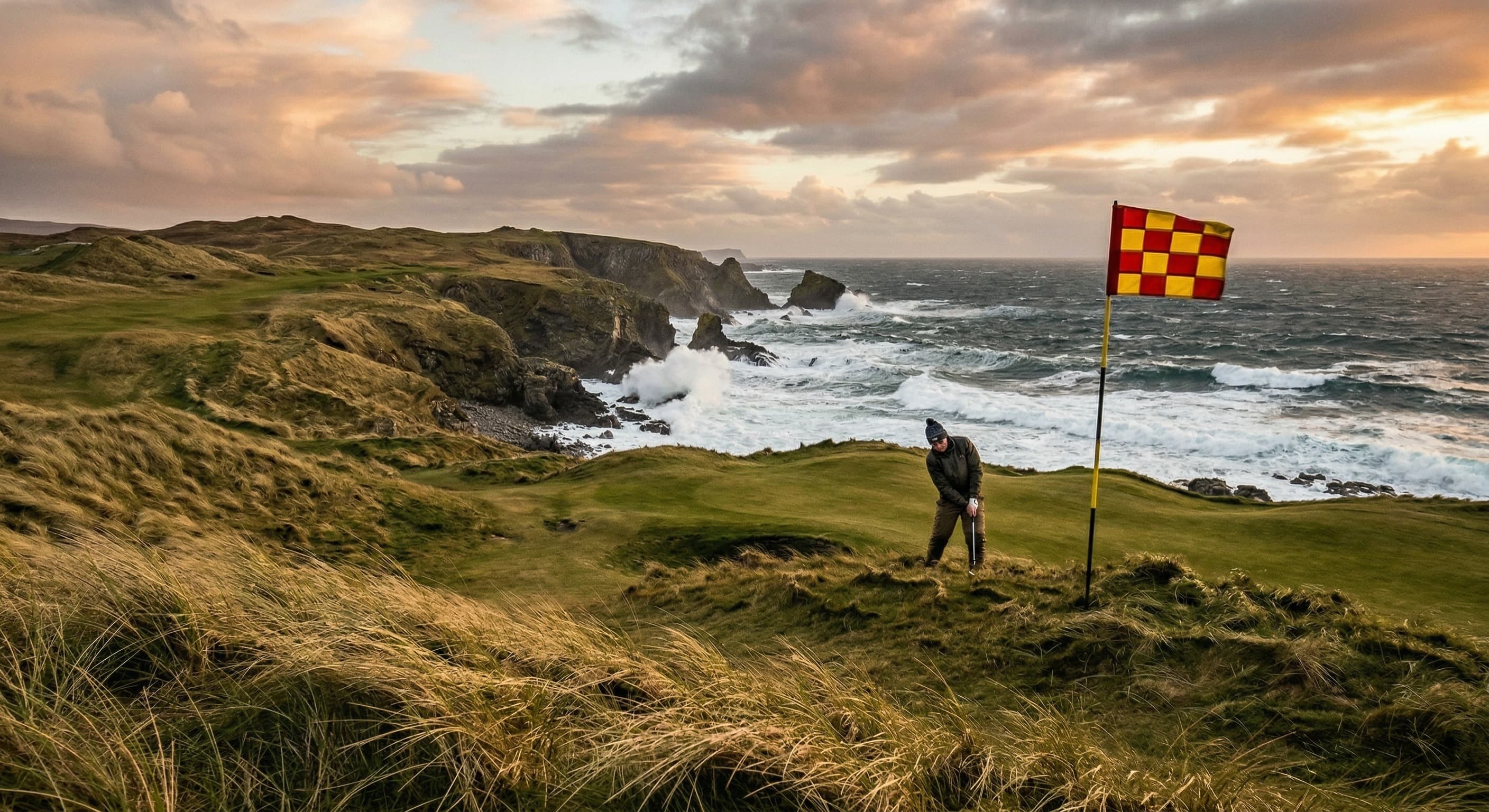
America's 20 Windiest Golf Courses: A G-Score Wind Analysis
We ranked America's 20 windiest golf courses using G-Score wind penalty data. See how coastal gusts and prairie gales reshape playability scores.
Read Story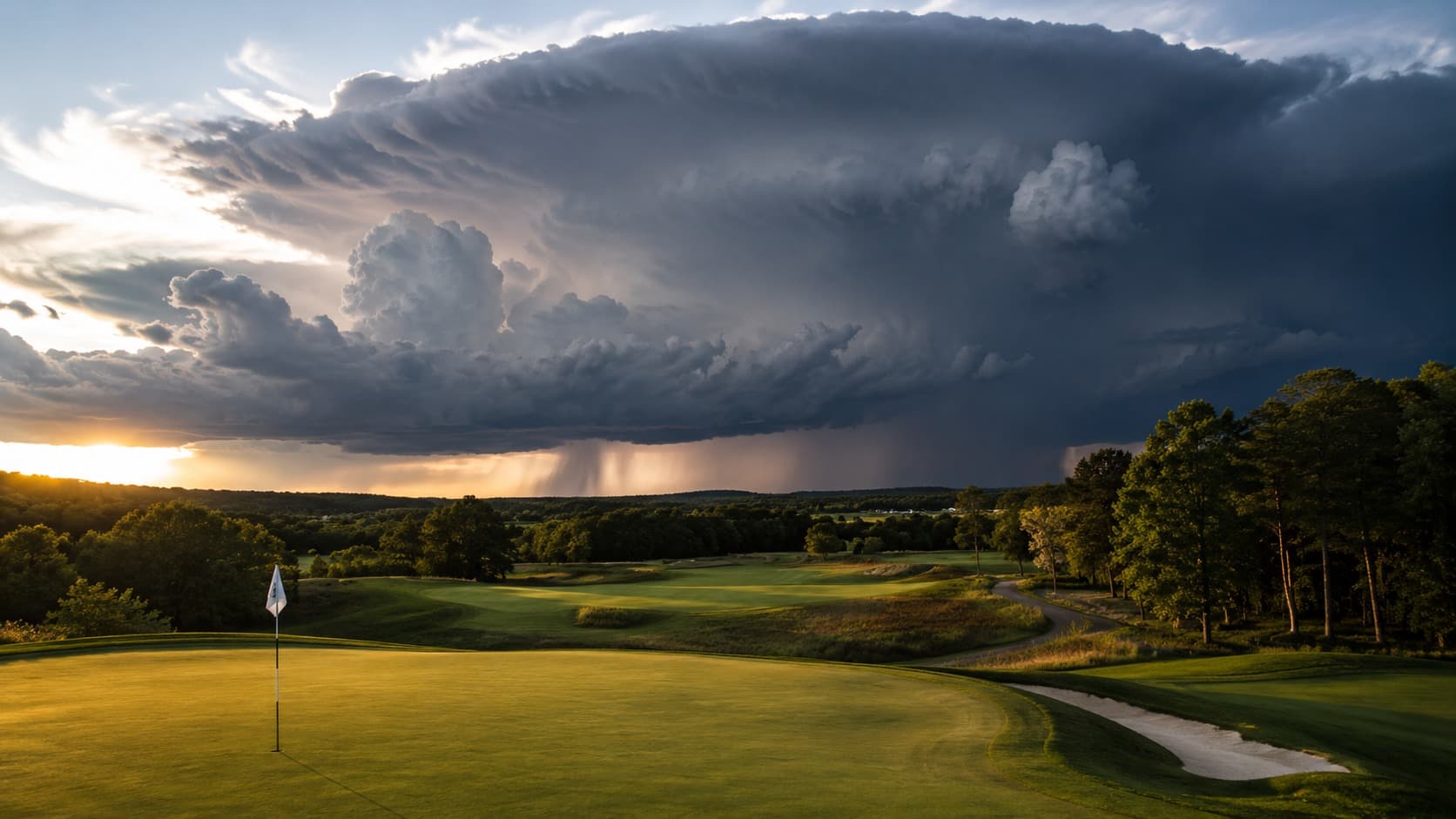
The Three O’Clock Storm: Reading Summer’s Convective Cycle to Protect Your Round
A 40% chance of afternoon thunderstorms does not mean a 40% chance of getting rained on. In the summer convective season it means the morning is nearly clear and the afternoon carries a fast-building, high-energy storm risk driven by a daily heating cycle. Here is the meteorology behind the pattern, the G-Score data on how the storm cycle punishes afternoon tee times across the Southeast, Midwest, and desert Southwest, the lightning-safety decision tree that actually matters, and the workflow that gets you off the course before the first bolt.
Read StoryMinSu Kim
Founder & Golf Data Analyst
MinSu is a data analyst and golfer with 10+ years on the course. He built Golf Weather Score to answer one question: is today a good day to play? He combines weather data, course intelligence, and the proprietary G-Score algorithm to help golfers make smarter decisions.
Every Friday Morning
When Kiawah Island Club - Cassique plays best next weekend.
Friday 6am ET: peak G-Score windows for Kiawah Island Club - Cassique, wind direction by hour, and one gear call. Three minutes to read, save you the round.
One email a week. Unsubscribe in one click.
The Caddie's Oracle
Draw your luck before the tee off