
Caddie's Gear Advisor
Curated for today's 71°F · Clouds
Tour-Level Drivers
Engineered for maximum distance and forgiveness
Laser Rangefinders
Pin-seeking technology for precision approaches
Premium Golf Balls
Tour-caliber spin and distance performance
Performance Sunglasses
Polarized lenses optimized for reading greens
Your Golf Trip, Handled
The Ultimate Golf Trip Planner
Everything you need to play Kiawah Island Golf Resort - The Ocean Course — from booking your flight to checking in course-side.
Best time to golf in South CarolinaCourse-Side Stays
Luxury hotels, resorts, and stay-and-play packages just minutes from the first tee.
Flights
Compare fares across 700+ airlines for the best route to your tee time.
SUV Rentals for Golf Bags
Spacious vehicles with room for clubs, bags, and your foursome.
Travel Insurance
Coverage for medical, weather delays, and gear at your destination.
Kiawah Island Golf Resort - The Ocean Course: Course Intelligence
Signature Setup
I walked the Ocean Course on a late-October morning, 56°F at 8 a.m. with a steady NE off the Atlantic, and the first thing that struck me was how much of the sky the course gives you — no trees, just dune grass, marsh, and the gray line of the ocean down the right. The 17th green sat fully exposed when I reached it, and the wind that had been a nuisance on the front felt like a third hand on the club.
Pete Dye routed The Ocean Course on the eastern tip of Kiawah Island, South Carolina, and opened it in 1991 — built, famously, on a brutal deadline to host the Ryder Cup that same September, the match later nicknamed the "War by the Shore." Alice Dye's intervention defines the course: she suggested raising the entire layout several feet so every hole would see the Atlantic, which is why all 18 sit elevated above the original marsh grade. It has since hosted the 2012 PGA Championship, where Rory McIlroy won by eight, and the 2021 PGA Championship, where Phil Mickelson won at 50 on a setup stretched to roughly 7,876 yards — the longest in major-championship history.
Hole-by-Hole Wind & Playing Lines
Hole 17 (par-3, 221y from the tips). The most photographed and most weather-dependent shot on the property. The carry is all water to a green wedged against the dune line, fully open to the ocean. On my NE morning it played closer to 235 and I needed a hybrid where the card says mid-iron; on a following SW wind the same hole shrinks to a smooth 190. Read the wind first, club second — nothing else here matters.
Hole 18 (par-4, ~439y). A long, exposed closer bending right along the dunes. Into the prevailing SW breeze the tee shot wants to ride toward the right-side waste and marsh, so I aimed left-center and still had 200 in. Bogey into a 15–18 mph wind is a genuinely good score here.
Hole 2 (par-5, ~543y). Reachable in calm air, a three-shot hole the instant the wind turns into your face. Crosswind off the left is the real defense — it pushes the second shot toward the waste areas that frame nearly every fairway on the course.
Green & Fairway Characteristics
The Ocean Course is seashore paspalum from tee to green — a salt-tolerant turf that survives the ocean spray and runs firm and fast when the wind bakes it. Fairways are wide by championship standards but framed almost everywhere by sandy waste areas rather than rough, so a miss isn't penal off the tee as much as it leaves an awkward, often unraked lie. The greens are large, gently undulating, and exposed; for championship play they're pushed to around 11 on the Stimp, but the wind, not the slope, is what makes putting hard — the ball gets nudged on slower coastal mornings. Slope sits in the mid-140s from the back tees, and the course can be set anywhere from the high-6,000s to nearly 7,900 yards depending on the event.
Seasonal Weather Pattern
Kiawah is low-country Atlantic coast, and the ocean drives the round more than the season does. Spring (March–May) runs 60–80°F with firm turf and the year's steadiest mornings before the afternoon sea breeze builds. Summer (June–August) is humid and warm, often 84–92°F, with reliable SW breezes of 12–18 mph and pop-up afternoon storms rolling off the water. Fall — my window — is 58–78°F with the firmest, fastest conditions and lighter early air. NOAA coastal records for the Charleston area show that afternoon onshore winds frequently sit in the 12–20 mph range from spring through fall, which is exactly why morning tee times play measurably easier here.
Local Play Tips
Something you won't find on the scorecard: the Ocean Course has more genuinely oceanfront holes — ten directly along the Atlantic — than any course in the Northern Hemisphere, and that exposure means the wind doesn't just affect a few holes, it sets the entire round. Caddies here read wind before yardage, and you should too. The waste areas play firmer than they look — you can take an iron cleanly off the packed sand rather than splashing out — but the unraked sections near the dunes can leave a footprint lie, so check before you commit to a full swing.
Pre-Round Weather Workflow
Use the 7-day G-Score on this page the way I do. Three days out, check whether your tee window lands before or after the late-morning sea-breeze build — on a course with ten oceanfront holes, that single factor can move the score by double digits. The morning of, read the windExposure panel: a SW or W reading means 17 and 18 play directly into the breeze, so favor left-center targets and club up one into those greens. If the temperature reads below 60°F with overnight wind, expect firm, fast paspalum that releases hard on a low ball — fly your approaches in with spin, respect the water on 17, and accept that the Ocean Course was built to let the wind, not your card, decide the day.
Related Reading
Before you tee off at Kiawah Island Golf Resort - The Ocean Course
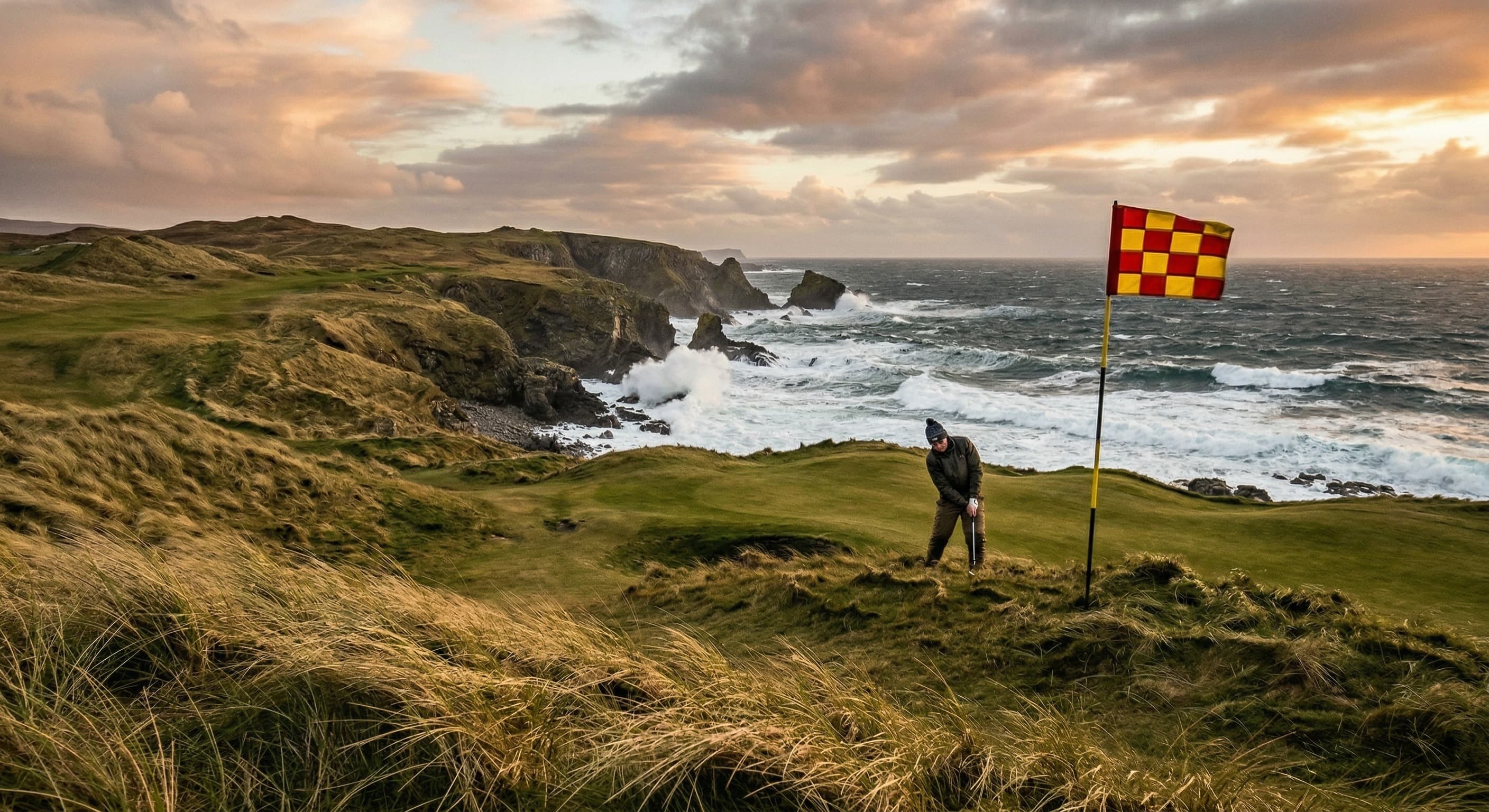
America's 20 Windiest Golf Courses: A G-Score Wind Analysis
We ranked America's 20 windiest golf courses using G-Score wind penalty data. See how coastal gusts and prairie gales reshape playability scores.
Read Story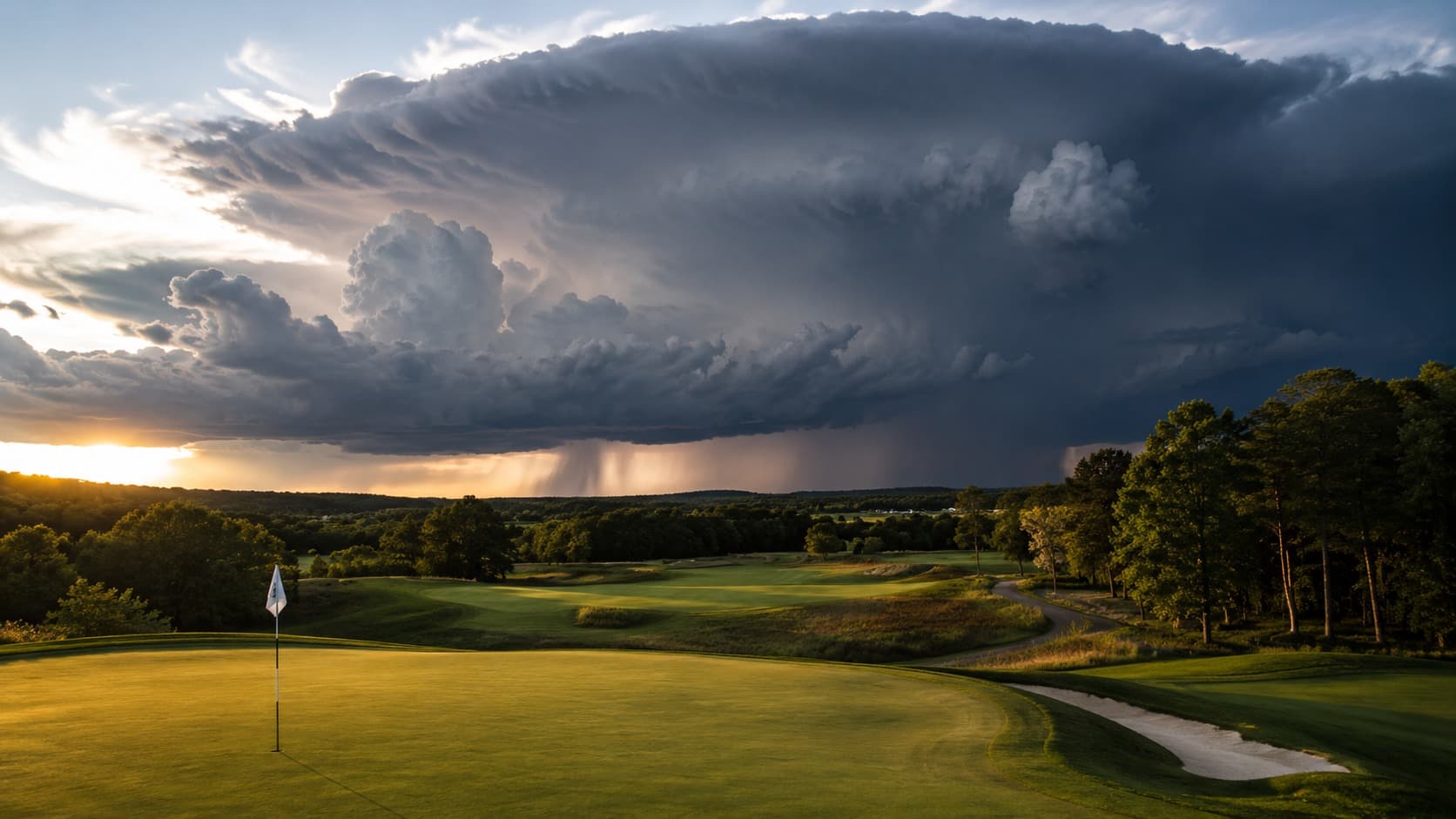
The Three O’Clock Storm: Reading Summer’s Convective Cycle to Protect Your Round
A 40% chance of afternoon thunderstorms does not mean a 40% chance of getting rained on. In the summer convective season it means the morning is nearly clear and the afternoon carries a fast-building, high-energy storm risk driven by a daily heating cycle. Here is the meteorology behind the pattern, the G-Score data on how the storm cycle punishes afternoon tee times across the Southeast, Midwest, and desert Southwest, the lightning-safety decision tree that actually matters, and the workflow that gets you off the course before the first bolt.
Read StoryDanorie
Editorial & Data
Golf Weather Score is built by Danorie. We compute the G-Score — our own playability rating — from live NOAA forecasts and published course scorecards, so any US course can be compared on any day with a single number. Methodology and data sources are documented on every page.
Every Friday Morning
When Kiawah Island Golf Resort - The Ocean Course plays best next weekend.
Friday 6am ET: peak G-Score windows for Kiawah Island Golf Resort - The Ocean Course, wind direction by hour, and one gear call. Three minutes to read, save you the round.
One email a week. Unsubscribe in one click.
The Caddie's Oracle
Draw your luck before the tee off