
Caddie's Gear Advisor
Curated for today's 41°F · Clear
Cold-Weather Performance Layers
Thermal mid-layers that move with your swing
Tour Hand Warmers
Rechargeable warmers trusted by caddies
Thermal Base Layers
Lightweight compression that traps heat
Winter Golf Headwear
Beanies and ear warmers built for the links
Your Golf Trip, Handled
The Ultimate Golf Trip Planner
Everything you need to play TPC Twin Cities — from booking your flight to checking in course-side.
Course-Side Stays
Luxury hotels, resorts, and stay-and-play packages just minutes from the first tee.
Flights
Compare fares across 700+ airlines for the best route to your tee time.
SUV Rentals for Golf Bags
Spacious vehicles with room for clubs, bags, and your foursome.
Travel Insurance
Coverage for medical, weather delays, and gear at your destination.
TPC Twin Cities: Course Intelligence
Signature Setup
The 18th at TPC Twin Cities looks like a birdie on the card and a coin flip from the tee, where the lake runs the whole left side and laps right up to the front of the green. I walked it on a July morning in Blaine, 66°F at 7 a.m. with the prairie grass still bent under dew and the air dead calm — the one window each day when this course lets its guard down.
TPC Twin Cities was built by the Arnold Palmer Design Company with Minnesota native Tom Lehman as the player consultant, and it opened in 2000. It plays to a par of 71 at roughly 7,431 yards from the championship tees. It hosted the Champions Tour's 3M Championship from 2001 through 2018, and since 2019 it has been the home of the PGA Tour's 3M Open, staged in late July — the warmest, most humid stretch of the Minnesota calendar.
Hole-by-Hole Wind & Playing Lines
Hole 4 (#1 handicap, par-4, ~480y). A long two-shotter that bares its teeth when the prevailing NW/W wind comes across the open ground. Into it, this is driver up the right and a long iron in; the smart miss is short and center, never at a tucked pin. A clean par here plays like a stroke gained on the field.
Hole 12 (par-4, ~470y). A scorecard-killer the broadcast tends to skip, with wetland down one side and prairie rough waiting on the other. On a crossing W wind the tee shot drifts toward trouble, so favor the safe side off the tee and take the center of the green rather than chasing it tight.
Hole 18 (par-5, ~600y). The reachable finisher. With a helping wind at the back, big hitters go for it in two over the corner of the lake; into the wind, lay up to a full wedge and let the bentgrass green do the work. The water guards the entire left and the green's front, so a pulled second is wet — bail right and a two-putt birdie is there.
Green & Fairway Characteristics
Bentgrass runs across greens and fairways, kept fast and firm for tournament week and lined by native fescue and tall prairie rough that turns a wayward drive into a lost-ball lottery. Slope runs 147 from the back tees — the stiffest in this group. The routing is prairie-style links: flat, exposed, with almost no tree cover to break the wind, and water in play on roughly half the holes. That means the wetlands and the breeze run every decision tee to green, and into a stiff prairie wind a low, driven approach is the answer rather than a high one the open air will shove off target.
Seasonal Weather Pattern
Minnesota gives this course a short, intense golf year inside a humid-continental swing. The late-July tournament window lands in the warmest, muggiest stretch of it — mid-80s°F highs, heavy humidity, and pop-up afternoon storm risk, which is precisely why the early waves play softer and calmer than the steamy back half of the day. June and September are the visitor's windows, with 70s°F highs, drier air, and firmer greens. Then winter shuts everything down hard: January in Blaine routinely sits below 20°F. The honest gap in my notes is that fall shoulder — I haven't teed it up here in September — so I trust the Twin Cities NOAA record for it, and that record pins summer as the wettest, most storm-prone run, putting radar timing on equal footing with wind direction.
Local Play Tips
One thing the yardage book won't tell you: with so little tree cover on this prairie routing, the wind is the whole defense. After mid-morning it builds off the open ground and the native fescue lining the fairways turns even a slightly pushed drive into a hack-out or a reload. I haven't played here in the September shoulder season, so I lean on historical conditions for that, but the lesson from the summer morning was simple — the dawn course and the windy afternoon course are not the same place. Get out early, keep your drives in the short grass, and treat every approach over water as a center-of-green play.
Pre-Round Weather Workflow
Work the 7-day G-Score above into your booking. On a prairie layout this exposed, the single biggest variable three days out is whether you tee off ahead of the mid-morning wind off the open ground — that's an 8–12 point swing. Morning of, the windExposure panel sets your targets: a NW/W reading stretches and bares the 480-yard 4th, the wetland-flanked 12th, and the reachable par-5 18th over the lake, so I aim center, club up, and keep drives in the short grass clear of the fescue. Through summer storm season the radar earns the same attention as the breeze — a first-wave time is the best hedge against the heat, the afternoon cells, and the prairie wind that takes ownership of this course after 10 a.m.
Related Reading
Before you tee off at TPC Twin Cities
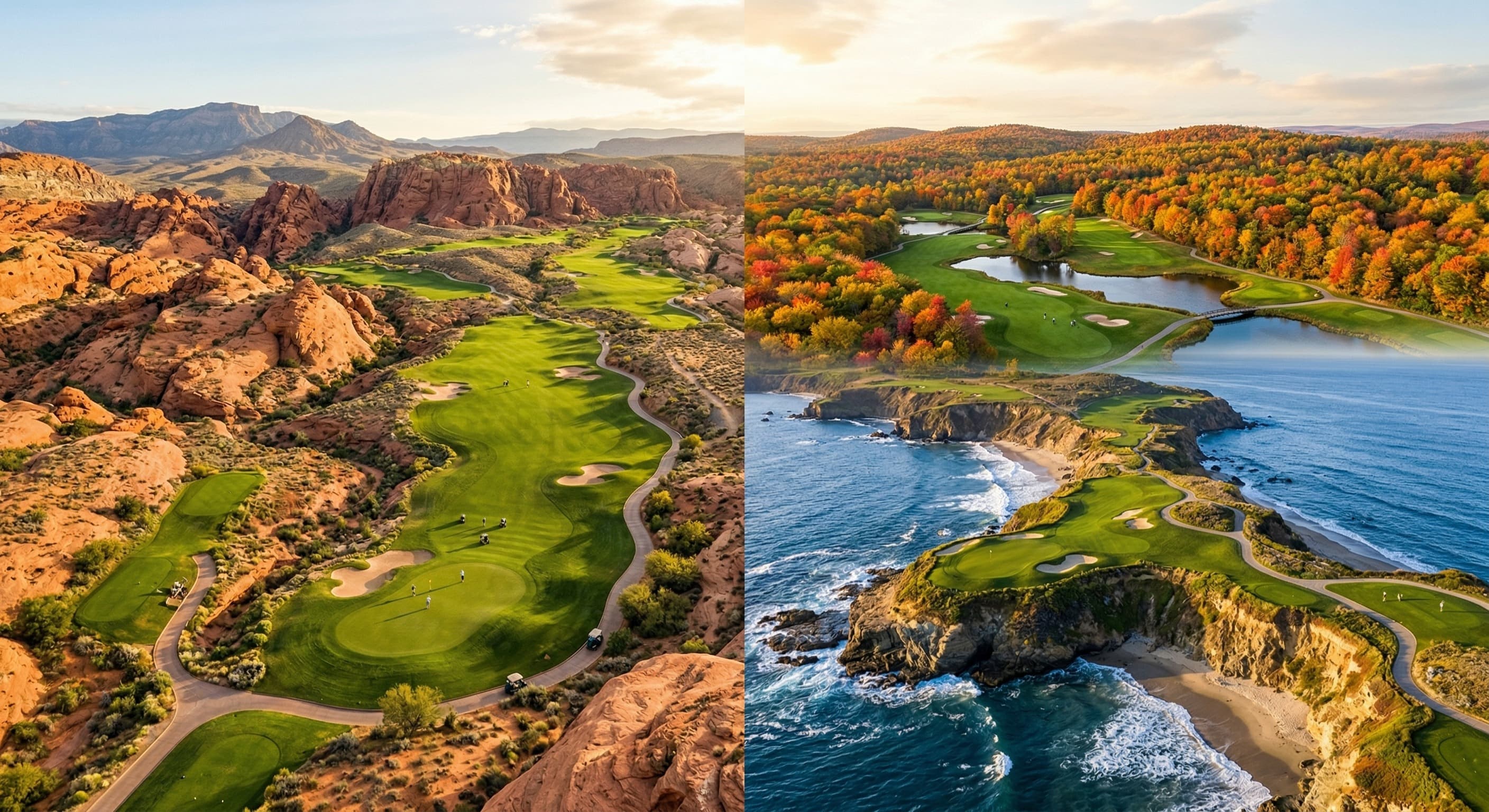
Best Golf Weather by State: Ranking America by Average G-Score
We ranked all 50 US states by average G-Score golf playability. California tops the list, but the results beyond the top five may surprise you.
Read Story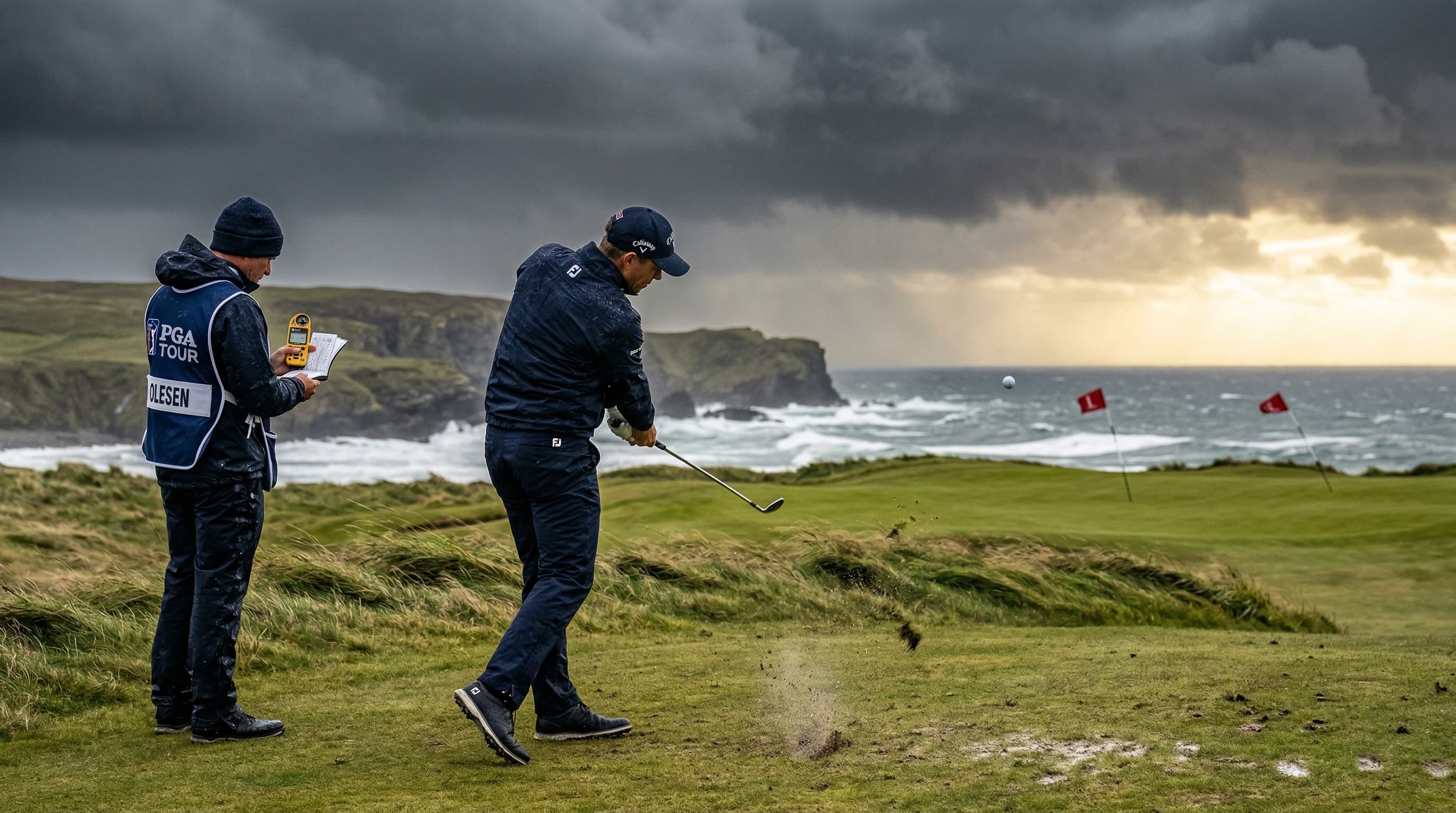
Golf Weather Physics: How Temperature, Altitude, and Humidity Change Ball Flight
Real physics data on how temperature, altitude, humidity, and wind change your golf ball flight — with specific yard adjustments, named course examples, and measured G-Score data from courses we track daily.
Read StoryDanorie
Editorial & Data
Golf Weather Score is built by Danorie. We compute the G-Score — our own playability rating — from live NOAA forecasts and published course scorecards, so any US course can be compared on any day with a single number. Methodology and data sources are documented on every page.
Every Friday Morning
When TPC Twin Cities plays best next weekend.
Friday 6am ET: peak G-Score windows for TPC Twin Cities, wind direction by hour, and one gear call. Three minutes to read, save you the round.
One email a week. Unsubscribe in one click.
The Caddie's Oracle
Draw your luck before the tee off