
Caddie's Gear Advisor
Curated for today's 109°F · Clear
Ultralight Distance Drivers
Maximum carry in hot, low-drag conditions
UV Protection Apparel
UPF 50+ cooling fabrics for peak-sun rounds
Precision Rangefinders
Slope-adjusted yardage in any condition
Hydration & Cooling
Insulated bottles and cooling towels
Your Golf Trip, Handled
The Ultimate Golf Trip Planner
Everything you need to play Ahwatukee Lakes Golf Club — from booking your flight to checking in course-side.
Course-Side Stays
Luxury hotels, resorts, and stay-and-play packages just minutes from the first tee.
Flights
Compare fares across 700+ airlines for the best route to your tee time.
SUV Rentals for Golf Bags
Spacious vehicles with room for clubs, bags, and your foursome.
Travel Insurance
Coverage for medical, weather delays, and gear at your destination.
Ahwatukee Lakes Golf Club: Course Intelligence
Signature Setup
The first time I drove into Ahwatukee, South Mountain sat directly south of me, a brown wall against an 8 a.m. sky already reading 84°F in early May. Ahwatukee Lakes is an executive-length 18 at the base of that mountain — shorter than the championship layout next door, built around the water features that give it its name. I'll be honest up front: this course has been at the center of a long deed-restriction and closure dispute in Ahwatukee, so confirm current playing status before you book. I'm writing from desert rounds in this corner of south Phoenix, not from a claim I played every hole last week.
What the "Lakes" name tells you is real: water sits in play on a meaningful share of the round, and on an executive layout the lakes do most of the defending. This is a walkable, target-style desert course — you're not hitting driver fourteen times, you're managing wedges and mid-irons over and around water.
Hole-by-Hole Wind & Playing Lines
Wind here is not coastal and steady — it's terrain-driven. South Mountain blocks and funnels the prevailing flow, and the dominant pattern is a light morning calm that builds into an afternoon thermal off the heated valley floor.
- The longest par-4: Into the afternoon up-valley thermal it stretches. My 150-yard stock 8-iron became a 165-yard 6-iron by 3 p.m. on a 102°F June afternoon — club up one and aim for the front edge, because anything long leaves a downhill chip into firm green.
- A lake-guarded par-3: Morning calm, it's a comfortable 7-iron. Afternoon, the thermal quarters left-to-right and pushes a weak shot into the water. I bail right of the flag here every time after lunch.
- A dogleg with water on the inside: The smart line is the dry side, even though it adds 15–20 yards. The dry desert air (Phoenix sits near 1,150 ft elevation) already carries the ball — give up the hero line.
Green & Fairway Characteristics
The turf runs the standard Arizona two-season program: Bermuda through the summer heat, overseeded to ryegrass in fall for winter color. In the dry stretch of May and June, fairways get firm and fast — a well-struck drive picks up roll, and approach spin drops. Greens are small to medium, fair to read, and the slope rarely punishes more than mid-130s in feel. As an executive layout the yardage is short, so scoring lives entirely on wedge distance control, not length.
Seasonal Weather Pattern
Ahwatukee's climate is the real variable. December–January highs sit around 66–68°F — the peak playing window, and why winter green fees across Phoenix climb. By June the daytime high crosses 104°F, and July–August routinely touches 108–112°F. Then the monsoon arrives: July through mid-September brings afternoon thunderstorms and the occasional haboob — a wall of dust that can drop visibility to near zero in minutes. According to the National Weather Service Phoenix office, dust-storm and microburst activity concentrates in those late-summer afternoons, which is exactly why locals tee off at dawn.
Local Play Tips
Two things I learned the hard way in the valley. First, hydration is a scoring stat in summer here — by the back nine of a 105°F round, club selection errors creep in from fatigue, not from the course. Carry more water than you think. Second, the late-afternoon light off South Mountain throws long shadows across west-facing greens after about 4 p.m. in winter; reads get tricky, so finish before the shadow line crosses the cup.
Pre-Round Weather Workflow
Use the 7-day G-Score forecast the way I do for any Phoenix desert round:
- Tee-time window: In May–September, target the earliest slot you can get — surface heat and afternoon haboob risk both climb sharply after noon.
- windExposure: Check the afternoon thermal trend. A rising up-valley wind means clubbing up on the longer holes and bailing away from the lakes.
- Monsoon days (Jul–Sep): If the afternoon storm probability is elevated, treat it as a hard cutoff — lightning, not rain, is the real risk here. Play the front nine early and bank the round before the cells build over the mountain.
Related Reading
Before you tee off at Ahwatukee Lakes Golf Club
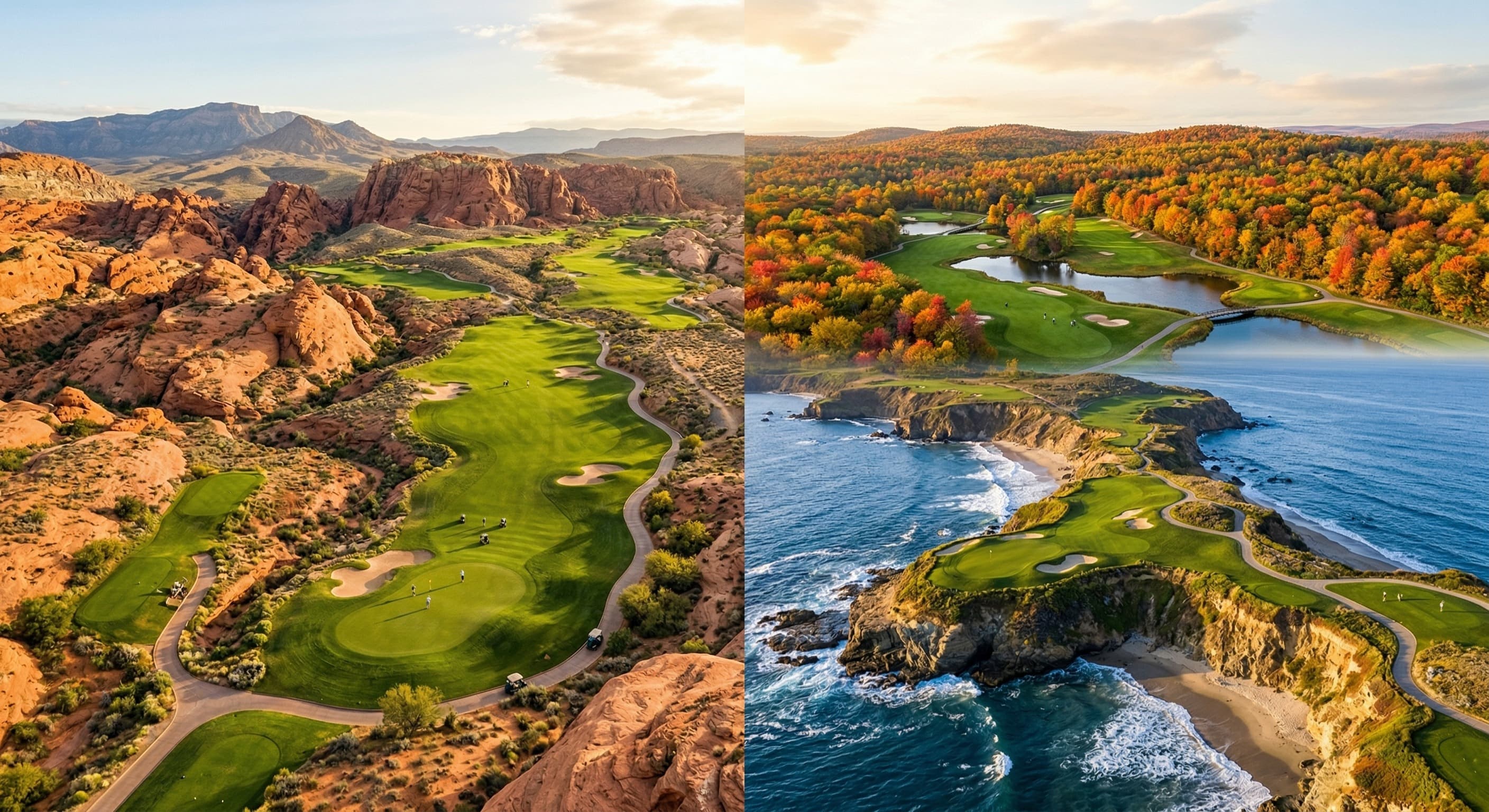
Best Golf Weather by State: Ranking America by Average G-Score
We ranked all 50 US states by average G-Score golf playability. California tops the list, but the results beyond the top five may surprise you.
Read Story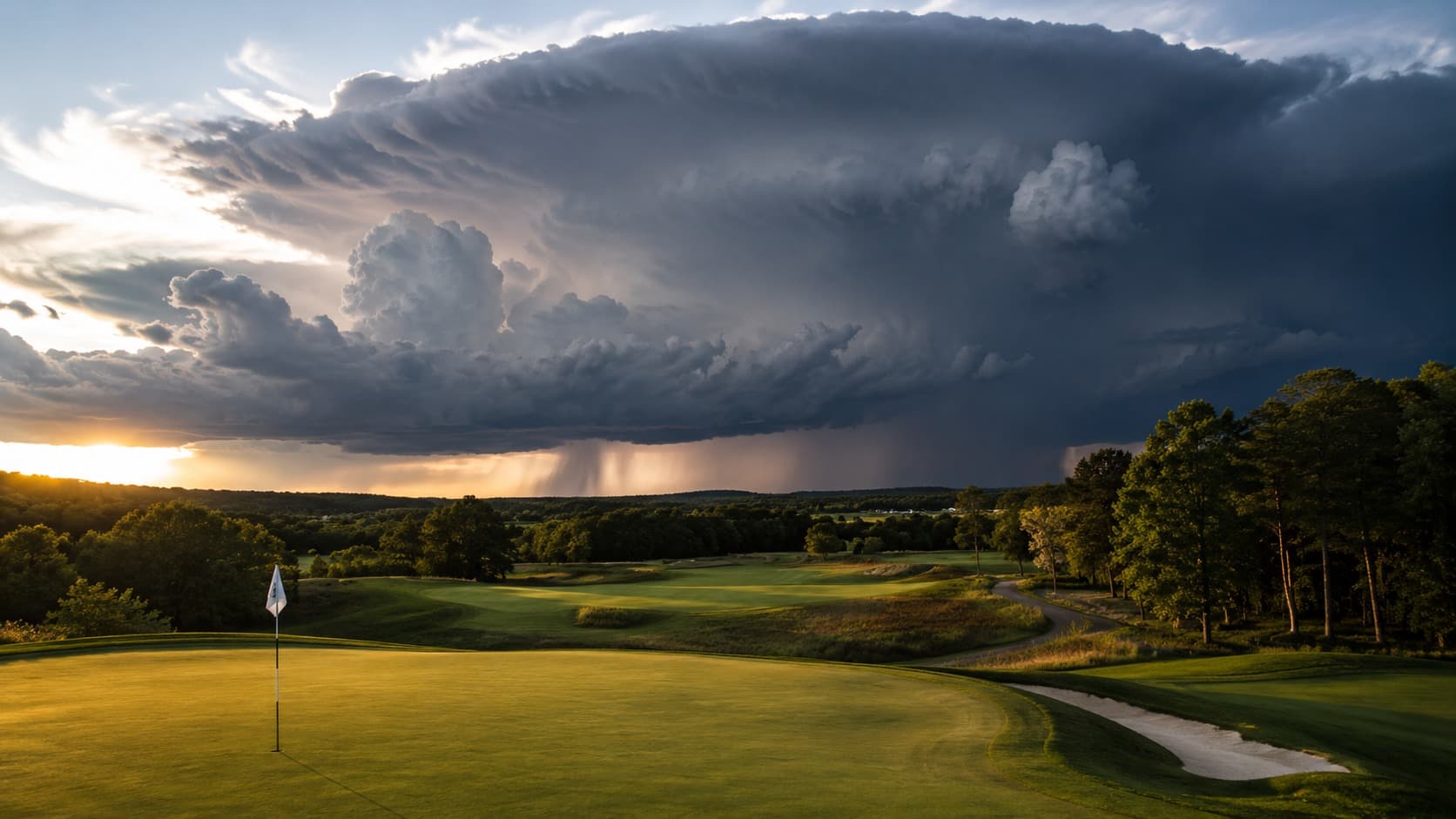
The Three O’Clock Storm: Reading Summer’s Convective Cycle to Protect Your Round
A 40% chance of afternoon thunderstorms does not mean a 40% chance of getting rained on. In the summer convective season it means the morning is nearly clear and the afternoon carries a fast-building, high-energy storm risk driven by a daily heating cycle. Here is the meteorology behind the pattern, the G-Score data on how the storm cycle punishes afternoon tee times across the Southeast, Midwest, and desert Southwest, the lightning-safety decision tree that actually matters, and the workflow that gets you off the course before the first bolt.
Read StoryMinSu Kim
Founder & Golf Data Analyst
MinSu is a data analyst and golfer with 10+ years on the course. He built Golf Weather Score to answer one question: is today a good day to play? He combines weather data, course intelligence, and the proprietary G-Score algorithm to help golfers make smarter decisions.
Every Friday Morning
When Ahwatukee Lakes Golf Club plays best next weekend.
Friday 6am ET: peak G-Score windows for Ahwatukee Lakes Golf Club, wind direction by hour, and one gear call. Three minutes to read, save you the round.
One email a week. Unsubscribe in one click.
The Caddie's Oracle
Draw your luck before the tee off